
23 Jun 2026
Jacqueline Matthews BVMS, PhD, FRSE, FRCVS discusses this issue in horses and how the threat can be addressed and best managed.

Jacqui Matthews
Job Title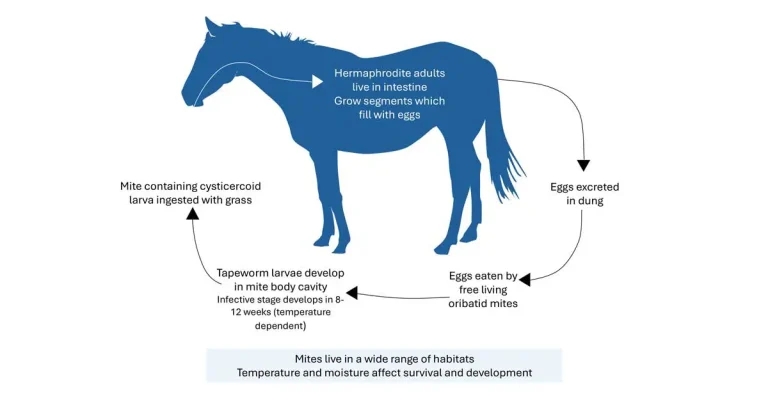
Figure 1. Mites live in a range of habitats, impacted by temperature and moisture.
Equine parasite control has changed significantly in the past two decades. Routine, interval-based deworming is now widely recognised as unsustainable, largely due to the growing threat of anthelmintic (dewormer) resistance, driving a shift towards more evidence-based, targeted control strategies.
Much of this focus has been on nematodes such as cyathostomins (small redworms) and Parascaris species (ascarids), where resistance is already well established. Increasing attention is now being given to the common equine tapeworm, Anoplocephala perfoliata, with concerns about emerging resistance further reinforcing the need for sustainable control measures across all equine parasites.
Three tapeworm species infect equids; A perfoliata is the most frequently encountered and clinically significant. This parasite is found globally, with reported prevalence varying markedly between populations and regions, ranging from less than 10 per cent to more than 80 per cent (Matthews et al, 2023).
Horses of all ages can become infected, although younger animals may be more susceptible to higher burdens and be more at risk of clinical disease (Burcákova et al, 2023).
A perfoliata is found in highest numbers at the ileocaecal junction, where it attaches to the mucosa via suckers on its scolex. While low burdens are often well-tolerated, infections in excess of 20 tapeworms have been consistently associated with intestinal damage, including mucosal ulceration, thickening and inflammation, and disruption of normal ileocaecal function (Williamson et al, 1997; Pavone et al, 2010).
Infection has been linked to an increased risk of colic, including spasmodic colic, ileal impaction and, in severe cases, intussusception and intestinal rupture (Barclay et al, 1982; Proudman and Edwards, 1993; Proudman et al, 1998).
The level of pathology is closely associated with infection intensity, so accurate identification of infected horses is essential to ensure treatment is appropriately targeted to reduce disease risk.
The epidemiology of A perfoliata is influenced by multiple interacting factors: the ecology of its oribatid mite intermediate host, pasture management, climate, age and previous anthelmintic use. Horses become infected through ingestion of tapeworm-infected oribatid mites while grazing (Figure 1).
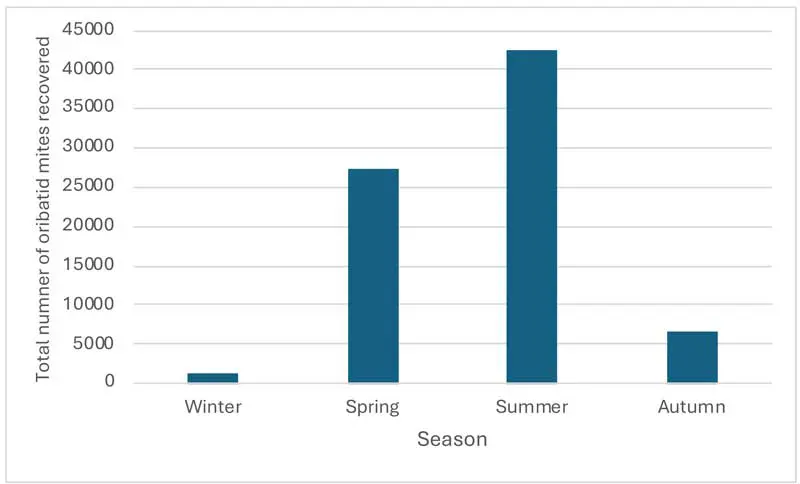
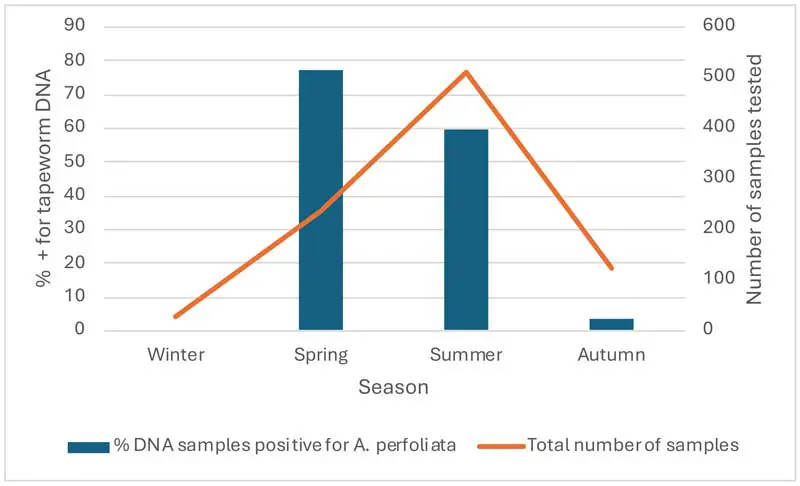
Although transmission occurs year-round in the UK, latest studies indicate infection pressure on paddocks is highest in spring and summer, when oribatid mite abundance increases (Figure 2a; Wickenden et al, 2025). These studies also demonstrated a corresponding spring–summer peak in tapeworm-infected mite samples (Figure 2b).
It remains unclear how long infected mites persist for on paddocks, although this is likely to be at least several months. Consequently, horses grazing contaminated paddocks experience repeated exposure to infection, particularly when stocking densities are high and pasture hygiene is poor. This is further compounded by rapid reinfection following treatment as cestocidal anthelmintics (praziquantel and pyrantel) lack persistent activity.
Similar to other helminths, a feature of A perfoliata infection is its highly aggregated distribution; in most herds, the majority of horses carry a few or no tapeworms, while a small proportion harbour heavy burdens (Meana et al, 2005). This pattern changes under conditions that favour transmission: when paddock management is poor and environmental conditions support oribatid mite populations, particularly in herds with a high proportion of young, susceptible horses, a greater proportion of animals become infected and more carry burdens above levels associated with pathology (Matthews and Peachey, 2026).
These epidemiological patterns have important implications for control: blanket treatments lead to unnecessary anthelmintic use in low-risk animals, while in higher-risk populations a lack of evidence-based approaches may fail to identify heavily infected horses that contribute most to environmental contamination and are at increased risk of colic. These issues highlight the need for site-specific control strategies that are informed by risk assessment and diagnostic test results.
Historically, control of A perfoliata has relied almost exclusively on cestocidal anthelmintics, praziquantel and pyrantel salts. Both compounds demonstrated high efficacy against A perfoliata (pyrantel salts at double the dose used for nematode infections) in early licensing studies and their widespread use is thought to have contributed to a reduction in tapeworm-associated disease (Sallé et al, 2020). Consequently, prophylactic treatment once or twice yearly has become common practice. However, this approach does not account for variation in exposure and infection risk, and repeated blanket treatments increase selection pressure for anthelmintic resistance by reducing parasite refugia and favouring resistant genotypes (Matthews, 2014). Despite growing awareness of this risk, many in the UK sector still rely on interval-based blanket treatments for tapeworm control (Shrubb et al, 2025).
Evidence suggesting reduced cestocidal effectiveness is now emerging. Tapeworm-associated disease and persistently high antibody levels have been reported in horses in Canada despite regular treatments (Peregrine and Trotz-Williams, 2012), with similar findings observed on a Thoroughbred farm in France (Matthews et al, 2024a). Further evidence for the threat of anthelmintic resistance in tapeworm populations comes from a US study reporting lower-than-expected reductions in egg shedding two weeks following treatment with praziquantel and pyrantel pamoate (Nielsen, 2023).
Although faecal egg count (FEC) methods have poor sensitivity for detecting tapeworm infection due to intermittent egg shedding and the frequent presence of non-gravid worms (Gasser et al, 2005; Meana et al, 1998), the detection of eggs in faecal samples at this time point post-treatment in several horses is noteworthy.
The increasing risk of anthelmintic resistance necessitates more sustainable control approaches that reduce unnecessary anthelmintic use and slow resistance development by preserving parasite refugia. This can be achieved through improved management and the use of diagnostics to ensure only horses requiring treatment are administered with anthelmintics.
Effective control depends on reducing transmission at the paddock level. Regular dung removal is essential to limit exposure of oribatid mites to tapeworm eggs and should be carried out at least twice weekly, particularly during warmer months when mite activity is highest. On high-prevalence premises, daily removal may be necessary. Dung should be disposed of away from grazing areas and watercourses and never spread on grazing land. Stocking density also plays an important role in reducing pasture contamination; at least one acre per horse is recommended (Canter Guidelines, 2026).
Extended paddock rest periods (months rather than weeks) are more effective at reducing infective stages, and rotational grazing with cattle or sheep can further reduce transmission, as A perfoliata does not develop in these hosts, although the risk of liver fluke should be assessed. Young horses are particularly susceptible and require optimal management, especially on large premises where infection pressure may be high.
On open premises, robust quarantine procedures are essential, particularly where prior testing indicates a low tapeworm prevalence. A perfoliata can be readily introduced via incoming horses and once oribatid mites become infected, elimination can be challenging. The potential introduction of anthelmintic-resistant parasites further increases risk. All new arrivals should be stabled, tapeworm-tested on entry and treated according to results. Following treatment, horses should remain stabled for at least 48 hours, with dung disposed of on to heaps. Follow-up saliva testing can be conducted three months later.
FEC methods have poor sensitivity for detecting tapeworm infection (Matthews et al, 2023). Serum and saliva ELISAs have been developed based on parasite-specific antibody (IgG[T]) levels that correlate with A perfoliata burden (Lightbody et al, 2016). The tests offer much higher sensitivity than coprological methods and enable more accurate identification of infected horses. Their use has contributed to reduced cestocidal treatments in the UK, with around two-thirds of several hundred thousand horses tested using the saliva test falling below the treatment threshold (Matthews et al, 2024b).
The timing of tapeworm testing is important to maximise its effectiveness. Spring testing enables early identification of infected horses at a time when oribatid mite numbers increase on paddocks (Wickenden et al, 2025), enabling targeted treatments before the peak transmission season to reduce infection pressure through the main grazing period. Autumn testing identifies horses that have accumulated burdens over the grazing season, when increasing mite activity and higher levels of infected mites support ongoing transmission and increase clinical risk.
Testing frequency should be tailored to the risk level of the premises or group. On higher-risk yards, where management and local prevalence result in increased exposure to infection, biannual testing is recommended. In well-managed, low-risk environments, annual testing is generally sufficient; however, if tapeworm prevalence increases, exposure should be reassessed and testing increased to twice yearly.
Monitoring for anthelmintic resistance in tapeworm populations is complex and lacks standardised protocols (Matthews and Peachey, 2026). FEC methods have poor sensitivity for detecting A perfoliata infection, leading to false negatives at the time of and, importantly, following treatment. In addition, parasite-specific antibodies decline too slowly after treatment (Lightbody et al, 2016) to allow a meaningful short-term assessment of efficacy. Despite these limitations, vigilance for reduced efficacy remains essential.
Potential indicators include persistently high anti-tapeworm antibody levels despite good or improved paddock management, the occurrence of tapeworm-associated colic cases following repeated treatments or the detection of tapeworm eggs in faeces two weeks after administration of cestocidal anthelmintics. In these instances, combining diagnostic methods can improve interpretation of efficacy.
Pre-treatment antibody testing (blood or saliva) can identify infected individuals and guide treatment decisions, while FEC testing on the day of treatment and two weeks post-treatment can assess changes in tapeworm egg shedding. Follow-up salivary antibody measurements at five weeks can then be used to assess reductions in antibody levels, which at this time point may indicate effective parasite killing by the anthelmintic before levels rise again due to reinfection from contaminated paddocks (Lightbody et al, 2016). Although each method has limitations, this integrated approach could provide a framework for detecting emerging reductions in cestocidal performance.
Looking to the future, there is an urgent need for improved approaches to equine tapeworm control. The development of novel anthelmintics is unlikely in the short term due to limited commercial incentives within the pharmaceutical market. One potential avenue is the repurposing of existing compounds as equine cestocidal drugs (Guerrero et al, 1983), although this requires further evaluation of safety and efficacy– including appropriate dosing, pharmacokinetics and field performance studies under different management conditions (Matthews and Peachey, 2026). In parallel, improved understanding of oribatid mite ecology offers opportunities for more targeted management interventions to reduce transmission pressure.
In conclusion, effective equine tapeworm control is likely to become increasingly difficult in the face of reduced anthelmintic efficacy. Veterinary surgeons, with a strong emphasis on client engagement, will play a central role in supporting the transition to more evidence-based approaches by improving owner understanding of the pathogenic significance of these parasites, their transmission dynamics and how diagnostic testing and paddock management can reduce reliance on anthelmintic use.
Jacqui Matthews qualified as a veterinary surgeon, completed a PhD in parasitology and then worked in academia for more than 25 years, leading a range of interdisciplinary projects focused on helminth infections of ruminants and horses. During this time, she taught many undergraduates and postgraduates in the subject area, and was awarded more than £13 million in competitive funding for research, from which more than 140 peer-reviewed papers have been published. Jacqui has written numerous lay articles, given seminars and workshops to stakeholders promoting sustainable helminth control practices, and for many years was technical advisor to the Control of Worms Sustainably in Cattle initiative and parasitology expert on the UK Veterinary Products Committee. She sits on several sub-groups of the CANTER initiative, set up to develop and promote best practice guidelines for parasite control in horses. One of her inventions – an ELISA test for equine small redworm – was commercialised by Austin Davis Biologics in 2019 and, in 2022, she moved to this company as director of veterinary science, where she leads the research and development programme.