
7 Jul 2026
Victoria Colgate MA, VetMB, MSc, MRCVS Catriona Mackenzie BVMS, MSc, CertAVP(EM), DipECEIM, MRCVS discuss issues regarding sport, housing and transportation, and how to keep these equines cool.
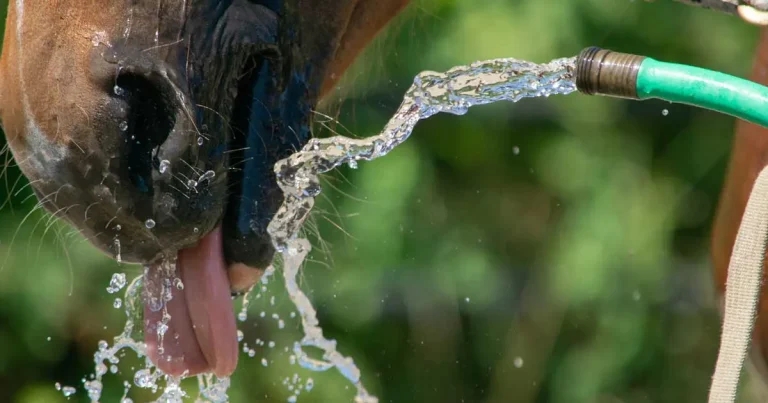
Image: Mike / Adobe Stock
During strenuous exercise, a large amount of metabolic heat is produced by contraction of the skeletal muscles, which must be dissipated to the environment if homeostasis is to be maintained.
The horse, in particular the Thoroughbred (TB) racehorse, in general has an impressive thermoregulatory capacity, but under certain environmental conditions, most notably extreme heat and humidity, the system can be overwhelmed with progression through thermal strain, to heat stroke, and then exertional heat illness (EHI).
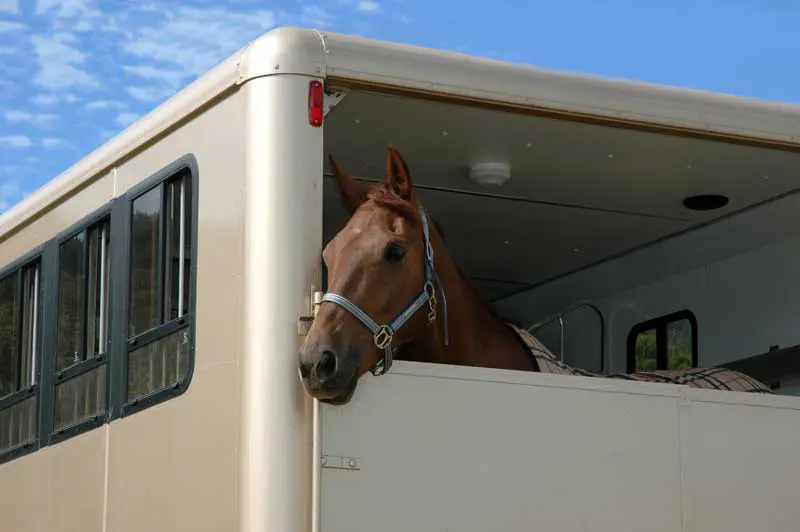
As we experience increasing global temperatures, it is likely that EHI incidence will increase and become a significant welfare issue not only associated with sporting equestrianism, but also the housing and transportation of horses. As a previously poorly understood and under-reported condition, it is vital that awareness of clinical signs and knowledge of the underlying pathophysiology is increased, as early identification and prompt treatment are key to escalation prevention and safeguarding of equine welfare.
The high-intensity, short-duration exercise performed by the TB racehorse leads to almost immediate production of significant metabolic heat, which is initially stored within the body, but must be dissipated to the environment during the recovery period if a critical rise in core body temperature is to be avoided.
During this recovery period, the skin becomes the interface for heat transfer (Brownlow and Mizzi, 2022a), and physical heat exchange mechanisms see heat lost to the environment through a combination of conduction, convection, radiation and evaporation (Brownlow and Mizzi, 2023a).
A significant element that enables rapid heat loss through these mechanisms involves redistribution of cardiac output from a dominance of blood flow to the muscles during exercise, to maximised skin blood flow during recovery (Brownlow and Mizzi, 2023a). This is facilitated by opening of arteriovenous anastomoses to increase compliance of the cutaneous circulation; therefore, shunting blood from the core to the periphery (Brownlow, 2018a). Additionally, the horse has a considerable sweating ability, which enables it to lose substantive quantities of heat through evaporation. In particular, horse sweat uniquely contains the protein latherin, which creates a foam on the skin, increasing surface tension, minimising sweat run off, and enhancing evaporation efficiency (Kang et al, 2023).
As environmental temperatures increase, and skin surface temperature and ambient temperature approach equality, heat loss through conduction, convection and radiation become limited, with emphasised reliance on the evaporative cooling capacity (Brownlow et al, 2016) of the respiratory system and sweating.
However, in hot, humid conditions with low wind speed, the vapour pressure gradient between the skin and external environment decreases, reducing evaporative capacity (Brownlow and Mizzi, 2022b). It is here that thermoregulatory mechanisms can fail and allow the core body temperature to reach a critical thermal maximum, leading to a spiral of deleterious consequences.
Although the critical thermal maximum has not been determined for the horse as it has for humans, the pathological pathways that lead to the clinical signs associated with EHI have been elucidated, and this is thought to be a dual process involving a heat toxicity and an endotoxaemic response.
The classically described heat toxicity pathway involves rising temperatures causing direct irreversible thermal injury to cells through the denaturation of proteins (Brownlow, 2022; Brownlow and Mizzi, 2023a). Specific damage to the vascular endothelium leads to microvascular thrombosis, disseminated intravascular coagulation and potential progression to multi-organ failure and death (Brownlow, 2022; Brownlow and Mizzi, 2023a) if left unchecked.
But this heat toxicity pathway fails to explain all of the clinical signs associated with EHI, and recently the role of a second endotoxaemic pathway has been identified.
The redistribution of cardiac output to the skin associated with the normal thermoregulatory response consequently leads to relative gastrointestinal and cerebral ischaemia and, if prolonged, this has downstream effects. Intestinal ischaemia leads to increased permeability of tight junctions, allowing the release of endotoxin into the systemic circulation and potential progression to systemic inflammatory response syndrome (SIRS; Brownlow, 2022). It is important to note that the horse’s immune function will dictate if endotoxin is deactivated or allowed to induce a cytokine proliferation which leads to SIRS (Brownlow, 2022; Brownlow and Mizzi, 2023a).
Once a cytokine pathway is induced, cooling alone may not reverse clinical signs. The redistribution of cardiac output also leads to relative cerebral ischaemia which, combined with rising serotonin levels, increases permeability of the blood brain barrier to lead to neuronal injury and the clinical signs of CNS dysfunction that are associated with EHI (Brownlow, 2022).
Although detailed pathophysiology may superficially seem of irrelevance to the clinician, its understanding is crucial to appreciating the mechanisms of treatment and prevention.
EHI is actually a complex disorder resulting from a failure of homeostasis and the interplay between both thermoregulatory and inflammatory systems (Brownlow and Mizzi, 2023b).
Usually defined and diagnosed by its clinical signs, if left untreated, it is a progressive condition characterised by increasing degrees of CNS dysfunction and endotoxaemia, as outlined on a severity scale from 1 to 4 (Brownlow et al, 2016; Brownlow and Brotherhood, 2021; Brownlow, 2022). However, common to all levels is skin that is “hot to touch”, with sweat running off the horse rather than evaporating – an early indication that the evaporative capacity of the environment is compromised and sweat is not being removed at the rate required to achieve the necessary heat loss (Brownlow and Smith, 2021).
Table 1 outlines the clinical signs considered characteristic of each level of EHI, but it is important to highlight that a lot of the signs – especially early signs – are vague and can easily be mistaken for other post-exercise conditions. For example, the unusual behaviour of kicking out in a random fashion and headshaking associated with level 2 could be mistaken for fly irritation or colic, while the hopping hindlimb gait of a level 3 horse could be confused with a limb fracture (Brownlow, 2022).
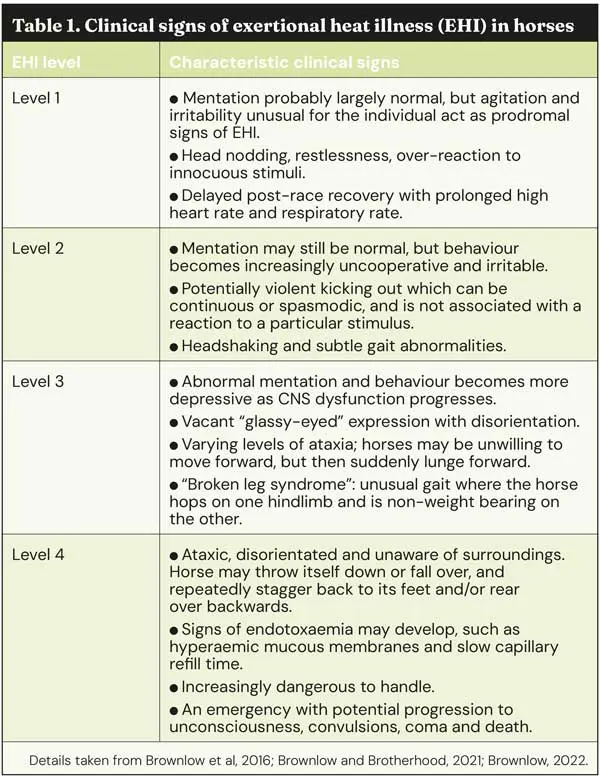
Accordingly, and with global warming increasing the potential for EHI to be seen not only in racehorses but also those competing in other disciplines, it is important to be cognisant with the signs and mindful of the condition as a differential diagnosis in the distressed horse post-exercise.
Adding to the enigma is the fact that, in some individuals, EHI can actually occur in comparatively cool conditions, indicating that high environmental temperatures are not the sole causal factor.
Indeed, strenuous exercise that produces substantial metabolic heat is considered to be the causative agent that must be present for EHI to occur, with extrinsic environmental factors and intrinsic individual factors forming the other points of the epidemiological triad (Brownlow and Mizzi, 2022a).
Key environmental factors such as ambient temperature, wind speed, vapour pressure and radiant heat determine the evaporative capacity of the environment and, therefore, the degree to which normal thermoregulatory mechanisms may be compromised (Brownlow and Mizzi, 2022a).
As well as the direct thermal stress associated with particular climatic conditions, other external factors also influence how these conditions are experienced by the horse; for example, race distance and ground conditions have been identified as risk factors for EHI, presumably as they determine workload, which, in turn, dictates the amount of internal heat production (Trigg et al, 2023). Equally, exercise surface also plays a role. Grass absorbs a large amount of solar radiation but reflects very little, while tarmac and arena surfaces both absorb and reflect large amounts, meaning grass is a much cooler and more comfortable surface to be on in hot weather (Marlin et al, 2018).
The fact that EHI is unpredictable in occurrence with a whole field of horses experiencing the same climatic and exercise conditions, but only a few suffering from EHI (Trigg et al, 2023), suggests individual factors must act to determine susceptibility and clinical expression.
Factors such as fitness, hydration status, feeding, inherent or acquired acclimatisation to hot conditions (Brownlow, 2018b) and body condition score (Marlin et al, 2018) all affect the potential development of heat stress.
Although this is a largely undefined area at present, the observation that some horses are repeat offenders suffering from EHI in nearly every race they compete in (Brownlow and Smith, 2021), while others are able to tolerate presumed significant hyperthermia under extreme environmental conditions with no adverse effects (Brownlow, 2022), would suggest intrinsic factors play a significant role in disease expression. This individual variability acts as an important consideration when we come to consider preventive measures against EHI, suggesting a “one fits all” solution does not exist.
Obviously, prevention forms the ideal scenario, but early detection of prodromal signs, rapid assessment and targeted cooling forms the cornerstone of treatment for EHI.
Cooling of the skin increases the temperature gradient to enhance heat transfer from the core to the environment. Additionally, it reduces skin vessel compliance and blood flow to encourage some backflow to the central circulation, offsetting the cardiac redistribution and thermal strain associated with the hyperthermic response to exercise (Brownlow, 2021; Brownlow and Mizzi, 2023a).
However, to date, the optimal cooling technique for the hot horse has not been definitely established, and is usually selected empirically on the basis of individual preferences, experience and availability.
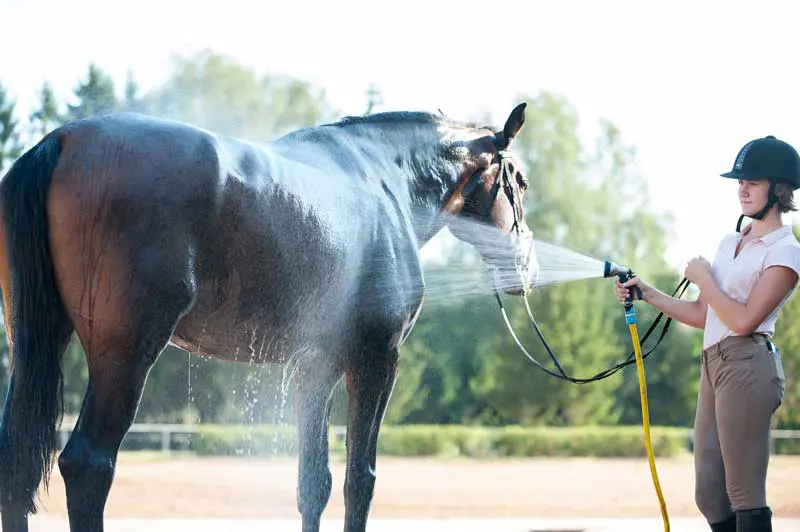
What is known is that the thermal conductivity of water is far superior to that of air, identifying a rationale for continual coating of the entire horse in cool water to maximise conductive heat transfer. Various methods for achieving this are suggested, but continuous showering of a horse with tap water was found to be superior to intermittent application of cold water (Takahashi et al, 2020). Although cold water would achieve more efficient heat transfer, the continual showering was found to be more important than water temperature.
Historically, intermittent scraping to remove warmed water from the body surface has been advocated as vital to maintain the thermal gradient for heat transfer. This is now outdated and no longer recommended; continual application of water achieves an equivalent effect in terms of removing heated water from the skin surface (Brownlow, 2018a), and pausing water spraying to allow scraping is probably counterproductive.
Although evaporative capacity is limited in the hot and humid environments likely to precipitate EHI, providing significant airflow over the body through the use of fans can still achieve a cooling effect and increase horse comfort. Equally, the provision of shade acts to improve welfare and reduce additional heat absorption through solar radiation (Kang et al, 2023).
As it is the duration of time that core temperature remains above the critical thermal maximum that dictates outcome, these cooling methods should aim to achieve normothermia within approximately 30 minutes (Brownlow, 2022).
Although not preferred as initial cooling techniques, once temperature has been reduced below critical levels, cooling blankets and cooling collars may have a role in maintaining the cooled state and protecting against rebound hyperthermia.
Rebound hyperthermia is a real danger if initial treatments have acted to cool the surface but not the core, meaning that subsequent heat redistribution from the core (Brownlow and Mizzi, 2023a) can once again lead to thermal strain. This makes continuous monitoring of horses by experienced personnel throughout the post-race recovery period a vital undertaking.
Cooling techniques applied rapidly and effectively will reduce skin surface and core temperatures to assist in halting the progression of EHI to higher levels. But, once the endotoxaemic pathway and associated inflammatory cytokine cascade has been initiated, purely reinstating normothermia may not be sufficient treatment, and rationale exists for early and effective use of ancillary medications. When administered to the horse suffering from EHI, detomidine hydrochloride does not have the normal sedative effect, but has been found to reverse abnormal neurological behaviour associated with EHI (Brownlow, 2022). This makes its administration vital to ensure handler safety and allow effective equine treatment.
Due to the involvement of gastrointestinal ischaemia and associated endotoxin release, NSAID administration in the form of flunixin meglumine should be considered as an anti-inflammatory, and its early use in combination with detomidine has been found to precipitate positive outcomes (Brownlow and Mizzi, 2023a).
The potential nephrotoxic side effects of NSAIDs have prompted queries over their use in horses following strenuous exercise, but dehydration is actually uncommon post-race, and any redistributive hypovolaemia corrects very quickly with effective cooling (Brownlow and Mizzi, 2023a). That being said, dehydration can be significant following eventing or endurance disciplines, so this could be a more pertinent consideration in other populations where circulatory support should also be considered to correct any hypovolaemia.
Lastly, glucocorticoids such as dexamethasone can be considered due to their immunosuppressive and neuroprotective actions which may help stabilise cell membranes and offset the direct cellular effects of the heat toxicity pathway (Brownlow, 2022). Their use should be as a conjunctive, rather than standalone, treatment and reserved for the more severe, higher-level EHI cases.
Prevention is always better than cure, and the need exists to develop hot weather polices, based on epidemiological information, to allow prior risk assessment and implementation of appropriate mitigation strategies. However, formulation of a blanket best practice policy is complicated by the individual and geographic variations seen in the incidence of EHI cases.
As we have seen, it is the combination of metabolic heat production associated with strenuous exercise, combined with extrinsic and individual intrinsic factors, that will determine development of EHI. This means that risk assessment at the individual level is unrealistic, and all that can be reasonably achieved is measurement of environmental factors as a proxy estimate of risk (Brownlow and Mizzi, 2022a).
The premise revolves around prior planning and racecourse vets understanding the potential thermal strain imposed by specific environmental conditions on race day, therefore, allowing targeted cooling of horses at risk and amelioration of strenuous competition activities as appropriate. However, determination of the thermal strain of a particular environment is complicated and an area that requires further research.
Wet bulb globe temperature is an index of heat stress developed in humans that considers environmental relative humidity, air temperature, wind velocity and solar radiation in formulation of a single numerical value (Brownlow et al, 2016). This measure has been used as the decision-making yardstick in most equine hot weather policies formulated to date, but actually forms an imprecise estimate of environmental stress that does not necessarily equate to associated physiological strain (Brownlow, 2019). It does not differentiate between hot, and hot and humid, conditions, and a single numerical value can be associated with different degrees of thermal strain (Brownlow and Mizzi, 2022a), integer differences at the lower end of the scale being less appreciable than integer differences at the upper end (Marlin et al, 2018).
Conversely, prospective weather forecasts and temperature and humidity measurements on the day are readily available, and may be more instructive (Brownlow, 2019).
Two further important elements in prevention are education and acclimatisation. It has been considered that an important risk factor for EHI development is a lack of knowledge and understanding (Brownlow, 2022), leading to misidentification of horses at risk or exhibiting early prodromal signs. As early treatment is vital to halt detrimental progression, education of all racecourse staff, trainers and horse handlers in clinical signs and best prevention methods would be invaluable, and also act to increase awareness.
Heat acclimatisation through repeated exposure to, and exercising in, a hot environment has shown to lead to positive adaptations at the physiological and cellular level (Ebisuda et al, 2024) that may increase heat tolerance and reduce susceptibility to EHI. Appropriate acclimatisation can be hard to achieve within the schedule of a competition horse, but greater training intensity at home to reach a higher body temperature, training in the hottest part of the day, or using rugs during exercise (Marlin et al, 2018) are all measures that could be applied to achieve an appreciable effect.
As the social licence to use horses in sport becomes an ever more precarious debate, and global temperatures continue to rise, it is likely that EHI will become an increasing welfare issue for competition horses.
EHI, and a lot of the research around it, has revolved around the racehorse, but similar pathophysiology is seen in eventing and endurance horses, and could even be seen in the pleasure horse under certain conditions.
Accordingly, this is a condition that merits enhanced awareness among the profession to ensure optimal patient care and allow the safe use of horses for sport.
Victoria Colgate qualified from the University of Cambridge in 2014 and then completed a clinical training scholarship at its equine hospital before working in a busy polo practice in Ascot. She joined Rossdales Equine Hospital in 2017 as the Margaret Giffen Resident in Clinical Research, where she attained an MSc in Veterinary Epidemiology and Public Health. After time away in a specialist role as a veterinary epidemiologist at Equine Infectious Disease Surveillance (EIDS), Vicky returned to Rossdales in 2023 as a research associate, a role funded by the Margaret Giffen Charitable Trust.
Catriona Mackenzie qualified from the University of Glasgow’s veterinary school in 2006. Following a short spell in mixed practice, she moved to Kentucky, US, where she completed an internal medicine fellowship at Hagyard Equine Medical Institute. On returning to the UK, Catriona joined Rossdales Equine Hospital before completing a residency in internal medicine at the University of Liverpool, then becoming a boarded specialist through the European College of Veterinary Internal Medicine. She returned to Rossdales Equine Hospital as a member of the medicine team in March 2017 and is now a clinical director.