
5 May 2026
David Rendle BVSc, CertEM(IntMed), DipECEIM, MVM, FRCVS looks at how a vaccine can be used within wider biosecurity measures and to prevent the spread of this disease.

David Rendle
Job Title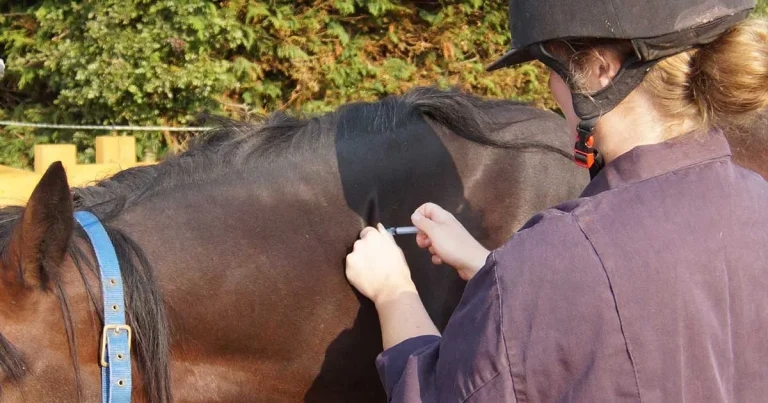
Image: Redwings
Vaccination has long been regarded as a desirable tool for preventing the spread of infection with Streptococcus equi equi and the resultant outbreaks of “strangles”.
After a few false starts with vaccines that came and went from the market, a vaccine with DIVA capability (such as able to differentiate infected from vaccinated animals) was launched in the UK in the summer of 2022 and was seen as a potential means of controlling and, with sufficient uptake, possibly eliminating strangles.
The recombinant protein-based vaccine (Strangvac; Intervacc) had been shown to be protective against experimental challenge with S equi (Robinson et al, 2018; Robinson et al, 2020); however, even at registration, questions arose around some aspects of its use, and some had reservations around how well it would perform in the field.
Use of Strangvac post-registration has enabled collation of data that has helped fill some of the initial knowledge gaps. Its DIVA capability has allowed the immune responses to both field strains of S equi and the vaccine itself to be followed in parallel. This article summarises recent reports and provides an update on how Strangvac can be integrated into wider biosecurity measures to prevent the spread of strangles.
A recent review highlighted inconsistency between dosing recommendations in the summary of product characteristics (SPC) for Strangvac and expert opinion (Rendle et al, 2024). In pre-registration studies, two doses of Strangvac significantly delayed the onset and reduced the severity of disease when horses were faced with a large experimental challenge of S equi (Robinson et al, 2020).
However, challenge studies were not performed beyond two months after the last vaccination, such that the SPC indicated a need for a repeat primary course only two months after the first. This requirement was prompted by absence of data rather than data indicating a lack of protection beyond this point. The dosing recommendations in the SPC were considered far too conservative (and impractical), and it has been suggested that an initial course of two vaccines should be administered, followed by boosters every 6 to 12 according to perceived level of risk (Rendle et al, 2024).
If S equi is known to be circulating and the risk is exceptionally high, then boosters up to every three months could be considered (Rendle et al, 2024) .
Recent clinical reports provide additional confidence that immunity persists well beyond two months. Serological responses to vaccination in a population of sport horses were documented when healthy horses were administered a primary course of two vaccines and then given a third vaccination at either five months (group 1, n=20) or 12 months (group 2, n=15) after blood was collected for serology (Hedenström et al, 2026). Mean antibody titres at 5 and 12 months post-second vaccination were 3.34 ± 0.31 and 3.14 ± 0.29, respectively. Mean antibody titres were lower at 12 months than at 5 months; however, the difference was small and was not statistically significant. Antibody titres increased significantly in both groups after third vaccination to 3.90 ± 0.29 for horses boosted at 5 months, and 3.90 ± 0.17 for horses boosted at 12 months.
In a subgroup of six horses, antibody levels were tested again seven months after the third vaccination and, at this time, had returned to similar levels (3.49 ± 0.21) to those that were measured prior to the third vaccine, levels that were still much higher than pre-vaccination and consistent with ongoing protection.
In another report, Gröndahl et al (2025) documented antibody levels 377 days after third vaccination in 7 horses. The mean titre of 3.56 ± 0.21 at this time was significantly above pre-vaccination levels (2.50 ± 0.28) and was similar to the titres that were obtained immediately prior to second vaccination (mean titre of 3.63 ± 0.31), or natural infection (mean titre of 3.72 ± 0.12), providing further evidence for sustained antibody responses to the vaccine for at least 12 months (Gröndahl et al, 2025). These findings advanced those reported in the earlier experimental studies, where the decline in antibody titres to vaccine antigens after second vaccination stabilised over a period of six months and remained above pre-vaccination levels (Robinson et al, 2020).
The administration of a third dose of Strangvac induced the same magnitude of response in antibody levels regardless of whether the vaccine was administered at 3 months, 6 months or 12 months after the second dose.
Collectively, these studies indicate effective priming of immunity for at least 12 months with further boosters providing a rapid increase in immunity.
Gröndahl et al (2025) reported the use of Strangvac in 17 healthy horses on a property where strangles had been identified, and subsequently confirmed, in three further unvaccinated horses 23 days earlier (Gröndahl et al, 2025). Two of the three unvaccinated cases were so severely affected that they were euthanised after 10 weeks. It took four days from the onset of clinical signs for the three infected horses to be isolated away from the other 17. Nineteen days after this separation (23 days after the first clinical signs) the 17 “healthy” horses were vaccinated with Strangvac and had blood taken. A second dose of Strangvac and second blood samples were collected 28 days later.
The results of subsequent dual antigen A/C iELISAs indicated that 8 of the 17 “healthy” horses had in fact been exposed to S equi by the time the first dose of vaccine was administered. Despite this exposure, none developed clinical signs of strangles and no adverse effects of vaccination were reported beyond transient fever in one horse and a transient swelling at the injection site in another.
Antibody titres to the antigens in the vaccine were increased at 28 days post-vaccination.
Following the initiation of vaccination, no further cases of strangles occurred in resident horses or new arrivals, despite serological data indicating exposure to S equi in the majority (71%) of horses on the yard.
In addition to suggesting a beneficial effect of vaccination, this report also highlights the challenges of implementing effective biosecurity measures early enough and, therefore, the need for vaccination as an additional measure. Such delays in isolating clinical cases after the development of non-specific signs of respiratory infection are not unusual. In another report of a strangles outbreak, vaccination was initiated on the same day that a new horse suspected to have been infected with S equi was introduced to the property (Rask et al, 2025). No evidence was found of previous exposure to S equi at the farm. Serology subsequently indicated that 7 of the 17 resident horses had been exposed to S equi, of which three exhibited transient clinical signs. One vaccinated horse developed a mild increase in body temperature and intermittent cough 11 days after first vaccination, and this horse tested positive for the presence of S equi and EHV-4.
Two other vaccinated horses had fever for one day at 22 days after their first vaccination. Although these three horses developed signs of respiratory infection, the report indicated that vaccination was likely to confer at least partial protection and limit disease spread even when used after the introduction of infection.
Previous experimental studies have demonstrated that Strangvac induces significant levels of antibodies against each of the vaccine components from eight days post-first vaccination in native ponies (Robinson et al, 2020). In the field, immunity may be induced even sooner as a result of priming from previous exposure to S zooepidemicus (Waller, personal communication).
Without a control group, it was not possible to quantify the benefit of vaccination in these clinical reports; however, in previous outbreak reports, most horses seroconvert following the introduction of an infected animal and more than half will exhibit clinical signs (Pringle et al, 2019a; Pringle et al, 2019b; Pringle et al, 2020) at much higher rates than in these recent reports where vaccination has been used.
In the reports of Strangvac use in the field, a low rate of transient adverse reactions consistent with previous experimental reports was noted.
Gröndahl et al (2025) reported one horse with fever and another with swelling at the injection site from the 34 vaccines that were administered (5.8%). Both horses recovered within two days. Hedenström et al (2026) reported transient signs of mild injection site swelling in 8.5% horses for two days, and a temperature rise of approximately 0.8°C in most horses for a day after vaccination.
Rask et al (2025) reported transient fever and localised swelling, with each occurring on four occasions (11.1%). An altered demeanour was recorded on 12 occasions (33.3%). These reactions were observed 24 to 48 hours after vaccination and lasted one to four days.
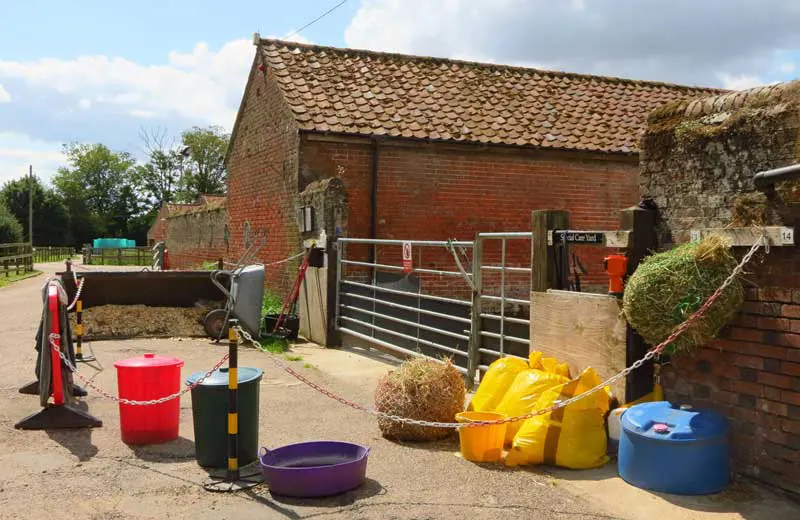
While the reports indicate the potential for Strangvac to limit the impact of introduced horses that are infected with strangles, they also highlight the importance of quarantine in preventing infection altogether.
Most strangles outbreaks are thought to be linked to the introduction of a new horse into the population. The need for continued attention to biosecurity was also demonstrated by recent modelling which showed that with worst case scenarios, and less than 100% vaccine uptake, vaccination alone may not be able to protect against strangles outbreaks (Houben et al, 2024). Hypothetically, if vaccination rates could approach 100% and all carriers could be eliminated within 2.5 years, then modelling suggests incursions of strangles could be prevented (Houben et al, 2024).
Analysis of a phylogenetic tree derived from 511 S equi isolates collected from UK horses between 2015 and 2022 showed that most detected S equi infections between 2016 and 2022 in the UK were caused by transmission from horses with overt clinical signs, or from recently convalesced subclinical short-term carrier horses.
Disease spread via transmission of older strains of S equi from longer-term carrier horses had less influence than previously proposed (McGlennon et al, 2025). This highlights the importance of post-outbreak screening protocols to confirm freedom from infection, rather than owners assuming recovery based on the resolution of clinical signs.
The effectiveness of quarantine procedures in preventing strangles outbreaks was demonstrated by a report from a UK rehoming centre performed from 2017 to 2021 (prior to the availability of Strangvac).
The screening protocol comprised clinical examination, paired dual target (A/C) iELISA six weeks apart, and bilateral guttural pouch endoscopy. It identified 34 horses that tested positive for strangles out of 626 admissions to the centre and completely protected the resident population from disease.
None of the horses that were identified by screening exhibited clinical signs of strangles, which is apparently at odds with the findings of McGlennon et al.
However, this was a distinct population, in which it is unlikely that horses with clinical signs would be presented for admission. In these more chronic cases, the use of the dual target (A/C) iELISA was not useful in predicting the presence of infection, highlighting the importance of guttural pouch endoscopy in the identification of more chronic carriers (McLinden et al, 2026).
Where guttural pouch endoscopy is not feasible or affordable, the use of the dual target (A/C) iELISA does not provide an effective substitute for identifying longer-term carriers, and horse owners should instead utilise vaccination. The dual target (A/C) iELISA remains a useful tool in identifying clinical cases and more acute carriers within six months of an outbreak (Boyle, 2023).
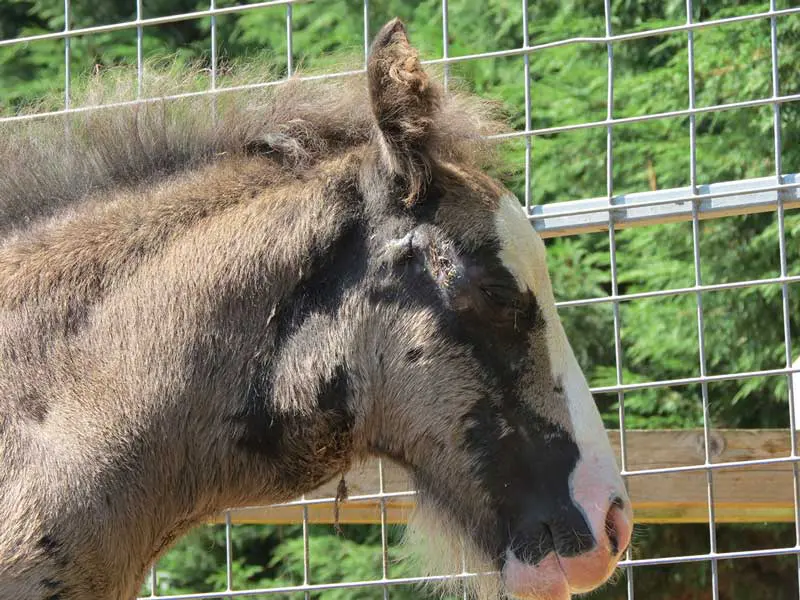
The reports described in this article highlight the effectiveness of Strangvac in the field. Antibody responses are significantly elevated for over a year after an initial vaccine course.
The data also supports previous recommendations of an initial course of two vaccine doses followed by single boosters at 6 to 12-month intervals, according to perceived risk.
It also provides confidence that antibody levels will rise significantly and rapidly in response to boosters administered in the face of disease for at least a year after the completion of the primary course. Although horse numbers in these reports were limited and control groups absent, the vaccination appeared to be effective in providing clinical protection and limiting disease spread, even when initiated days after infection was introduced to a population.
David Rendle graduated from the University of Bristol in 2001 and then worked in farm animal and equine practice before completing an internship at Liphook Equine Hospital. A three-year Horserace Betting Levy Board residency at the University of Glasgow and Liphook Equine Hospital enabled him to train as a specialist in equine internal medicine. David moved to Rainbow Equine Hospital, North Yorkshire, where he became a director and subsequently a clinical director. David now works as an independent equine medicine and therapeutics consultant.