13 Jan 2026
Edda Pohlandt BSc, BVSc, MRCVS explores the principles behind this ancient practice and the potential for its use in the treatment of animals

Edda Pohlandt
Job Title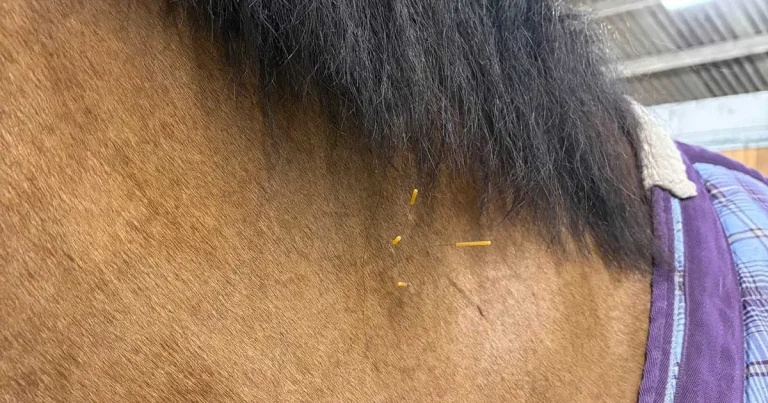
Acupuncture is the insertion of needles into the body to treat disease or injury and maintain health. Traditional Chinese medicine (TCM) uses acupuncture as a tool to maintain health and treat various ailments.
Principles such as chi (life energy), as well as yin and yang (opposites within the body), are used. The concept of meridians, combined with precise acupuncture points, allows the Chinese acupuncturist to aim for balance and a healthy function of the body.
In veterinary medicine, in the Western world, acupuncture tends to be an adapted science. The veterinarian makes a diagnosis according to familiar scientific principles. He or she then treats this condition with techniques adapted from Chinese acupuncture.
The principles behind using the points are simple.
It follows, therefore, that acupuncture cannot “overstimulate” a nerve or muscle. It cannot make it better than its best natural function. It is more like hitting the reset button on the computer – the original settings (brain perceptions) are re-installed and the painful area is re-evaluated.
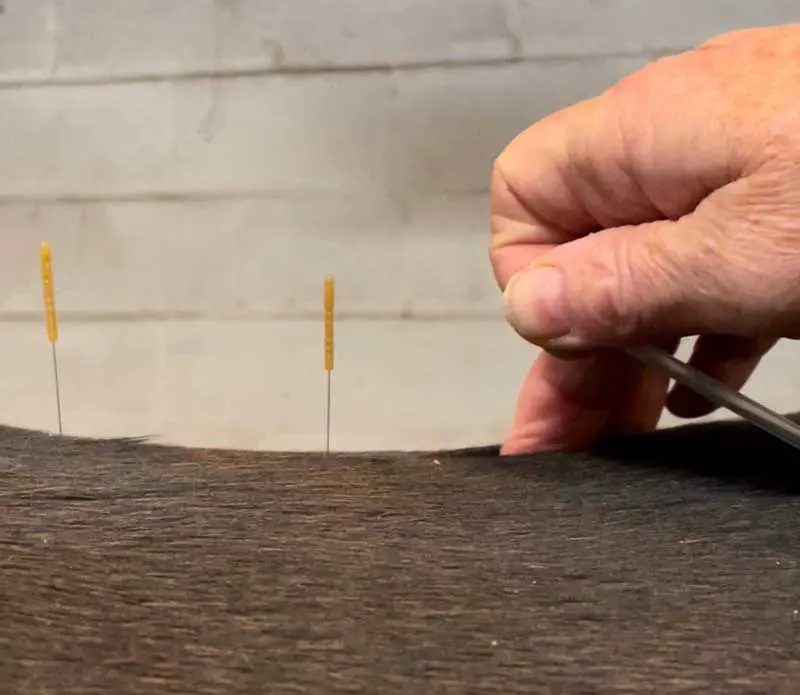
Mostly, acupuncture is used as adjunctive pain relief. It is effective for pain caused by muscle spasms or fibrous adhesions, myofascial trigger points (many, often secondary to OA), strain, repetitive injury or previous trauma.
Sacroiliac pain, sore backs, chronic adhesions or scar tissue, slow-healing wounds, traumatic injuries or post-surgical discomfort may all benefit from acupuncture. Many other conditions are treatable, but individual assessment is crucial before ascertaining if a condition will benefit from acupuncture treatments.
Often, NSAIDs are used to treat pain, followed by physiotherapy. It is common practice to add in additional pain relief drugs, but, with the exception of paracetamol, most have sedative or dissociative properties. In the short term, this is not a problem with most species, but horses’ size and sporting purpose means this is often unsuitable.
Acupuncture is generally most useful in chronic conditions, and this includes slow healing of an injury or surgical site. Chronic pain is defined in humans as pain that has lasted longer than three months and pathological and biologically without purpose (Self, 2023). In horses, a lack of response to conventional pain relief or the inability to heal completely within weeks would be considered chronic, and a reason to actively address the issue. Physiotherapy is often used timeously, but sometimes the big muscle masses in the horse need deeper intervention. This is where acupuncture can play a role.
Diagnostic acupuncture is an interesting application. Often, our horses attempt to cope and continue trying to please. This can result in tight cramped locomotion or odd displacement behaviour, such as head throwing.
On initial examination, compensatory changes can have a stacking effect, and the original cause of the discomfort becomes more and more difficult to identify. Acupuncture releases endorphins, loosens muscle spasms and provides pain relief. Lesser compensatory stiffness or pain will subside first, and this allows us to pinpoint which areas remain problematic.
So, acupuncture becomes a diagnostic tool, allowing us then to identify the problem area, which can then be investigated more fully; for instance, by using x-rays, ultrasound or other imaging techniques.
Electro-acupuncture stimulates nerves with varying frequency, pulse width and amplitude. Pulses per second are counted in Hz, length of each group of pulses and strength of pulse.
Combining low frequencies that modulate afferent nerve signals and high frequencies that trigger opioid neuropeptides gives a better response than treatment with a single frequency (Huang et al, 2021). Alternating frequencies is more effective than using a single continuous frequency, by keeping the brain engaged with a cyclical “new” signal.
Electro-acupuncture in large muscle masses appears to have a better and quicker effect than needles on their own. RVC-led research has shown success in treating head shakers with suspected trigeminal nerve pain (Dunkel et al, 2025). Tolerance levels are individual, and a “titration” approach is used.
Chronic inflammation occurs when acute inflammatory mechanisms are unable to resolve tissue injuries (Chen et al, 2017).
Perhaps, there would be an application for acupuncture treatment at site before and during an inappropriate inflammatory response; for instance, an equine flu vaccination. Some research was conducted into using acupuncture in people who had reacted to the COVID vaccine to reduce the side effects (Han et al, 2021). These were successful pilot studies that need further investigation. Empirical evidence suggests that placing needles around a reaction site improves blood flow and inflammation appears to wane more quickly.
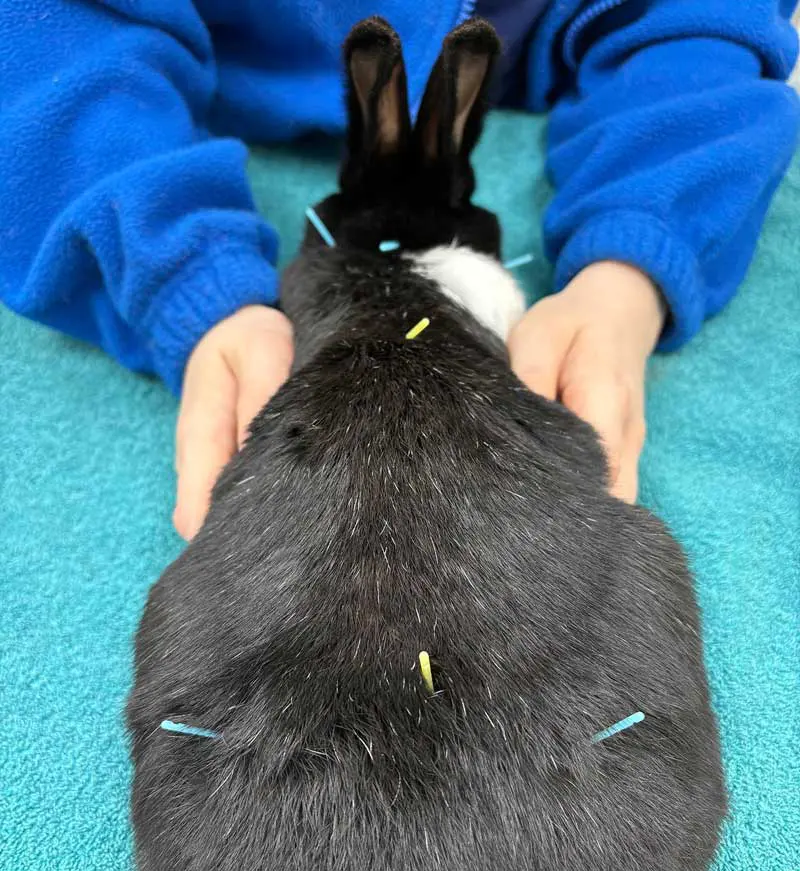
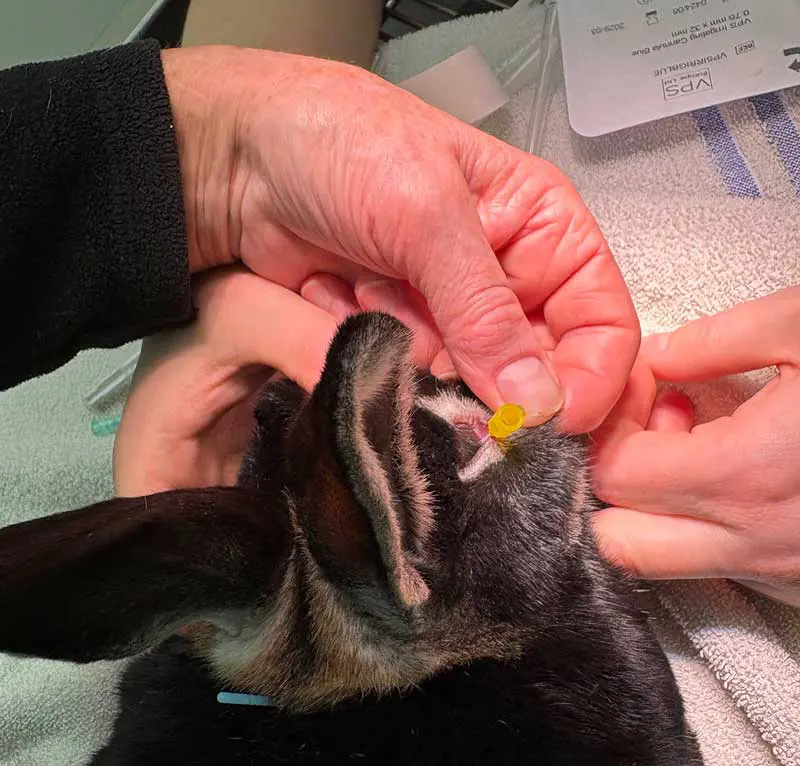
Endorphin release is an interesting application in exotics such as guinea pigs and rabbits. We have been placing small red needles on the GV meridian and our patients certainly have been more handleable doing simple procedures such as tear duct flushes.
As the patients were not necessarily clinically painful, we assume it is the endorphin release in small herbivores that allows them to tolerate procedures better. It remains to be seen if this would have an application in other species.
Acupuncture can and should be used in conjunction with other treatment regimes, such as NSAIDs and physiotherapy.
Horses can be exercised as normal, within their limits, within an hour of receiving acupuncture treatment. Our aim should always be the welfare and comfort of the horse, not to advocate one treatment method over another.
Usually, an animal responds within three to four sessions. The sessions are usually 5 to 10 days apart, and last 5 to 20 minutes. Often, as treatment progresses, the horses become more tolerant and the needles can stay in longer, or be manipulated more vigorously for maximum response.
Sedation may be necessary. Horses are reactive to short sharp pain such as flies biting and it is their natural instinct to try swish it away.
Acupuncture on animals does have to be performed by a registered veterinarian, as good knowledge of anatomy and physiology is not only critical to the correct placing of needles, but minimises the risk of damaging vital structures.
In cases of disease or injury, referral from the treating veterinarian is essential to allow quick and accurate follow-up treatment with the acupuncture. A report is then returned to the treatment veterinarian, once the acupuncture treatments are completed, allowing continued holistic treatment of the horse. Regular treatments for the prevention of injury and maintenance of health can then follow on from the original referral.
Acupuncture can be a very useful standalone treatment or adjunct to pain management. It can promote rapid healing and recovery from surgery or injury.
It is a drug-free therapy, which allows a horse to continue racing and competing while undergoing a course of treatment. It has many applications, of which only a few are mentioned in this article.
Edda Pohlandt graduated from Onderstepoort, University of Pretoria, in 1996. Shortly afterwards, she completed the Association of British Veterinary Acupuncturists foundation and electro-acupuncture courses. Edda has been in equine and small animal/exotic practice since then, with acupuncture part of daily treatment regimes. As a keen amateur showjumper, she has a special interest in keeping horses fit for performance.