
17 Feb 2026
Experimental treatment for strokes in birds of prey
Monica Guerrero Mendez. MRCVS discusses the case – including the decision to use antiplatelet medication – of this striated caracara.

Mónica Guerrero Méndez
Job Title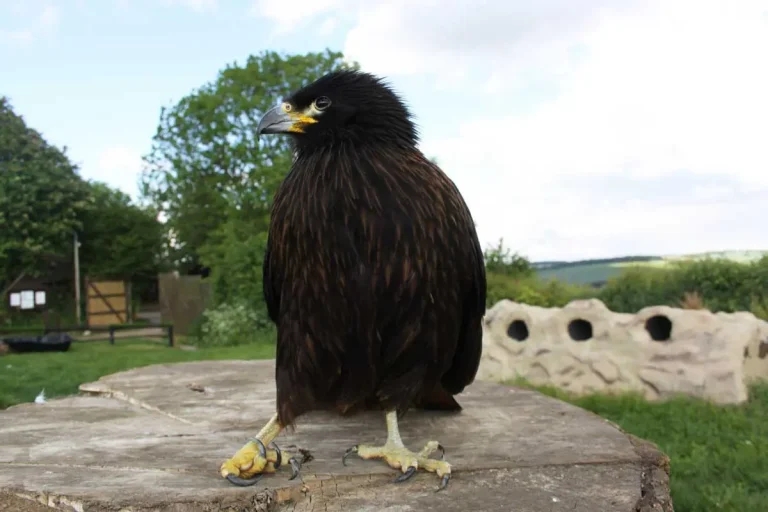
Three weeks post-stroke. Note that the right foot has still not recovered.
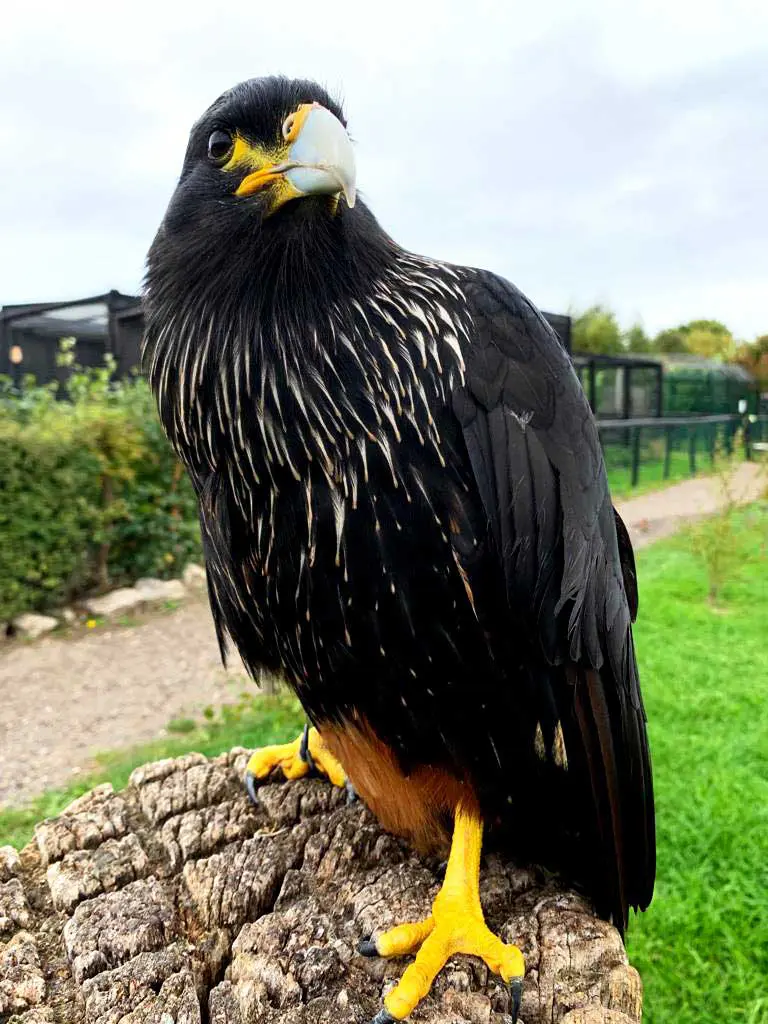
The patient is an eight-year-old striated caracara (Phalcoboenus australis) that has resided at Eagle Heights Wildlife Foundation since birth. In 2019, the patient was diagnosed with grade 2 bilateral pododermatitis, causing poor balance problems and wobbliness.
Although no in-depth investigations were carried out at the time, the differential diagnosis included the possible start of bumblefoot on the right foot. Cardiovascular problems were not included in the differential diagnosis at that time.
The patient was prescribed a short course of a combination of two different antibiotics – 250mg amoxicillin/clavulanic acid tablets and metronidazole 250mg – as well as meloxicam, for seven days.
The patient reportedly returned to normal after this and no further issues were reported.
In February 2025, Eagle Heights Wildlife Foundation contacted me because the patient had suddenly started to show signs of limping on the right foot again.
According to the keepers, the patient had not suffered any trauma or injury to the foot, and the problem presented itself in a very acute way.
Day 1
I assessed the patient and, on clinical examination, he was bright, the mucous membranes were pink and moist, and the capillary refill time was less than 3 seconds. The patient’s neurological exam was unremarkable and he was very vocal.
The chest sounded clear, the heart auscultation was unremarkable, and no obvious signs of abdominal problems or discomfort were reported. No obvious fractures were found on palpation.
On mechanical exam, the patient was weight non-bearing on the right foot; however, no hard swellings or signs of bumblefoot were reported.
The problem was solely localised to the right foot, so I made a differential diagnosis with possible traumatic injury and advised the keepers to give meloxicam at 0.5mg/kg, and to start a period of rest in a smaller enclosure with soft bedding, while continuing to monitor closely. I also advised the keepers to avoid overfeeding him, so as to keep the bodyweight steady and prevent any extra pressure from affecting the other foot.
Days 2-4
On day two, there was some mild improvement after meloxicam administration, which continued through days three and four as the administration of pain relief continued.
The improvement was minor, and I advised the keepers that the next step would be to carry out radiographs, full haematology and biochemistry.
Day 5
On day five, I received an urgent phone call from the foundation, as the patient’s condition had deteriorated considerably and he was now unable to stand properly or walk, appeared uncoordinated, and looked very dejected and depressed.
On clinical exam, heart auscultation was unremarkable, with a strong pulse and normal respiratory rate; the mucous membranes were pink with an adequate capillary refill time of less than 3 seconds.
A persistent tick was reported on the head. The patient showed an inability to hold his head straight and it appeared tilted to the left. Eating unassisted was also proving difficult. In addition, the patient showed some paralysis and stiffness around the wings and feet, which appeared twisted, cold, and unresponsive to deep pain when pinched.
A thorough clinical history was obtained from the keepers where extreme metabolic deficiencies (metabolic bone disease due to lack of calcium), heavy metal toxicity (with special emphasis in lead and zinc), aerosol exposures and potential recent food items that could have caused these symptoms were ruled out.
By doing a compilation of clinical signs, I suspected that the patient had suffered an acute stroke affecting mostly the left side of the body, since the symptomatology observed was typically reported in patients that had experienced some kind of stroke or cardiovascular event.
At this point, the welfare committee was called in to discuss the next step, which was either euthanasia on humane grounds or to start experimental urgent treatment with an antiplatelet to see if this would result in any improvement.
In this case, the antiplatelet I recommended was aspirin, which acts like a blood thinner and has also been used in human medicine to assist in stroke situations.
The patient would also receive physiotherapy on the limbs and wings daily to assist recovery. Environmental modifications to reduce stress and avoid further harm were also planned; this involved the patient being moved to a smaller enclosure with soft padding where he could rest and optimise his chances of recovery.
The starting dose of aspirin was 5mg/kg every eight hours, which was administered concurrently with omeprazole to protect the gut lining.
The patient would be assessed on a weekly basis unless his condition otherwise deteriorated.
Day 12
On day 12, the patient started to show a noticeable improvement. His feet started to gain strength and did not feel so cold to the touch, or appear as twisted as on day one. His demeanour had also improved, as well as his posture and balance, and he started to walk and eat unassisted. After doing some research on other antiplatelet agents, I compared aspirin to clopidogrel, and I learned that both drugs have different mechanisms of action and different work pathways.
Further reading of research into clopidogrel suggested that it might not only be more effective than aspirin in reducing cardiovascular events, but that it might also lead to fewer gastrointestinal disturbances.
Given this, even though there was no information available in relation to dosage or its use in avian patients, I decided to replace the aspirin with clopidogrel and prescribed it off licence and outside of the veterinary cascade.
The initial dose of clopidogrel started at 5mg/kg twice daily, alongside physiotherapy on his feet and the wings, and close monitoring by the keepers.
Day 19
On day 19, the patient was completely back to normal and was moved into a new, larger enclosure.
The patient continued taking clopidogrel as maintenance for a further five weeks before the next re-assessment.
Day 55
On day 55, the patient was re-assessed and it was found that he had continued improving and was doing well.
Clinical examination was unremarkable. The medication would continue for a further 25 days, when the patient would be re-assessed again.
Day 80
The last assessment was carried out on day 80. The patient had continued to do well, and so clopidogrel was discontinued.
Outcome
Seven months on from the initial episode, and having been off clopidogrel for over four months, the patient continued to do well and had a very good quality of life.
No further episodes of strokes or cardiovascular problems were reported.
Survey
I carried out a survey by contacting all the birds of prey centres across the UK to evaluate the incidence of cerebrovascular incidents in their premises; the percentage of cases reported was fewer than 10 per cent overall.
Most of the rehabilitation centres, including some referral hospitals, agreed that individuals showing any kind of symptomatology suggestive of cerebrovascular disease were under-diagnosed or were diagnosed only on postmortem examination.
One of the centres included in the survey had treated suspected cases using propentofylline and support care without reliable results.
Discussion
This case describes the successful treatment of an episode of suspected acute stroke in a striated caracara. A combination of two antiplatelets agents – aspirin and clopidogrel – were used to treat the patient over a period of two-and-a-half months.
While aspirin does not technically thin the blood, it prevents blood platelets from clumping together to form clots by inhibiting or stopping the production of thromboxane, a chemical that platelets release to call other platelets to clump together. When thromboxane cannot be released, the other platelets do not receive the message to clump together and form a platelet plug.
Initially, aspirin at a dose of 5mg/kg every eight hours was used with satisfactory results but, being concerned about possible gastrointestinal side effects long term, I researched the possibility of using an alternative such as clopidogrel, outside of the veterinary cascade, at an experimental dose of 5mg/kg twice daily.
There are no guidelines or data available for the use of clopidogrel in birds of prey; however, the drug has successfully been used in cats.
Clopidogrel is a prodrug that needs activation in the liver to work; the active metabolite of it is a thiol derivative that irreversibly binds to the P2Y12 receptor on platelets, inhibiting platelet aggregation.
This active metabolite is formed through a two-step oxidative process in the liver, primarily catalysed by the cytochrome P450 enzyme CYP2C19. This conversion is crucial for its antiplatelet effect, which lasts for the lifespan of the platelet – seven to 10 days.
The literature states that aspirin is usually a first-line treatment for strokes, but clopidogrel is often preferred for secondary prevention after an ischaemic stroke and also for patients with a higher bleeding risk, according to human medicine. The difference in performance between these two antiplatelet drugs is linked to their different work pathways: aspirin irreversibly inhibits cyclo-oxygenase to block thromboxane production, whereas clopidogrel blocks the P2Y12 receptor, inhibiting the binding of adenosine diphosphate and, therefore, preventing platelet activation and aggregation. Clopidogrel has also been indicated in patients showing allergic reaction to aspirin.
In this case, the patient was treated with clopidogrel for two-and-a-half months. After this period, the patient returned to a normal activity, regaining full mobility and a very good quality of life. Seven months post-therapy the patient continued to do well.
Cardiovascular disease and cerebrovascular conditions
Cardiovascular disease is under-diagnosed in the raptor patient, and usually disease involving the heart or vascular system – such as atherosclerosis, endocardial disease, myocarditis and cardiomyopathy – are discovered accidentally at necropsy in the form of aortic ruptures, pericardial effusions and ischaemic heart disease.
Clinical signs of these conditions involve sudden death, dyspnoea, weakness, neurological symptoms and pericardial effusion. Diagnosis of cardiovascular disease is mainly based on the clinical history, physical exam, ECG, radiography and heart ultrasound.
Cerebrovascular conditions as a result of cardiovascular disease – such as thromboembolism, brain aneurysms, vascular malformations, stenosis and strokes – are extremely difficult to confirm with standard diagnostic tests. MRI scans have been reported to be the most effective tool to help achieve a diagnosis since they can reveal hyperintense lesions in areas of the brain consistent with ischaemic strokes, but these are rarely performed in general practice.
In cases where it is unclear what is happening with the patient, a detailed clinical history can also help by ruling out other conditions that may be included in the differential diagnosis causing a similar symptomatology, such as heavy metal toxicity emphasising lead toxicity, insecticide poisoning, aerosol exposure and also some nutritional deficiencies, with the emphasis on calcium deficiency.
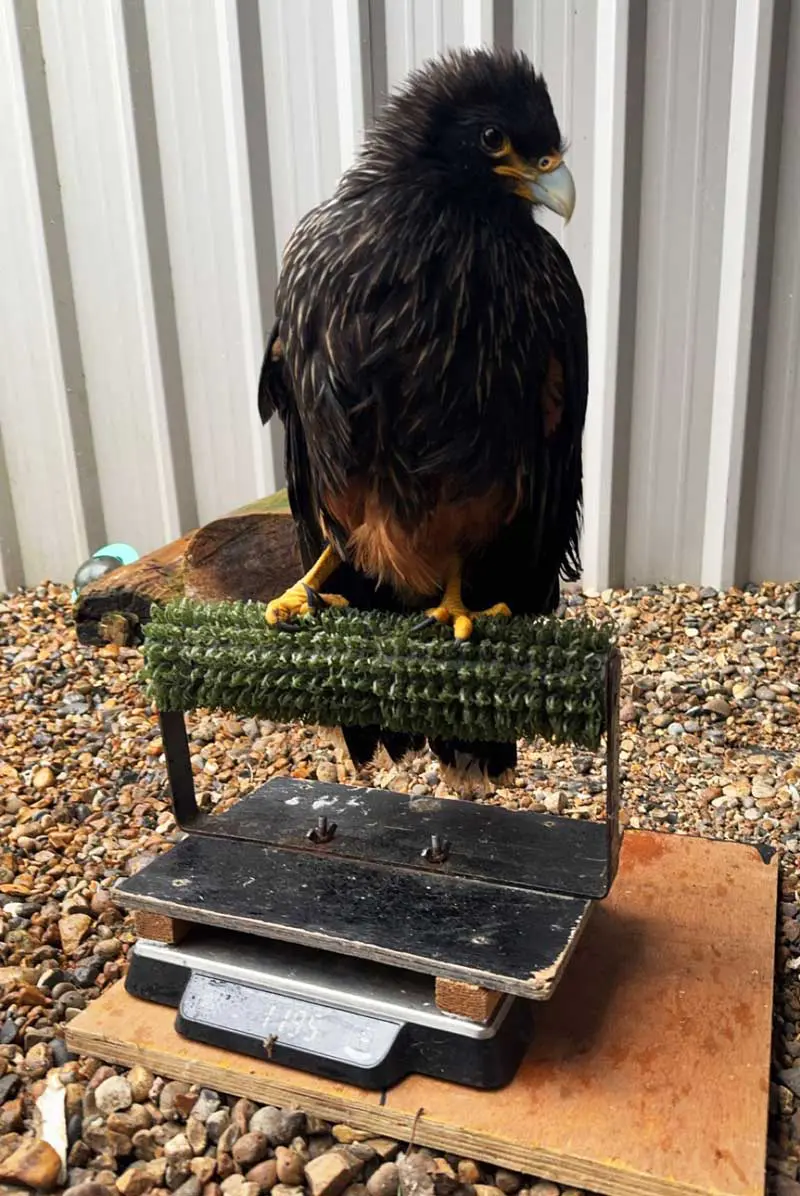
Patients presented with both heavy metal toxicosis and calcium deficiency (metabolic bone disease) can display neurological deficits, depression, limb paresis and paralysis, visual disturbances, and convulsions.
Some of the clinical signs in patients displaying cerebrovascular conditions include limb weakness, paralysis on one side or the entire body, neurological symptoms, poor coordination and sudden death.
In this case, the patient was displaying weakness, neurological signs, paralysis in the feet and a head tilt. After collecting a thorough clinical history and ruling out possible toxicosis and metabolic conditions, the patient was diagnosed with an acute stroke.
An MRI was not carried out on the patient because his condition was critical and general anaesthesia could have been detrimental, and fund restraints later on did not make this possible.
In the case reported in this article, the outcome achieved with the antiplatelet medication outlined was excellent and the patient returned to full normal activity within three months.
Seven months post-stroke, the patient is still doing very well and his quality of life is excellent. This report demonstrates that antiplatelet treatment can prove successful in cases of cerebrovascular disease in birds of prey.
- I wish to acknowledge Eagle Height Wildlife Foundation for allowing me to publish pictures of the patient and present this interesting case. I also wish to thank the keepers for their great support, compliance and teamwork with this difficult case.
- Use of some of the drugs in this article is under the veterinary medicine cascade.
- This article appeared in Vet Times (17 February 2026), Volume 56, Issue 7, Pages 16-18
- This article featured an update to correct the capillary refill time to “less than 3 seconds” in two instances (incorrectly “more than 3 seconds” in the print version. We apologise for any confusion.
Monica Guerrero Mendez qualified as a veterinary surgeon from Las Palmas, and soon after obtained a scholarship to complete an internship at Bristol Zoo Gardens. Following this, she began studying for a Master of Science in Wild Animal Health at the RVC and prepared for a Certificate in Zoological Medicine at the RVC. Monica’s experience is varied, having worked in exotic referrals and wildlife rehabilitation centres, zoological collections, wild animal parks, and trained in South Africa with large wild mammals. She also does small animal practice. At present, she carries exotic referral work around the London, Kent and Essex border, and she is the vet at Eagle Heights Wildlife Foundation.
References
- Jones R (2008). Chapter 26. In Chitty J and Lierz M (eds), BSAVA Manual of Raptors, Pigeons and Passerine Birds, BSAVA, Gloucester: 284-287.
- Beaufrère H, Nevarez J, Gaschen L et al (2011). Diagnosis of presumed acute ischemic stroke and associated seizure management in a Congo African grey parrot, J Am Vet Med Assoc 239(1): 122-128.