
24 Mar 2026
David Charles CertHE(Biol), BVSc, CertAVP(Sheep), PGCertVPS, MRCVS discusses sheep health targets and the importance of getting it right for maximum effects.

David Charles
Job Title
Image: andreac77 / Adobe Stock
This article intends to provide a summary that can act as a concise, actionable resource for veterinary surgeons working with sheep flocks in the United Kingdom.
The focus is on stage-specific nutritional and management priorities across the production year, with emphasis on hands-on body condition scoring (BCS), targeted supplementation informed by scanning, strategic trace element management, and pre-breeding and pre-lambing checks to reduce losses. The recommendations are intended to support clinical advice to clients, on-farm protocols and flock-level decision-making.
It is hard to start any article regarding benchmarking and targets with relation to nutrition without focusing on body condition scoring (BCS) first. In the eyes of the author, BCS is the single most important on-farm skill. It is a rapid, practical tool to assess body reserves and to guide management decisions throughout the year.
BCS must be performed hands-on; visual appraisal is unreliable. Repetition and consistency in scoring is important. A 1.0 change in BCS equates to approximately 10% to 12% of mature liveweight. For example, around 8.4kg for a 70kg ewe or 10.8kg for a 90kg ewe (AHDB, 2024a). On good grass it typically takes around six weeks to gain one unit of BCS.
Ensuring appropriate BCS at key points of the year can lead to benefits such as:
Hands-on assessment is essential. Ewes must be relaxed, standing on all four legs and not compressed. Use the same hand consistently to reduce inter-operator variability. Do not perform BCS with the ewe tipped, and ensure operators know what they are feeling for (Figure 1).
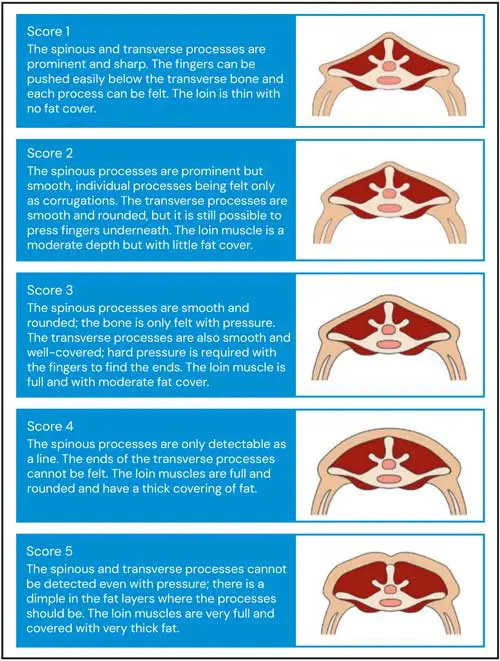
Repeat assessments. BCS is not a once-a-year measurement; it should be recorded at key stages (weaning, pre-mating, scanning, pre-lambing) and whenever management changes occur.
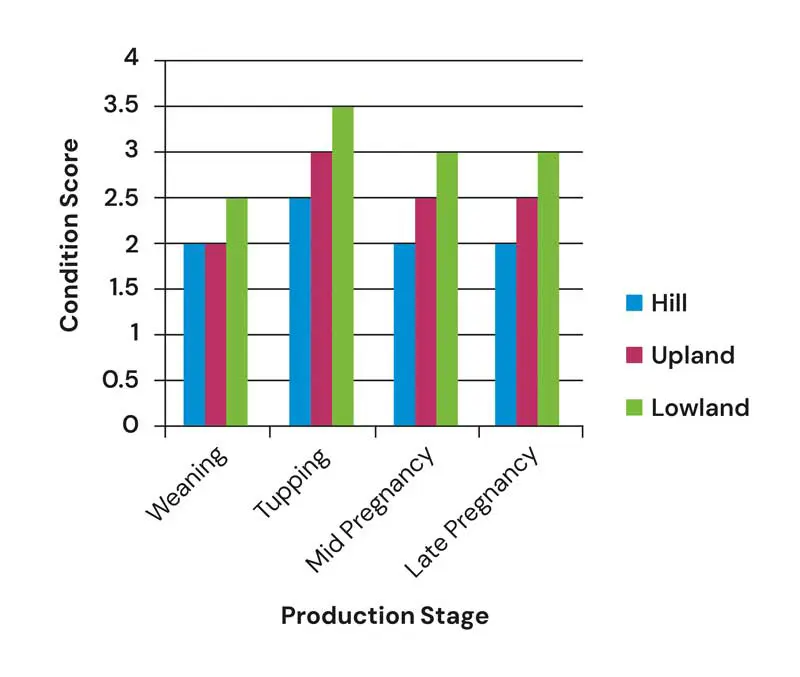
System-specific targets. Aim for BCS targets appropriate to the system and stage (Figure 2), for example, aim for BCS of 3.5 by mating in lowland systems; lower targets apply in upland/hill systems. Use BCS to prioritise interventions, grouping and culling decisions.
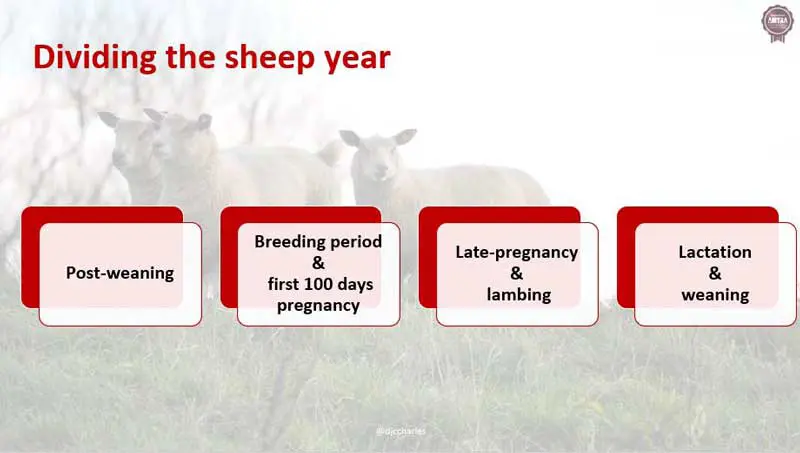
Segmenting the sheep year. The calendar year can be divided in many ways when it comes to sheep production. While several options exist and are recorded in different textbooks, papers, manuals, lectures and other resources are available to vets and farmers: the author prefers the approach as shown in Figure 3 (Charles, 2025c).
The period from weaning to mating is a critical window for restoring condition, optimising fertility and making strategic culling decisions. Veterinary input at this stage yields high returns through improved scanning rates and lambing performance.
During this phase four key aims are to:
Ewes will be at their lowest BCS at weaning, having had the drain of lactation and milk production for an average of 10 to 14 weeks. After weaning, there is a useful opportunity to sort through adult ewes and sort by BCS based upon targets and requirements for management. In some cases, it is appropriate to advise earlier weaning of a lamb if the ewe’s BCS is falling too low. Ideally, ewes should not be below BCS of 2.5 in lowland systems or 2.0 in upland and hill at weaning.
It is critically important to slow the development of resistance and that farmers investigate the cause of low BCS at weaning, rather than blanket treatment with an anthelmintic.
By mating, ewes need to have reached BCS of 3.5 (lowland), or 3.0 (upland/hill). As such, grouping the ewes at weaning by BCS allows appropriate feeding strategies based on the need of ewes to gain, lose or maintain BCS. It also allows the grouping of ewes where further investigation and/or intensive management is required.
Table 1 shows one strategy for grouping ewes at weaning based on BCS. It is important to remember that even ewes at target BCS at weaning need to gain 1.0 units of BCS between weaning and mating. On good quality pasture, 1.0 unit of BCS can be gained in 6 weeks; if pasture quality is lower then a longer period is required.
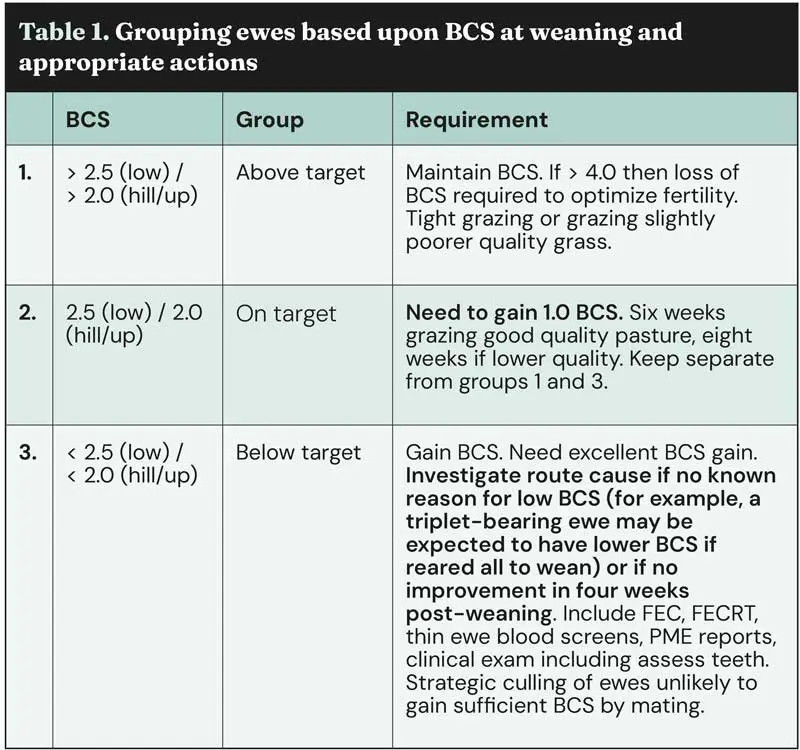
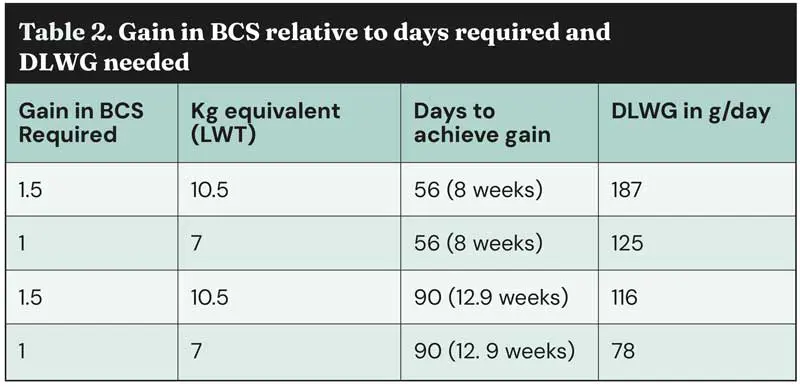
Table 2 shows one approach and associated targets for delivering desired BCS gain at pasture. Using these figures, we can see also the benefit of planning weaning timing (weaning at 12 weeks gives an extra 2 weeks to regain condition) and planning realistic feeding targets (AHDB, 2024b). As shown, if lambs are weaned when ewes are at 1.0 BCS below the BCS target for mating then either a lower daily live weight gain (DLWG) is required, or the BCS can be recovered in a shorter period of time. Looking at the numbers, it is easy to see why ewes that need to gain 1.5 units BCS in eight weeks often fail to do so – with the requirement for 187g/day live weight (LW) difficult to achieve in many UK pasture systems without notable supplementary feeding – which may make it uneconomical to do so. Additionally, in the post-weaning quarter the flock needs nutrition and management that will optimise fertility.
Key steps required in this phase:
It is essential that practitioners, farmers and feed advisors understand that trace elements are not a magic bullet. Supplementing trace elements is not a “sticking plaster” for poor nutrition, infertility, or other diseases that can reduce conception rate. It is also useful to take a detailed trace element history six to eight weeks prior to mating before further investigations (Hamer and Jones, 2023). This should also include a thorough history regarding anthelmintic use – as many of these (often labelled “SC” at the end) contain trace elements, too.
If sampling is warranted then consideration to sampling ewes, lambs at pasture, replacements, and the forage or grass itself, is useful. Soil should be avoided as a first-line material for analysis as it is not necessarily representative of the trace elements and minerals taken into the sheep – having its own requirement for trace elements and minerals.
Only the trace elements and minerals in the plant itself are available to enter the sheep. If grass is to be analysed then ensuring that samples are taken wearing gloves (sodium from the skin can contaminate samples) and cut above the ground level to ensure no soil contamination are important features of note.
Sampling animals four to six weeks prior to mating can allow adequate time for intervention to start to have effect. Sampling five or six animals per group (ewes, replacements, lambs from that season at pasture) is beneficial.
The major trace elements to assess for at this time of year that can impact fertility or reproduction are:
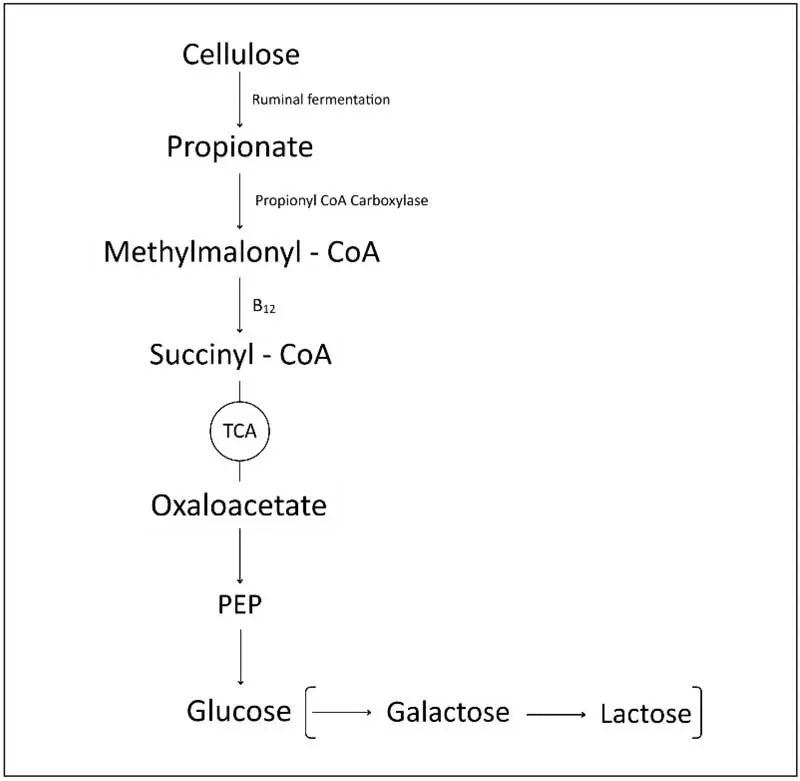
Cobalt. Ruminants cannot synthesise their own and, therefore, are solely reliant on dietary cobalt. It is required to produce B12, which, in turn, is essential for the conversion of propionate into glucose in the rumen (Figure 4). Deficiencies can present in a number of ways in breeding sheep, including: reduced DLWG; decreased fertility; poor BCS; and reduced dry matter intake (DMI). Sheep require 0.1mg/kg/day of dietary cobalt.
Selenium. Often serum GSH-Px concentration is tested instead. Selenium has many roles, including, but not limited to, its role in protecting tissues and cells from oxidative damage, and its role as part of the enzyme that catalyses T4 to T3 conversion. Deficiencies can present in a number of ways; in breeding animals this can be impaired fertility (ewes and rams) or impaired immune function. If low during gestation, white muscle disease (due to free radical damage to muscles) or increased lamb mortality with weak lambs can be observed. Targeting dietary concentration of 0.05mg SE/kg DM.
Iodine. Vital for its role in the production of thyroxine, and so energy metabolism. Deficiencies can present as reduced scanning percentages or smaller, weaker lambs that do not thrive. Target 0.3mg/kg DM rising to 0.5mg/kg DM in pregnancy. If goitrogen containing brassicas (for example, kale) are fed then the requirement for Iodine will increase due to interference with thyroxine production and utilisation. Toxicity can be severe, so care must be taken not to oversupplement. It is not recommended to “paint” the backs of sheep with iodine products as may be observed in dairy cattle due to its capacity to damage the fleece.
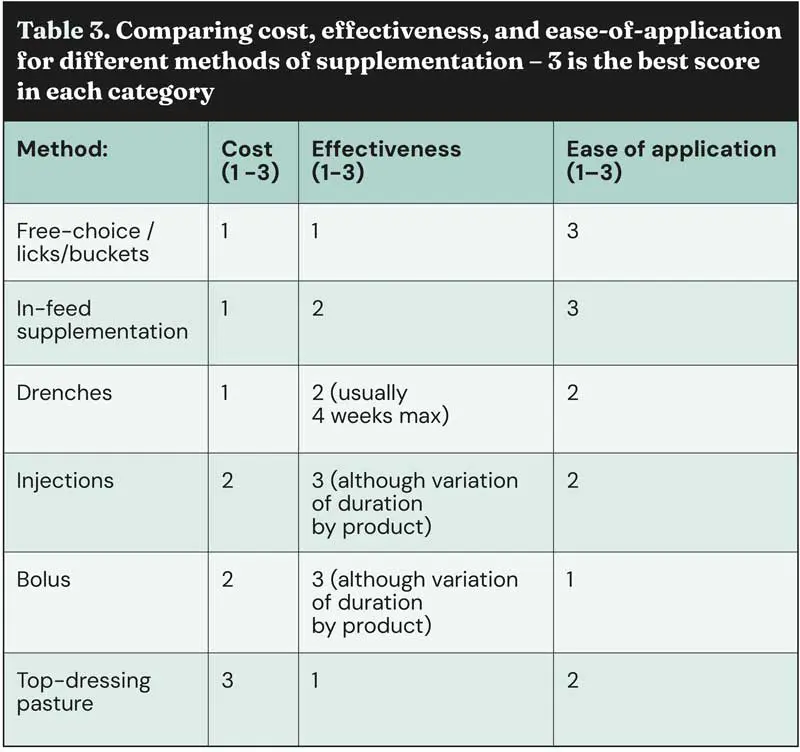
Not all methods of supplementation are equal or provide the same amount of available minerals and trace elements to the ewe.
Picking the correct product, and method of application, is vital to make any investment in supplementary products worthwhile (Hinde, 2020). For instance, with free choice or bucket minerals it is expected that 20% of ewes will eat more than required and 20% won’t eat any at all. Table 3 shows additional considerations when choosing a route of supplementation.
This is another important step that starts eight or more weeks prior to mating. This is covered extensively in specific articles on ovine fertility and improving fertility outcomes, but core aims are to ensure an understanding that spermatogenesis takes 63 days – requiring initial ram checks eight-to-10 weeks prior to mating. Rams also need to achieve a higher BCS than ewes of 3.5 to 4.0 with an expectation as much as 15% of bodyweight may be lost during the mating period. Supplementary concentrates may improve libido and condition, but avoid over-conditioning that can reduce sperm quality. Pre-breeding examinations are essential (Charles, 2025c; Price, 2021; SVS, 2014).
Four weeks prior to mating provides another chance to sort the ewes and cull any that are unfit for breeding (for example, repeat lameness, poor teeth or failure to gain BCS). Also, this provides a chance to catch any aged ewes that were missed in the culling decisions at weaning.
Arguably, flushing ewes straddles both the end of the “post-weaning to mating” and “mating and first 100 days” quarters of the production year.
If ewes fail to make target BCS, then flushing is an age-old, and effective, strategy that can boost BCS and improve ovulation by as much as 50%. Short (five to seven days) and long-term (six to eight weeks) options for flushing ewes have been shown to be effective. However, it is now known that flushing ewes with a BCS lower than 2.0 or more than 4.0 is ineffective. Flushing ewes with an increase of 3.5 MJ ME/day may improve BCS by 0.5 units: this can be achieved with 75g to 100g of 12 ME barley daily or 500g lupin grain/day (Scaramuzzi et al, 2006). For a more economical approach, moving through paddocks with a rising plane of nutrition will achieve similar effect, and the converse can be used to reduce BCS if ewes are over conditioned.
This quarter can be further split into the “implantation phase” and the “placental growth and development” phases.
Between 20% and 40% of losses occur here as early embryonic deaths (EED). After fertilisation the egg doesn’t implant and attach to the uterine wall for 21 to 30 days and remains at high risk of EED.
In this stage maintaining the status quo is the aim:
While often associated with infectious causes, EED can be due to management or stress events. For example, stress from dogs, excessive handling, nutritional stress and heat stress can all cause EED. In the past few years, ewes mated in August are at greater risk of heat or nutritional stress-related EED.
During this phase the 75kg ewe requires 1.0 times maintenance, 11.5 MJ ME per day. This can be achieved with 1.5kg DM/day of 10.0 MJME grass.
In this phase the following nutritional and management aims should be achieved:
In this quarter (days 100 to 150 of gestation approximately), key aims of the following allow reduction in metabolic disorders, improvements in colostrum quality, lamb birthweights and reductions in neonatal mortality.
In this period, the majority of fetal growth will occur (70% happens in the final six weeks), and nutrition is key. It is essential to feed to scan, supplementing if required using stepped feeding to support the ruminal flora acclimatise to the increase in concentrates – if concentrates are required (which they are not always if forage is high quality). Underfeeding will reduce lamb birthweights and vigour, as well as reduce colostrum quality and quantity.
At day 100 a 70kg ewe with a single lamb requires 1.1 times maintenance, approximately 10.2 MJME/day. A twin-bearing ewe requires 1.5 times maintenance. Our 75kg ewe requires 13.0 MJME/day (1.5 kg DM/d of 10 MJME grass) with a single lamb in utero, or 16.5 MJME if bearing twins (1.8kg DM/d of 10 MJME grass).
However, by late gestation ewes require two times maintenance ME (approximately 22 MJME for our 75kg ewe). It is realistic that a 75kg ewe could ingest 1.6kg DM/day or 2% to 2.5% of bodyweight, so it is clear that supplementary concentrates are required if feeding 10 MJME grass.
Farms with high-quality forage may not require supplementary concentrates: 12 MJME is possible in high-quality grass silage. If intakes of 1.6kg DM are achieved on such high-quality forage then intakes of 18.4 MJME could be achieved, which may be sufficient for a 70kg ewe with twins (AHDB, 2024c) but close monitoring and understanding of ewe weights is required.
When feeding supplementary concentrates, trough space should be considered (in late gestation a minimum 50cm/ewe but 80cm/ewe recommended), and the ratio of forage to concentrates should be forage heavy (75% forage: 25% concentrates is easier and more effectively used by the rumen than 75% concentrate to 25% forage). Never feed more than 500g of concentrates in one go to avoid causing ruminal acidosis.
Ensuring sufficient access to clean, potable water is important with early lactational requirements reaching 10 litres per ewe day total, and requirements for 10cm of water trough space per animal, or one drinking space per twenty ewes, as indicated in the code of recommendations.
Clostridial and respiratory booster vaccines should be given to the ewes.
The quality of the ration can be assessed which can be used to identify the need for any changes to reduce the risk of metabolic disorders or poor-quality colostrum and lamb-related impacts.
Specifically, albumin, urea, β-HB, calcium and magnesium in the blood can be analysed. The latter three are useful to identify the risk of metabolic disorders and interventions can be taken as discussed in other articles on metabolic disorders and feeding the pregnant ewe.
Urea specifically can be useful as an indicator of recent protein intake (specifically rumen degradable protein[RDP]). Low urea (below 3.6mmol/L) indicates a lack of RDP either by inadequate levels in the diet, or insufficient intake. Low urea can be an indicator of colostral quality as well as low milk and colostral yields. In flocks where pre-lambing blood tests show insufficient urea concentration in the blood it is recommended to discuss the best ways to supplement colostrum and ensure that testing the quality is done. Reminding clients that for sheep the threshold is 26.5% on a Brix refractometer, compared with 22% for cattle.
Actions taken at all stages of the sheep production cycle impact on the productivity and profitability of the flock. Nutrition is a cornerstone of this and should not be a topic from which vets shy away. Simple measures such as ensuring consistent, hands-on body condition scoring and ensuring adequate feed and water access can have significant impact. Additionally, the targeted use of blood tests can allow informed decisions to be made regarding interventions that can impact animal health and welfare as well as reproductive outputs.