
12 May 2026
Nicola Gladden BVM&S, DipECBHM, PhD, PGCHE AFHEA, MRCVS considers specific youngstock challenges, preventive measures and treatment options.

Nicola Gladden
Job Title
Image: Wesley/peopleimages.com / Adobe Stock
Bovine respiratory disease (BRD) poses a significant challenge for the cattle industry; for example, in 2025, BRD was one of the most frequent APHA postmortem diagnoses (APHA, 2025), and almost 70% of herds are reportedly affected (Baxter-Smith and Simpson, 2020).
Therefore, BRD has important implications for cattle health and welfare in addition to a substantial economic impact, estimated to be worth £50 million per year in the UK (Statham et al, 2018; Blakebrough-Hall et al, 2020).
It is widely accepted that initial viral infection compromises the respiratory immune defences and predisposes animals to secondary bacterial infection (Smith et al, 2020; Calderón Bernal et al, 2023).
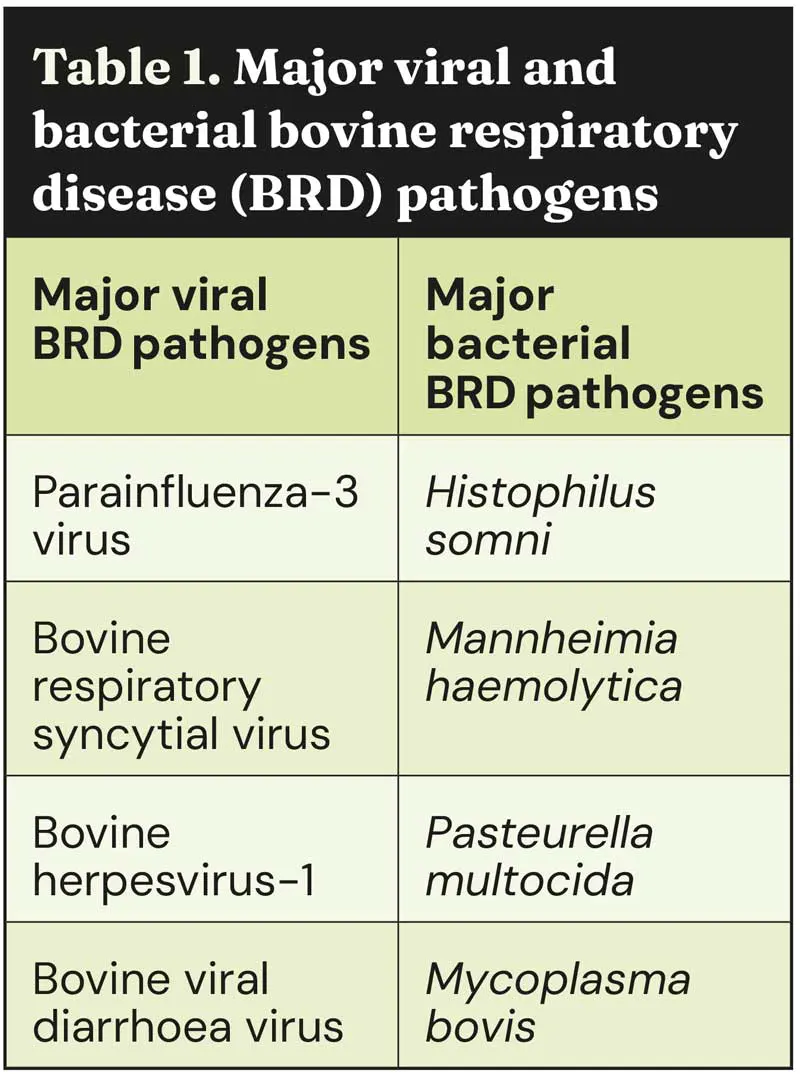
The major viral and bacterial pathogens implicated in BRD are presented in Table 1. Although Histophilus somni, Mannheimia haemolytica and Pasteurella multocida are likely inhabitants of the healthy bovine respiratory microbiome (Holman et al, 2015; Pardon and Buczinski, 2020; Centeno-Martinez et al, 2022), these bacteria are also important opportunistic respiratory pathogens (Pardon and Buczinski, 2020; Calderón Bernal et al, 2023; O’Donoghue et al, 2025).
Completion of a thorough clinical examination, together with obtaining a detailed herd and individual history, are the principal diagnostic approaches to BRD (O’Donoghue et al, 2025).
However, the variability of presenting signs, difficulty in identifying lesion location (upper or lower respiratory tract), and inability to detect subclinical disease (where no obvious clinical signs are evident) can limit the accuracy of diagnosis (Lowie et al, 2022; Kamel et al, 2024). Additional diagnostic tools can be used to augment clinical examination and improve diagnosis where needed.
Scoring systems developed to aid BRD diagnosis typically assign a numerical score to several individual clinical signs that are summed together to generate an overall score. If this is above a specified threshold, BRD is diagnosed (Jaureguiberry et al, 2023; McGuirk and Peek, 2014).
The Madison-Wisconsin calf health scoring system is well known (University of Wisconsin – School of Veterinary Medicine, 2026), and in the UK, the AHDB produces a calf scorecard that applies a traffic light system to different clinical presentations designed to aid calf rearers in making treatment decisions (AHDB, 2026).
Scoring systems are simple to implement and offer a way to standardise BRD identification on farms where multiple people care for calves, as well as a means to collect data representing calf health over time if performed regularly. However, sensitivity to detect BRD can be low (Buczinski et al, 2015; Donlon et al, 2024) and subclinical respiratory disease cannot reliably be detected.
It has been suggested that combining calf scoring systems with thoracic ultrasonography (TUS) may overcome some of these limitations and lead to more accurate BRD diagnosis (Reynolds and Brennan, 2021).
Increasing interest has been expressed in the past decade in the use of TUS to enhance BRD diagnosis.
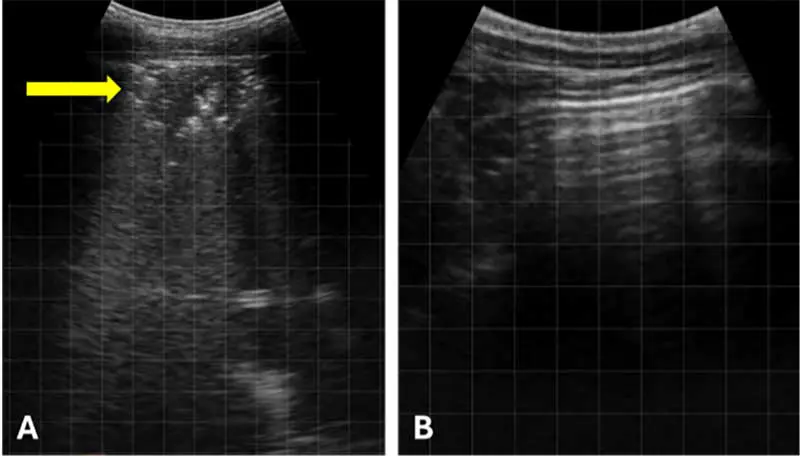
Upper and lower respiratory disease can be differentiated, and pulmonary lesions consistent with subclinical BRD can be identified (Figure 1), making TUS a useful additional diagnostic tool (Ollivett et al, 2015; Baxter-Smith et al, 2022); however, lesions need to be present for a diagnosis to be made, so TUS cannot identify calves before this stage of disease. The non-invasive and accessible nature of TUS makes it ideally suited for routine use, but a lack of consensus exists regarding clinical application of the different approaches and scoring systems that are described (Buczinski et al, 2025; Lindley et al, 2025).
Further study to produce more standardised guidelines to aid practitioners in implementing TUS on farms is merited.
Sampling of the lower respiratory tract can be useful if pathogen identification is required (for example, targeted vaccination programmes).
Nasal swabs are straightforward to obtain, but only sample the upper respiratory tract and can be subject to contamination, meaning interpretation of results can be difficult. One study found that nasal swabs reliably identified P multocida, M haemolytica and Mycoplasma bovis, but were less reliable for identification of bovine respiratory syncytial virus and bovine coronavirus (Doyle et al, 2017). Therefore, nasal swabs may be of use if these bacteria are the pathogens of interest, but are of limited value for wider investigation.
Generally, deep nasopharyngeal swabs, transtracheal washes and bronchoalveolar lavage are considered more suitable for BRD pathogen identification (Pardon and Buczinski, 2020). Although more invasive and less straightforward to perform, samples obtained using these methods typically represent the lower respiratory tract better and are less prone to contamination than nasal swabs, so have more diagnostic value. As yet, the optimal sampling method has not been determined, so practitioners are recommended to consider the advantages and disadvantages of each, and use the technique that best suits their needs. A thorough review by Pardon and Buczinski (2020) discusses this in more detail.
Recently, interest has been expressed in the use of precision technology for early detection of BRD; for example, studies of milk feeder collected data have found that sick calves show altered feeding behaviours, including reduced overall milk consumption (litres), reduced drinking speed and fewer unrewarded visits compared to healthy calves (Svensson and Jensen, 2007; Knauer et al, 2017; Conboy et al, 2021). These data are currently limited in detecting calves with BRD specifically, but they show promise for identifying calves that would benefit from closer monitoring for disease or should be targeted for further diagnostic techniques, such as TUS.
Although BRD affects cattle of all ages, calves and youngstock can experience distinct challenges that increase their susceptibility to infection, such as immune function immaturity, exposure to stressful management and husbandry procedures, and a greater sensitivity to respiratory irritants than adults.
Beef calves up to eight months of age and dairy calves up to three months of age are reported to account for most economic losses related to BRD (Chamorro and Palomares, 2020), highlighting the importance of targeting these groups when recommending and implementing BRD control plans.
The bovine innate immune system is fully developed at birth, but takes several weeks to achieve full functionality (Chase et al, 2008). Additionally, acquired immunity is dependent on effective passive transfer of colostral immunoglobulins (Geiger, 2020). Collectively, these factors result in young calves being immunologically immature and more susceptible to BRD pathogens than older animals; therefore, optimising immune defences and minimising pathogen exposure is a key aspect of BRD prevention.
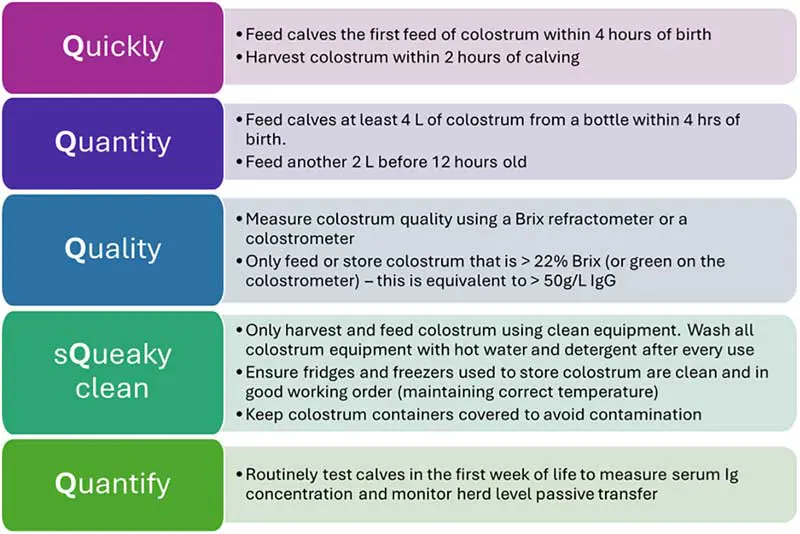
Early-life immunity is optimised by effective colostrum management, and frameworks such as the “five Qs” are helpful for assessment of farm procedures (MSD Animal Health UK, 2025; Figure 2). More detailed discussion of colostrum management is outside the scope of this article, but has been well reviewed elsewhere (Godden et al, 2019).
Vaccination can be used to further enhance immunity to BRD pathogens. A wide variety of BRD vaccines are available in the UK which primarily target the major viral BRD pathogens, although vaccines are also available for some bacterial pathogens such as M bovis and M haemolytica (NOAH, 2026).
Although widely used in practice, meta-analyses have found the evidence for efficacy of BRD vaccination in reducing morbidity and mortality is limited (Theurer et al, 2015; Chamorro and Palomares, 2020; Sanguinetti et al, 2025). It is possible that these findings are related to differences in study design – especially the types and ages of animals studied, and whether BRD is naturally occurring or created through experimental challenge. Accordingly, responses to BRD vaccination may vary between farms, and decisions regarding implementation of vaccination programmes for BRD prevention should be tailored to individual herds.
The developing respiratory tract of young mammals is particularly sensitive to air pollutants (Vancza et al, 2009).
Pollutants that calves might be exposed to include ammonia and particulate matter – respiratory irritants that are known to impair respiratory immunity. Increasing air concentration of both ammonia and particulate matter have been associated with an increased likelihood of lung consolidation (van Leenen et al, 2020; 2021), suggesting that poor air quality increases the risk of BRD; however, the few available data are conflicting – for example, Lundborg et al (2005) found that calves exposed to lower ammonia concentration (less than 6ppm) were at increased risk of BRD compared to calves exposed to air with ammonia concentration of more than 6ppm. Lundborg et al were unable to explain this unexpected finding, but suggested that an unidentified confounding factor may have been present.
Nevertheless, although data are limited, a systematic review concluded that high air concentration of ammonia and particulate matter is likely to negatively affect calf respiratory health and should be avoided in calf housing to minimise BRD risk.
However, the authors could not produce definitive guidelines based on the evidence available and highlighted the need for further study (Donlon et al, 2023). Effective ventilation is important for reducing air pollution in calf sheds and contributing to prevention of BRD. Natural ventilation is suitable for housing of older cattle, but young cattle in the age range most susceptible to BRD do not generate enough heat to create a stack effect. As a result, mechanical ventilation is usually more effective in young calf housing (Nordlund and Halbach, 2019).
Air pollutants can also be reduced by minimising the source; for example, dirty bedding is a source of ammonia (released when urine is broken down by bacteria) and dusty bedding is one source of particulate matter. Accordingly, optimising bedding management by ensuring enough clean, dry, good quality bedding is used is an important part of BRD control.
Providing calves with deep, dry beds also helps them thermoregulate more efficiently, reducing the risk of cold or heat stress, providing further contribution to BRD prevention as well as improved welfare conditions.
Stress has a generalised immunosuppressive effect and is also associated with alterations in the respiratory mucosa, both of which contribute to an increased risk of BRD (Taylor et al, 2010; Griebel et al, 2014). The first months of a calf’s life typically include husbandry procedures (such as disbudding) and management changes (such as weaning or transport) that can induce stress and compromise healthy respiratory and immune functions.
Transport is a well-established stressor associated with BRD (leading to the term “shipping fever”). Generalised immune function effects including altered neutrophil function (Jakes et al, 2026) and increased serum concentration of biomarkers of inflammation and oxidative stress (Chirase et al, 2004; Griebel et al, 2014).
The upper respiratory microflora of calves has also been found to be altered by transport (Holman et al, 2017), suggesting that local respiratory immunity is also affected. Although shipping fever is commonly associated with long distance transport to feedlots in countries such as the US (Storoni et al, 2026), an Irish study found increasing numbers of movements of calves housed and transported in systems more typical of the UK and Ireland were associated with increased risk of BRD (Murray et al, 2016).
This finding supports the hypothesis that transport is a consistent risk factor for BRD, irrespective of how calves are transported and subsequently housed. By contrast, the effects of disbudding and weaning on BRD incidence are less well studied, although, as they are known stressors for calves, they may be associated with increased susceptibility to BRD.
As such, judicious timing of these procedures and careful implementation to minimise stress as much as possible may aid BRD prevention.
Antimicrobial therapy remains the primary treatment approach for BRD. Historically, antimicrobial prophylaxis or metaphylaxis were popular approaches (Nickell and White, 2010; Rérat et al, 2012), but blanket treatment of groups of calves leads to high antimicrobial usage, is expensive, and has limited beneficial effect when compared to targeted treatment of sick calves (Baptiste and Kyvsgaard, 2017). As such, prophylactic/metaphylactic antimicrobial treatment is no longer recommended.
It also needs to be considered that, since 2024, routine prophylactic antibiotic treatment of farmed species has been banned in the UK, with prophylaxis only allowed in exceptional circumstances under veterinary oversight (VMD, 2024). Current recommendations for treatment of BRD-affected calves promote a comprehensive approach that includes antimicrobial therapy, NSAIDs and supportive care.
NSAIDs are widely used for BRD treatment to reduce associated inflammation, pyrexia and pain. Treatment of BRD-affected calves with NSAIDs and antimicrobials has been associated with improved clinical outcomes such as reduced pain, more rapid resolution of clinical signs and improvements in lung lesion scores when compared with antimicrobial treatment alone (Lockwood et al, 2003; De Koster et al, 2022; Martin et al, 2022). However, NSAID treatment has been found to have limited effect on the likelihood of calves requiring re-treatment (Scahill et al, 2026).
Few studies have investigated the value of administering just NSAIDs to treat BRD (that is, in the absence of antimicrobial treatment), but the existing data do not support this approach, as calves solely treated with NSAIDs frequently require subsequent antimicrobial treatment, meaning that effective treatment may be delayed, potentially harming welfare (Mahendran et al, 2017; Mahendran, 2020).
A single study found that treating calves with an oral electrolyte solution (OES), in addition to a combination florfenicol and meloxicam product, improved clinical outcomes and productivity of beef calves affected with BRD compared to calves treated with florfenicol and meloxicam alone (Miró et al, 2025). OES are widely used by farmers for treatment of calf diarrhoea (Baxter-Smith and Simpson, 2020).
Accordingly, implementing OES as an adjunct treatment of BRD is likely to be straightforward on farms already familiar with these products, but the paucity of data available means further work is needed to enable robust evidence-based recommendations to be made.
Recently, studies have found that probiotic supplementation may enhance respiratory immune function (Bertagnon et al, 2024; McDaneld et al, 2024) and may have potential for use as an adjunct treatment for BRD.
A single American study investigating the effects of feeding a Bacillus-based probiotic supplement to grazed stocker cattle (similar to store cattle) for 90 days after arrival at the unit found that, although the incidence of BRD-related clinical signs was not affected by treatment, productivity was improved in probiotic-supplemented animals (Mackey et al, 2024).
These results support the hypothesis that probiotic supplementation may contribute to BRD treatment protocols, but further research is needed before definitive conclusions can be drawn.
BRD is a complex, multifactorial condition that is a leading cause of cattle mortality and morbidity worldwide.
Young animals are at increased BRD risk due to additional challenges faced in early life that contribute to an increased susceptibility to disease. Targeted antimicrobial therapy of affected calves remains the mainstay of treatment, but blanket treatment of groups of calves is no longer considered an acceptable approach.
Including NSAIDs in BRD treatment protocols can improve welfare of affected calves and is associated with improved outcomes, so this is recommended.
OES and probiotic supplements show promise as ancillary treatments, but data are few and further studies are warranted before recommendations can be made.
Nicola Gladden qualified from The University of Edinburgh in 2006 and worked in mixed clinical practice before taking up a position as senior clinical scholar in production animal health at the University of Glasgow School of Veterinary Medicine in 2014. Nicola qualified as a diplomate of the European College of Bovine Health Management in 2019 and completed a PhD in 2021. She is a European and RCVS specialist in bovine health and production and works at the University of Nottingham School of Veterinary Medicine and Science teaching farm animal practice to undergraduate veterinary students, as well as continuing to do some clinical work.