
27 Jan 2026
Sara Pedersen BSc, BVetMed, CertCHP, DBR, MRCVS explores the history of the bovine claw, and considers how practitioners and farmers can help to reduce lameness prevalence.

Sara Pedersen
Job Title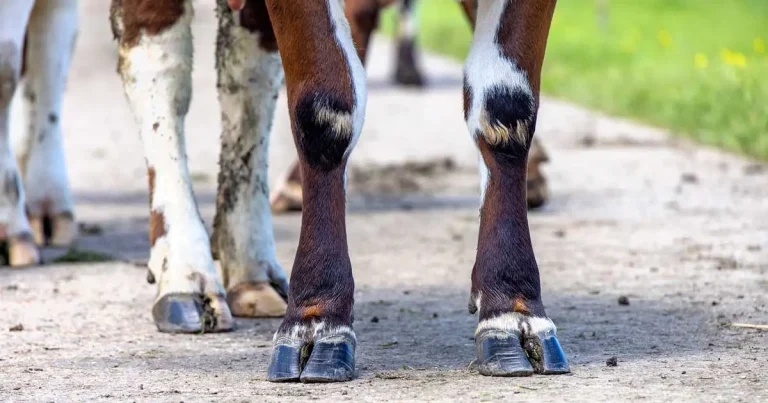
Image: Clara / Adobe Stock
The past 20 years has seen a significant increase in our understanding of the most effective ways to identify, treat and prevent lameness. However, this does not appear to have translated to significant reductions in lameness across the national herd (Wessels et al, 2025).
Lameness has wide-ranging impacts on the cow in terms of compromised welfare, altered social behaviour and reduced productivity. This ultimately impacts profitability and sustainability due to increased greenhouse gas emissions from milk production. Overall, a considerable number of gains can be made from reducing lameness; however, due to its complexity, no single solution exists.
Understanding the anatomy of the bovine claw is a crucial aspect in furthering our knowledge of the aetiopathogenesis of claw horn lesions. It is also important in the development of prevention strategies, including hoof trimming protocols.
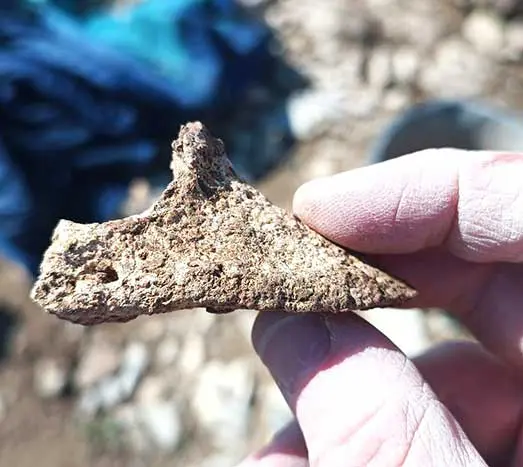
Thousands of years of domestication cannot reverse evolution, and the modern dairy cow still retains the anatomical features of her ancestors, who evolved in a vastly different environment in which she is lives today (Figure 1). However, while lameness may be seen as a relatively recent challenge, pathological changes to the bovine skeleton because of human interference can be traced back thousands of years. These changes have been found on the phalanges of archaeological specimens dating back to the Bronze Age in relation to traction use (Liu et al, 2025). Similarly, more recently, the osteological changes that occur on the pedal bone in relation to claw horn lesions have been focused on.
Cattle are even-toed ungulates and the anatomy of their distal limb is the culmination of an evolutionary process that began in the early Eocene (55 million years ago). This resulted in the elongation and streamlining of the distal limb and a reduction in the number of digits from five (pentadactyl) to four (artiodactyl) through loss of the first digit, alongside secondary fusions.
More recently, the underlying molecular mechanisms of the gene expression and regulation pathways associated with these adaptations have been identified (Lopez-Rios et al, 2014).
These processes have resulted in a limb that is paranoxic; that is, its weight-bearing axis sits between digits III and IV. As well as the weight-bearing axis shifting through the evolutionary process, the morphology of the individual phalanges has also altered. The middle digits (three and four) are of similar length to allow cattle to walk on the distal most phalanges (equivalent to a human tiptoeing).
Alongside the lengthening of the limbs, this adaptation enabled cattle to walk and run on different terrains, which was an essential component of the “fight or flight” response – something cows retain today.
While these evolutionary changes were essential in allowing prehistoric cattle to adapt to survive in the habitats in which they roamed, they are less advantageous for the modern domesticated dairy cow.
The fundamental anatomy of the bovine skeleton and claw cannot be changed; therefore, elements of prevention must instead focus on manipulating the claw, or the environment, to reduce the impact of the interactions between the two.
The broadening of our understanding of the development of claw horn lesions has led us to a greater understanding of how to not only prevent lameness in the first instance, but also to promote recovery when lameness does occur.
A recently published review by Wessels et al (2025) analysed risk factors for lameness identified in publications from north-west Europe in the past 25 years; their meta-analysis identified consistent themes were important when preventing lameness.
Wessels et al (2025) reported a significant association between access to pasture and lameness prevalence, with increased exposure to concrete consistently emerging as a significant environmental risk factor for lameness.
The cow’s foot has not evolved to withstand the pressures of concrete and instead is more adapted to a soft surface; therefore, this association is not surprising. Considerable additional mechanical load is put on the hoof as a cow walks on concrete, and the reduction in circulation through the vascular layers of the claw seen with prolonged standing contributes to the risk of claw horn lesions.
However, despite this association, allowing access to pasture is not a simple way to address lameness, as many grazing herds also experience high prevalences and, conversely, housed cows can also experience a very low risk of lameness. This highlights the multifactorial nature of lameness.
Where cows are housed, it is important to look at ways of mitigating the impact of concrete exposure through reducing standing times. Improving the robustness of the foot through appropriate trimming protocols and ensuring high quality horn production can also help reduce the impact of concrete.
Although concrete flooring is an associated risk factor for lameness, not all flooring types are the same and, therefore, a variation in risk exists.
Slatted concrete flooring is associated with a higher prevalence of lameness compared to solid flooring. However, a complete absence of slats can lead to increased slurry build up and, therefore, a greater infection pressure. Regardless of the type of floor, slippery floors significantly increase the risk of lameness – specifically in relation to white line disease. Mitigating strategies include rubber matting and grooving; however, both need to be chosen carefully to ensure that they do not exacerbate the problem.
Not all rubber flooring is equal and for it to provide sufficient grip, it must be deep enough for the cow’s foot to sink in to it, as well as being installed in a strategic way. While it may be tempting to install rubber on all walking surfaces, this can have negative impacts on lying times and horn wear, leading to increased lameness risks.
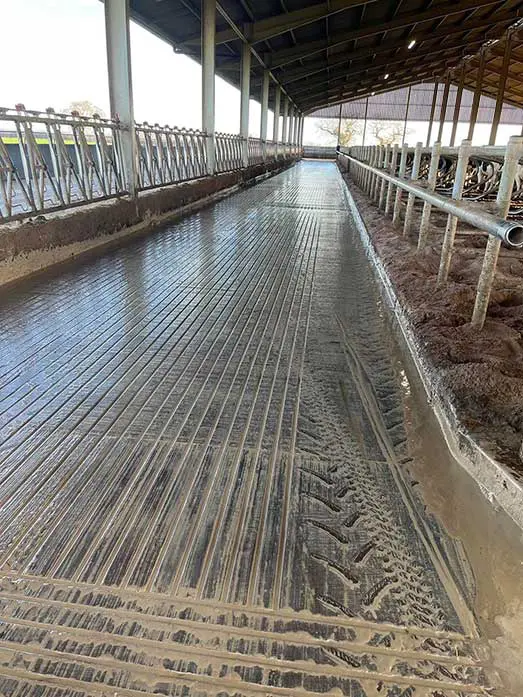
Grooving is a common solution to slippery flooring, and an array of different patterns are used. While it may seem simpler to imprint the concrete as it is laid, this can often lead to an uneven surface and sharp, rough edges. Deep, wide, parallel, square-cut lines are the preferred method of grooving, with the lines running in the direction of greatest cow traffic (Figure 2).
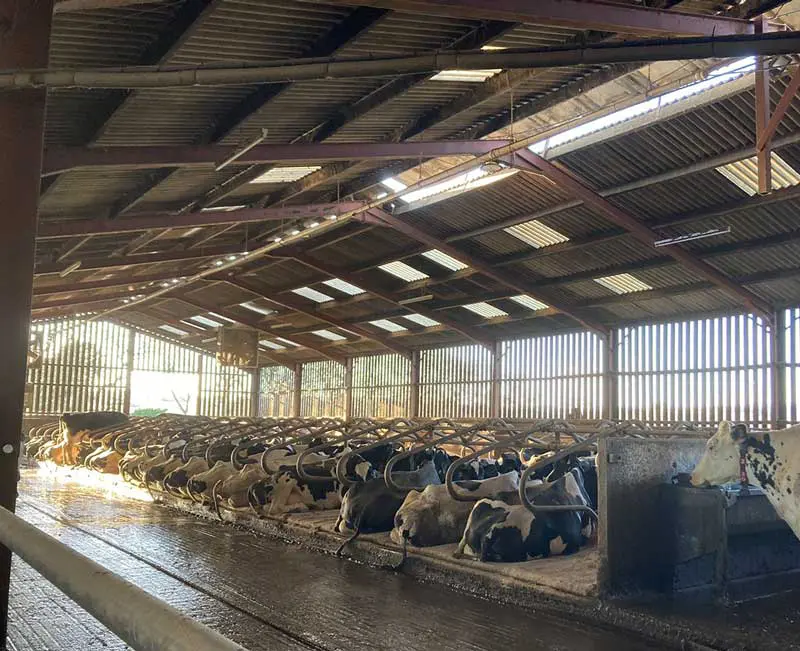
Providing housed cows with a comfortable bed is crucial. Uncomfortable lying surfaces were identified as a significant risk factor, but one that can be easily overcome. Providing a cow with a comfortable bed on which she can lie down when she wants, for as long as she needs, ensures that exposure to concrete is minimised and rumination maximised (Figure 3).
Our increased knowledge about the anatomy and dynamics of the digital cushion (fat pad) has really helped to advance our understanding of the link between body condition score (BCS) and lameness. It has also added to our understanding of the chronic nature of lameness and the self-perpetuating cycle of increasing damage that occurs after an initial case of lameness that is not correctly treated.
Thin cows have compromised digital cushions and, therefore, when she walks, her weight is not distributed through the digital cushion to the strong hoof walls and, instead, greater pressure is taken on the more vulnerable sole. This increases susceptibility to claw horn lesions including sole bruising, sole ulcer and white line disease; therefore, careful BCS management is key.
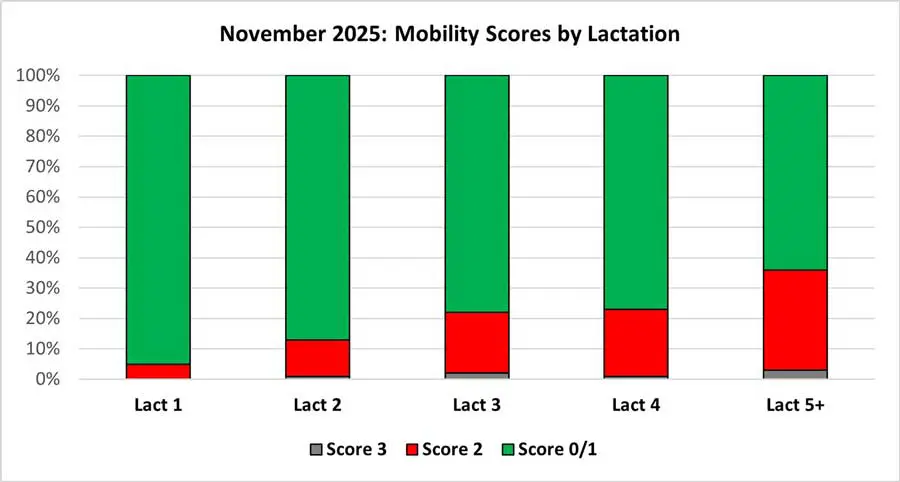
Increasing parity was associated with higher odds of lameness, reflecting the cumulative impact of repeated biomechanical exposure and possible degenerative changes in older animals. Focusing on first lactation animals and reducing lameness in this group as much as possible is an important goal on any farm for longer-term lameness management (Figure 4).
Lameness in cattle represents a mismatch between an evolved distal limb adapted for soft, variable terrain and the demands of modern dairy systems. While the bovine claw cannot be anatomically redesigned, its interaction with the environment can be managed. Evidence increasingly supports targeted interventions addressing flooring, lying comfort, body condition and early-life prevention as the most effective means of reducing lameness prevalence.
Taking a targeted approach to addressing these risk factors is needed to ensure that we reduce lameness prevalence due to claw horn lesions in the national herd.
Sara Pedersen graduated from the RVC in 2005, and has since worked exclusively with farm animals – predominantly dairy cattle. She is an RCVS specialist in cattle health and production and runs Farm Dynamics, a consultancy business involved in research, training and teaching at a number of vet schools. She is also a member of the Wales Animal Health and Welfare Framework Group and BVA’s Welsh branch.