27 Jan 2026
David Harwood BVetMed, FRCVS recalls elements from the latest meetings of the Goat Veterinary Society.

David Harwood
Job Title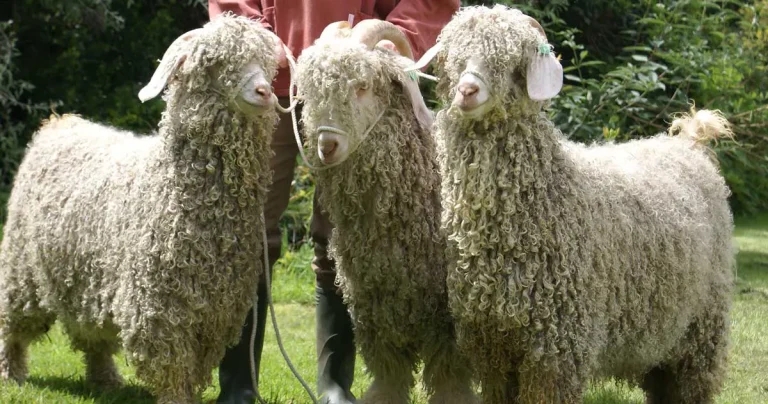
Angora goats, which were first introduced to the UK in 1981.
The Goat Veterinary Society (GVS) held two virtual conferences via Zoom on 5 and 12 November, attracting delegates from the UK and overseas.
The first speaker was Steve Prentice, a pedigree Angora breeder and chairperson of British Mohair Marketing (BMM). The population is relatively small, with around 280 Angora producers, many of which have only a handful of goats. They were first introduced into the UK in 1981, with a rapid expansion peaking in the early 1990s at 15,000 goats, now down to around 1,000. This is due to several factors, but general enthusiasm simply waned, and owners grew older and gave up.
There are, however, a few real enthusiasts – particularly as the breed is ideal for the smallholder and there is no need to kill the animal to make money.
BMM had successfully promoted mohair as part of its business and the demand had to be met – collecting from even the smallest producer and labelling the product as supporting Britain’s industrial heritage. Last year, a total of 2,985kg of mohair was collected from 34 producers. In 2025, kid mohair attracted £23/kg, young goat £12.50/kg and adult £10.50/kg – compared to £1.18/kg for wool.
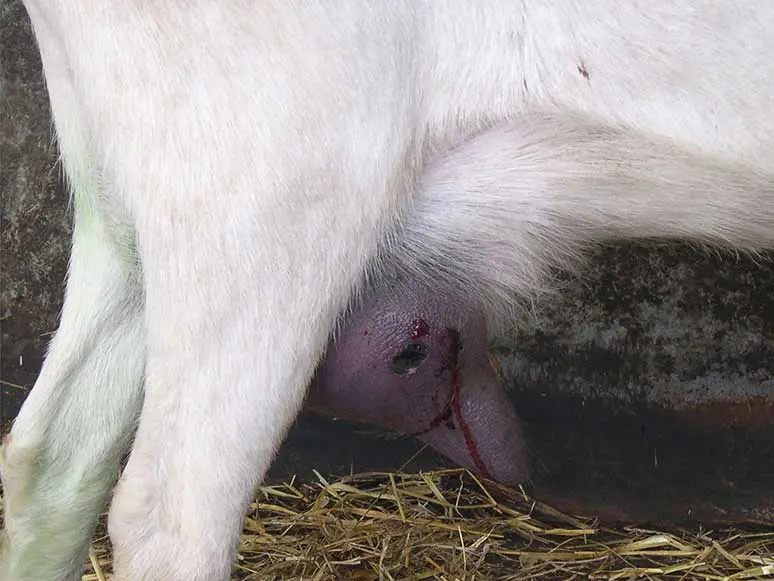
John Matthews, a GVS past-president, reminded the audience that good udder and teat health begins with good udder conformation, describing the pendulous udder with poor attachments as a real problem.
Mastitis in goats is predominantly caused by Gram-positive bacteria and tends to be contagious rather than environmental. Its presentation can vary from subclinical to severe gangrenous mastitis. Clinical mastitis is, however, comparatively rare, although the occasional outbreak can develop. Subclinical mastitis, however, as defined by a raised somatic cell count, is very common.
Mycoplasma mastitis and specifically contagious agalactia, a notifiable disease, is currently absent from the UK, and we must keep it out. There are no licensed therapies for mastitis in goats producing milk for human consumption, so cascade principles must be used – routine treatment such as during the dry period is discouraged unless deemed necessary. Pet goats can often live well into their teens, and sporadic mammary neoplasia can be encountered.
The speaker concluded by discussing the surgical procedure of mastectomy, for pendulous udder, mammary neoplasia, chronic mastitis and so forth – particularly again for pet goats – and this can be very successful.
Alanna Grossman, a final-year undergraduate at the RVC, then discussed her project findings collecting 399 samples from eight farms. Samples were assessed using Brix refractometry. The average Brix value was 19.88%, less than that of a 20% quality benchmark established in previous studies, with less than half reaching the benchmark. Quality was lower on larger farms compared to small and medium farms.
Levels were also lower in single compared to multiple litter size. There was no significant difference when comparing parity or age of first kidding. Colour and consistency estimation also seemed to correlate with measured Brix levels.
The final speaker on the first day was Bryony Kendall, GVS treasurer from the Tyndale Farm Veterinary Practice. She began by describing the normal goat oestrous cycle, which can be of variable length with 77% at 17 to 25 days, with smaller proportions being either longer or shorter. Ovulation occurs at any time from nine to 72 hours from the onset of oestrus. The practice had tried two protocols: one was described as a French protocol and the other a locally adapted one. Both protocols use a controlled internal drug releasing device (the CIDR-O), an intravaginal pessary containing progesterone (P4) designed for synchronising oestrus in ruminants.
The CIDR is used in conjunction with a timed administration of pregnant mare serum gonadotropin and cloprostenol prior to insemination. Conception rates varied between the two protocols, ranging from 46% to 75%. It was also noted that there was some farm-to-farm variation in success, with the speaker describing variable farmer compliance possibly because of the number of timed interventions.
Suzi Bell, of APHA Shrewsbury, covered a relatively rare, yet potentially important, problem in UK goats. Approximately 20 tick species are present in the UK, with the most important being Ixodes ricinus. It can be found in any pasture, but tends to be more common in upland areas.
Goat and tick population, and activity, areas do overlap. The main small ruminant tick-borne diseases in the UK are tick-borne fever, tick pyaemia and louping ill, each of which can potentially develop in goats, but particularly tick pyaemia. Diagnosis is based on the presence of characteristic clinical signs, seasonality and the presence of ticks.
Confirmation of disease is by postmortem examination, molecular and serological tests. Scope is limited for controlling ticks in the environment, although keeping grass short around field margins can be beneficial. The manual removal of ticks is feasible with small numbers of goats. No products are licensed for use in goats, although several products recommended for use in sheep can be used off licence and under cascade principles. The UK has a government-run tick awareness and surveillance scheme.
Cryptosporidium species are important zoonotic protozoal parasites with a worldwide distribution, which was discussed by Paul Bartley of the Moredun Research Institute.
Cryptosporidium is spread by the faecal/oral route, but can also be waterborne or foodborne. Its zoonotic potential is most severe in the very young, the very old and those who are immunocompromised. Clinical signs include profuse watery diarrhoea, weight loss, dehydration and death in severe cases. Cryptosporidium has at least 48 recognised species, with C parvum and C hominis the most clinically significant.
The oocysts are environmentally very stable and are immediately infectious. It also has a very low infectious dose of as few as 10 oocysts capable of causing disease, with an infected lamb shedding 1×10⁹ oocysts daily. A few products claim to inactivate oocysts in contaminated buildings, with 3% hydrogen peroxide being most effective.
Only one product is licensed for its treatment in goats: Parafor Crypto (Huvepharma). There is also a vaccine for use in cattle, but not goats. Severity is worst in young kids, and the importance of good kidding hygiene and good colostrum management were emphasised.
The next speaker was Marion McMillan, of SRUC Veterinary Services at St Boswells. Caprine arthritis encephalitis (CAE) is a lentivirus infection of goats closely related to Maedi visna in sheep – together, they are now referred to as small ruminant lentivirus infections, and they cause a slowly developing chronic disease with a long period of asymptomatic carriage. Clinical signs in goats include swollen variably painful joints – particularly the carpal joint – and an indurative mastitis causing progressive udder fibrosis and milk loss.
The encephalitic form affecting young kids aged two to six months is comparatively rare. Other signs described include pneumonitis and chronic weight loss. SAC Consulting has tested 5,484 blood samples in the past 12 months in 265 submissions. A total of 79 samples were positive, 74 of which came from three holdings, two of which had control programmes in place; the third was of unknown status on submission.
Two schemes are available: the Premium Sheep and Goat Health Scheme, and the British Goat Society scheme. Transmission of infection is predominantly from dam to kid via infected colostrum – there is very little in utero transfer. Biosecurity is key with this disease – keep it out.
The final speaker of the conference was Vanessa Swinson, of APHA. Between 1 July and 6 November 2025, there had been a total of 141 cases (England) and 13 cases (Wales) of BTV-3. Additionally, there had been one case in England of BTV-8 only, but five further cases on premises with both serotypes. The impact of BTV in goats in the UK has been minimal, but by comparison in the Netherlands, with a larger goat population of more than 600,000, it was noted that significantly more goat deaths were recorded during 2024
The overall clinical impact has been greater in both sheep and cattle, however. The teratogenic impact of BTV virus on the developing fetus may be the first sign that infection has gained access to a holding. International disease monitoring is still being undertaken on potential threats to the UK, including peste des petits ruminants and sheep and goat pox.
David Harwood BVetMed, FRCVS is a former Goat Veterinary Society president and is currently its programme secretary and journal editor.