
21 Jul 2026
Clare Eames BVSc, MRCVS discusses the helminths that can impact the health and welfare of UK sheep and cattle, as well as the economic prospects of their keepers.

Clare Eames
Job Title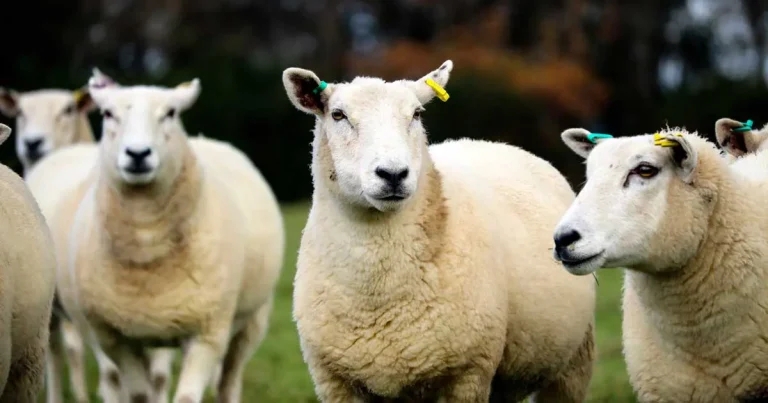
Image: Leon Woods / Adobe Stock
Helminth infections represent a ubiquitous and significant challenge in grazing livestock systems, particularly in temperate regions such as the United Kingdom where climatic conditions favour parasite survival on pasture.
Parasitic infections reduce growth rates, milk yield, reproductive performance and overall productivity, resulting in major economic losses for the livestock sector. Gastrointestinal nematodes, lungworms and trematodes affect sheep and cattle of all production types, causing both clinical disease and significant subclinical production losses, and they also impact on welfare and profitability.
Anthelmintic drugs have historically formed the cornerstone of parasite control; however, widespread and increasing anthelmintic resistance now threatens their long-term efficacy, while awareness is increasing of the secondary negative effects their use has on pasture insect populations. Historical routine blanket worming and prophylactic use of anthelmintics, which has driven the emergence of anthelmintic resistance in many parasite species and resistance to multiple drug classes, is now widespread in sheep nematodes in the UK and increasingly reported in cattle parasites.
Lately we have been looking towards integrated, diagnostics-driven strategies that aim to preserve drug efficacy while maintaining production. In addition, grazing management and the impact of dung beetles and ecosystem services has come to the fore more in the past few years, allowing us to look beyond the drugs to control strategies.
This article reviews the major parasites affecting sheep and cattle in the UK, their economic significance and the latest evidence-based worming strategies relevant to veterinary practice, including targeted selective treatment, refugia preservation, faecal egg count monitoring and integrated grazing management. The article aims to provide practising vets with an overview of contemporary parasite control strategies and the evolving role of anthelmintics, while reducing infection pressure through management interventions. It will start by looking at some of the common parasites of sheep and cattle in the UK.
Gastrointestinal nematodes are the most economically significant parasites of grazing ruminants in the UK. They infect animals through ingestion of infective third-stage larvae (L3) present on pasture, where they develop from eggs shed in faeces as part of their seasonal pasture based life cycle.
Collectively, these parasites (with the exception of Haemonchus contortus) cause parasitic gastroenteritis (PGE), characterised by diarrhoea, reduced appetite, weight loss and poor growth in lambs. Subclinical infections are particularly important economically. Even relatively low worm burdens can significantly reduce growth rates in lambs without overt clinical disease.
Seasonal epidemiology and immunity is critical; for example:
Key epidemiological features can include:
The interaction between host immunity, grazing management and climatic conditions determines infection pressure.
A few points on H contortus include the following:
In cattle, the most economically significant gastrointestinal nematodes are:
Again, seasonal epidemiology and immunity is critical:
Moniezia expansa quite commonly infects lambs as its host, but it is usually of limited clinical significance. Although segments may be visible in faeces, treatment is rarely necessary unless very heavy infections occur, which may cause, loss of condition, scouring or intestinal blockage in extreme cases. Its intermediate host is the pasture mite.
Remember that both sheep and cattle can be the intermediate host for other tapeworms. If they become infected they usually develop muscular cysts that may not cause clinical symptoms and cannot be treated. However, these cysts may be a cause of carcase condemnation at the abattoir, resulting in economic implications for the producer.
Lungworms affect both sheep and cattle and can be responsible for respiratory disease in grazing animals.
Dictyocaulus viviparus is the most common parasite. It causes parasitic bronchitis, also known as husk, with clinical signs including coughing, tachypnoea, respiratory distress, reduced weight gain or milk production, and occasionally sudden death in heavy infections.
Outbreaks are most common in young grazing cattle, but they can occur in adult cattle when immunity wanes or when climatic conditions favour larval survival.
Adult lungworm may cause clinical signs before D viviparus sheds larvae in the faeces, so diagnosis by the Baermann technique – looking for live larvae in the faeces – is only possible from 25 days post-infection.
It is also a consideration in adult animals that have repeat infections that the cow’s immune system may stop the life cycle before the larvae are produced.
A definitive diagnosis may therefore require postmortem examination, although generally clinical signs and history are good indicators of lungworm disease.
A vaccination is available.
The most common lungworm to infect sheep is Dictyocaulus filaria. The clinical picture is usually less severe than in cattle, but will still reduce growth rates and production and it needs to be identified if animals are coughing or have laboured breathing while at grazing.
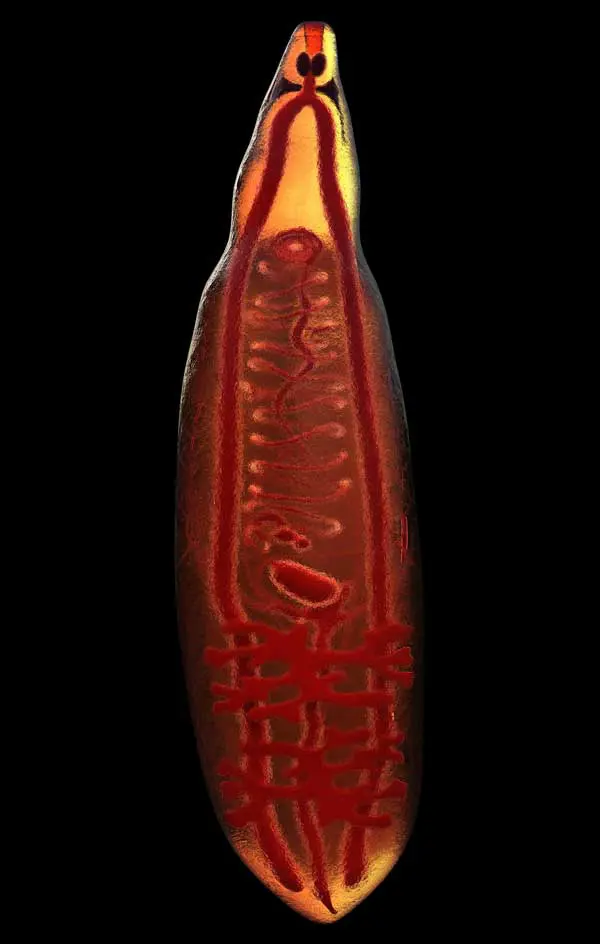
The trematode Fasciola hepatica is widespread in the UK due to the favourable climate for the intermediate host snail (Galba truncatula), which is an amphibious, air-breathing freshwater snail. It primarily inhabits shallow, slow-moving aquatic ecosystems and moist mud.
Fluke infection in ruminants leads to:
Fluke risk depends strongly on environmental conditions conducive to snail habitats, and it has increased in the past few decades due to wetter conditions and changes in grazing patterns. Strategic flukicide use and pasture management remain key control measures, but newer diagnostic tests, such as fluke coproantigen testing, are now commonly used, allowing earlier intervention when infection is present.
Parasitic infections represent a major economic burden for the UK livestock sector due to both clinical disease, subclinical productivity, treatment costs and animal losses. A large European modelling study published in 2020 estimated that parasitic worms cost the UK livestock industry approximately £270 million annually, including losses in beef, dairy and sheep production1.
The breakdown of estimated annual losses includes:
Additionally, drug-resistant parasites contribute millions of pounds in further losses through reduced treatment efficacy and increased disease incidence, costing an estimated £7.5 million per year1.
Subclinical parasitism may have the greatest economic impact; even moderate worm burdens can reduce youngstock growth rates significantly and impair feed conversion efficiency.
The scale of these losses underscores the importance of sustainable parasite control strategies to maintain both farm profitability and welfare.
Several classes of anthelmintic drugs are licensed for use in ruminants in the UK.
Benzimidazoles (BZ) act by binding to parasite ß-tubulin and disrupting microtubule formation.
Examples include:
They are effective against many nematodes and some cestodes, but there is widespread resistance in Teladorsagia and Trichostrongylus in sheep.
Levamisole acts as a nicotinic acetylcholine receptor agonist causing spastic paralysis of nematodes.
It has a relatively narrow safety margin, but currently remains effective against many BZ-resistant parasite populations. It works rapidly and has short persistence.
These compounds act on glutamate-gated chloride channels causing parasite paralysis.
Examples include:
They have broad activity against nematodes and ectoparasites, but resistance issues and also environmental impacts are increasing due to persistence in dung affecting insects.
Newer compounds have been developed to combat resistance and two additional groups are licensed for sheep in the UK:
These drugs provide additional treatment options for resistant nematode populations and are important tools in managing resistance. They are useful for strategic treatments or quarantine dosing.
Knowledgeable evidence-based veterinary guidance is critical in selecting appropriate drug classes to both maximise efficacy and delay the development of resistance.
Anthelmintic resistance occurs when parasites survive doses that would normally be effective and pass on resistance traits to their offspring.
Resistance is now widespread in sheep parasites in the UK and it is well documented that most lowland flocks are likely to have some species resistance to BZ, with increasing resistance to levamisole and macrocyclic lactones being found. Multiple-class resistance has also been documented.
The key drivers of resistance include:
With these issues in mind, for a number of years veterinary advice on using anthelmintics has included:
Resistance threatens the long-term viability of chemical parasite control as treatments fail to reduce worm burdens, production losses increase and available drug options become limited. As a consequence, as vets we need to increasingly emphasise sustainable parasite control strategies.
Targeted selective treatment (TST) involves treating only animals demonstrating evidence of infection or poor performance rather than the entire flock or herd.
Selection criteria may include:
TST reduces selection pressure for resistant parasites by leaving a proportion of the parasite population unexposed to anthelmintics.
Refugia refers to the proportion of the parasite population not exposed to anthelmintic treatment, that is those parasites currently on the grazing or of the wrong stage of development, or species to be targeted by the anthelmintics used.
Maintaining refugia is essential for slowing resistance development because susceptible parasites dilute resistant genes.
Strategies include:
It should be gold standard to use regular faecal egg count (FEC) testing to guide parasite control decisions.
Applications include:
Routine monitoring allows more targeted and evidence-based treatment protocols.
Pasture management plays a crucial role in reducing parasite exposure.
Effective strategies include:
Such measures reduce the number of infective larvae available for ingestion.
Introducing new animals poses a major risk of introducing resistant parasites.
Recommended quarantine protocols include:
These practices reduce the likelihood of resistant parasites entering the farm population.
The UK livestock industry has developed coordinated programmes to address anthelmintic resistance.
The Sustainable Control of Parasites in Sheep (SCOPS) initiative provides evidence-based guidelines for parasite control and resistance management in sheep production systems.
Key recommendations include:
The Control of Worms Sustainably (COWS) programme provides equivalent guidance for cattle producers, focusing on integrated parasite management strategies.
Breeding for parasite resistance is gaining increasing attention as a sustainable control strategy and has the potential to improve productivity and reduce reliance on anthelmintics.
Adequate nutrition enhances host immunity against parasites. Protein supplementation has been shown to improve resilience and reduce parasite establishment in young animals.
While a vaccine for the cattle lungworm (D viviparous) has been available for a number of years and is used successfully on many farms, research into vaccines against gastrointestinal nematodes is ongoing.
A vaccine against H contortus is also now commercially available in the UK via import.
Vets play a critical role in implementing sustainable parasite control strategies on farm.
Key inputs include:
Regular veterinary involvement helps ensure parasite control programmes remain effective and evidence-based.
Helminth parasites continue to represent a major challenge to sheep and cattle production in the UK. Gastrointestinal nematodes, liver fluke and lungworm contribute to substantial production and economic losses, and animal welfare concerns.
While anthelmintic drugs remain essential tools for parasite control, widespread resistance threatens their long-term effectiveness. As a result, modern parasite management strategies should increasingly include sustainable approaches that integrate targeted treatment, diagnostic monitoring, grazing management and genetic selection.
Veterinary surgeons are central to implementing these strategies and guiding clients toward evidence-based parasite control programmes. By combining responsible anthelmintic use with broader management interventions, the livestock industry could preserve the efficacy of existing treatments and ensure sustainable parasite control for future generations.
This article appeared in Vet Times Livestock (21 July 2026 issue, VT56.29), Volume 12, Issue 2, Pages 18-23.
Clare Eames has worked in the south-west since qualifying from the University of Bristol in 2001. She works part time at Synergy Farm Health and farms with her husband the rest of the time. Clare is particularly interested in regenerative farming and improving whole farm health.