
14 Apr 2026
Ian Wright BVMS, BSc, MSc, MRCVS states the benefits for the routine use of preventive medicine, with careful consideration of potential environmental impacts, to stop these parasites from taking over clients’ homes.

Ian Wright
Job Title
Image: Richard / Adobe Stock
Some parasites of veterinary and zoonotic significance in the UK are unlikely to be perceived as seasonal; Taenia species tapeworms, for instance, are transmitted through the ingestion of meat and offal from domestic livestock or through hunting, with the intermediate host being largely unaffected by seasonal factors.
Other parasites, however, are often perceived as seasonal. Both fleas and ticks depend heavily on warmth and humidity to reproduce, feed and survive, making seasonal fluctuations more likely. This means in many European countries, fleas are a seasonal problem, and prevention is only needed at certain times of year.
As such, the European Scientific Counsel Companion Animal Parasites (or ESCCAP) recommends preventive flea treatment on a risk-based approach, depending on lifestyle and seasonal factors. Exposure to fleas in the UK, however, can occur at any time of year (Singleton et al, 2019; Farrell et al, 2023) with diseases in pets and people potentially occurring as a result.
A case exists, therefore, for year-round preventive treatments to be used in UK cats and dogs, while taking steps to minimise environmental contamination with parasiticides.
If pet owners are made aware of the potential for year-round infestation, they can then make an informed decision on flea control while taking other factors such as environmental contamination with parasiticides into account.
Cat fleas can live on a wide variety of mammalian hosts, including cats, dogs, rabbits and wildlife such as foxes and hedgehogs (Clark et al, 2018). They are also well suited to living in the humidity and temperatures maintained in most UK homes, with 95% of a typical flea infestation existing in the home as eggs, larvae and pupae.
The current climate in the UK is favourable for cat flea persistence and proliferation, and is becoming more so as the climate warms. Temperatures below freezing are lethal to adult fleas, dying within five days at -1°C and 10 days at 3°C. Survival significantly increases when temperatures exceed 8°C, where nearly half of emerged adults stay alive for 20 days (Silverman and Rust, 1983).
Eggs and larvae are also highly susceptible to cold temperatures, with larvae dying 10 days post-hatching at 10°C (Silverman et al, 1981).
The effects of cold temperatures in winter, therefore, in many countries create a seasonal pattern for flea infestations. These effects are somewhat offset by the protection adult fleas are afforded by the fur of their host and, crucially, by centrally heated homes, making infestations sustainable all year round.
Milder winter temperatures such as those recently seen in the UK mean that outdoor life stages can also continue to survive and develop. This means, as a trend of overall milder seasons continue, it can be expected that flea exposure and subsequent household infestations on domestic pets and subsequent household infestations will become more likely rather than less likely.
Where seasonal fluctuations in exposure do occur, they would have to be significant enough to prevent infestations establishing over time, and no evidence in the UK exists to say that this is the case.
Household infestations may establish through the winter through the mechanical transmission of newly emerged adults into the home. Even households with purely indoor cats may be infested by owners, triggering outdoor pupal emergence through their heat and movement, and then bringing newly emerged adults inside on clothing.
Once inside, these adults can feed on indoor cats and infestation can be established. In a similar fashion, cats visiting multiple households may be infested by newly emerged adults outdoors and then bring them indoors into a number of different homes.
Fleas are also present throughout the UK, so exposure can occur anywhere in the UK at any time of year (Singleton et al, 2019; Farrell et al, 2023). Pet owners need to know this to make an informed decision on year-round treatment.
A number of benefits are associated with year-round flea prevention preventing household infestations.
Flea infestations may lead to primary skin irritation from bites or dermatitis secondary to allergic reactions to flea saliva (flea-allergic dermatitis; FAD). Flea-bite hypersensitivity is associated with pruritus and, in the dog, leads to papules, crusts, alopecia, hyperpigmentation and lichenification, affecting the caudal half of the body – predominantly the dorsal lumbosacral area, tail fold, the caudal and inner thighs, and the abdomen.
In the cat, it is associated most with miliary dermatitis, non-inflammatory alopecia, lesions of the eosinophilic granuloma complex and head and neck pruritus. FAD can lead to considerable irritation and morbidity for the patient linked to flea exposure, and requires elimination of fleas to prevent exposure.
Fleas may also transmit a number of zoonotic pathogens via bites, ingestion of fleas or exposure to flea dirt, including Bartonella species, Rickettsia felis and Dipylidium caninum.
Out of all flea infestations on UK cats and dogs, 11.3% and 5% have recently been found to be positive for Bartonella species and Rickettsia felis, respectively (Abdullah et al, 2019). People are thought to be exposed to flea-borne Bartonella species primarily through flea faeces, making flea control vitally important for preventing zoonotic exposure.
B henselae and B clarridgeiae infections have regularly been reported in apparently healthy human hosts such as Brazilian blood donors (Pitassi et al, 2015), suggesting that asymptomatic infection can occur.
When clinical signs do occur, zoonotic infection most commonly presents as a self-limiting regional lymphadenopathy developing after a primary papular lesion, lasting from a few weeks up to several months (Boulouis et al, 2005).
In a minority of cases, however, this can progress to abscessation of the lymph node and systemic clinical signs such as chronic fatigue, headaches, blurred vision and ataxia. An increasing number of more serious atypical clinical presentations are also being recognised in association with infection, including uveitis and endocarditis (Florin et al, 2008; Tsuneoka et al, 2010).
In immunocompromised individuals, however, the disease can be fatal. Bacillary angiomatosis is one of the most common clinical presentations in immunocompromised individuals, which is life threatening if left untreated (Lange et al, 2009). Few confirmed cases exist in the UK, but in the absence of surveillance or routine testing, current prevalence of infection and incidence of disease is unknown. R felis is a cause of flea-borne spotted fever and is transmitted through flea bites.
Again, without surveillance or routine testing, current incidence of disease in the UK human population is unknown.
Papular urticaria caused by flea bites presents clinical symptoms of a hypersensitivity reaction accompanied by skin lesions.
The predominant specific antibody isotypes vary according to the time elapsed since the onset of symptoms in papular urticaria caused by flea bites. The presence of flea adults and larvae in the home can also lead to revulsion on the part of pet owners and subsequent erosion of the human-animal bond.
If flea infestations occur without the possibility having been discussed and adequate control offered, pet owners may seek their own solutions through purchasing of non-veterinary (POM-V) products online or via subscription services without any advice regarding correct application or disposal.
This can lead to the product being washed off by shampoo, misapplied or packaging/unused product being disposed of in an irresponsible manner.

To effectively prevent flea reproduction, a flea adulticide product must kill fleas quickly enough to prevent egg laying and be applied frequently enough to continue to prevent egg laying.
The time after application at which fleas survive long enough in the presence of the product to lay eggs is known as the “reproductive break point”. If the reproductive break point is reached and fleas are present, then flea control will fail.
Once infestations have established in the home, treatment of the environment with insect growth regulators, environmental insecticides, hot washing of bedding and daily vacuuming, is also important to reduce environmental larvae and eggs.
Data from the Environment Agency examining the occurrence of fipronil, fipronil metabolites and imidacloprid in 20 English rivers from 2016 to 2018 found fipronil, fipronil sulfone, fipronil sulfide and imidacloprid in 98.6%, 96.5%, 68.7% and 65.9% of samples, respectively.
Chronic toxicity safety limits for aquatic life were exceeded at some of those sites. Sites immediately downstream of wastewater treatment works had the highest levels of fipronil and imidacloprid, suggesting that potentially significant quantities of pesticides from veterinary flea products may be entering waterways via household drains (Perkins et al, 2021).
A subsequent study has investigated possible routes by which pesticides may enter wastewater and subsequently rivers. Wash-off studies combined with modelling to account for the frequency of emitting activities found hand washing post-application to be the most significant source.
All household routes investigated (hand washing, bathing of pets and washing of bedding) were found to be equivalent to 20% to 40% of the daily per capita load in wastewater of fipronil and imidacloprid, respectively (Perkins et al, 2024).
These and other studies suggest that companion animal parasiticides are likely to be responsible for a significant proportion of fipronil and imidacloprid contamination in UK waterways.
As a result, it is important that the risk of flea exposure in the UK continues to be assessed and possible risk factors identified. Year-round prevention to prevent infestations and its benefits needs to be weighed against potential environmental harms.
Many parasiticides containing fipronil and imidacloprid, however, are often sold through non-veterinary channels without advice, with the product being washed off or misapplied.
Owner education regarding reducing contamination from the application of product and avoiding bathing, washing, swimming or bed washing with treated animals is, therefore, key to reducing contamination.
Where flea prevention is recommended, it is important to select a flea product suited to the pet and owner’s lifestyle. This will maximise efficacy while potentially reducing environmental contamination.
Factors to be considered when selecting a flea prevention product include:
Flea control may fail even when a preventive product is used. This can happen for several reasons and all of them need to be considered if flea control is to be re-established.
Where flea control fails, drug resistance should be considered as a possibility.
The presence of resistance genes in a flea population may lead to a need for increased treatment frequency, but this would appear to be comparatively rare compared with other reasons for the reproductive breakpoint being reached (Coles and Dryden, 2014). Therefore, although the possibility of drug resistance as a cause of flea control breakdown should not be ignored, it should only be considered as a possibility once other more common causes have been eliminated.
Many pet owners live busy lifestyles, and it can be easy for flea treatment doses to be missed or not applied on time. Apps and text reminders can help to remind clients when products are due to be applied. Practice health plans and postal services can also be useful to prompt clients as to when products are due to be applied, and ensure they are using the correct amount of product.
Potential flea hosts can be present in households which owners have not considered and may also require treatment. These include stray cats entering houses and domestic cats visiting and spending time in multiple households.
Clients may also not realise that rabbits and ferrets can be infested with cat fleas.
It is important to confirm that fleas in household infestations are Ctenocephalides species (cat or dog fleas) by examination under a microscope. Ctenocephalides species fleas will have both genal and pronotal combs.
If bird or rodent fleas are present, then sources of contamination within the home such as nests will need to be identified and treated.
If clients are having difficulty administering a product or are not shown how to administer a new product effectively, then correct dosage and frequency of drug treatment may not occur. If finances are an issue, then owners may compromise on dosing frequency recommendations beyond licence claim statements and/or veterinary advice.
Discussing client treatment preferences and demonstrating to clients how to administer products will help to improve compliance. Practice health plans are also useful in spreading the cost of treatment.
All flea products take time to kill adult fleas, so frequent re-exposure outdoors will mean that adult fleas may still be seen even though treatments are effective and household infestations are not occurring.
Once household infestations have established, they take time to clear. If owners are not aware of this and continue to see fleas after treatments have been applied, they may assume that they are not working.
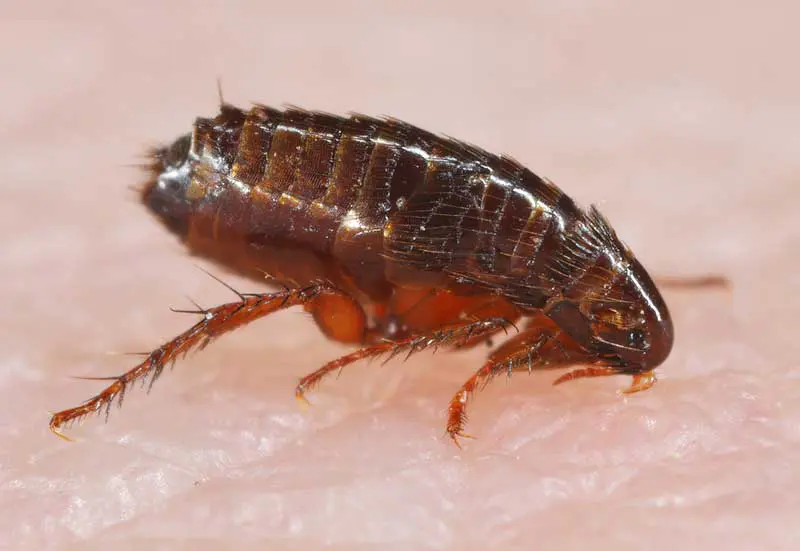
Flea control is important in terms of limiting zoonotic disease, improving animal health and strengthening the human-animal bond.
Flea control continues to remain a challenge, and it is vital that all aspects of control are considered. Understanding the reproductive break point, effective environmental control, compliance, and management of owner expectation are all essential if flea control plans are to succeed.
Year-round flea control in the UK based on current evidence is required to minimise the risk of flea infestations and maximise health benefits. These advantages need to be weighed against the risk of environmental contamination and veterinary professionals have a vital role to play in explaining both considerations to clients, so they can make an informed decision.
It is also essential that an appropriate flea product is selected to suit a pet’s lifestyle and maximise owner compliance.
Ian Wright is a practising vet and co-owner of The Mount Veterinary Practice in Fleetwood, Lancashire. He has a master’s degree in veterinary parasitology and is chairman and director of the European Scientific Counsel Companion Animal Parasites (ESCCAP), as well as guidelines director for ESCCAP Europe.