
15 June 2026
Eric Morissette, DVM, DACVP, senior manager of AI portfolio development platforms at Zoetis Diagnostics, discusses how Vetscan Imagyst helped in the tricky case of dog Yogi.


Vet Times
Job Title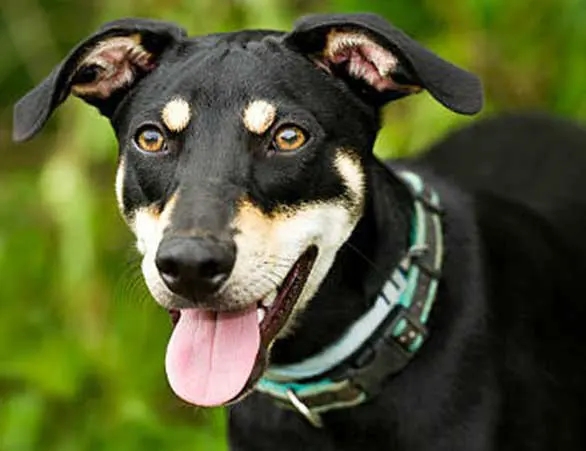
Imagine a busy weekday morning in a typical small‑animal clinic. The appointments are fully booked, the phones are ringing, and in comes Yogi, a five‑year‑old terrier cross whose owners are clearly worried.
Yogi hasn’t been himself for three days. He’s been lethargic, vomiting and refusing food. The moment the vet lifts his lip, it’s obvious something is very wrong. His gums, skin and the whites of his eyes have taken on a yellow tint, the kind of colour change no clinician ever ignores. He’s also tachycardic, his heart racing at 160 beats per minute, signalling that his body is working overtime to cope.
Initial in‑house testing offers little reassurance. His chemistry panel shows significantly elevated bilirubin and liver enzymes, and his automated CBC (Vetscan OptiCell™) flags elevated reticulocyte count, moderate neutrophilic leukocytosis, anaemia and possible thrombocytopenia, a collection of findings significant enough to prompt careful consideration. Is the low platelet count genuine, or is something skewing the analyser’s read? Is this liver disease, haemolysis, an immune‑mediated process or all the above? At this point, greater diagnostic clarity is essential to avoid delays in clinical decision‑making.
In a traditional workflow, this is often the stage where things can slow down. Manual smear preparation and interpretation can vary significantly depending on the clinician’s experience, and not every practice has someone on staff who feels confident reading these slides under a microscope. Clinics often send samples to a reference laboratory for expert interpretation. These labs provide an important depth of analysis, but the turnaround time naturally means waiting for results while the patient’s condition may continue to evolve.
Fortunately, Yogi’s case followed a different course. The team had access to Vetscan Imagyst®, the point-of-care seven-in-one analyser that offers an AI Blood Smear capability. Within minutes1, results provided a clear, objective picture of what was occurring haematologically. The system had leveraged advanced deep‑learning algorithms trained on extensive datasets of both normal and abnormal haematology samples, enabling it to evaluate red blood cells, white blood cells, and platelets with a high degree of consistency1,. By analysing cell morphology, distribution, and key haematological features across the digital smear, the platform provides a structured, clear assessment that helps reduce the variability inherent in manual slide review1-3.
Once the smear was scanned, the analyser generated annotated images, quantified findings, and highlighted abnormalities, guiding the clinician directly to areas of concern. This process not only accelerates interpretation but also provides a clear, reproducible framework that supports clinical confidence. The results revealed several crucial morphological red flags that would have been difficult and time‑consuming to identify manually:
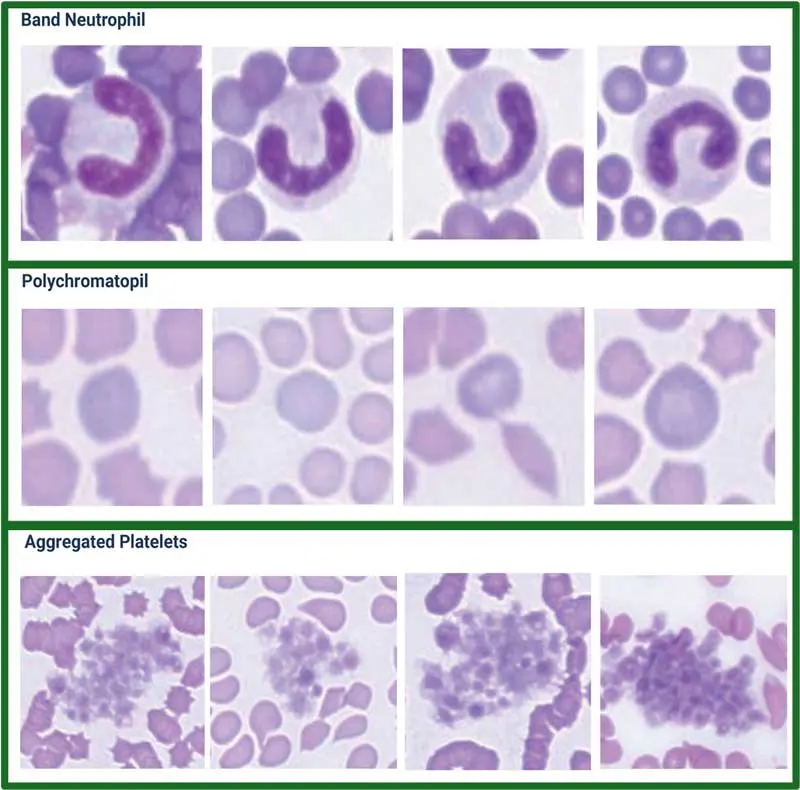
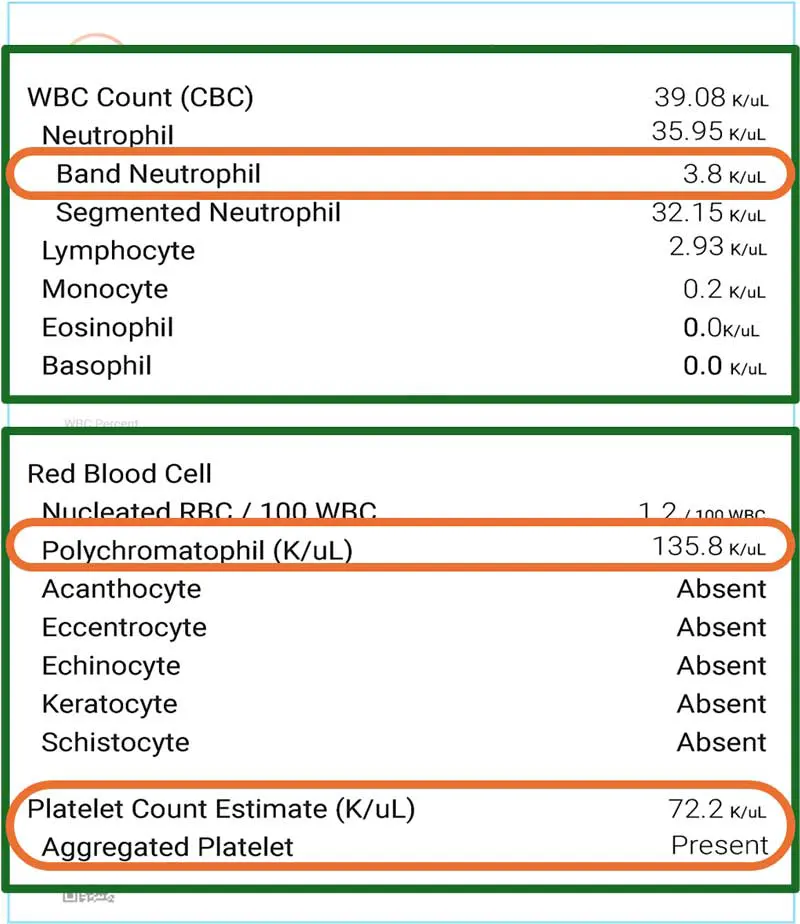
With the Vetscan Imagyst AI Blood Smear results available, the clinical picture became significantly clearer. What had initially appeared to be a broad differential converged toward a far more definitive diagnosis: immune‑mediated haemolytic anaemia (IMHA).
Given the seriousness and complexity of IMHA, the team proceeded to utilise the Add-On Expert Review**; submitting the digital smear for evaluation by a Zoetis board‑certified clinical pathologist. Within hours5 , the specialist confirmed the AI‑identified findings, providing authoritative validation and reinforcing the accuracy of the interpretation.
Yogi’s entire haematological work‑up, CBC, chemistry, Vetscan Imagyst AI Blood assessment, and expert confirmation, was completed within just a few hours. No courier delays, no overnight waiting and no uncertainty. With a confident diagnosis established on the same day, the clinicians were able to initiate the intensive, time‑critical therapy that IMHA requires. This case underscores a broader point: AI‑assisted haematology can streamline the diagnostic process, resolve uncertainties earlier, and support more timely clinical intervention, all of which can meaningfully influence patient outcomes.
Across UK clinics, veterinary care continues to advance at a rapid pace. Rising pet ownership, and the growing recognition of pets as integral family members, has led to increased demand for both routine screening and more advanced diagnostic capabilities 6. As a result, clinics are consistently navigating:
In cases like Yogi’s, uncertainty about smear interpretation or discrepancies in CBC results can delay clinical decision-making. When clinicians suspect thrombocytopenia, regenerative anaemia or other significant haematological abnormalities, both time and diagnostic confidence are critical. This is where AI‑powered diagnostics are making a meaningful impact, not only on patient outcomes, but on the day‑to‑day reality of clinical practice. By supporting more consistent interpretation, streamlining workflows, and reducing reliance on external turnaround times, AI tools such as Vetscan Imagyst are supporting clinicians in delivering timely, informed care within the constraints of a busy general practice.
As clinics continue to balance heavy caseloads, staffing constraints, and rising owner expectations, diagnostics that are rapid, reliable and easy to interpret have never offered greater value. However, successful and responsible use of AI-powered diagnostics in veterinary haematology rests on three core pillars, each reflected within the Vetscan Imagyst platform:
In Yogi’s case, this hybrid model, pairing the speed and consistency of AI with expert clinical pathology oversight, provided definitive answers within a clinically critical timeframe.
One of the greatest strengths of Vetscan Imagyst AI Blood Smear is the clarity it brings to discussions with pet owners during moments of uncertainty. When a clinician suspects conditions such as immune-mediated disease, regenerative or non‑regenerative anaemia, thrombocytopenia, or significant red cell abnormalities, owners often feel overwhelmed. Clear, visual information can make an enormous difference.
Vetscan Imagyst’s annotated smear images, highlighting platelet clumping, left shifts, abnormal RBC morphology, or features suggestive of haemolysis, allow vets to show clients exactly what is happening at a cellular level. These visuals turn complex haematology into something tangible and understandable, helping owners follow the clinician’s reasoning in real time. This transparency builds trust. When owners can see why the numbers on the CBC don’t tell the whole story, they are more likely to understand the need for further diagnostics or treatment. The speed of results also reduces anxiety; instead of waiting for external lab reports, clinicians may be able to explain findings within the same visit and begin planning next steps immediately.
Earlier recognition of regenerative anaemia, platelet artefacts, or morphological signs consistent with immune‑mediated destruction allows clinicians to stabilise patients sooner and initiate appropriate therapy without delay. In cases like Yogi’s, this can be the difference between gradual deterioration and rapid, targeted intervention.
UK clinics are seeing more patients while having less time per appointment. Veterinary teams frequently cite time pressure and workload as leading contributors to stress and burnout4.
Tools like Vetscan Imagyst help address these pressures by:
This creates a smoother workflow, freeing up time for patient care rather than microscope time.
The landscape of veterinary diagnostics is changing, and Yogi’s case is a powerful reminder of where the profession is heading. AI is a present-day reality that’s quietly changing veterinary diagnostics. Tools like Vetscan Imagyst are helping primary care practitioners make faster, more confident decisions, improving outcomes for pets and peace of mind for their owners. As the technology continues to evolve, its potential will only grow, and the beauty of these technologies is that new capabilities and updates can be made remotely, through software updates. There’s no need to replace or install a whole new device in the clinic.
By investing in innovation, Zoetis Diagnostics aims to support veterinary teams in delivering the highest standard of care whether they’re managing routine wellness exams or navigating complex clinical presentations. The company’s focus is on tools that work in real-world settings, supporting clinical expertise and in response to the needs of everyday practice.
To learn more about Vetscan Imagyst and explore how AI Blood Smear can support your practice, visit: https://www.zoetisdiagnostics.com/us/point-of-care/vetscan-imagyst/
** Additional costs may apply.
All trademarks are the property of Zoetis Services LLC or a related company or a licensor unless otherwise noted. ©2026 Zoetis Services LLC. All rights reserved. VTS-01925