11 May 2026
Carus looks at the importance of a contextualised approach to care of GI cases – one that balances clinical evidence with real-world constraints.

Chronic gastrointestinal (GI) cases are rarely straightforward. While diarrhoea, vomiting and inappetence are common presenting signs, the decisions that follow are often shaped by more than clinical findings alone, particularly when inflammatory GI disease is among the differentials.
Patient temperament, owner preference and the feasibility of further diagnostics all play a role in determining the most appropriate course of action. In this setting, a contextualised approach to care, one that balances clinical evidence with real-world constraints, becomes increasingly important.
Faecal calprotectin offers a practical way to support this approach, providing an objective, non-invasive measure of intestinal inflammation that can be interpreted alongside the wider clinical picture.
Histopathology remains necessary for a definitive diagnosis of inflammatory enteropathy, with samples obtained by endoscopy or surgical biopsy. However, whether due to cost, patient factors or owner reluctance, these more invasive diagnostics are not always pursued. This can leave clinicians managing cases with an element of uncertainty.
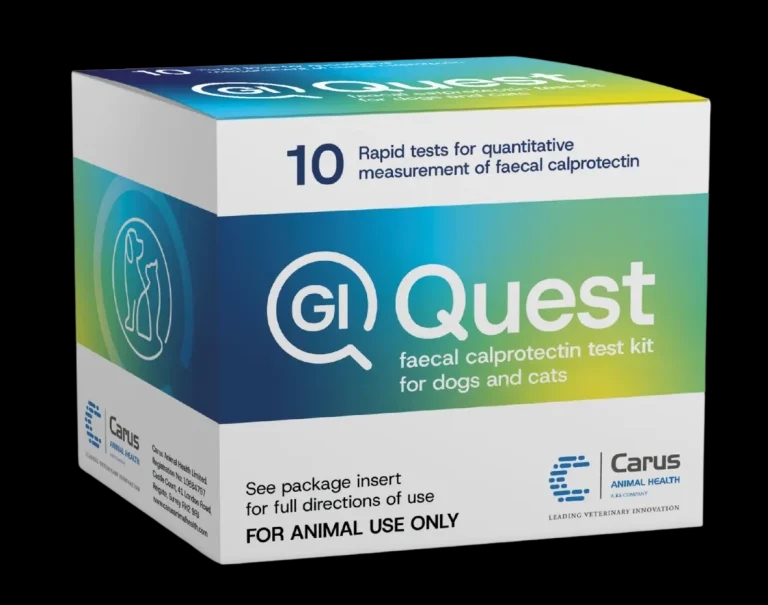
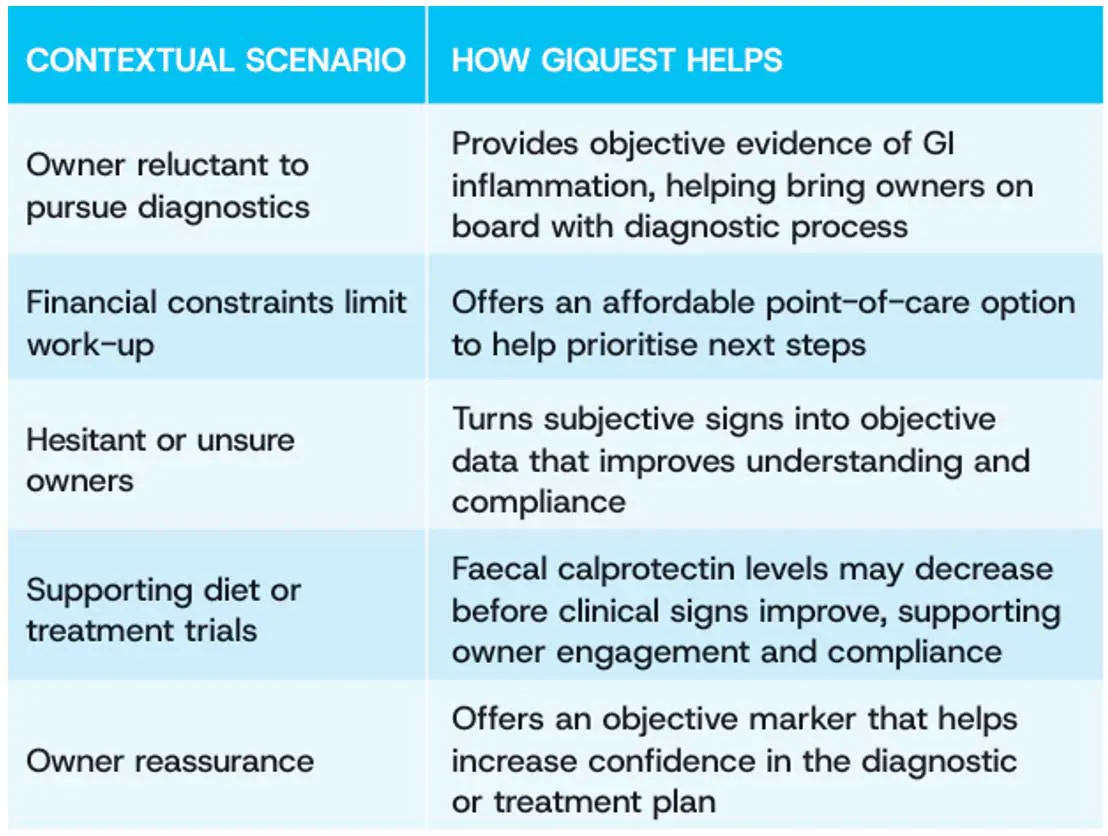
Faecal calprotectin is particularly useful in first opinion practice, when pragmatic, rapid decision-making is required (Table 1). GIQuest, a patient-side faecal calprotectin test, provides a practical way to bring this objective data into the consultation, helping support clearer communication and more confident next-step decisions.
As a neutrophil-derived biomarker, faecal calprotectin reflects inflammatory activity within the gastrointestinal mucosa. When used in practice, it can support:
Importantly, it provides an additional layer of insight when clinical signs and initial diagnostic tests do not tell the full story.

The value of this approach is well illustrated in the following case study.*
A three-year-old dog presented with a long-standing history of intermittent diarrhoea and inappetence, alongside behavioural concerns including anxiety and reactivity. After initial investigations, the clinical picture remained unclear, but food responsive enteropathy(FRE) was suspected and a diet trial was started.
A key consideration in this case was the patient’s behavioural profile, which impacted case management in two ways. Firstly, the dog found veterinary intervention stressful and it was felt that more invasive diagnostics could have a negative impact. Secondly, there was clinical suspicion that the dog’s anxiety-related, high arousal state might be contributing to flare-ups of GI signs.
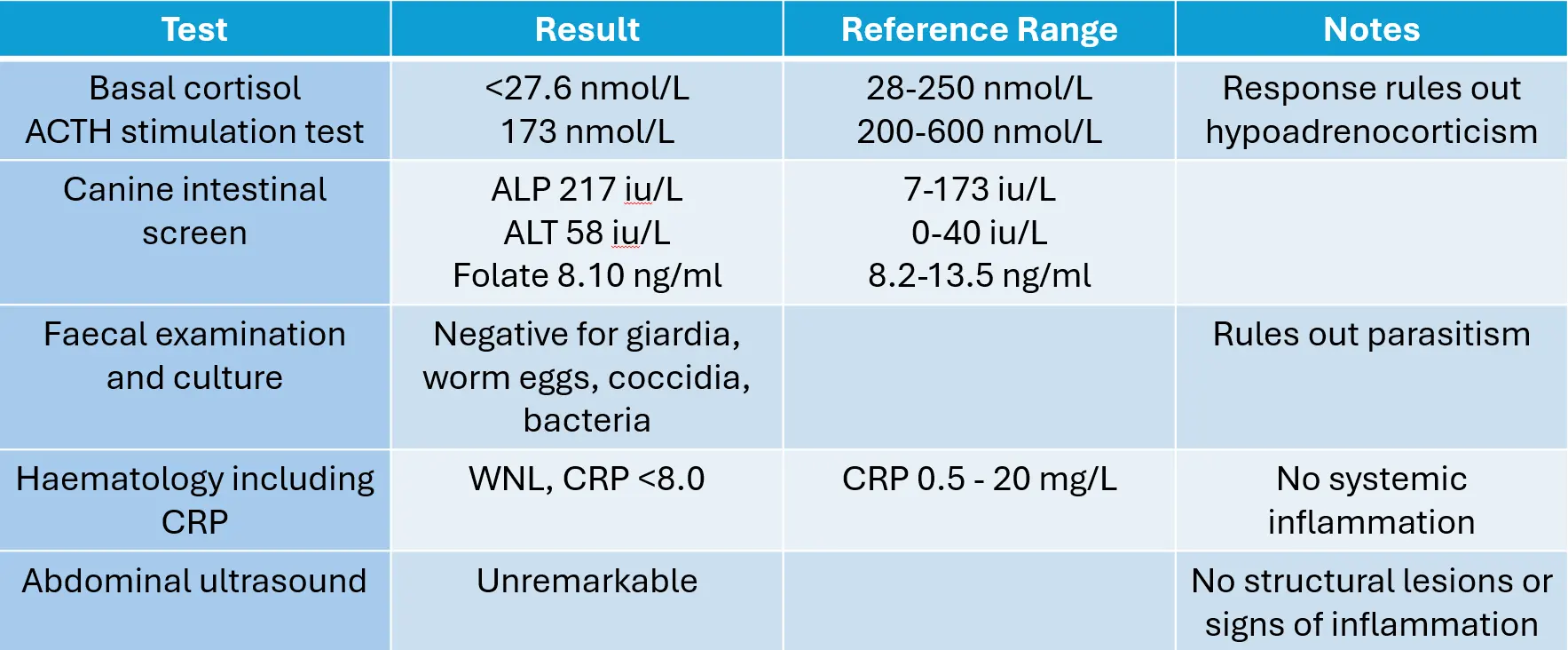
GIQuest was therefore used prior to considering invasive diagnostics such as GI biopsy. A faecal calprotectin level of 2.0mg/kg fell within the normal range, indicating an absence of active gastrointestinal inflammation at that time.
This result provided important clarity. While a degree of food-responsive enteropathy could not be ruled out, the absence of active inflammation suggested that the current hypoallergenic diet was effectively managing any FRE component.
This allowed the clinical focus to shift more confidently towards behavioural management. In this instance, GIQuest supported:
This case highlights the value of combining objective biomarkers with clinical judgement and case context. Faecal calprotectin does not replace traditional diagnostics, but it can help guide when and how they are used. In practice, this supports a more balanced approach – one that considers not only what could be done, but what is most appropriate for the individual patient.
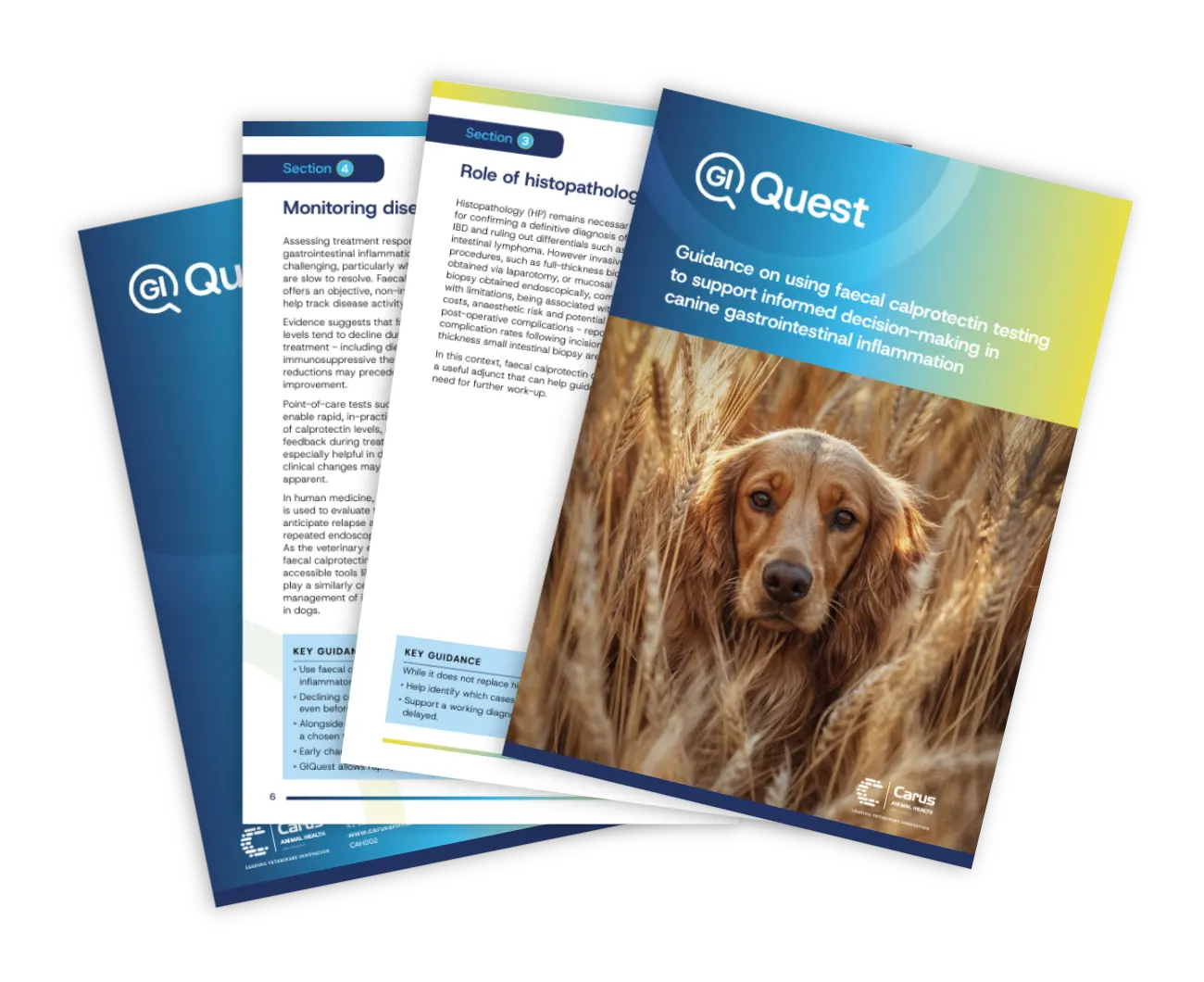
For guidance on using faecal calprotectin testing to support informed decision-making in canine and feline inflammatory enteropathies, download the GIQuest guidelines for use.
To read the full case study or learn more about how GIQuest can support your approach to inflammatory GI cases, visit https://carusanimalhealth.com/giquest or contact Carus Animal Health at [email protected]
* Case example based on a clinical case provided by Lydia Michaelides, MRCVS.