
01 June 2026
Jessica-Anne Berlyn, veterinary technical manager at Purina, discusses the composition and metabolism of dietary fats, and fat-sensitive conditions.

Image: sinhyu / Adobe Stock
Dietary fat is an essential macronutrient in canine nutrition. It provides a concentrated source of energy, supports absorption of fat‑soluble vitamins (A, D, E, and K), contributes to cell membrane integrity, and plays a crucial role in skin, coat, growth, and development. Fatty acids also modulate inflammatory pathways and serve as precursors for eicosanoids and prostaglandins, which influence immune and metabolic responses1-5.
Despite these benefits, excessive dietary fat may exacerbate several disease states in dogs. For a number of gastrointestinal, metabolic, and pancreatic disorders, restriction of dietary fat is an essential part of nutritional management. This article reviews fat metabolism in dogs and outlines evidence‑based dietary approaches for managing fat‑sensitive conditions.
Lipids consist of triglycerides, composed of three fatty acids esterified to a glycerol backbone. Fatty acids are classified according to chain length: short‑chain (<6 carbons), medium‑chain (6–12 carbons), and long‑chain (>12 carbons). The length of the fatty acid chain determines its digestion, absorption, and subsequent metabolism2.
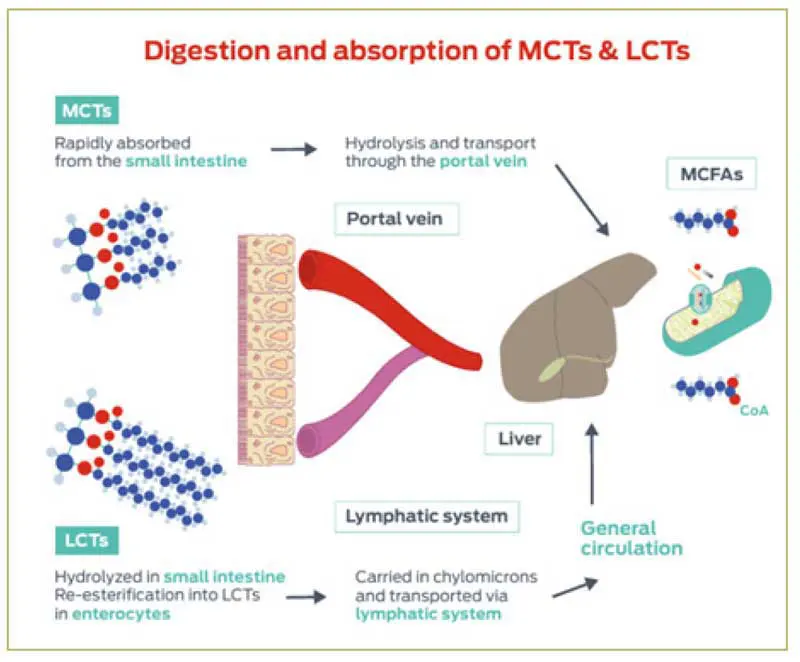
Long‑chain triglycerides require emulsification by bile acids and hydrolysis by pancreatic lipase before being absorbed into intestinal lacteals, packaged into chylomicrons and transported via the lymphatic system. In contrast, medium‑chain triglycerides (MCTs) are absorbed directly into the portal circulation, largely independent of bile acids and pancreatic lipase3,4. This distinction has important therapeutic implications for dogs with disorders of fat digestion, absorption, or lymphatic transport.
Omega‑6 and omega‑3 fatty acids are polyunsaturated long‑chain fatty acids considered essential for dogs. These fatty acids must be included in their diet, as dogs cannot synthesise them endogenously5. These fatty acids are required for normal neurological function, skin integrity, reproductive health, and immune regulation.
Essential fatty acid deficiency may be seen in dogs fed unbalanced home‑prepared diets or ultra‑low‑fat diets that are not appropriately supplemented. Deficiency of omega‑6 fatty acids is associated with alopecia, scaling, poor growth, and reproductive abnormalities, whilst omega‑3 deficiency may result in neurologic impairment5. For this reason, even when fat restriction is indicated, diets must provide sufficient LCTs to meet essential fatty acid requirements.
The inclusion of MCTs in therapeutic diets offers several advantages:
However, MCTs do not supply essential fatty acids, and inappropriate substitution of all LCTs may lead to deficiency. Therefore, MCTs should be used strategically rather than exclusively.
The length of the chain influences how the fat is metabolised and these differences can be exploited in the management of some diseases. For example, medium-chain triglycerides can be beneficial in patients with disorders of lipid digestion or absorption because they are absorbed differently to long-chain fatty acids3,4(Figure 1).
We shall now discuss fat-sensitive conditions in the dog. A summary table is provided (Table 1).
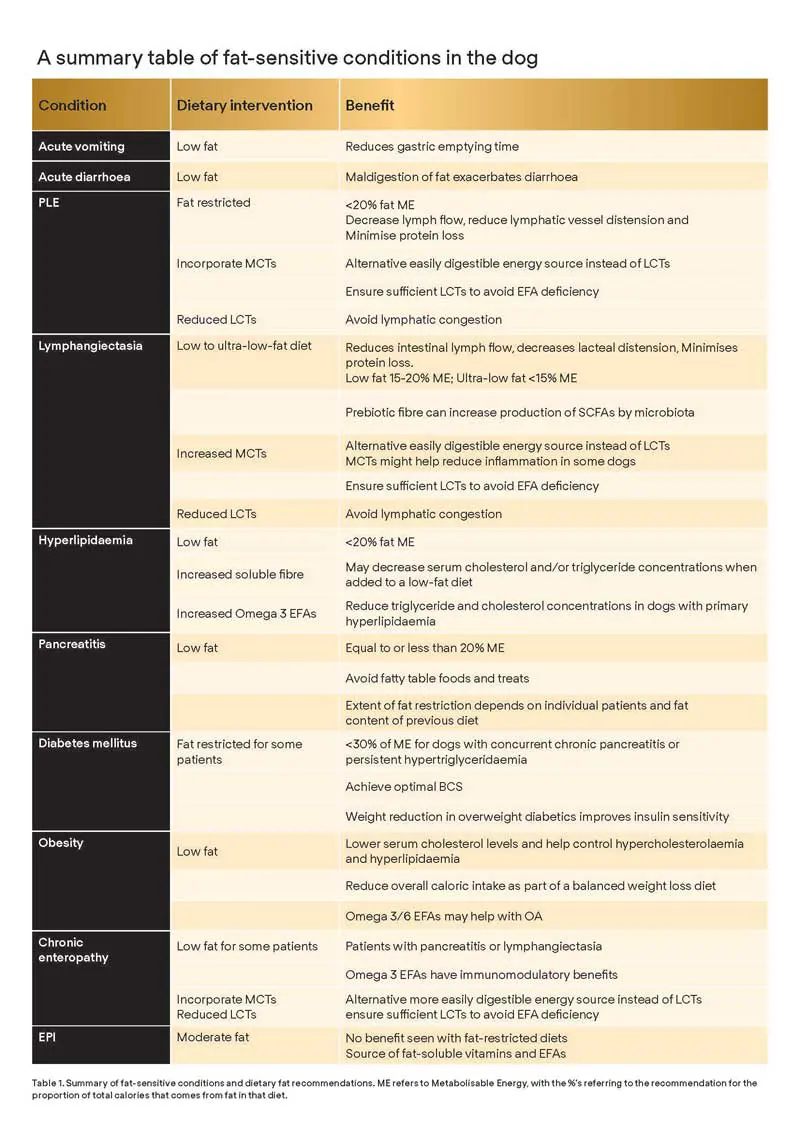
Dogs with acute gastrointestinal upset benefit from short‑term fat restriction. Fat delays gastric emptying, which may worsen nausea and vomiting and increase the risk of aspiration. Maldigestion of fat can exacerbate diarrhoea by increasing osmotic load within the intestinal lumen. A low‑fat, highly digestible diet is therefore recommended during acute episodes.
Protein‑losing enteropathy is characterised by excessive loss of plasma proteins, particularly albumin, into the gastrointestinal tract, resulting in severe negative protein and energy balance. Common underlying causes include intestinal lymphangiectasia, severe chronic enteropathy, and intestinal lymphoma8,9.
Dietary fat restriction is a key factor for management and is recommended regardless of underlying cause, with fat intake limited to less than 20% of metabolizable energy (ME). Reducing dietary fat decreases intestinal lymph flow, limits lymphatic vessel distension, and helps minimise protein loss9,12.
Dogs with PLE are frequently cachectic. Because low‑fat diets are inherently lower in calories, it can be challenging to meet the dog’s energy requirements. Incorporation of MCTs may help meet energy requirements whilst minimising lymphatic congestion, provided sufficient LCTs remain in the diet to prevent essential fatty acid deficiency6,7.
Intestinal lymphangiectasia is a specific form of PLE characterised by dilation of intestinal lymphatic vessels, resulting in leakage of lymph into the lamina propria and intestinal lumen10. It may occur as a primary idiopathic condition or secondary to inflammation, infection, neoplasia, or lymphatic obstruction11.
Dietary intervention is the cornerstone of long‑term management. Low‑fat to ultra‑low‑fat diets reduce intestinal lymph flow, decrease lacteal distension, and minimise protein loss12,13. Typically, low‑fat diets provide approximately 15%–20% ME from fat, while ultra‑low‑fat diets contain less than 15% ME.
MCTs may be incorporated to increase caloric density without significantly increasing lymphatic flow3,6. Prebiotic fibre may further support gastrointestinal health by increasing production of short‑chain fatty acids through microbial fermentation.
Hyperlipidaemia refers to abnormal elevations in circulating triglyceride and/or cholesterol concentrations. Primary (familial) hyperlipidaemia occurs most commonly in miniature schnauzers, while secondary hyperlipidaemia may be associated with endocrine disease, protein‑losing nephropathy, pancreatitis, obesity, medications, or excessive dietary fat14.
The primary therapeutic goal is normalisation of serum triglyceride concentrations to help minimise clinical complications, including pancreatitis. Fat restriction to less than 20% ME is the mainstay of nutritional management14. Lipid‑lowering medications may be considered when dietary modification alone is insufficient.
Supplementation with omega‑3 fatty acids has been shown to reduce triglyceride and cholesterol concentrations in dogs with primary hyperlipidaemia15. Increased soluble dietary fibre may also contribute to improved lipid profiles when added to a low‑fat diet16.
Pancreatitis is a common inflammatory condition in dogs and may present as acute or chronic disease. Identified risk factors include dietary indiscretion, ingestion of high‑fat foods, obesity, hypertriglyceridaemia, and corticosteroid administration17.
Dietary modification is critical for both acute management and long‑term prevention. Fat in the intestinal lumen stimulates pancreatic enzyme secretion, potentially exacerbating pancreatic inflammation. A practical approach is to reduce dietary fat by approximately 50% relative to the dog’s previous diet, commonly targeting ≤20% ME from fat18.
Dogs recovering from acute pancreatitis may eventually tolerate moderate fat levels, whereas those with chronic pancreatitis generally require lifelong fat restriction. Avoidance of fatty treats and table foods is essential.
Most dogs develop insulin‑dependent (type 1) diabetes mellitus due to destruction of pancreatic β‑cells. Contributing factors include obesity, age, concurrent endocrinopathies, pancreatitis, and hypertriglyceridaemia7,19.
Dietary management complements insulin therapy and aims to optimise body condition, improve insulin sensitivity, and address concurrent metabolic disease. Between 28% and 40% of diabetic dogs show evidence of concurrent pancreatitis7. In dogs with chronic pancreatitis or persistent hypertriglyceridaemia, fat restriction to less than 30% ME is recommended.
Weight reduction in overweight diabetic dogs improves insulin sensitivity and glycaemic control7,20.
Obesity is associated with reduced lifespan and increased morbidity in dogs21,22. Weight loss requires controlled reduction of caloric intake whilst maintaining adequate nutrient provision.
Reducing dietary fat lowers the energy density of the diet and may help to control hypercholesterolaemia and hyperlipidaemia when present. However, excessive fat restriction should be avoided to prevent essential fatty acid deficiency. Obesity is a chronic inflammatory condition, thus inclusion of EPA and DHA is beneficial, particularly for dogs with concurrent osteoarthritis11.
Chronic enteropathy is defined by persistent gastrointestinal clinical signs lasting longer than three weeks after exclusion of infectious, parasitic, neoplastic, and extra‑intestinal causes2,3. Impaired digestion and absorption of protein and fat are common.
Dietary therapy is individualised and may involve hydrolysed diets, novel protein diets, gastrointestinal diets, or balanced home‑prepared diets. Hydrolysed diets are often lower in fat, highly digestible, and may contain omega‑3 fatty acids with immunomodulatory effects2,3.
Fat restriction is recommended for dogs with concurrent pancreatitis or lymphangiectasia. Excess fat reaching the colon may contribute to dysbiosis, epithelial damage, and fluid secretion24. Partial substitution of LCTs with MCTs may be beneficial, and modifying the omega‑3 to omega‑6 ratio may help reduce intestinal inflammation25,26.
EPI is a syndrome of maldigestion resulting from insufficient secretion of pancreatic enzymes and bicarbonate, most commonly due to pancreatic acinar atrophy or chronic pancreatitis. Optimal management includes enzyme supplementation, vitamin correction, and dietary modification27.
Current evidence does not support fat restriction in EPI. Diets should be highly digestible with a moderate fat content, as excessive fat restriction may worsen malnutrition and result in deficiencies in fat‑soluble vitamins and essential fatty acids28. Novel protein or hypoallergenic diets may be beneficial in selected cases27.
Management of fat‑sensitive conditions in dogs requires an individualised nutritional approach. Understanding the fat level of the previously fed diet is helpful when determining the degree of dietary modification required. Clear guidance for owners is essential to prevent inadvertent selection of inappropriately high‑fat foods, particularly as canned diets are often higher in fat than dry formulations.
Commercial therapeutic low‑fat diets offer a balanced and practical option for long‑term management. Where home‑prepared diets are considered necessary, formulation should be undertaken in consultation with a board‑certified veterinary nutritionist.
In summary, successful dietary management of fat-sensitive conditions in the dog requires careful consideration of fat quantity and type, to feed a diet that is sufficiently restricted in fat but complete and balanced at the same time.
1. National Research Council (2006). Fats and fatty acids, Nutrient Requirements of Dogs and Cats, The National Academies Press, Washington, DC: 81-110.
2. The editors of Encyclopaedia Britannica (2025). “Fatty acid”, Encyclopedia Britannica, available at https://www.britannica.com/science/fatty-acid (accessed 13 August 2025).
3. Purina Institute. Hot Topic: Medium-Chain-Triglycerides in Pet Food, https://www.purinainstitute.com/sites/default/files/2024-02/HOT-TOPIC-Medium-Chain-Triglycerides-in-PetFood.pdf (accessed 10 August 2025).
4. Bach AC and Babayan VK (1982). Medium-chain triglycerides: an update, American Journal of Clinical Nutrition 36(5): 950-962.
5. Lenox CE (2015). Timely topics in nutrition: an overview of fatty acids in companion animal medicine, Journal of the American Veterinary Medical Association 246(11): 1,198-1,202.
6. Purina Institute. Intestinal Lymphangiectasia in Dogs, https://www.purinainstitute.com/centresquare/therapeutic-nutrition/canine-intestinal-lymphangiectasia (accessed 12 August 2025).
7. Teixeira FA, Machado DP, Jeremias JT, Queiroz MR, Pontieri C and Brunetto MA (2020). Starch sources influence lipidaemia of diabetic dogs, BMC Veterinary Research 16(1): 2.
8. Dossin O and Lavoué R (2011). Protein-losing enteropathies in dogs, Veterinary Clinics of North America: Small Animal Practice 41(2): 399-418.
9. Purina Institute. Protein-Losing Enteropathy in Dogs, https://www.purinainstitute.com/centresquare/therapeutic-nutrition/protein-losing-enteropathy-in-dogs (accessed 5 August 2025).
10. Louvet A and Denis B (2004). Ultrasonographic diagnosis: small bowel lymphangiectasia in a dog, Veterinary Radiology and Ultrasound 45(6): 565-567.
11. Melzer KJ and Sellon RK (2002). Canine intestinal lymphangiectasia, Compendium Continuing Education for Veterinarians 24(12): 953-961.
12. Okanishi H, Yoshioka R, Kagawa Y and Watari T (2014). The clinical efficacy of dietary fat restriction in treatment of dogs with intestinal lymphangiectasia, Journal of Veterinary Internal Medicine 28(3): 809-817.
13. Elliott KF, Rand JS, Fleeman LM, Morton JM, Litster AL, Biourge VC and Markwell PJ (2012). A diet lower in digestible carbohydrate results in lower postprandial glucose concentrations compared with a traditional canine diabetes diet and an adult maintenance diet in healthy dogs, Research in Veterinary Science 93(1): 288-295.
14. Purina Institute. Hyperlipidaemia in dogs, https://www.purinainstitute.com/centresquare/therapeutic-nutrition/hyperlipidemia-in-dogs (accessed 21 August 2025).
15. de Albuquerque P, De Marco V, Vendramini THA, Amaral AR, Catanozi S, Santana KG, Nunes VS, Nakandakare ER and Brunetto MA (2021). Supplementation of omega-3 and dietary factors can influence the cholesterolemia and triglyceridemia in hyperlipidemic Schnauzer dogs: a preliminary report, PLoS ONE 16(10): e0258058.
16. Hoenig M, Laflamme D, Klaser DA, Singer MJ and Ferguson DC (2001). Glucose tolerance and lipid profiles in dogs fed different fiber diets, Veterinary Therapeutics 2(2): 160-169.
17. Watson P (2012). Chronic pancreatitis in dogs, Topics in Companion Animal Medicine 27(3): 133-139.
18. Xenoulis PG, Suchodolski JS and Steiner JM (2008). Chronic pancreatitis in dogs and cats, Compendium: Continuing Education for Veterinarians 30(3): 166-181.
19. Nguyen P, Dumon H, Biourge V and Pouteau E (1998). Glycemic and insulinemic responses after ingestion of commercial foods in healthy dogs: influence of food composition, Journal of Nutrition 128(12 Suppl): 2,654S-2,658S.
20. Behrend E, Holford A, Lathan P, Rucinsky R and Schulman R (2018). 2018 AAHA diabetes management guidelines for dogs and cats, Journal of the American Animal Hospital Association 54(1): 1-21.
21. Simpson KW and Jergens AE (2011). Pitfalls and progress in the diagnosis and management of canine inflammatory bowel disease, Veterinary Clinics of North America: Small Animal Practice 41(2): 381-398.
22. Penell JC, Morgan DM, Watson P, Carmichael S and Adams VJ (2019). Body weight at 10 years of age and change in body composition between 8 and 10 years of age were related to survival in a longitudinal study of 39 Labrador retriever dogs, Acta Veterinaria Scandinavica 61(1): 42.
23. Kathrani A (2021). Dietary and nutritional approaches to the management of chronic enteropathy in dogs and cats, Veterinary Clinics of North America: Small Animal Practice 51(1): 123-136.
24. Ramakrishna S, Mathan M and Mathan VI (1994). Alteration of colonic absorption by long-chain unsaturated fatty acids. Influence of hydroxylation and degree of unsaturation, Scandinavian Journal of Gastroenterology 29(1): 54-58.
25. Cave N (2012). Nutritional management of gastrointestinal diseases. In Fascetti AJ and Delaney SJ (eds), Applied Veterinary Clinical Nutrition, John Wiley and Sons: 175-220.
26. Ontsouka CE, Burgener IA, Luckschander-Zeller N, Blum JW and Albrecht C (2012). Fish-meal diet enriched with omega-3 PUFA and treatment of canine chronic enteropathies, European Journal of Lipid Science and Technology 114(4): 369-491.
27. Cridge H, Williams DA and Barko PC (2023). Exocrine pancreatic insufficiency in dogs and cats, Journal of the American Animal Hospital Association 262(2): 246-255.
28. Batchelor DJ, Noble PJ, Taylor RH, Cripps PJ and German AJ (2007). Prognostic factors in canine exocrine pancreatic insufficiency: prolonged survival is likely if clinical remission is achieved, Journal of the American Animal Hospital Association 21(1): 54-60.