
29 Sept 2026
Michael Macfarlane BVMS, DipECVIM-CA, MRCVS talks about how oncologists try to maximise the time dogs and cats with cancer spend feeling healthy and well.

Michael Macfarlane
Job Title
Image: Elayne / Adobe Stock
Often, new buzzwords and phrases make me cringe. Talking about “reaching for the low-hanging fruit” or “circling back” to a previous idea make me shudder.
However, one buzzword my colleague, Gerry Polton, hospital director here at NDSR, heard recently struck enough of a cord with him that he shared it with us. During a sweaty exercise session, the coach congratulated him on improving his “healthspan”.
I have always focused on this in oncology consultations without knowing there was a word to describe it.
Healthspan – the time spent being healthy and feeling well – is central to what we do. Often owners and even other vets aren’t fully aware of what my job entails. “Trying to maximise the healthspan of dogs and cats with cancer” is the closest I can get to a concise answer.
This might seem intuitive and obvious, but it can be at odds with the research surrounding veterinary cancer treatment.
This is focused on terms such as the “survival time”, the “disease-free interval” or “one-year survival rate”.
This is dissociated from how a dog or cat is feeling. Your pet might feel great with a lump on its side, but be counted as a failure in the disease-free interval measurement, or it might feel awful due to treatment side-effects but still be alive a year later and seen as a treatment success.
Mostly, the reason for the lack of consideration for heathspan in veterinary oncology research is the difficulty in assessing it in animals.
There are questionnaires for pet owners, while vets can also make assessments of how an animal is feeling, but it is very hard to put this into a number value that can then be assessed statistically in research.
The same dog feeling the same way might be given different numbers by different people. In contrast, a lump is either there or not and it can be measured, so it’s easier to translate this into statistics.
Although it is hard to quantify, assessing healthspan is the biggest skill of the oncologist and it is nice to have a word (even if it is a buzzword) to define what we measure.
It seems to work better than “quality of life” as it includes an expectation of how long a good quality of life will last.
On a day-to-day basis, we take all the information about:
We then need to decide:
There will generally be a list of options, with different risks as well as different chances of restoring healthspan. Our skill is knowing these options inside out, to be able to relay them and to make recommendations.
While the research does, of course, help us a lot, we know that if the average dog lives for several years after a treatment and weeks without that treatment is quite likely to help improve healthspan. The research also informs us of the potential side effects.
An example of our decision-making process follows…
Jas is a very sweet natured pug who first came to us in 2019 with mast cell tumours.
We have since seen her around 18 times and have managed her treatment, adapting to it as it has developed over the years. We are delighted that despite developing more than 10 mast tumours, including some that had spread and others that grew to cover half the circumference of her leg, she has remained well.
We will focus on the decision making and treatment during her most recent visit to us at the end of 2023. At this time, Jas’ owner brought her to us as there were two mast cell tumours on her right leg that had grown quickly.
The back story was that Jas had seven previous mast cell tumours removed, including one that had spread to a lymph node.
When she then developed more, including one large tumour on her hock (ankle) joint, it was decided not to pursue what would have been extensive surgery as it seemed likely that more tumours would keep growing.
After trying one treatment that didn’t work, we found a low dose, daily chemotherapy and intermittent steroid treatment was enough to control this tumour and her healthspan was good for well over a year.
However, in the weeks before her appointment in 2023, Jas’ owner had noted two large masses on the side of her back leg that were growing quickly. When she came to see us, the skin over the surface of the lump was thinner and slightly inflamed.
Although Jas was now 10 years old she otherwise had great levels of energy and no other significant health issues. She was still receiving the chemotherapy tablets and not bothered by the lumps.
As we always do, we considered and talked through all the options. We considered that, given the size of the new lump and that it was growing quickly, it was going to threaten her quality of life soon if we took no action.
She had previously been treated with surgery, but this new tumour was very large and surgery would therefore have to involve reconstructive skin grafts or amputation, both of which have some recovery time, the potential for long-term complications and also a risk that the tumour may come back.
Chemotherapy is another option for mast cell tumours. However, these lumps were growing despite the chemotherapy she was on and we were loathed to change it as it had kept the previous lump under control.
We were, therefore, looking for a minimally invasive option to shrink these tumours without affecting her quality of life.
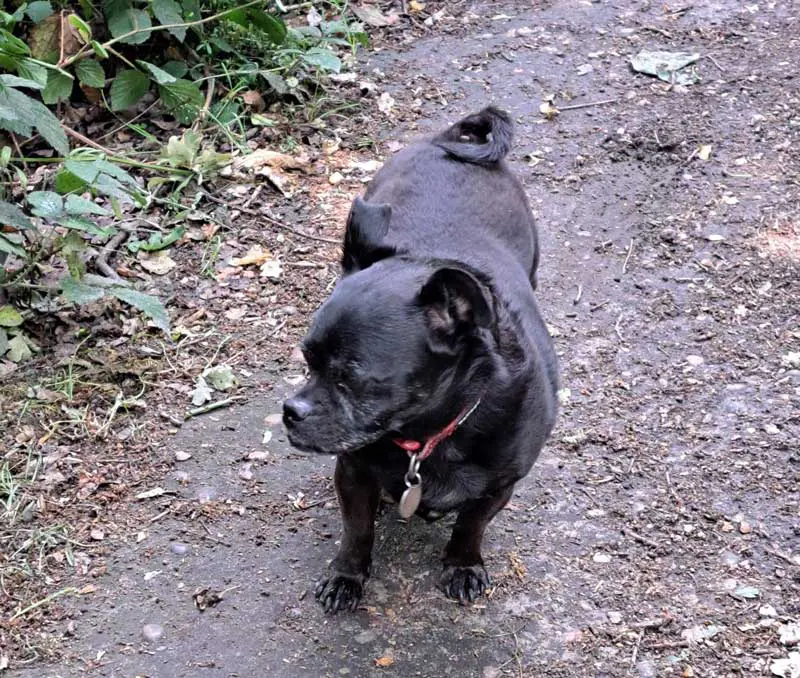
Jas’ owner had read about an injectable treatment for mast cell tumours, given directly into the tumour and we were happy to consider this option. It results in 75 per cent of dogs being tumour-free a month later.
Not a guarantee, but good odds and the treatment can be done with sedation on an outpatient basis.
We have experience of using the treatment and have also attended several seminars and shared information on its use, so despite it being a new treatment, we felt able to discuss its pros and cons and also administer it effectively.
One thing that is unusual is that we were very comfortable in treating only the two rapidly growing tumours and leaving several other mast cell tumours behind. This goes against a lot of treatment principles – but completely matched our goal of preserving healthspan and focusing only on the tumours we felt were jeopardising it.
As the tumours were large, our hopes were to delay their progression and keep Jas feeling well for longer. We were delighted to see the tumours completely resolved when we saw her a month later.
The treatment had caused some mild discomfort in the first week (which was treated), but Jas soon recovered and is continuing her daily chemotherapy treatment, which now requires minimal ongoing checks with her vets.
Around six months later and given their initial appearance, we can be quite sure that the large tumours would have caused her an issue. We didn’t focus on eradicating all the tumours at all costs – Jas has lots of lumps that are not affecting her daily life. She is very happy having had a minimally invasive and focused treatment and we hope that her healthspan will continue to be preserved for some time to come.
At NDSR, we have four oncology specialists who, before knowing the word existed, focus on healthspan, either on improving it, maintaining it or sadly accepting we may not be able to.
When compared to orthopaedic surgeons who can fix bones or neurologists who can make dogs walk again, we have fewer manual practical skills, but our skill lies in integrating knowledge of diseases, the treatment options and, above all, listening – both to the animals and their parents who come to see us.
We can offer treatments including immunotherapy, electrochemotherapy and state-of-the-art diagnostics, such as testing DNA in the blood for cancer. However, we can also instigate palliative treatment and monitoring if that is the right thing to do.
We welcome requests for advice from vets and have availability to see consultations from Monday to Friday.
Michael Macfarlane graduated from the University of Glasgow in 2009. He worked in first opinion practice in Buckinghamshire and in County Antrim, then started an internship at the University of Glasgow in 2012 with the aim of furthering his knowledge and experience in oncology. A year later he started his ECVIM residency in oncology. Michael became a diplomate of the European College of Veterinary Internal Medicine and a European-recognised specialist in oncology in 2017.