
10 Nov 2026
Andy Yale BVM BVS, MVetMed, DipECVIM-CA, MRCVS reviews a practical approach to diagnosis, staging and treatment of these cases.

Andy Yale
Job Title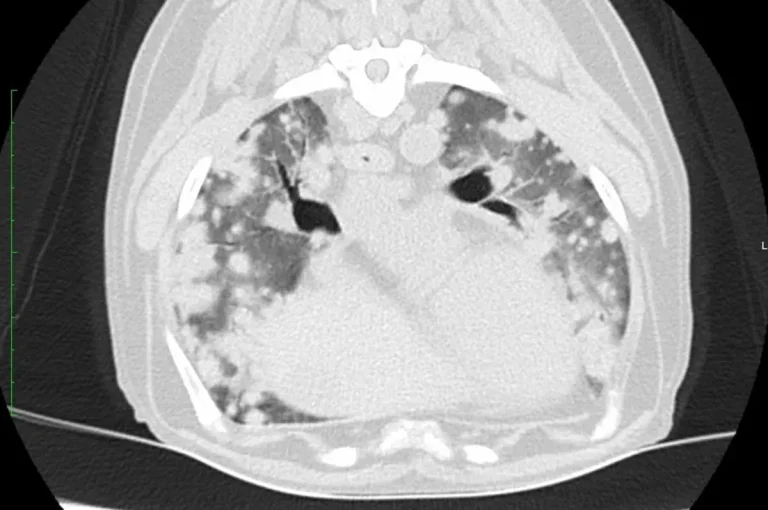
Figure 1. CT image showing widespread pulmonary metastatic disease in a dog with splenic haemangiosarcoma.
For many owners, a diagnosis of splenic haemangiosarcoma can feel like a death sentence.
The prognosis is certainly poor in many cases – particularly where metastatic disease is already present – but treatment can still be worthwhile. Surgery, chemotherapy and appropriate supportive care can extend both survival and, importantly, the period of good quality of life, and many elements of this management can be delivered successfully in general practice.
This article reviews a practical approach to diagnosis, staging and treatment, with an emphasis on where intervention is most likely to make a meaningful difference.
Canine splenic haemangiosarcoma (HSA) is an aggressive malignant vascular tumour and one of the most common splenic malignancies in dogs. Although HSA has traditionally been considered to arise from mature endothelial cells, current evidence supports a more complex origin, potentially from pluripotent haematopoietic progenitor cells capable of endothelial differentiation1. Clinical behaviour is dominated by marked angiogenesis, local invasion and early haematogenous metastasis.
The spleen is the most common primary site, although HSA also occurs in the right atrium/auricle, liver, skin and subcutaneous tissues, retroperitoneum and other viscera. Cutaneous HSA is biologically distinct and often less aggressive. Visceral HSA behaves very differently, with micrometastatic disease assumed to be present in many dogs, even when staging identifies no gross metastasis, which explains why local treatment alone is rarely sufficient1.
Splenic HSA predominantly affects middle-aged to older dogs. German shepherd dogs, golden retrievers and Labrador retrievers are commonly represented, although any breed can be affected1. Presentation varies from an incidental splenic mass to dogs presenting in hypovolaemic shock secondary to haemoabdomen.
Typical signs of spontaneous tumour rupture include acute weakness, collapse, tachycardia, pale mucous membranes and poor pulse quality. A history of intermittent lethargy, reduced appetite, vomiting or transient weakness may precede the acute event and can reflect smaller subclinical episodes of haemorrhage.
It is important to note, however, that a ruptured splenic mass is not diagnostic of HSA. In a systematic review of 1,150 dogs with non-traumatic haemoperitoneum secondary to a splenic mass, 73 per cent had a malignant lesion and 87.3 per cent of those malignancies were HSA2. The probability is, therefore, high, but a minority of dogs do have benign disease. This is important to remember when discussing emergency splenectomy with owners, before histopathology is available.
In an unstable dog, initial investigations should be focused and efficient. Packed cell volume/haematocrit, total solids, blood gas and lactate measurement provide useful information regarding the severity of blood loss and tissue hypoperfusion. In dogs with HSA, haematology commonly identifies anaemia and thrombocytopenia, with schistocytes and acanthocytes frequently present on blood smear exam. Coagulation abnormalities are also common and can range from disseminated intravascular coagulation to a hypercoagulable state1.
Point-of-care ultrasound (POCUS) is very useful in the emergency setting. Abdominal POCUS can identify free abdominal fluid and often the splenic mass itself, while thoracic POCUS can rapidly screen for pleural or pericardial effusion. Abdominocentesis, thoracocentesis or pericardiocentesis is indicated to classify the type of effusion. Stabilisation should take place alongside these investigations, with IV fluid therapy and blood products used according to the patient’s perfusion status, degree of anaemia and ongoing haemorrhage.
Once the dog is stable, more complete staging should ideally take place prior to surgery. Thoracic radiographs remain acceptable, although CT is more sensitive for detection of small pulmonary nodules and is preferable where available (Figure 1). Abdominal ultrasonography or CT should also be performed to assess the splenic mass and look for gross metastatic disease involving the liver, omentum, peritoneum or other abdominal organs.
Echocardiography should also be considered as part of staging, as concurrent right atrial or auricular masses have been reported in approximately nine per cent of dogs presenting with splenic HSA, although estimates vary between studies and are based on relatively small retrospective cohorts3.
Fine-needle aspiration of the primary splenic mass is often unrewarding because HSA exfoliates poorly and aspirates are usually dominated by blood. A risk of haemorrhage also exists. Histopathology following splenectomy, therefore, remains the most common method for definitive diagnosis. Immunohistochemistry, most commonly using endothelial markers such as CD31 or von Willebrand’s factor, can assist when differentiation from other splenic mesenchymal tumours is difficult1.
Splenectomy is the mainstay of treatment for splenic HSA (Figure 2). Stage I disease is confined to the spleen; stage II includes splenic rupture or regional lymph node metastasis; and stage III denotes distant metastasis.
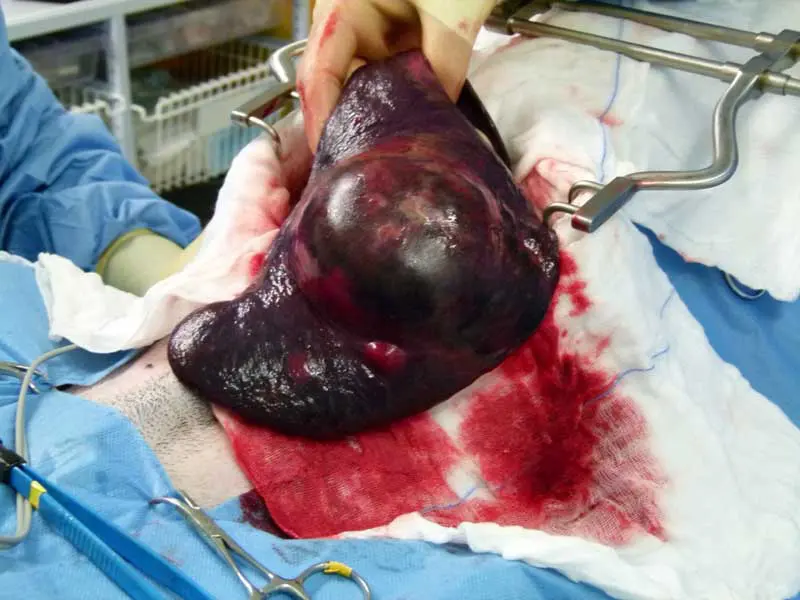
Splenectomy is recommended for most dogs with stage I or II disease, provided they are stable enough for anaesthesia. In stage III disease, the decision is made on an individual case basis, but surgery can still provide useful palliation where the splenic mass is actively bleeding or considered at high risk of further rupture.
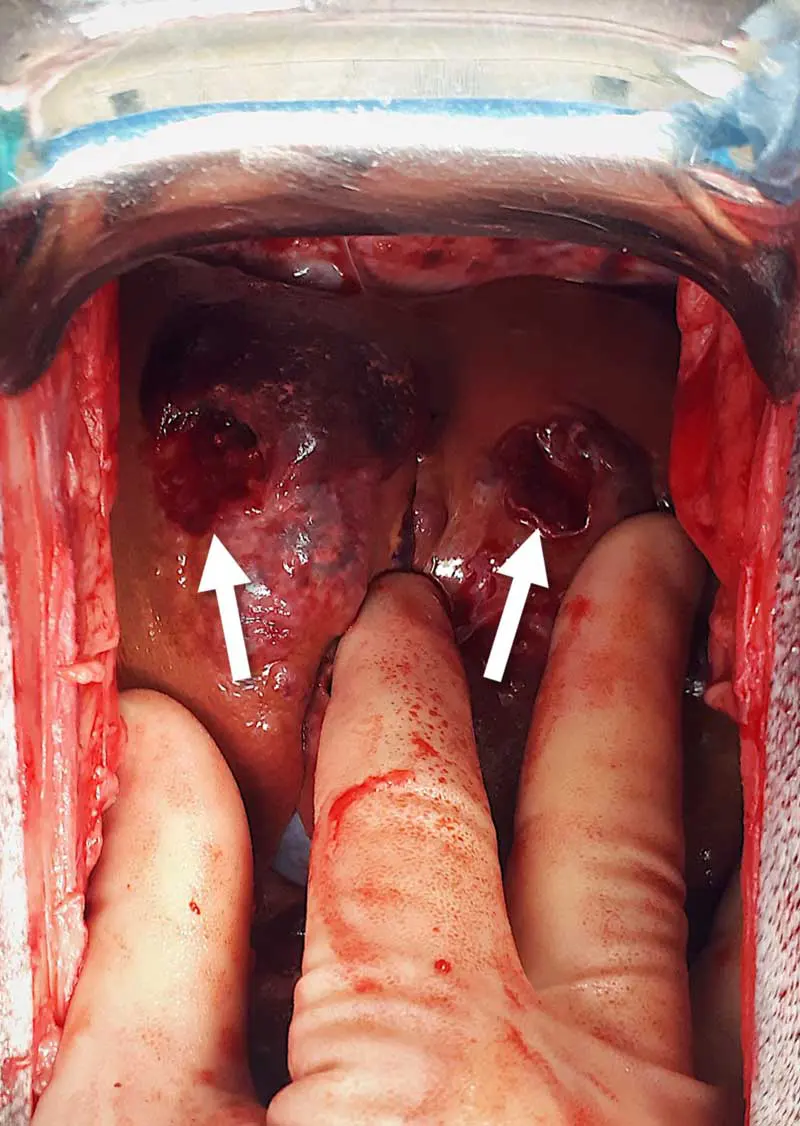
The abdomen should be explored carefully at surgery, with suspicious lesions in the liver (Figure 3), omentum or peritoneum biopsied rather than assumed to represent metastasis. This is particularly relevant because benign splenic disease can rupture, while incidental non-neoplastic hepatic or omental lesions are common in older dogs.
Surgery alone is rarely adequate treatment for confirmed HSA. In a retrospective study of 208 dogs, the median survival time (MST) following splenectomy alone was 1.6 months, and clinical stage was the only prognostic factor significantly associated with survival4.
Even where disease appears localised at diagnosis, microscopic metastatic disease is very likely to be present in most dogs with splenic HSA. Splenectomy alone is, therefore, rarely curative, with MSTs generally around 1.5 to 3 months. Adjuvant anthracycline-based chemotherapy remains the standard treatment for dogs with stage I to II disease, with doxorubicin most commonly administered at 30mg/m² IV every three weeks for six doses.
Survival following chemotherapy remains strongly stage-dependent. Across published anthracycline-based studies, MSTs of approximately 8 to 12 months for stage I disease, 3 to 6 months for stage II disease and around 2 to 5 months for stage III disease have been reported, although considerable variation exists between studies5-7. The presence of macroscopic metastatic disease should not necessarily preclude chemotherapy, as responses can occur in gross disease.
However, in most dogs with stage III HSA, the more realistic aim is slowing progression rather than achieving significant tumour regression. In a multicentre study of 103 dogs with stage III splenic HSA, maximum-tolerated dose chemotherapy prolonged MST to 140 days, compared with 40 days in dogs receiving no adjuvant therapy6.
Doxorubicin remains the best-established drug, although alternatives can be considered depending on the circumstance. Epirubicin can be used where concerns are shared regarding doxorubicin-associated cardiotoxicity. Carboplatin is another option when anthracycline treatment is not suitable, as recent research has shown potentially similar efficacy to doxorubicin in the adjuvant setting8.
Owners are often concerned that chemotherapy will cause the same degree of toxicity associated with treatment in people. In veterinary oncology, however, preservation of quality of life is a major treatment priority, and most dogs tolerate chemotherapy very well. Owner-reported studies support this, with good quality of life generally maintained during treatment and adverse effects not necessarily translating into a reduction in perceived quality of life9.
If adverse effects occur, they most commonly consist of transient gastrointestinal signs or myelosuppression. When clinically significant toxicity occurs, many cases can be managed on an outpatient basis with supportive medications and/or a short treatment delay.
Subsequent chemotherapy doses can also be reduced where necessary, allowing treatment to continue while reducing the risk of recurrent toxicity. Severe adverse effects requiring hospitalisation can occur, but are rare.
Metronomic chemotherapy involves continuous administration of low-dose oral chemotherapy, most commonly cyclophosphamide-based protocols, with the aim of inhibiting angiogenesis and modulating the tumour microenvironment.
Evidence suggests that outcome is comparable to adjuvant anthracycline-based chemotherapy in dogs with stage I to II splenic HSA, so this can be an alternative in dogs where intravenous chemotherapy is not possible (for example, due to owner finances or patient temperament)10. However, metronomic chemotherapy does not appear effective compared to conventional chemotherapy where macroscopic metastases are present (stage III disease), so should not be recommended in this setting6.
Owners frequently ask about complementary treatments – particularly Coriolus versicolor (Turkey tail mushroom) and Yunnan Baiyao. C versicolor contains polysaccharopeptide (PSP), which has immunomodulatory and potential anti-tumour effects, although a prospective study of 101 dogs with splenic HSA found no survival benefit from adding PSP to doxorubicin chemotherapy and that single-agent PSP was also not an effective substitute for conventional chemotherapy11.
Yunnan Baiyao is widely used in dogs with HSA because of its proposed haemostatic properties; however, evidence supporting clinically meaningful haemostatic effect is lacking.
Both substances appear well tolerated and can be permitted alongside conventional therapy if owners wish, but expectations should be managed regarding anti-tumour effect.
For dogs with advanced/refractory disease, significant comorbidities or owners who decline anti-cancer treatment, management should focus on quality of life. Supportive treatment may include antiemetics, appetite support and analgesia, if required. Repeated bleeding, progressive weakness and declining appetite are common features of advanced disease, and at this stage euthanasia needs to be discussed.
For dogs receiving chemotherapy, or following completion, restaging every two to three months is indicated to assess response to treatment and for disease progression. Once macroscopic metastasis develops, further chemotherapy can be considered; although, response to further chemotherapy is generally modest, and treatment decisions should be based on clinical signs, rate of progression and expected quality of life.
The prognosis for splenic HSA remains guarded to poor. As already outlined, stage is consistently one of the strongest prognostic factors, with dogs that have disease confined to the spleen experiencing significantly improved survival compared to those presenting with rupture or distant metastasis. However, this does not make treatment worthless.
Many dogs recover rapidly after splenectomy and tolerate adjuvant chemotherapy well, gaining several months of good quality of life which means so much to their family.