
Advertorial
19 October 2026
Join us for a different kind of evening CPD
Wouldn’t you like derm consults to be an easier part of your day? Find out how with the Scratch That tour…
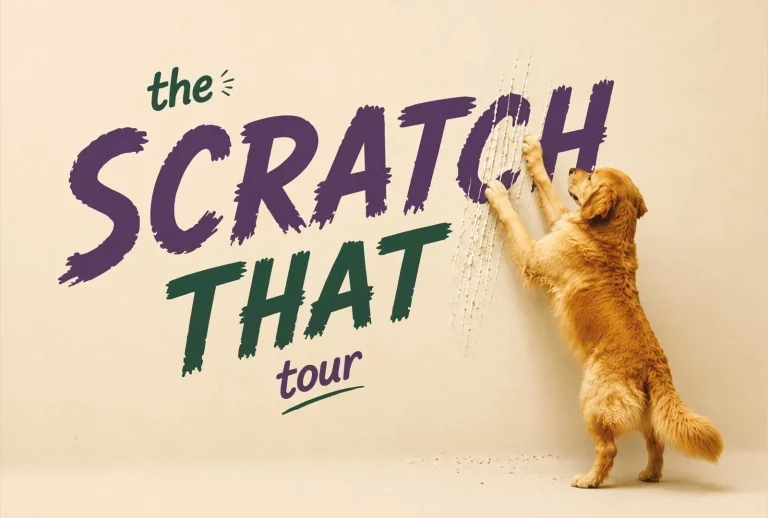
An itchy dog, a frustrated owner and a consultation that starts to run over its allotted time – we all know how quickly a dermatology consultation can become a little more complicated than you’d like.
Owners have high expectations. They expect you to resolve their dog’s itch and get them back to normal, quickly and affordably1,2.
In fact, 80% say they would leave a veterinary practice if their vet couldn’t figure out how to treat their itchy dog3.
But do we know what each owner’s expectations really are? Sometimes, the simplest thing is to ask: “What would you consider to be a good outcome for your dog?” Understanding what owners expect from treatment gives you the opportunity to agree together on what success should look like.
“It may be that the patient is doing well while they’re on therapy, but the owners expect them to get back to normal.”
Victoria Robinson, BVM&S, BSc, CertAVP (VD), DipECVD, MRCVS,
EBVS and RCVS-recognised specialist in veterinary dermatology
This is exactly the kind of challenge we’ll be exploring during the Scratch That tour.
Our opportunity is to help owners understand what successful control can look like. We can start to do this by helping owners understand more about what’s possible with itch management and helping give dogs the best chance of achieving normal itch levels.
So, how can we start to raise the bar for what we can achieve for dogs, and their owners?
Successful itch management means going further than before
If we’re going to raise the bar in treating canine atopic dermatitis, we need to start by looking at what successful itch management really means.
Historically, a two-point reduction in itch score, or a 50% reduction in pruritus, was considered a successful outcome for dogs with allergic and atopic dermatitis5. But that could still leave a dog experiencing significant levels of itch5.
As treatment options have evolved, so too have our expectations of what successful control looks like. International guidelines increasingly recommend assessing treatment by the achievement of specific pruritus scores5. A PVAS score of less than 2, for example, represents the normal level of itch seen in non-allergic dogs1.
With 79% of owners expecting their dog to get back to normal after treatment, and treatment goals increasingly focused on achieving normal levels of itch, owner expectations and veterinary recommendations are becoming more closely aligned1,5.
Helping owners understand what ‘normal’ means
Of course, “normal” may mean different things to different people. So, how can we make it something that owners can better understand, recognise and aim for?
One simple way is to involve owners in rating their dog’s itch using the Pruritus Visual Analogue Scale (PVAS).1 This validated scale gives owners a simple way to rate their dog’s itch on a continuous scale from 0 (no itch) to 10 (extreme itch). Importantly, a score of less than 2 represents a normal level of itch for a healthy dog1.
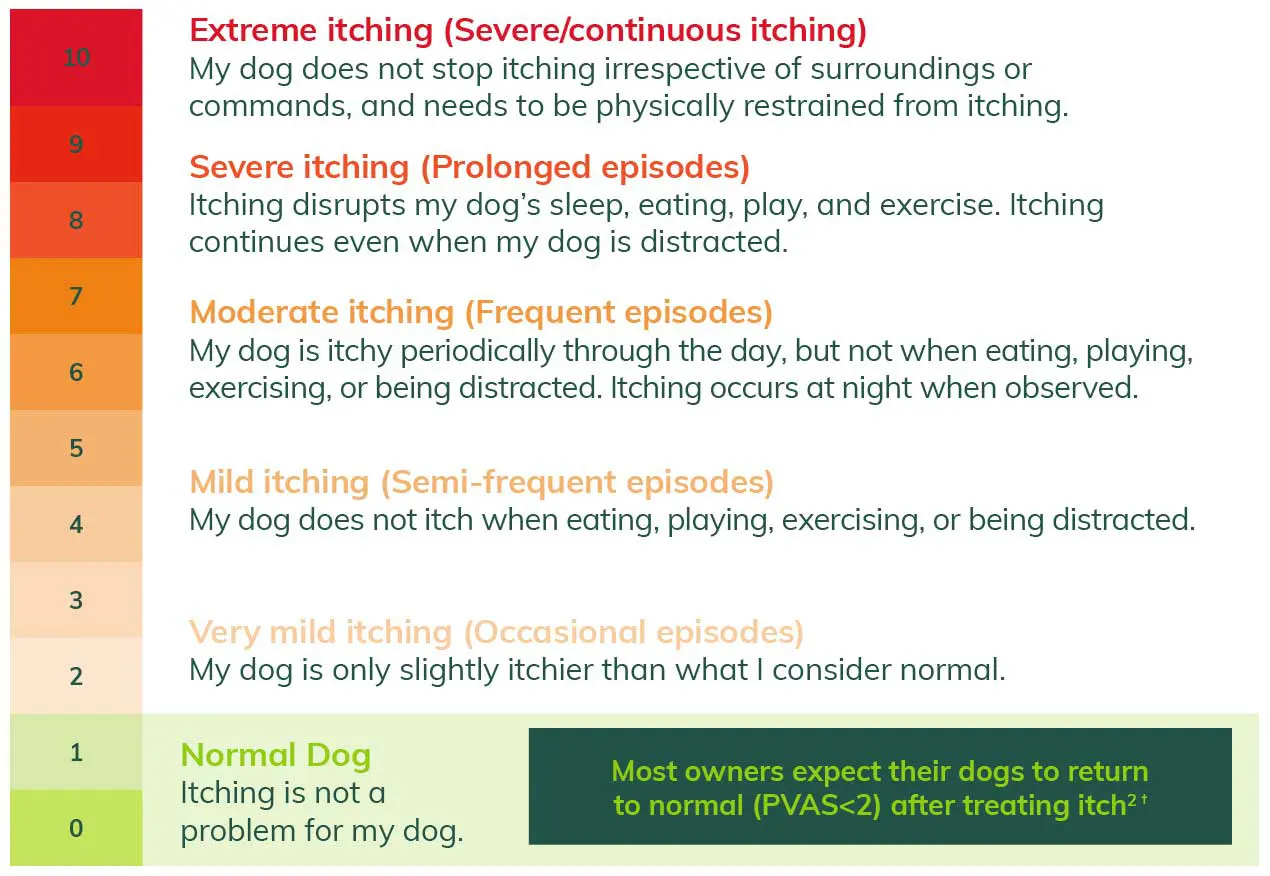
Using the PVAS regularly can help owners see the difference between a dog that is simply a bit better and one that has reached normal levels of itch. It also gives vets and owners a shared way to track progress, talk about treatment and, ultimately, agree on what success looks like.
Of course, agreeing on treatment goals is only part of the picture. Achieving them depends on what owners are realistically able to do at home.
Making treatment achievable for owners
Even the best treatment plan needs to work for the person carrying it out at home. It sounds simple, but it’s often not. What if their dog resists having its ears cleaned? Is the owner capable of shampooing their dog at home? There are many situations where compliance can be difficult for owners. It’s important that you ask questions during consultations. Talk openly and honestly, because understanding what owners can realistically manage at home will help inform the treatment plan you recommend.
It’s time to bring it all together
As expectations around managing canine atopic dermatitis continue to evolve, there’s real value in sharing what’s working in practice and in finding ways to make dermatology consultations less stressful for everyone.
At each Scratch That tour evening, dermatology specialists and experienced GP vets will share their own experiences of managing allergic and atopic dermatitis, including how newer treatment approaches and benchmarks are influencing the way we judge success.
The Scratch That tour is coming your way soon
We’d like to invite you to the Scratch That tour, a new event series bringing vets together from across England for relaxed, educational evenings focused on canine atopic dermatitis.

- Free, interactive CPD in a relaxed setting
- Live case discussions exploring the realities of everyday derm consults
- Practical tips and insights designed for the 15-minute consult
- Fresh thinking on canine atopic dermatitis from specialists in dermatology
- Dinner, drinks and good company
- A short wellness session designed with busy veterinary professionals in mind
Don’t miss out! Book your place now for one of the following tour dates:

And for every vet who attends in person, Elanco will make a donation to StreetVet*, helping to support veterinary care for the pets of people experiencing homelessness.
Can’t make it in person? You can also register to watch the Bristol event via live stream.
If you’ve ever wished your dermatology consultations could run more smoothly, this is your chance to discover how.
Register for your nearest tour event now.
Spaces are limited, so click here.

References
1. Rybnícek J et al (2009). Vet Dermatol 20(2): 115-122
2. Hanna B (2022). DVM360 53: 42. Available from https://www.dvm360.com/view/earlier-dermatology-referral-rewards-primary-care-practice-part-1-easing-client-expenses-and-enhancing-patient-care. Accessed January 2025
3. America’s Itchy Dogs (2025). Elanco Animal Health 2025. Available from Earlier dermatology referral rewards primary care practice (part 1): easing client expenses and enhancing patient care | dvm360
4. Forster S et al (2025). Vet Dermatol 36(2): 165-176.
5. Olivry T et al (2018). BMC Veterinary Research 238.
* For each in-person delegate who attends a Scratch That tour event, Elanco will donate £5 to StreetVet (Registered Charity: England & Wales 1181527), up to a maximum aggregate donation across all Scratch That tours of £3,000.
ZenreliaTM film coated tablets contain ilunocitinib. Legal category POM-V in UK, POM in IE. For further information call Elanco Animal Health on +44(0)1256 353131 or write to: Elanco UK AH Limited, Form 2, Bartley Way, Bartley Wood Business Park, Hook, RG27 9XA, United Kingdom. For further information, consult the product SPC. Zenrelia, Elanco and the diagonal bar logo are trademarks of Elanco or its affiliates. © 2026 Elanco or its affiliates PM-IE-26-0243. Date of preparation 10/26.
Advice should be sought from the medicine prescriber prior to use. Prescription decisions are for the person issuing the prescription alone.
Use medicines responsibly www.noah.co.uk/responsible www.apha.ie