28 Apr 2026
Vet Mark Gosling presents an interesting case in a five-month-old shih-tzu puppy.

Mark Gosling
Job Title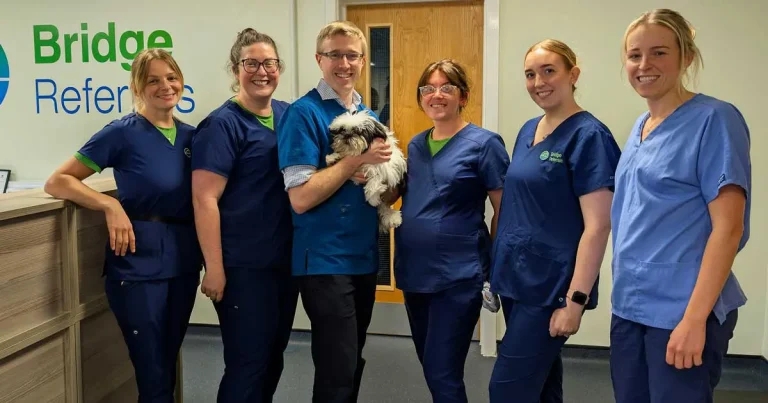
Cooper with the surgical team at Bridge Referrals.
Cooper, a five-month-old shih-tzu puppy, was referred to the soft tissue team at Bridge Referrals after being diagnosed with an extrahepatic portosystemic shunt (EHPSS) by his primary care vet, writes Mark Gosling.
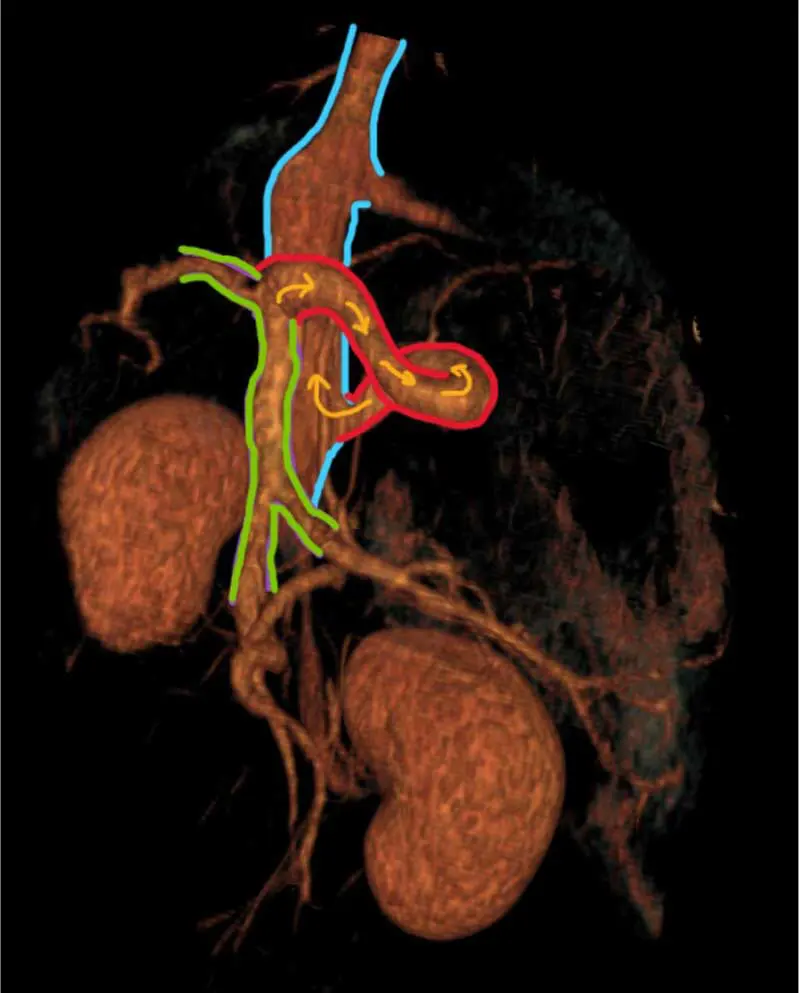
Cooper had suffered from lower urinary tract signs as well as early changes in mentation. Following a period of medical stabilisation, CT angiography was performed and this confirmed a right gastro-caval shunt entering the caudal vena cava in the region of the epipolic foramen.
Cooper’s portal vein above the shunt was very small, so the likelihood of an acute ligation being feasible was deemed to be slim. Having reviewed the potential approaches, it was decided that a laparoscopic approach might be a good option.
One attraction of a keyhole approach was that a period of rest would not be required following discharge from hospital, making life easier for Cooper and his owners.
Keyhole cellophane banding of EHPSS is a relatively new technique in dogs, with a low complication rate reported in a study by Poggi et al (Vet Surg 2022).
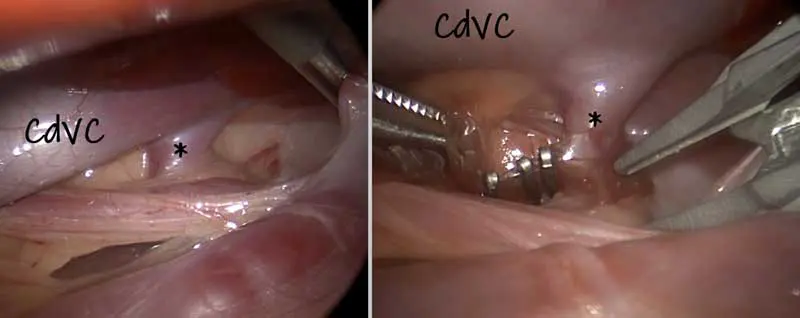
In Cooper’s case, a right flank approach was utilised and excellent visualisation of the shunt insertion into the vena cava was achieved. Following dissection of the shunting vessel, a cellophane band was placed around it and secured with clips. No intraoperative or short-term postoperative complications occurred, and Cooper was discharged from hospital following a period of inpatient monitoring for post-surgical neurologic complications.
At his two-month postop check up, he had almost doubled in size and his bile acid stimulation test was pleasingly normal. The author, who leads the soft tissue team at Bridge Referrals, said he was thrilled to be able to offer another minimally invasive procedure to veterinary patients in the north of England. He said it had been a challenging surgery, not least due to Cooper’s small size, but the team worked together fantastically to achieve the outcome hoped for.
The author’s preference is still to ligate EHPSS where this is feasible, but for cases where that is not likely to be possible, laparoscopic attenuation offers a rapid recovery time and low morbidity.
Advances in surgical techniques are always exciting, and the author is incredibly grateful to be part of such a passionate and supportive European soft tissue community.
He would particularly like to thank Manuel Jiménez Peláez for his mentoring and advice prior to Cooper’s surgery.