
15 Sept 2026
Seamus Whitehead BVM, BVS, MRCVS discusses signs and treatments to this serious toxicity issue in felines.

Seamus Whitehead
Job Title
Image: Ilya / Adobe Stock
A four-month-old domestic shorthair male entire cat presented after potential ingestion of lily pollen around one hour previously. The owner knew the seriousness of the incidence, as her friend had previously lost a cat for the very same reason.
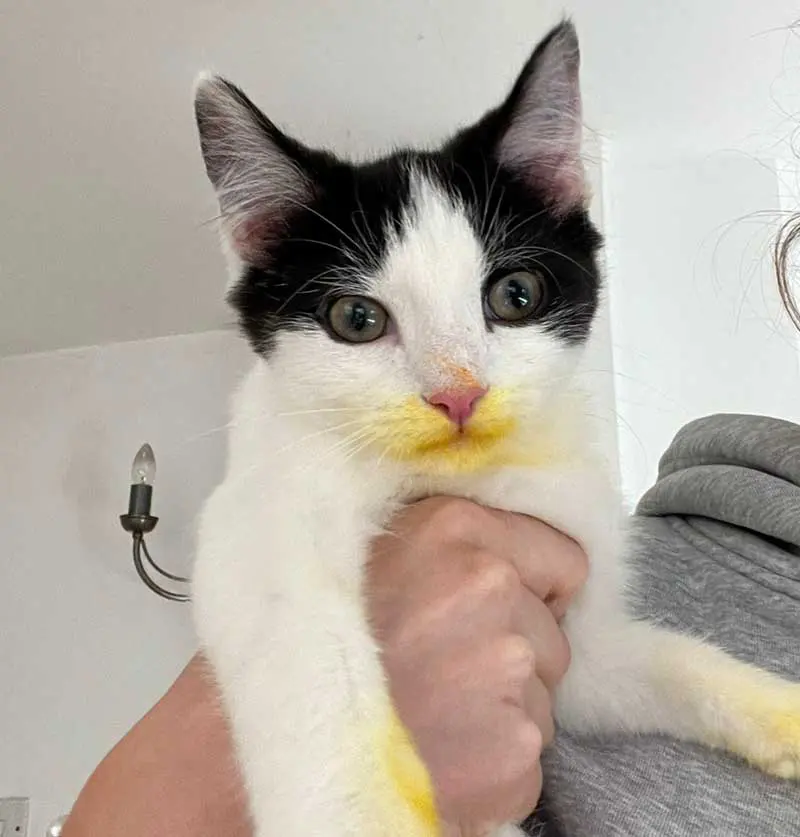
Upon presentation, the cat was bright, alert and responsive, his temperature was 38.1°C, heart rate was 140, respiratory rate was 30. He had a large amount of yellow pollen staining to his fur around his face and forelegs. The owner reported he had been grooming himself after the incident in an attempt to clean his fur, almost guaranteeing ingestion.
The cat was sedated with medetomidine (10µg/kg) upon admission, which unfortunately did not produce a successful emesis. While sedated, his fur was thoroughly washed with a gentle shampoo and some areas of fur clipped out where the washing did not prove successful. He was commenced on intravenous fluid therapy of Hartmann’s solution at twice maintenance. His medetomidine was antagonised with atipamezole (25µg/kg IM).
Upon recovery, he was syringe-fed activated charcoal 4g/kg and then fed a proprietary cat food. His activated charcoal was continued at six-hourly intervals for 48 hours.
He went home overnight following a subcutaneous fluid bolus and was readmitted the following morning to continue IVFT at twice maintenance. His blood sample was repeated and his kidney values were still within normal limits. He was his normal self the following day and had a good appetite. Following 48 hours of fluid therapy and activated charcoal, the treatment was discontinued with regular follow-up of the cat’s urine samples to check specific gravity and dipstick values.
Pleasingly, he made a full recovery, and one month later attended the clinic for castration.
We are pleased to report that he is doing well three months later with no signs of renal impairment. This case highlights the importance of acting fast in potential ingestion incidents and shows the crucial role of public awareness around common toxicities in animals.
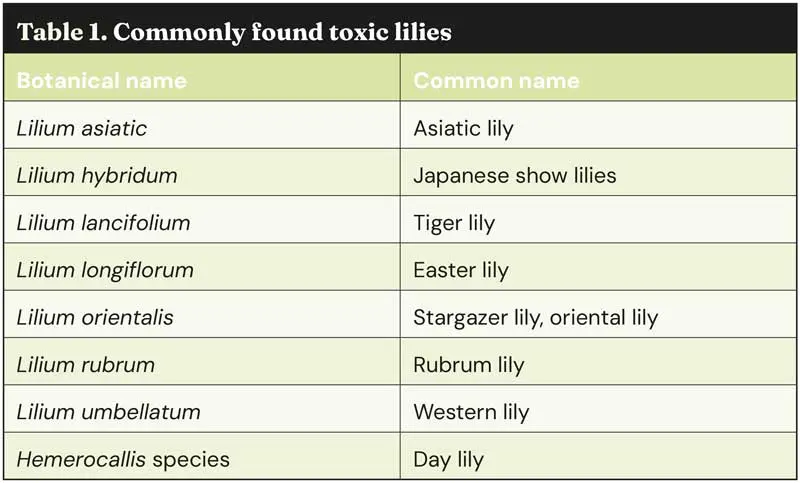
Lilies are common plants found both in the garden and in bouquets of flowers. Table 1 lists the common toxic lilies found in gardens and floral displays1. The exact toxin is not known; however, it is a water soluble toxin found in all parts of the plant. Day lilies are also toxic; however, they are from a different species of plant.
Other plants that contain the word lily in their name are less toxic to cats, such as peace lilies and Peruvian lilies, which often only cause mild stomach irritation. Lily of the valley is also toxic to cats; however, it has cardiac effects rather than renal2.
All parts of lily plants are toxic to cats; however, the most common way of ingesting it is through the pollen, as it so readily falls off the stamen when brushed against by inquisitive cats. The toxin causes necrosis of renal tubular epithelial cells, ultimately causing renal failure2.
Common clinical signs appearing in cats are vomiting, lethargy, drooling and anorexia. These signs usually appear within six hours of ingestion.
Within 18 to 24 hours, the renal parameters on a blood panel will be raised and the cat will likely be demonstrating signs of renal insufficiency such as drinking and urinating more. Ultimately, this can progress to renal failure and death within 36 to 48 hours. The mortality rate for cats with delayed treatment ranges between 50 per cent to 100 per cent3,4.
The most important factor for success of treatment is the speed of instigating the therapy. Failure to start treatment within 18 hours of ingestion of lilies can lead to irreversible kidney failure and, ultimately, death. If pollen is present on the coat, grooming should initially be stopped by placing an Elizabethan collar.
If the lily has been ingested a few hours prior to presentation then induction of emesis should be attempted, as long as the cat does not have severe CNS depression or respiratory distress. In cats, induction of emesis is best attempted when the cat has a full stomach, and the dose of medetomidine used is 5µg to 20µg/kg IM. If the cat has ingested pollen, it will likely be on its fur. While it is sedated, this is a good time to decontaminate the coat with warm water and a mild detergent; for example, baby shampoo or a mild veterinary shampoo.
Once the cat has recovered from the sedation, it is advised to start activated charcoal therapy, as this can absorb the lily toxin and reduce GI absorption. The dose used is 4g/kg and may be repeated every four to six hours until the black charcoal is seen in the cat’s faeces. Many proprietary activated charcoal products now contain sorbitol, which is useful to act as a cathartic to increase GI transit time and, therefore, decrease absorption.
Intravenous fluid should be started as soon as practical to do so, to support kidney function and facilitate the flushing out of the lily toxin. This should be continued for 48 hours. Hartmann’s solution is a suitable product, and rate should be based on the individual animal; however aggressive treatment is normally warranted (at least twice maintenance). Urine output should also ideally be monitored, as anuria is an indication of renal failure, as well as monitoring specific gravity and glucosuria. Frequent monitoring of biochemistry values and SDMA are useful during hospitalisation and after the event to assess long term renal function.
If treatment is started before signs of renal failure, then the prognosis is good; however, once signs have developed, it is poor.
The standard of care for cats following lily ingestion is previously described in this article. As an interesting side note, the cat in this case was treated as a day patient receiving IVFT during working hours and subcutaneous boluses for overnight care.
A study from the US found survival rates similar to, but not quite as high, for outpatient treated cats (subcutaneous fluids rather than IV) compared to inpatient treated cats5. For cats receiving treatment as an outpatient, a survival rate was reported of 86 per cent versus 100 per cent in a tertiary referral hospital.
Personal preferences, financial considerations and geographical location influence the ability to access veterinary hospitals.
The author believes further research is required to develop evidence-based guidelines to provide cats with the best available contextualised care.
Seamus Whitehead is a small animal GP vet working in Derbyshire. He graduated from the University of Nottingham in 2019 and has completed a rotating internship. He has an interest in medicine and emergency and critical care.