
28 Jul 2026
OA in cats: advances in diagnosis, treatment and ongoing care
Alex Taylor RVN, CertSAN, ISFMDipFN, AdvCertFB and Sam Taylor BVetMed(Hons), CertSAM, PGCert(TLHE), FHEA, MANZCVS, FRCVS share an update on how to diagnose and manage this common condition in felines.
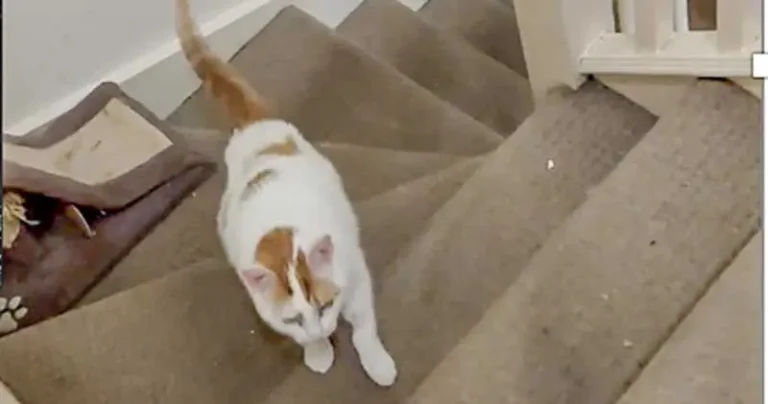
Figure 1. Asking caregivers for videos of cats moving at home can provide useful insight. Image: Courtesy of Sam Taylor
Osteoarthritis (OA) is common in older cats, and despite increased awareness among veterinary professionals and caregivers in recent years, many cases remain undiagnosed and untreated (Lefort-Holguin et al, 2025).
Although most frequently recognised in older cats, it can occur in younger patients; for example, secondary to trauma (Lascelles et al, 2010) or breed associated (such as hip dysplasia in the Maine coon or chondrodysplasia in the Scottish fold).
Management remains understudied, but a multimodal approach including pharmacological and non-pharmacological interventions and involvement of the whole veterinary team is likely to be most effective.
Diagnosing OA
Many cats with OA are diagnosed based on clinical signs rather than radiographic findings. Cats in pain due to OA may show behavioural changes that are reported by the caregiver rather than specific musculoskeletal signs such as limping (Bennett et al, 2012).
Furthermore, caregivers may misinterpret behavioural signs of musculoskeletal pain as a normal part of the cat’s ageing process (Lefort-Holguin et al, 2025).
Physical examination
In the consultation room, observation of gait abnormalities can be challenging if the cat is reluctant to move, and findings such as reduced range of joint motion or crepitus are not always present (Bennett et al, 2012).
Allowing the cat to walk around, jump on to a chair and examining in a location it is comfortable (for example, in the base of the carrier) can improve detection of abnormalities; even better are observations of mobility in the home environment via mobile phone footage. Asking caregivers to record videos of cats walking on a flat surface, jumping on and off chairs, and walking up and down the stairs can provide very useful examples of gait change that may be consistent with pain (Figure 1; Boone et al, 2025).
Other innovative ways of assessing mobility include collar-mounted actimetry monitoring and quantitative sensory testing (Lefort-Holguin et al, 2025).
Behavioural changes seen in cats with OA
Cats will mask signs of pain as a survival strategy and this can make pain challenging to recognise – especially in cats experiencing chronic pain, where associated behavioural changes can be subtle and gradual (Monteiro and Steagall, 2019). However, using simple questionnaires or checklists, such as the iCatCare mobility check list can help encourage caregivers to disclose information about any changes in their cat’s behaviour and mobility.
Another useful resource is painfreecats.org – this website gives caregivers and veterinary professionals access to The Feline Musculoskeletal Pain Index, which is a validated pain scoring tool that can be used to assess for chronic joint pain before diagnosis and to monitor a cat’s response to treatment (Enomoto et al, 2022).
Caregivers may report that their cat spends less time doing the following.
- Grooming: coat may be matted, as the cat cannot comfortably reach certain areas to groom (such as hips, spine, hindlegs, base of tail, ventral abdomen).
- Playing or hunting: the predatory sequence involves stalking, chasing, pouncing, capturing and manipulating prey (or toys), which may be challenging behaviours for cats with joint pain.
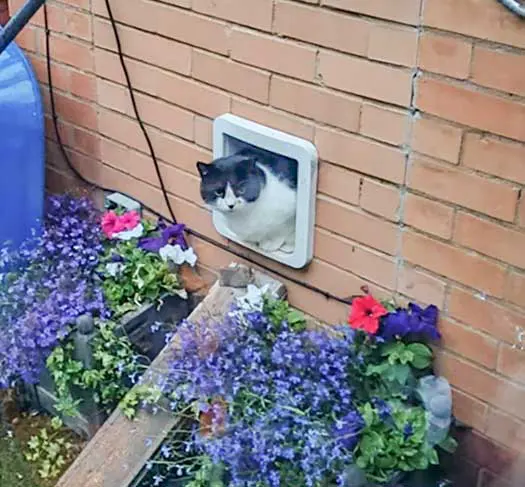
- Exploring outside: cats feel more vulnerable as they are less mobile, and may be more affected by the cold, so may prefer to stay indoors. Use of the cat flap may also be avoided if painful.
- Moving around the house: stairs may be challenging to navigate or are avoided altogether; this change may be reported as sleeping more.
- Scratching surfaces: hip and elbow pain may prevent cats from scratching – especially vertical surfaces. Claws may become overgrown due to cessation of scratching behaviours.
- Interacting with humans or other animals in the home: the cat may choose to spend more time away from the caregiver and other animals in the home, reporting sleeping more and spending time in unusual places in the home (such as under the bed).
Caregivers may report that their cat is more sedentary, when in fact the cat is unwilling to move due to anticipatory or actual joint pain. They may also disclose that their cat seems more “irritable”, but it is likely that the cat is reacting to human touch and is displaying repelling behaviours (for example, swiping, biting or vocalisations such as growling or hissing to prevent a potentially painful interaction). Affected cats may also resort to moving or running away from their caregiver as an avoidance response to anticipatory pain.
Some cats will overgroom chronically painful joints to reduce pain; self-soothing, hair loss and skin irritation may be present (Monteiro and Steagall, 2019).
Despite being a species that prefers elevated resting areas, cats with joint pain and impaired mobility will often favour lower resting areas – especially in warm areas, as this will provide additional comfort (Figure 2).
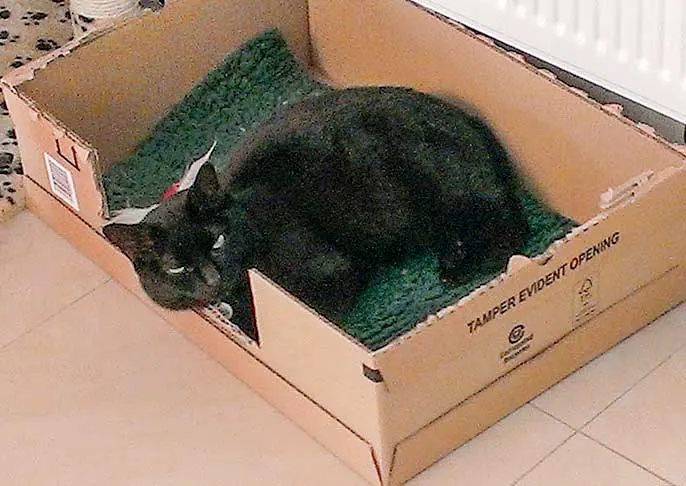
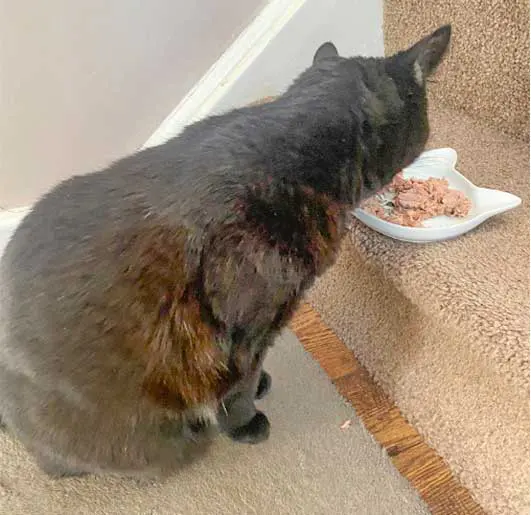
Affected cats may also struggle to eat and drink from bowls at floor level, finding it painful to flex their elbows or neck (if intervertebral disc disease or vertebral spondylosis are present). These cats may take longer to eat and drink, pausing frequently for breaks or choosing to eat little and often – they may even become hyporexic and lose weight if a pain-related aversion develops towards using a particular bowl.
House soiling and OA
House soiling is a common problem behaviour in cats with joint pain (Padalino et al, 2023) which may prompt a caregivers to seek veterinary attention. Common reasons for cats with osteoarthritis to house soil include:
- Discomfort stepping in and out of the litter tray, and adopting normal postures to pass urine/faeces.
- Litter tray is challenging to reach; for example, located upstairs.
- Other cats in the home blocking access to litter facilities.
- The cat no longer wants to go outside, but no litter facilities are (or have ever been) provided inside the home.
It is important to help caregivers understand that house soiling behaviours occur because their cat is experiencing joint pain, as this helps to take the blame off the cat, and advice can then be given on how optimise the cat’s litter facilities along with treatments to manage any pain. Cats with OA can also present with constipation due to reluctance to defecate (due to pain posturing) and resultant difficulty passing dry faeces.
Diagnostic imaging
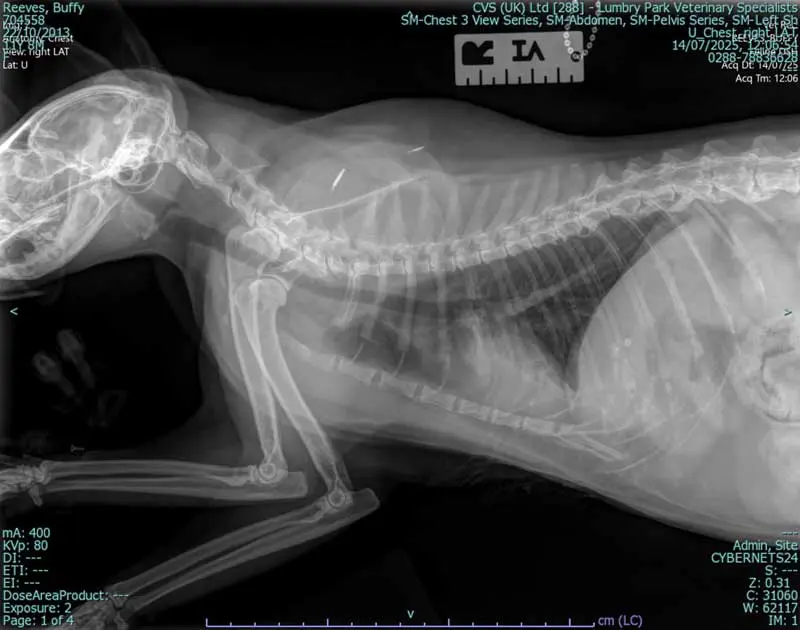
Radiography can identify abnormalities associated with OA (sclerosis, periarticular new bone formation, spondylosis), but these may correlate poorly with clinical signs and miss mild abnormalities that cause discomfort.
However, if senior cats or cats with the behaviour changes described are having sedation or anaesthesia for other reasons, an opportunity to document changes can be taken (Figure 3).
Management of OA
OA is optimally managed with a combination of pharmacological and non-pharmacological methods. Oral analgesics can be challenging for caregivers to administer, and comorbidities are common in senior patients which may limit choices.
However, a pragmatic approach to multimodal management can improve quality of life in affected cats.
Pharmacological treatment
Efficacy of interventions can be assessed by repeating mobility questionnaires or reviewing repeat home videos. NSAIDs are the most studied analgesics for cats with OA and can be used long term.
Meloxicam and robenacoxib are widely prescribed for this indication, and a few useful tips on NSAID therapy for OA include:
- Dose for lean bodyweight in overweight or obese cats.
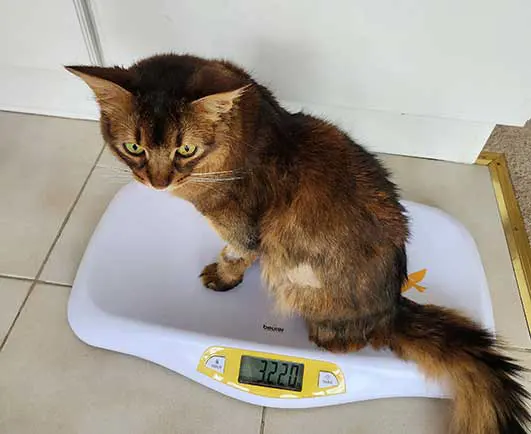
- Weigh cats, body condition score and muscle condition score regularly to ensure appropriate dosage and identify underlying disease (weighing can be performed at home; Figure 4).
- A few weeks after initially starting the recommended long-term dosage, this can be reviewed and may be reduced to the lowest effective dosage (ideally monitoring with validated pain scales to avoid under-treatment).
- Pair NSAID administration with food to create positive associations, ensure the cat has a normal appetite and the medication will not get stuck in the oesophagus.
- Encourage water intake in older cats to maintain hydration (see tinyurl.com/4vpb8622).
The use of long-term NSAIDs in cats with chronic kidney disease (CKD) has been studied (KuKanich et al, 2021), yet evidence supporting or refuting the use of NSAIDs in this situation remains limited. NSAIDs can be used in many cats with “stable” CKD (defined as a patient with minimal changes in bodyweight and creatinine over a period of two months, normotensive, non-proteinuric, no evidence of urinary tract infection, well-hydrated and eating normally). NSAIDs should not be given if the cat’s condition changes, appetite reduces or the cat is dehydrated, for example.
Patient selection is crucial, and caregivers should be encouraged to maintain water intake and be educated on signs of adverse effects. With the cat’s quality of life at the centre of any discussion, a risk versus benefit discussion can be had with caregivers. More information on long-term NSAID use can be found in the International Society of Feline Medicine guidelines (tinyurl.com/yxh93kvv).
Alternatives to NSAIDs described for the treatment of OA include:
- Tramadol: shown to improve mobility in OA compared to placebo (Guedes et al, 2018a); however, the drug is bitter and can be challenging to administer.
- Amantadine: an antagonist of N-methyl-D-aspartate receptors, which play a role in central sensitisation and, therefore, chronic pain. A blinded, placebo-controlled study showed that amantadine improved owner-identified impaired mobility and quality of life in cats with OA; although, activity was decreased in the treatment group, likely due to some sedative effects (Shipley et al, 2021).
- Anti-NGF mAbs: frunevetmab is an anti-NGF mAb (provided as a monthly subcutaneous injection) used to manage the pain of OA in cats (Gruen et al, 2016; 2021). Adverse effects include dermatitis, alopecia and pruritus. Long-term studies (beyond six months) and studies investigating safety of this anti-NGF mAb with concurrent NSAIDs and other medications, and in the face of comorbidities, are still needed in cats.
- Gabapentin: might be used alone or with NSAIDs for cats with OA, but is understudied, and adverse effects such as sedation and ataxia may worsen mobility. Gabapentin (10mg/kg by mouth every 12 hours) decreased activity in geriatric cats with OA while improving impaired activities compared with a placebo (Guedes et al, 2018b).
- Ketamine: given subcutaneously, anecdotally at 0.5mg/kg once a month for OA pain and, although understudied in cats, evidence is emerging in dogs with OA (Nielsen et al, 2026).
- Opioids: such as buprenorphine can be used as “rescue” analgesia during flare-ups, and transmucosally at home short term.
Non-pharmacological management
Non-pharmacological management incorporates nutritional management, physical and other therapies, and environmental modification. Omega-3 enriched diets and omega-3 supplements have shown efficacy in cats with OA (Corbee et al, 2013; Barbeau-Grégoire et al, 2022).
Weight management can also be helpful (for example, controlled weight loss in obese cats), and physical therapy, although rarely used in this species, can help improve muscle mass and stabilise sore joints. Other therapies such as acupuncture, therapeutic ultrasound and photobiomodulation lack an evidence base, but anecdotally, they help some patients.
Environmental modification
Veterinary professionals can give immediate advice on environmental modification to caregivers if they suspect a cat has mobility issues. This advice should be centred around optimising access to resources, and a guide for caregivers can be found via the QR code. Advice given needs to be practical and achievable for the caregiver, considering the time, effort and cost of optimising resources.
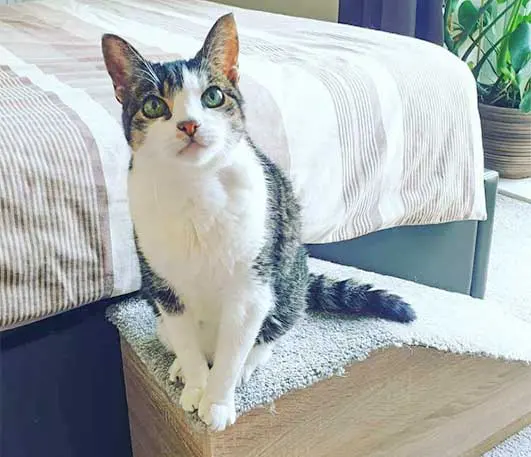
- Resting areas: access to a safe place to rest is key for all cats, and most cats prefer their bed to be positioned on an elevated surface. Caregivers can be advised to provide additional structures between the floor and cat’s bed, which enables cats with joint pain access to safe resting places; these may take the form of steps, ramps, or cat or human furniture (Figure 5).
- Food stations/bowls: raising food bowls off the floor so that cats do not need to flex their elbows to reach food can encourage them to eat (Figure 6). Cats will compete for access to food, so multiple food stations should be offered in different areas of the home (including lower levels) in multi-cat households, so that cats with joint pain do not need to bypass other cats in the home to reach food.
- Water stations/bowls: water bowls can be raised to encourage water intake, and caregivers can also offer running water from receptacles such as water fountains, providing the water is provided from a raised surface and offered in several areas of the home (including lower levels).
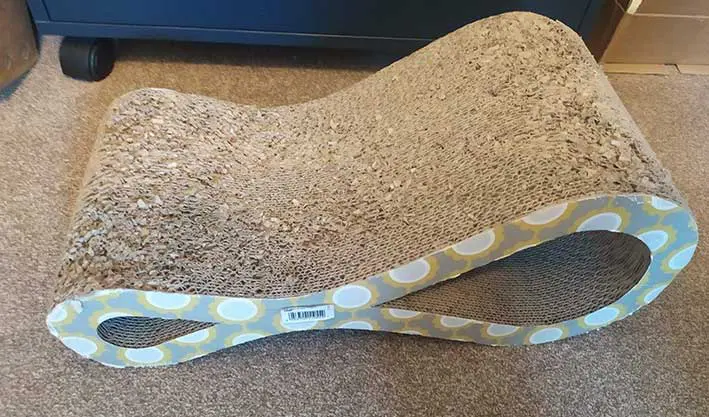
- Scratching surfaces: the action of scratching can be uncomfortable for cats with OA; therefore, they may avoid performing this behaviour altogether. Caregivers can help combat this by providing horizontal surfaces for their cat to scratch, so it does not have to stand up on its hindlegs and stretch to scratch. Offering surfaces that require less resistance during the scratching process (such as cardboard or carpet) may also encourage scratching behaviours (Figure 7).
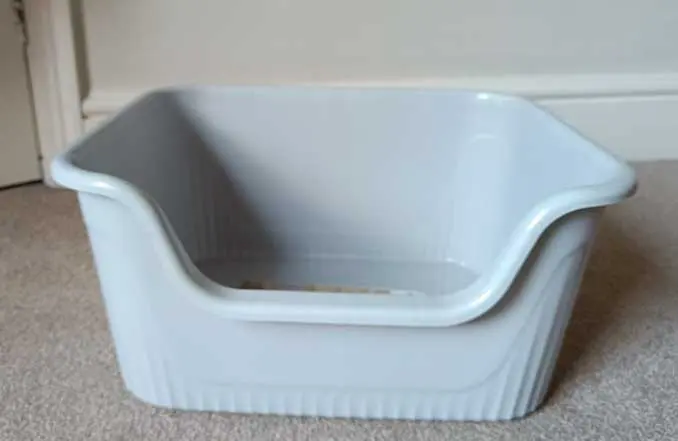
- Litter facilities: litter trays with raised sides can be challenging for cats with joint pain to enter. Caregivers can tackle this issue by offering litter trays with at least one lowered side to enable easy access (Figure 8). Multiple, separated litter trays should be offered in different levels of the home – especially in multi-cat households; however, additional litter trays can be provided on the lower levels of the home, so cats do not have to navigate the stairs to reach them.
- Non-slip surfaces: caregivers can offer cats rugs, short-pile carpet runners or gym mats along hallways in the home to provide some additional stability in areas where the flooring is slippery.
- Play: providing joint pain has been effectively managed, play times should not be omitted in cats with OA, as exercise can help maintain lean muscle mass and support joint health.
Older cats may also prefer to engage in predatory play behaviours from inside the comfort of their home. However, play sessions should be short, gentle and not too vigorous, as not to put stress on affected joints.
Cats that have outdoor access may also benefit from environmental modifications to resources outside. This may include providing:
- Ramps up to and down from cat flaps (Figure 9).
- Raised water bowls.
- Covered, ground level resting areas.
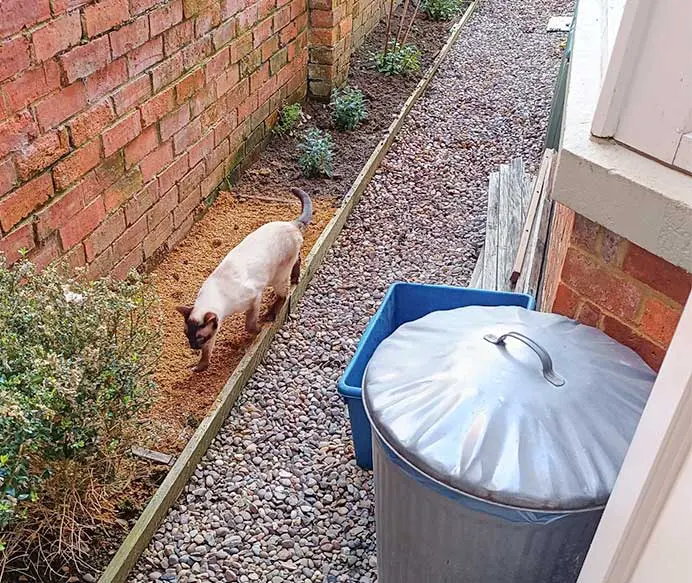
- Access to sandy, outdoor toileting areas (Figure 10).
Supporting caregivers to medicate their cat
Medicating cats can be challenging for caregivers, so treatment plans need to be pragmatic, otherwise cats will not receive the medication they need and the human-cat bond can break down (Taylor et al, 2022). Asking questions about which medication formulation is easiest for caregivers to administer, whether their cat will eat mediation in food (if an option) and how many times a day they are able to give medication can aid with caregiver compliance.
Veterinary nurses are well placed to offer caregivers advice and support about medicating their cat, and can report any issues about this back to the vet.
Further advice on how caregivers can medicate cats can be viewed on the iCatCare webpage.
Conclusion
OA is common in cats and should be suspected when behavioural change is reported, and caregiver videos may be helpful for documenting gait changes.
Management should involve the whole veterinary team and incorporate medication and environmental adjustments.
Veterinary nurses can play a key role in communication with caregivers.
- Use of some of the drugs in this article is under the veterinary medicine cascade.
PANEL: The veterinary nurse’s role in management of cats with osteoarthritis
The whole veterinary team should be involved in managing cats with chronic pain and supporting caregivers of affected cats (Monteiro et al, 2025). The role of the veterinary nurse is extremely important, as they can raise awareness about the signs of joint pain in cats to keep caregivers informed and provide invaluable ongoing support for managing these cases through nurse-led clinics (Monteiro et al, 2025).
Although veterinary nurses cannot diagnose, they may be the first team member to notice a cat is having mobility issues. Cats are often brought into the nurse’s clinic for a different reason; for example, a nail trim, where nurses might ask caregivers if their cat has shown any changes in scratching behaviours, as well as identify issues such as the cat having a stiff gait, sitting abnormally on the examination table, having a matted coat or a low muscle condition score – all of which are potential indicators of joint pain in cats. In these cases, veterinary nurses can alert caregivers that their cat may be uncomfortable or have mobility issues, ask them to complete a mobility or behavioural questionnaire, and offer referral to a vet for further investigation and treatment.
Care should also be taken when interacting with painful cats at the veterinary clinic, as they will likely be in a protective emotional state (Rodan et al, 2022). Many cats suffering from conditions such as osteoarthritis will also be elderly and many have reduced muscle mass and intervertebral disc disease, making prolonged handling and sitting on hard surfaces uncomfortable. Measures such as ensuring cats use soft, thick and warm bedding on examination tables, not hyper-extending limbs for cannula placements, giving cats breaks between procedures and allowing them to position themselves however they feel most comfortable can minimise any additional discomfort these cats might experience (Rodan et al, 2022).
Pain assessment and the administration of analgesia will also improve patient welfare.
- This article appeared in Vet Times (28 July 2026), Volume 56, Issue 28, Pages 6-11
Alex Taylor qualified as a veterinary nurse in 1997 and has completed the ISFM feline nursing certificate, diploma and advanced certificate in feline behaviour. In 2023, she passed the Advanced Diploma in Applied Animal Behaviour (Feline). Alex currently works for International Cat Care as cat well-being and behaviour advisor, and as a self-employed lecturer and writer on feline nursing, behaviour and well-being. Alex is a member of the International Cat Care Feline Wellbeing Panel. In 2024, she received the RCVS Inspiration Award for her commitment educating cat owners and veterinary professionals about cat behaviour and well-being.
Sam Taylor completed a Feline Advisory Bureau residency at the University of Bristol and was awarded the European Diploma in Veterinary Internal Medicine in 2009. In 2011, she became an RCVS-recognised specialist in feline medicine and in 2019 was made a fellow of the RCVS for outstanding contributions to the profession. Sam is a consultant for the International Cat Care Veterinary Society and works as an Internal Medicine Specialist at Lumbry Park Veterinary Specialists. She is currently completing a PhD in feline health and welfare.
References
- Barbeau-Grégoire M, Otis C et al (2022). A systematic review and meta-analysis of enriched therapeutic diets and nutraceuticals in canine and feline osteoarthritis, International Journal of Molecular Sciences 23(18): 10,384.
- Bennett D, Afiffin SMBZ and Johnson P (2012). Osteoarthritis in the cat: 1. how common is it and how easy to recognise?, Journal of Feline Medicine and Surgery 14(1): 65-75.
- Boone G, Pang DSJ, Shih H-Y and Moody CM (2025). Incorporating video telehealth for improving at-home management of chronic health conditions in cats: a focus on chronic mobility problems, Frontiers in Veterinary Science 12: 1500006.
- Corbee RJ, Barnier MMC, van de Lest CH and Hazewinkel HAW (2013). The effect of dietary long-chain omega-3 fatty acid supplementation on owner’s perception of behaviour and locomotion in cats with naturally occurring osteoarthritis, Journal of Animal Physiology and Animal Nutrition 97(5): 846-853.
- Enomoto M, Lascelles BDX, Robertson JB and Gruen ME (2022). Refinement of the Feline Musculoskeletal Pain Index (FMPI) and development of the short-form FMPI, Journal of Feline Medicine and Surgery 24(2): 142-152.
- Gruen ME, Thomson AE, Griffith EH et al (2016). A feline-specific anti-nerve growth factor antibody improves mobility in cats with degenerative joint disease-associated pain: a pilot proof of concept study, Journal of Veterinary Internal Medicine 30(4): 1.138-1,148.
- Gruen ME, Myers JAE and Lascelles BDX (2021). Efficacy and safety of an anti-nerve growth factor antibody (frunevetmab) for the treatment of degenerative joint disease-associated chronic pain in cats: a multisite pilot field study, Frontiers in Veterinary Science 8: 610028.
- Guedes AGP, Meadows JM, Pypendop BH et al (2018a). Assessment of the effects of gabapentin on activity levels and owner-perceived mobility impairment and quality of life in osteoarthritic geriatric cats, Journal of the American Veterinary Medical Association 253(5): 579-585.
- Guedes AGP, Meadows JM, Pypendop BH and Johnson EG (2018b). Evaluation of tramadol for treatment of osteoarthritis in geriatric cats, Journal of the American Veterinary Medical Association 252(5): 565-571.
- KuKanich B, George C, Roush JK et al (2021). Effects of low-dose meloxicam in cats with chronic kidney disease, Journal of Feline Medicine and Surgery 23(2): 138-148.
- Lascelles BDX (2010). Feline degenerative joint disease, Veterinary Surgery 39(1) 2-13.
- Lefort-Holguin M, Delsart A, Frézier M et al (2025). Osteoarthritis in cats: what we know, and mostly, what we don’t know… yet, Journal of Feline Medicine and Surgery 27(7): 1098612X251347999.
- Monteiro BP and Steagall PV (2019). Chronic pain in cats: recent advances in clinical assessment, Journal of Feline Medicine and Surgery 21(7): 601-614.
- Monteiro BP, Taylor S, Dowgray N et al (2025). Feline chronic pain management: the importance of a team approach for optimal outcomes, Journal of Feline Medicine and Surgery 27(11): 1098612X251374161.
- Nielsen MBM, Thomsen V, Dahl KH et al (2026). A randomized, double-blinded, placebo-controlled parallel-group pilot study evaluating the effect of low-dose subcutaneous ketamine as an adjunctive analgesic in dogs with osteoarthritis, AVA Spring Meeting, Liverpool: 40.
- Nielsen MBM, Thomsen V, Dahl KH et al (2026). A randomized, double-blinded, placebo-controlled parallel-group pilot study evaluating the effect of low-dose subcutaneous ketamine as an adjunctive analgesic in dogs with osteoarthritis, AVA Spring Meeting, Liverpool: 40.
- Padalino B, Zappaterra M, Felici M et al (2023). Factors associated with house-soiling in Italian cats, Journal of Feline Medicine and Surgery 25(11): 1098612X231202482.
- Rodan I, Dowgray N, Carney HC et al (2022). 2022 AAFP/ISFM Cat Friendly Veterinary Interaction Guidelines: approach and handling techniques, Journal of Feline Medicine and Surgery 24(11): 1,093-1,132.
- Shipley H, Flynn K, Tucker L et al (2021). Owner evaluation of quality of life and mobility in osteoarthritic cats treated with amantadine or placebo, Journal of Feline Medicine and Surgery 23(6): 568-574.
- Taylor S, Caney S, Bessant C and Gunn-Moore D (2022). Online survey of owners’ experiences of medicating their cats at home, Journal of Feline Medicine and Surgery 24(12): 1,283-1,293.