
20 Oct 2026
Charlie Pittaway BVSc, MRCVS, David Brewer BVSc, MRCVS, and Angelo Capasso MSc, MRCVS examine developments in detection, immunotherapy and palliative care in dogs and cats.


Image: Tatyana Gladskih / Adobe Stock
Over the past 10 to 20 years, significant advancements have been made in diagnosing and treating canine and feline neoplasia.
This article will highlight some of these new diagnostic, therapeutic, and decision-making options – especially in palliative care.
A Google artificial intelligence (AI) search for “advances in veterinary oncology” suggested some of the topics covered in this article, including liquid biopsy, next-generation sequencing, immunotherapy, advanced radiation and AI. Given the breadth of topics, this article will focus on the first three and explore decision-making approaches using these techniques, even in palliative care.
The purpose of this article is to introduce some of the new diagnostic and therapeutic options available, focusing on earlier detection, immunotherapy and palliative care.
The primary purpose of veterinary oncology testing is to confirm the diagnosis, ensuring that the presenting clinical signs are indeed caused by an underlying neoplastic process. Once a diagnosis is confirmed, the extent of the disease burden can be assessed. Ideally, similar testing techniques can be repeated to confirm the response to any treatment initiated.
Considering our patients, it is ideal to minimise the number of interventions and the risk of morbidity. However, confirming a diagnosis often requires more than one test or an interpretation of a combination of tests.
In clinical practice, a combination of concordant tests leads to the most accurate diagnosis, confirming neoplastic disease and ensuring that negative results indicate a correct diagnosis. However, this approach can increase the number of interventions, the risk of morbidity and the cost to our clients.
When considering a test, it is crucial to understand sensitivity and specificity, and their clinical relevance. Sensitivity measures a test’s ability to correctly identify diseased animals; for instance, an 80% sensitivity means 80% of dogs with the condition will test positive, while 20% will test negative despite having the condition (false negatives). Specificity measures a test’s ability to correctly identify non-diseased animals. An 80% specificity means 80% of non-diseased cases will test negative, while 20% will test positive (despite not having the condition).
Liquid biopsy involves analysing bodily fluids (for example, blood or urine) for cells or cellular fragments that contain signatures associated with neoplasia, often mutations. Genetic mutation assays are often highly specific, often up to 100%, but have varying degrees of sensitivity; therefore, when considering the use in clinical practice, positive tests tend to suggest neoplasia but negative tests may not indicate the absence of disease.
An excellent example of this in the clinic is the ability to test for the BRAF V595E mutation in patients with possible bladder or prostatic urothelial carcinoma. Historically, this has been a diagnostic challenge because the chronic inflammatory change seen in epithelial cells on urinalysis can resemble actual neoplastic change. Fine-needle aspiration is also contraindicated or requires great care due to the risk of tumour cell seeding. The reported specificity of 100% means that a positive test indicates the dog does have neoplasia. However, the sensitivity is in the 80% range, meaning 20% of dogs with bladder or prostatic neoplasia will return a negative test.
Next-generation sequencing analyses cell-free DNA for genomic alterations common in neoplastic processes, typically using blood samples. This test aims to improve early detection of various neoplasms. A recent study by Flory et al (2026) showed excellent specificity (98.9%) and sensitivity (56.9%) using this technique. The paper concluded that early neoplasia detection was increased by more than five times. While sensitivity can be improved, with 43.1% of cases undiagnosed in this study, advancements in these techniques and mutation research are expected to further enhance detection in the coming years.
Plasma nucleosome concentration assays are being used for early cancer screening. These assays measure the concentration of nucleosomes in blood samples. Elevated nucleosome concentrations have been found in patients with haematopoietic cancers (for example, lymphoma) and haemangiosarcoma. Similar to other early detection techniques, this technique proved very specific (97%) but less sensitive (49.8%) in a study by Wilson-Robles et al (2022).
In conclusion, liquid biopsy techniques are emerging as exciting early detection methods for neoplastic conditions. They are highly specific, but sensitivity varies, leading to false negatives. While these techniques offer exciting diagnostic possibilities, it should be remembered the simplest way to detect cancer early, though perhaps not as early as these advanced methods, is to perform fine-needle aspiration sooner rather than later when presented with a mass, or actively monitor newly discovered masses. When considering contextualised clinical practice, the relative costs of cytology versus genetic-based tests should not be forgotten when trying to reach earlier diagnosis of neoplastic conditions.
Since the early 20th century, it has been known that stimulating the immune system can reduce tumour burden. Greater understanding of interaction between the immune system and cancer cells has been a major driver of the significant improvements in cancer patient outcomes.
Immunotherapy aims to generate an immune response by targeting two potential pathways. The first involves breaking immunotolerance, a normal body mechanism that prevents self-recognition and auto-immune disease. Tumour cells can exploit these pathways to create immunotolerance by promoting regulatory T cells and creating tumour micro-environments that promote immunotolerance, or by using proteins that inactivate cytotoxic T cells. The purpose of immunotherapy in this context involves breaking through this immunotolerance; examples include imiquimod, stimulation with bacterial proteins, metronomic chemotherapy, the canine melanoma vaccine, or the use of checkpoint inhibitors.
The second pathway involves identifying and extracting a specific signature from the tumour cells and priming an immune response against it. This signature can then be used as treatment within the body. This approach uses monoclonal antibodies or chimeric antigen receptor (CAR) T cell therapy.
The use of imiquimod and bacterial proteins as immunotherapy work by activating the innate immune system, which is faster but less specific for tumour proteins. This can reduce immunotolerance in the tumour microenvironment and increase antigen presentation, potentially activating the adaptive immune system and creating memory T cells that can quickly respond to tumour antigen recurrence. Imiquimod has been used in the treatment of superficial nasal squamous cell carcinoma, but often with only partial responses seen or responses that do not remain durable.
Metronomic chemotherapy aims to shift the balance of regulatory T cells to cytotoxic T cells by exploiting differences in drug export between these cell types. This increase in cytotoxic T cells leads to tumour cell clearance or an equilibrium where tumour cell division matches clearance. The clinical picture often seen with this treatment is tumour burden stabilisation.
The Oncept Canine Melanoma Vaccine (Boehringer Ingelheim Animal Health) aims to activate the adaptive immune system by using the human version of tyrosinase, a precursor to melanin. This precursor is similar enough to trigger an immune response. Interestingly, some dogs treated with this vaccine show changes in coat pigmentation, suggesting a successful immune response induction.
Checkpoints are molecules on activated T cell surfaces that, when bound to their ligands, inactivate the T cell. Tumour cells can also express these ligands, inactivating T cells. Although not currently available in the UK, gilvetmab, the first veterinary licensed product used in clinical trials in the US, showed a 20% response rate for melanoma and a 46% response rate for mast cell tumours, as reported by Chon et al (2026).
Monoclonal antibodies and CAR T cell therapy, though not yet in clinical practice, offer targeted treatments with exciting potential; however, their availability in clinics is uncertain – especially considering the potential costs.
When considering the response to immunotherapy, the concept of pseudoprogression is crucial. Tumours may initially increase in size during treatment, but then reduce in size. Traditional assessments would have deemed these treatments failing, leading to inappropriate early treatment cessation.
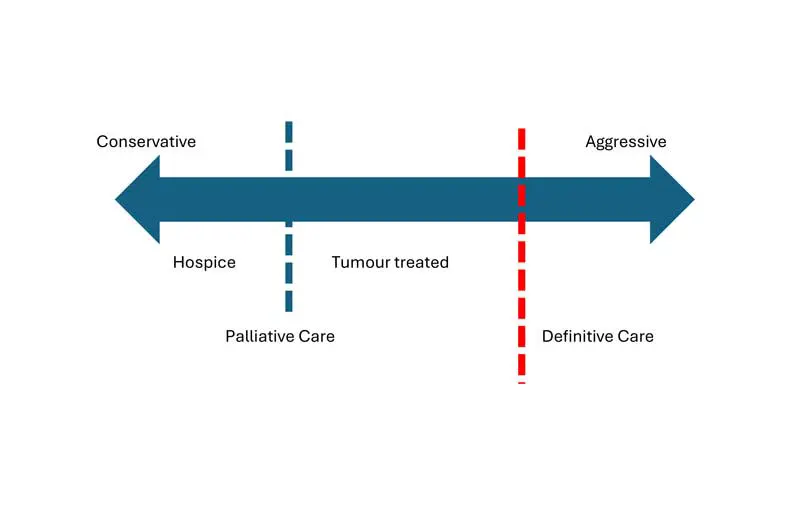
When considering palliative care in veterinary oncology, it is useful to first consider its definition in human medicine. This is defined as relieving clinical signs related to cancer, either by treating the clinical signs directly or the cancer itself; therefore, following this definition, treatment for lymphoma in dogs and cats would be considered palliative because it relieves these signs by treating the cancer. A subset of this, hospice care, solely involves treating clinical signs at a symptomatic level without treating the underlying cancer.
Corticosteroids are no longer the only palliative option for treatment. They may, however, sometimes provide temporary symptomatic relief. Palliative care should be viewed as a much broader, multimodal approach.
We would place particular emphasis on proactive and effective pain management, as pain can have a major impact on both quality of life and the human-animal bond. Ideally, patients should be assessed regularly using validated pain and quality of life tools, with treatment tailored to the individual patient and adjusted according to their response. Where appropriate, this may involve a multimodal analgesic approach combining different classes of analgesics. When possible, the combination of analgesics should try to target different parts of the pain pathway, from transduction, transmission, spinal modulation (dorsal horn), ascending pathways, supraspinal perception and descending modulation.
Referral to or involvement of a dedicated pain management service or pain clinic can be particularly valuable for patients with complex, chronic or difficult to control pain. Additional supportive measures may include nutritional support, management of nausea or gastrointestinal signs, wound and ulcer care, physiotherapy and rehabilitation, environmental adaptations, and maintaining mobility and normal daily activities for as long as possible.
Importantly, palliative care should also involve regular discussions with the owners regarding treatment goals, expected disease progression and quality of life. Clear communication allows an individualised plan to be developed and provides owners with guidance on recognising signs of deterioration, and determining when the focus should shift from disease management to end of life care.
Ultimately, the goal of palliative oncology is to maximise comfort, function and quality of life for as long as possible while minimising treatment-related burden.
Treatments for pain and appetite stimulation have improved. NSAIDs are often more appropriate and have greater anti-cancer activity than anti-inflammatory and analgesic medications. Radiation, electrochemotherapy and bisphosphonates can also relieve tumour-associated pain.
The decision making when palliative care should, therefore, still involve looking at some of these more involved treatments, as these offer different and more effective ways of palliatively managing clinical signs caused by tumours. This section will highlight two possible treatment options: electrochemotherapy (ECT) and the use of bisphosphonates.
ECT is a locoregional cancer treatment that combines short, high-intensity electric pulses with a poorly permeant cytotoxic drug, most commonly bleomycin and less frequently cisplatin, to transiently increase tumour cell membrane permeability and markedly enhance intracellular drug uptake.
In veterinary oncology, ECT is now supported by a substantial and growing body of clinical evidence in both dogs and cats, and is increasingly recognised not only as an adjunct to surgery, but as a primary or palliative treatment in its own right – particularly for tumours that are unresectable, recurrent or located in anatomically or functionally sensitive sites.
As a palliative modality, ECT offers a combination of high local response rates, low systemic toxicity and a rapid, tangible improvement in comfort and function, achieved in one to four brief general anaesthetic sessions typically spaced two to three weeks apart.
Electroporation transiently disrupts the phospholipid bilayer of the cell membrane, allowing hydrophilic or poorly permeant chemotherapeutic agents to enter tumour cells at concentrations several hundred-fold higher than would otherwise be achieved. Bleomycin is the agent of choice for most protocols because its intracellular potency increases dramatically once membrane permeability is bypassed, while its systemic toxicity profile remains favourable even at doses used for electroporation. The technique also produces a transient anti-vascular “vascular lock” effect within the tumour, which prolongs drug retention, controls haemorrhage in friable or ulcerated masses, and contributes to local tumour devitalisation independent of the cytotoxic drug itself.
For palliative intent specifically, these properties translate into rapid debulking or resolution of ulcerated, bleeding or malodorous masses; fast relief of local pain and functional impairment (for example, in oral or nasal disease); and a treatment burden – typically, day-case general anaesthesia every two to three weeks – that most owners and patients tolerate well, even late in the course of disease.
It is particularly well suited also to patients and owners for whom radical surgery, radiotherapy, or systemic chemotherapy are declined; financially unfeasible; or judged disproportionate to the animal’s overall prognosis and quality of life. Reported local response rates for palliative or first-line ECT in canine and feline cutaneous, subcutaneous, oral and nasal planum tumours consistently range from roughly 70% to more than 95%, with complete remission achieved in a substantial proportion of cases, even though median survival times in advanced or high-stage disease often remain modest. Toxicity is generally self-limiting local tissue reaction, swelling, superficial necrosis or transient fistulation in oral cases, with minimal systemic or haematological effects, distinguishing ECT favourably from conventional cytotoxic chemotherapy in the palliative setting.
On the basis of the current literature, summarised in the following paragraphs, ECT can be regarded as a well-tolerated and clinically effective palliative option for selected cutaneous, subcutaneous, oral and nasal planum tumours in dogs and cats, with the strongest evidence base in feline nasal planum and cutaneous squamous cell carcinoma, canine and feline mast cell tumours, canine oral malignant melanoma and squamous cell carcinoma, and canine soft tissue sarcoma.
Prospective, randomised and larger multicentric studies are still needed to standardise protocols, define optimal patient selection and establish firmer survival benchmarks, but the existing body of retrospective and case-series evidence is sufficiently consistent to support ECT as a legitimate part of the palliative oncology toolkit, rather than an experimental or last-resort technique.
In dogs, the available evidence supports ECT across a range of tumour types, including oral malignant melanoma, squamous cell carcinoma, mast cell tumours and soft tissue sarcomas. Studies have reported high objective response rates, often in the 70% to 100% range, including complete responses in a substantial proportion of patients. Importantly, for palliative cases, responses can occur rapidly, with improvement in tumour-associated clinical signs and quality of life reported shortly after treatment. ECT may, therefore, be particularly valuable for large or anatomically challenging tumours where definitive surgery is not feasible or would carry significant morbidity. Tumour bone invasion and local recurrence appear to be associated with poorer outcomes, suggesting that ECT is most effective when disease remains predominantly local and accessible to electrode placement.
In cats, the most convincing evidence relates to cutaneous squamous cell carcinoma – particularly lesions involving the nasal planum. Published studies have demonstrated very high response rates, with one multicentre study reporting an overall response rate of approximately 97% and complete remission in around 66% of cats. Responses can be durable, and treatment is generally associated with manageable local toxicity. ECT is also being explored for more challenging feline tumours, including injection-site sarcomas and oral tumours, where preservation of function is an important consideration. This is particularly relevant for lesions such as lingual squamous cell carcinoma, where surgical treatment could result in substantial functional impairment.
From a palliative perspective, ECT should, therefore, be considered primarily as a means of achieving local disease control and improving quality of life, rather than as a treatment expected to prevent metastatic progression. It may be particularly appropriate when the primary tumour is causing pain, bleeding, ulceration, difficulty eating, obstruction or other local clinical signs, and when radical surgery or definitive radiotherapy is not appropriate or has been declined. Its relatively low systemic toxicity also makes it an attractive option for patients in which maintaining quality of life is the principal therapeutic objective.
The main practical limitations are the requirement for anaesthesia patients, accessibility of the tumour to electrode placement, and the potential for local treatment-associated inflammation, oedema, ulceration or discomfort during tumour regression. Nevertheless, these adverse effects are generally transient and manageable. Patient selection remains important – particularly in cases with extensive bone invasion, poorly accessible disease or rapidly progressive systemic disease.
Overall, the current veterinary literature supports ECT as a useful, minimally invasive local treatment modality with a favourable therapeutic index – particularly for superficial or accessible tumours. In the palliative setting, its greatest value is the potential to provide rapid and meaningful local tumour control while preserving function and quality of life, making it a reasonable alternative to more invasive local therapies in appropriately selected patients.
Bisphosphonates are a group of drugs that reduce bone resorption by inducing apoptosis of osteoclasts. In doing so, they can alleviate bone pain that is often triggered by both primary bone tumours and metastatic disease.
Several bisphosphonates are available; however, zoledronate has been found to be well tolerated in dogs and cats with minimal toxicity. Oral versions such as alendronate are poorly bioavailable with a lower potency, and zoledronate can conveniently be administered intravenously over 10 to 15 minutes, whereas pamidronate requires a two-hour administration time.
Bone tumours and metastatic bone lesions cause bone pain by stimulating osteoclast activity and bone resorption. This can lead to pain due to local acidification, inflammatory mediators and structural bone damage. The rationale for using zoledronic acid relies on the prevention of bone resorption and, therefore, provides analgesia indirectly and should be used in conjunction with other analgesics. Importantly, though, they act upstream of other analgesics by modifying the pathologic bone environment, as discussed.
Evidence of zoledronic acid’s clinical utility is growing and promising. When zoledronic acid was used in conjunction with radiotherapy in dogs with cancer-induced bone pain, a perceived improvement was reported in both pain severity and interference when compared to baseline. Biomarkers of bone turnover, such as serum N-telopeptide, showed a 30% reduction in dogs that had received zoledronic acid with radiotherapy when compared to baseline. Similarly, when combined with radiotherapy in cats with oral squamous cell carcinoma, the treatment was well tolerated, with reductions in biomarker serum c-telopeptide reflecting reduced bone turnover.
Palliative care for veterinary oncology patients should be multimodal, considering the presenting signs to formulate the most effective treatment plan.
Ongoing monitoring should include frequent revisits to assess its effectiveness. Several drugs and medications commonly used may offer more effective ways of managing clinical signs.
While prednisolone may still be part of a treatment plan, this article hopes to raise awareness that it is considered outdated as a sole palliative treatment option. This could potentially offer the biggest advance in palliative care.
Charlie Pittaway graduated from the University of Bristol in 2014 and undertook a rotating internship at the University of Cambridge, followed by a residency in medical oncology. He joined DWR in 2019 and became a diplomate of the European College of Veterinary Internal Medicine (Oncology) in 2021. He became DWR’s head of oncology in 2023.
David Brewer graduated from the University of Liverpool in 2016, and completed a 12-month rotating internship at Fitzpatrick Referrals in 2019 and a three-year residency in small animal oncology back at Liverpool in 2022. He joined DWR a month latest and has been a diplomate of the European College of Veterinary Internal Medicine (Oncology) since 2024.
Angelo Capasso graduated from University of Naples Federico II in 2009. Undertaking internships and residencies including at DWR, he became a European College of Veterinary Internal Medicine (Oncology) diplomate in 2023. He is also an EBVS specialist in oncology and is currently a consultant in veterinary oncology and intern director at DWR.