
Register

Login

Vet Times logo
  • Register
  • Login
  • View all news
  • Vets news
  • Vet Nursing news
  • Business news
  • + Media
    • Videos
    • Podcasts
    • Crossword
  • View all clinical
  • Clinical hubs
  • Small animal
  • Livestock
  • Equine
  • Exotics
  • Job Seekers
  • Recruiters
  • Career Advice
About
Vet Times App
Contact Us
For Advertisers
NewsClinicalJobs

Search Articles & More

Vet Times logo

Vets

All Vets newsSmall animalLivestockEquineExoticWork and well-beingInternational

Vet Nursing

All Vet Nursing newsSmall animalLivestockEquineExoticWork and well-beingOpinion

Business

All Business newsHuman resourcesBig 6SustainabilityFinanceDigitalPractice profilesPractice developments

Media

VideosPodcastsDigital EditionCrossword

The latest veterinary news, delivered straight to your inbox.

Choose which topics you want to hear about and how often.

Vet Times logo 2

About

The team

Vet Times App

Advertise with us

Recruitment

Contact us

Vet Times logo 2

Vets

All Vets news

Small animal

Livestock

Equine

Exotic

Work and well-being

International

Vet Nursing

All Vet Nursing news

Small animal

Livestock

Equine

Exotic

Work and well-being

Opinion

Business

All Business news

Human resources

Big 6

Sustainability

Finance

Digital

Practice profiles

Practice developments

Clinical

All Clinical content

Clinical hubs

Small animal

Livestock

Equine

Exotics

Jobs

All Jobs content

Job Seekers

Recruiters

Career Advice

Media

All Media content

Videos

Podcasts

Digital Edition

Crossword


Terms and conditions

Complaints policy

Cookie policy

Privacy policy

fb-iconinsta-iconlinkedin-icontwitter-iconyoutube-icon

© Veterinary Business Development Ltd 2026

IPSO_regulated

Advertorial

07 July 2026

Optimising diagnosis of feline hyperthyroidism

Sarah M A Caney BVSc, PhD, DSAM(Feline), MRCVS, RCVS, specialist in feline medicine, discusses feline hyperthyroidism, a common, manageable condition


Optimising diagnosis of feline hyperthyroidism

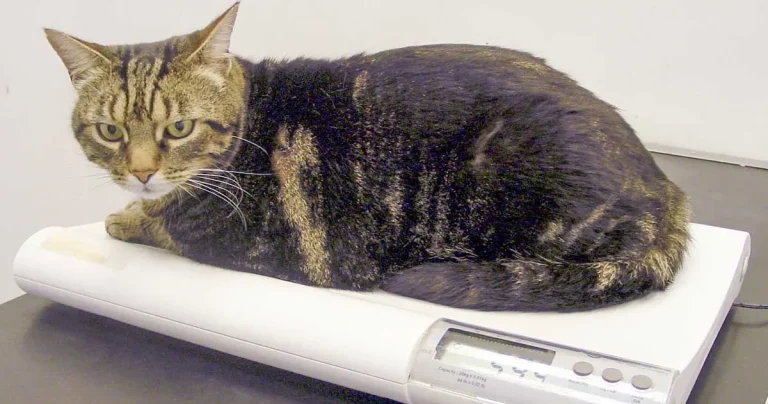
Figure 1. Weight loss is the most common clinical sign associated with hyperthyroidism, and this diagnosis should be considered in any cat with unintended weight loss, even if body condition is normal or overweight.

Hyperthyroidism – the clinical syndrome resulting from excessive circulating levels of thyroid hormones – is the most common endocrinopathy in cats. Hyperthyroidism affects around 10% of cats aged 10 and above; the median age at diagnosis is usually 12 to 13 years. In most cats, hyperthyroidism is caused by bilateral adenomatous hyperplasia; 2% of patients have carcinomas. Diagnosis and management are often straightforward.

The most common clinical signs of hyperthyroidism are weight loss, often in spite of a normal or increased appetite (Table 1). Signs are most obvious in those cats that have been suffering with the illness for longer and in those that have concurrent illnesses. Chronic kidney disease (CKD) is the most common concurrent illness, estimated to affect up to a third of patients. Many cats with hyperthyroidism can appear “healthy” to an owner – polyphagia and hyperactivity can be interpreted as a cat with a “healthy joie de vivre” and weight loss often passes unnoticed.
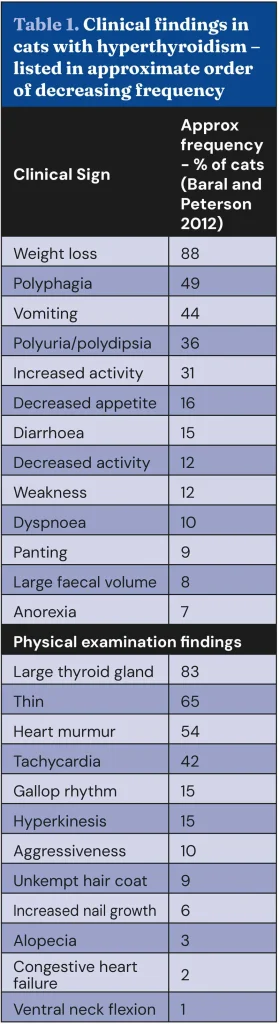
 

Physical examination often reveals weight loss, presence of a goitre and tachycardia (Table 1, Figure 1 and Figure 2). Up to a quarter of hyperthyroid cats have systemic hypertension at the time their hyperthyroidism is diagnosed (Figure 3).
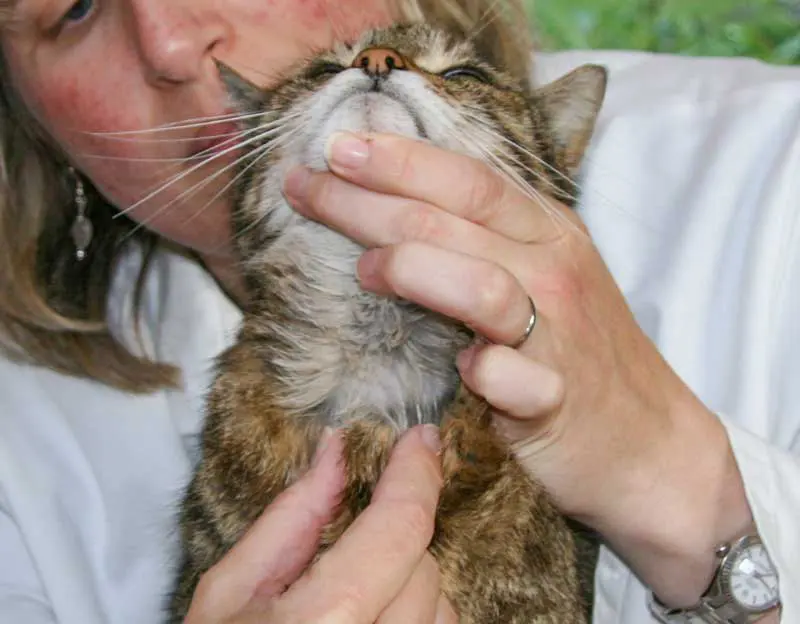
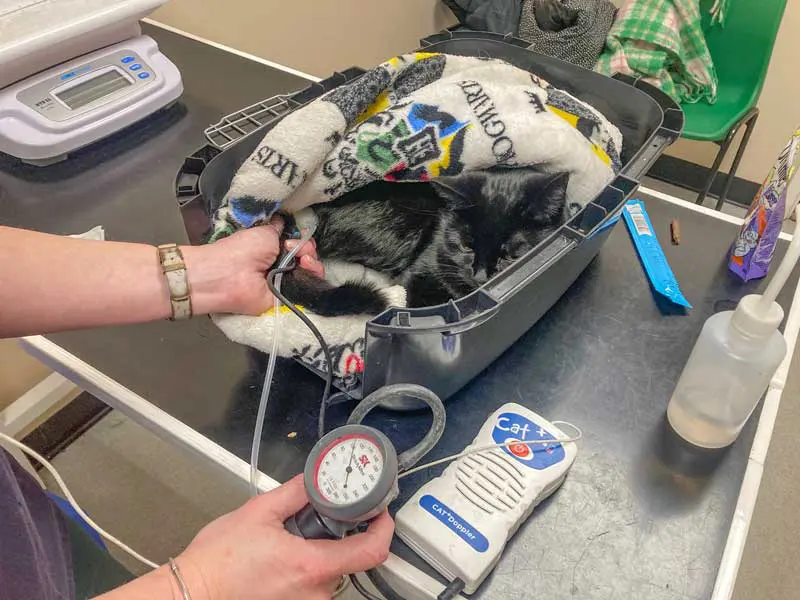
Figure 2. Most hyperthyroid cats have an enlarged thyroid (goitre) which can be palpated by gently sliding a thumb and forefinger up and down the neck from the larynx to the thoracic inlet. Typically a goitre feels like a small pea sized mass which slips under the finger/thumb.
Figure 3. Blood pressure assessment is recommended in all cats with a diagnosis of hyperthyroidism: at the time of diagnosis and every 3-6 months thereafter. Blood pressure assessment should be done in as calm and cat friendly a manner as possible; the author prefers to do this with the patient still in their carrier and uses the Doppler methodology to assess blood pressure on the tail or forelimb, depending on the cat’s preference.

How is a diagnosis of hyperthyroidism typically confirmed?

In most cases the diagnosis can be confirmed in cats with compatible clinical signs, simply by measuring resting serum total thyroxine (tT4) levels. Serum biochemistry and haematology are important to rule out other causes of similar clinical signs, identify concurrent disease and reveal clues of hyperthyroidism. Common changes include elevated liver enzymes, leucocytosis, eosinopenia and erythrocytosis.

Occasionally, a normal tT4 result is received in a cat suspected of having hyperthyroidism. This is especially common in cats that have concurrent disease, such as CKD, resulting in suppression of total T4 levels. Repeat tT4 testing at a reference laboratory is a sensible first step; adding free T4 and TSH assessment can also be helpful. Cats suffering from hyperthyroidism typically have elevated free and total T4 and low or undetectable levels of TSH. Diagnosis of hyperthyroidism is rarely an emergency as this is a slowly progressive illness. Therefore, if in doubt, repeat assessment (a “watch and wait” approach) is sensible rather than treating the cat.

Tips for optimising a diagnosis of hyperthyroidism

Hyperthyroidism is typically a gradually progressive condition so it is easy for early and subtle clinical signs to pass unnoticed and for carers to only become aware of an issue once the disease is advanced. The earlier the diagnosis, the better the prognosis since damaging consequences of hyperthyroidism will be milder and more easily reversible.

The author’s tips for optimising early diagnosis include:

  • Evaluating total T4 levels in:
    • All patients presenting with clinical signs compatible with hyperthyroidism (Table 1), regardless of age: hyperthyroidism is sometimes seen in very young cats
    • All patients presenting with unintended weight loss including:
      • Cats that are overweight
      • Cats where no other clinical signs of ill health have been documented
    • All patients above the age of seven years that are having blood tests due to being “unwell”
    • All wellness evaluations of cats aged 11 years and above
  • Educating carers on clinical signs associated with hyperthyroidism
  • Educating carers on the importance of wellness checks that should be done annually in cats less than 11 years old and six monthly thereafter

Hyperthyroidism is typically straightforward to treat and the outcome is often excellent (Figure 4).
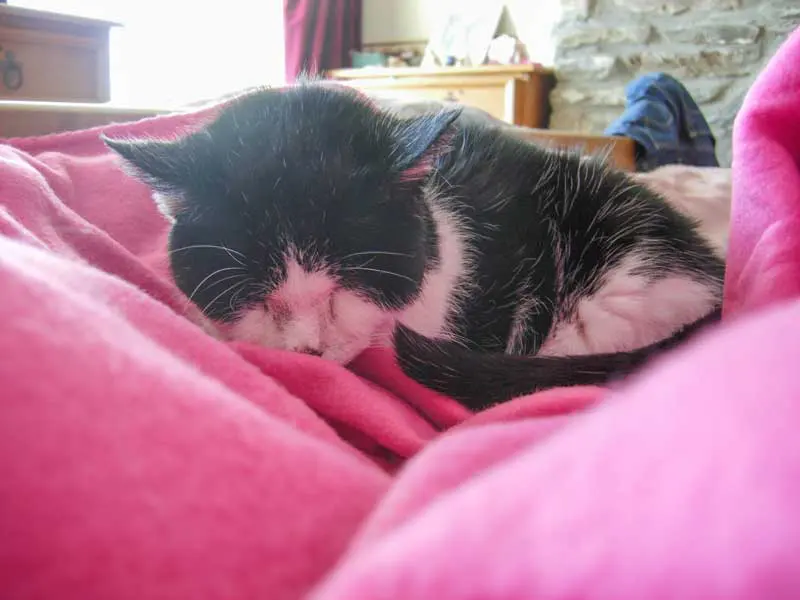
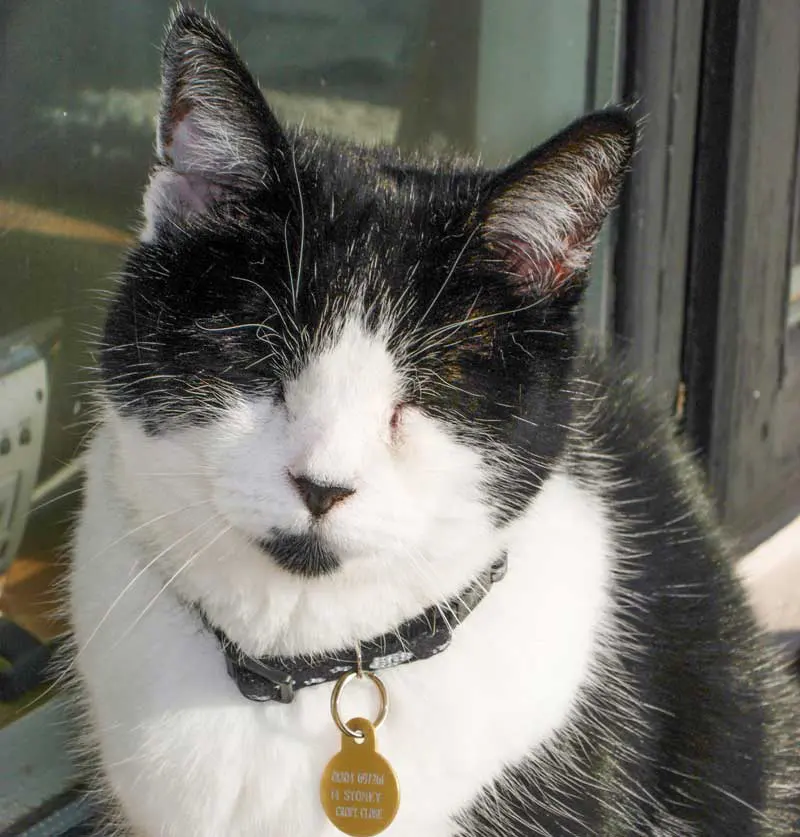
Figure 4a. Millie pre-treatment with thiamazole
Figure 4b. Successful treatment of hyperthyroidism: Millie post-treatment with thiamazole, where she can be seen to have gained weight and regained her fabulous coat condition.

Sarah Caney is internationally recognised as 1 of around a dozen RCVS specialists in feline medicine working in the UK. Sarah has always enjoyed seeing a mixture of first opinion and referral feline medicine patients, and has a particular interest in elderly cat medicine. Sarah founded Vet Professionals in 2009.

References and further reading

Baral R, Peterson ME (2012). Thyroid gland disorders. In Little SE (ed), The cat: clinical medicine and management, Elsevier Saunders, Philadelphia, PA: 571–592

Carney HC, Ward CR, Bailey SJ, Bruyette D, Dennis S, Ferguson D, Hinc A, Rucinsky AR (2016). AAFP Guidelines for the Management of Feline Hyperthyroidism, J Feline Med Surg 18(5): 400-416.