
9 Dec 2025
Fergal McDermott MVB outlines how best to help practice in-patients get a restful night

Fergal McDermott
Job Title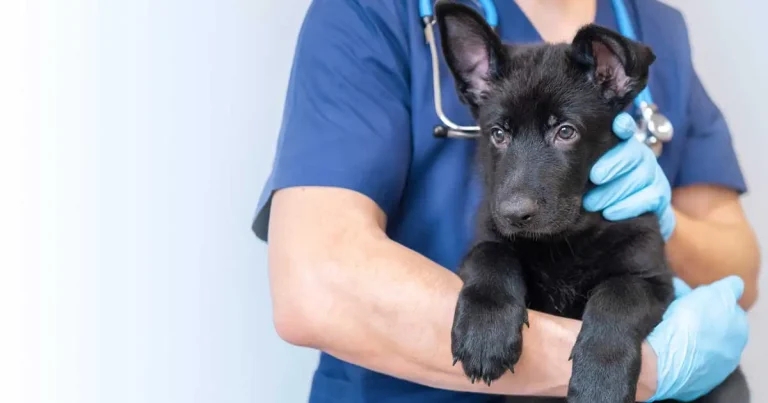
Image: yana136/ Adobe Stock
As veterinary medicine is becoming increasingly advanced and specialised we must look at finer margins when it comes to improving patient care. The psychological health of our patients will become more relevant and in the future a field of veterinary psychiatry will likely exist.
One aspect we should turn our attention to is the sleep of our patients when in the clinic. Anybody who has worked in a 24-hour clinic at night time will know how disruptive these places can be.
Patients in human ICUs are well known to have poor and stunted sleep, and sleep disturbances are associated with likelihood of development of delirium, longer ICU stays and overall worse patient outcome. Although very little veterinary evidence exists, one has to assume that the equivalent is true for our patients.
What is known about veterinary patients is that sleep deprivation results in insulin insensitivity in dogs, anxiety, increased likelihood of seizures in epileptic patients and alterations in inflammatory mediators. Furthermore, sleep length was proportional to chances of survival of rabbits with infectious diseases. It would be hard to prove, but it is fair to assume that veterinary patients with poorer sleep have poorer outcomes.
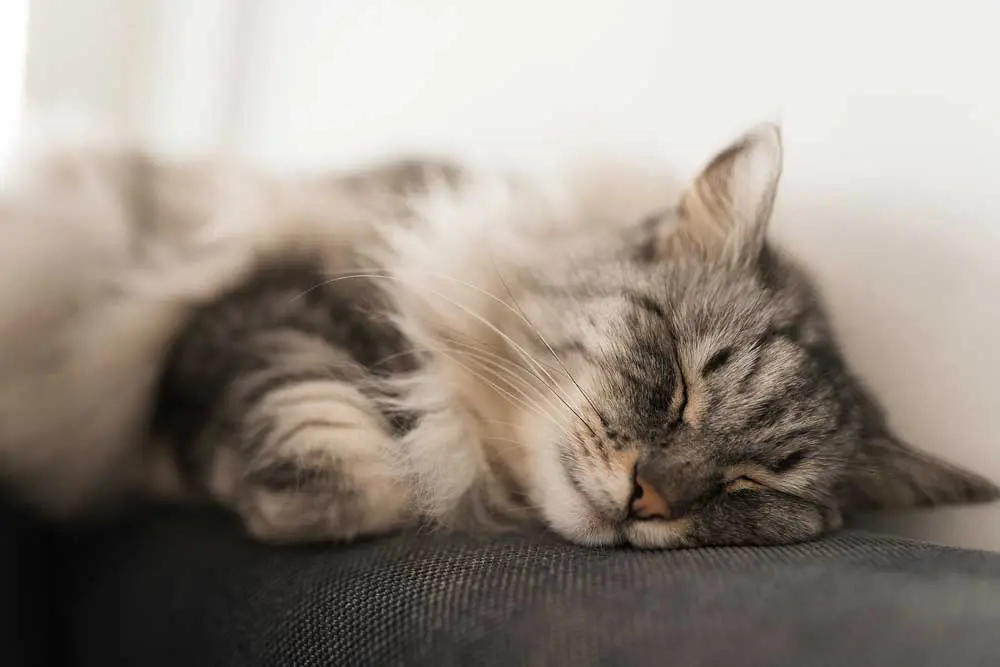
Although concrete data are limited, adult dogs and cats typically sleep 12-16 hours per day in short cycles of 16 to 30 minutes, alternating between light and deep sleep throughout the day and night, and dogs seem to sleep deeper at night.
The gold standard of sleep measurement is through use of a polysomnograph (PSG). Polysomnography typically involves continuous monitoring of brain activity (electroencephalogram, EEG) and eye movements, and sometimes also includes heart activity and muscle activity. The results are interpreted in 30-second periods based on EEG wave patterns and are classified as wakefulness, both light and deep non-rapid eye movement (NREM) sleep, and rapid eye movement sleep (REM) sleep.
Although it is the gold standard, it has several disadvantages that result in alternatives being used more frequently. It is expensive, labour intensive and it is not readily interpretable. Up to relatively recently, the use of PSG in veterinary patients involves invasively inserting the probes subcutaneously. It is also questionable to what extent our patients will freely allow all the apparatus involved in PSG to remain in place.
Alternate means of sleep measurement such as visual surveillance, questionnaires and video recordings seem plausible but also labour intensive. As such the trend in sleep measurement in human medicine is through the use of accelerometry.
Accelerometers are activity trackers that have been validated for use in human medicine. Various brands of accelerometers, which can be attached to a patient collar, are available for our veterinary patients and the research into them is increasing. The biggest limitation to their use is that, with several competing brands, very few, if any, have been validated against other methods of sleep measurement and not all companies are willing to share the raw data of the tracker and/or how to interpret the units provided.
They are mostly related to dogs and may be too heavy for cats. Another limitation of these trackers in general is their inability to distinguish between a patient asleep and a patient awake, but still and resting.
In general, the factors that affect patient sleep are categorised as patient and environmental. Patient-related factors include pain, anxiety and sepsis. Interestingly, PSG studies of some septic patients showed no identifiable sleep phase. Material on/in the patient, such as feeding tubes, e-collars or urinary catheters, are also likely to induce stress and reduce sleep.
Many drugs used in ICU patients (opioids, steroids, sedatives, ketamine and sympathomimetics) can disrupt normal sleep architecture.
Environmental noise is a significant contributor to disturbed patient sleep in human ICUs and studies have demonstrated that veterinary ICUs are too noisy, often related to staff conversation and shift changes. Likely, apparatus alarms and noisy/barking fellow patients are a contributor. Excessive light can play a role and it can alter the patient’s ability to distinguish day and night and thereby affect their circadian rhythm.
Animals and people in new environments sleep poorly the first night, and likely this first-night phenomenon applies to hospitalised veterinary animals. The stress of night-time handling/examination or sample taking can play a role. Studies in mice showed that placing them in cages that had unpleasant and/or threatening odours disrupted their sleep. This could be relevant to our patients if they were placed in cages that were not sufficiently cleaned from the prior patient. Another possible role is the presence of threatening species nearby. I can imagine a cat placed in a cage looking at a dog all night is unlikely to sleep well. Other aspects include ambient temperature and humidity.
Most of the measures that can be taken to promote sleep in our hospitalised patients involve the use of common sense. In general, I think we need to be stricter with regard to the noise levels in our clinics and, in the future, sound level meters should be commonplace.
Noise and light should be kept to an absolute minimum after certain “quiet” or “lights out” times. In this aspect, patients kept overnight in certain minimal clinics in which they are basically ignored until the next morning are at a huge advantage compared to fancy 24-hour clinics. In human patients earplugs and eye masks are used, but it is likely some of our patients would become more stressed by these measures.
Blue lights suppress melatonin release and dogs and cats are partially colour-blind, so nocturnal cage lighting should be of a colour chosen that does not hinder patient sleep. Although there are studies supporting this, it is likely that the best colours are red/amber because they are less visible to dogs and cats and, therefore, less likely to disrupt sleep or suppress melatonin.
Some studies have shown that classical music has reduced signs of stress in shelter dogs and this could be applied to our work settings
Therapy or examinations should be bundled together to minimise nocturnal disturbances. I think wisdom should be applied to some things and not all patients require night time walks or temperature measurements.
Thorough cleaning of cages and odour management could help some patients. Sandalwood oil and cedar oil improved sleep in rats and they both could be considered in the ICU setting.
Currently, no ideal drug exists for promoting sleep in hospitalised patients. Benzodiazepines are commonly used in human ICUs, but are strongly linked to delirium, which increases hospital stays and mortality. Dexmedetomidine provides good sedation with less delirium, but does not promote natural sleep architecture.
If we are to assume hospitalised patients are stressed then one could argue for the use of trazodone in all patients displaying unrest and there may even be use of further anti-depressants to promote sleep in the future.
Melatonin appears safe and shows mixed, but generally positive results in improving sleep in human ICU patients. It may also help in managing sepsis and stress responses, with animal studies suggesting it can counteract the effects of sleep deprivation. While evidence in veterinary patients is limited, melatonin could be a promising option, with recorded doses ranging from 3mg-12mg PO q12–24h or 5mg/kg PO.
A good night’s sleep will not heal an open wound or fix a broken femur, but if maximising patient comfort is our concern then this is an area we should be more conscious of.
Fergal McDermott graduated as a veterinarian in 2017, then spent two years at the University of Saskatchewan, Canada, working as a rotating intern and after as an emergency clinician. He then moved to Belgium, and worked as an emergency intern at the University of Liège. During the height of the COVID crisis, Fergal moved back to his home country of Ireland to work for The Irish Blue Cross and to locum. He then moved to the Netherlands to work as an emergency clinician at Utrecht University, where he still works.