1 Nov 2026
Ellie Kohut DipVN, APVN, RVN looks at how RVNs can help with these serious cases over the Christmas period.

Ellie Kohut
Job Title
Image: Anna Averianova / Adobe Stock
From Christmas dinner and chocolate advent calendars to seasonal bouquets and New Year’s Eve celebrations, the festive period introduces a variety of potential toxins into our patients’ environment.
Colder weather can bring further risks, including antifreeze and road grit, making poisoning and toxic hazards an important consideration throughout the winter months.
In 2023, the Veterinary Poisons Information Service and Animal PoisonLine handled 24,649 cases involving more than 39,000 toxic agents (Robinson, 2024). While some of the more common poisons encountered in practice may be familiar, veterinary professionals cannot be expected to know the potential risk, toxic dose and appropriate management of every substance a patient may be exposed to. This can be particularly challenging when decisions need to be made quickly in a busy clinical environment (Robinson, 2024).
For veterinary nurses, recognising potential toxic exposures, obtaining an accurate history and understanding the clinical signs that may develop are important aspects of supporting these patients. This article will explore some of the toxins particularly relevant during the festive and winter period, including common sources of exposure, potential clinical signs and treatment options.
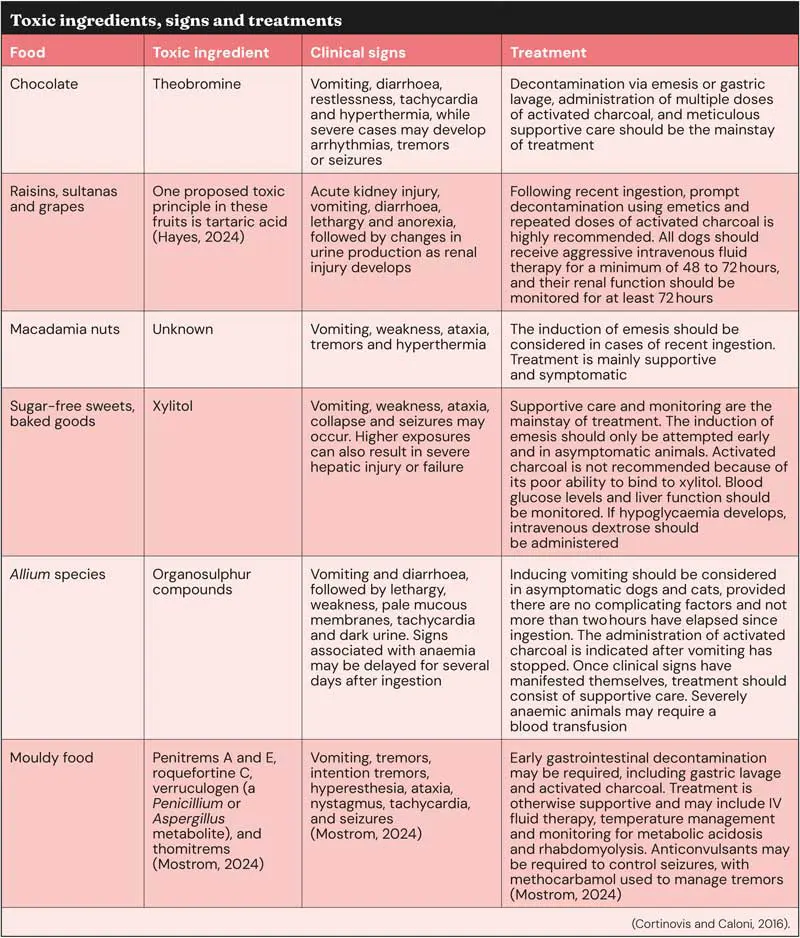
Food-related poisoning is commonly seen in veterinary practice over the Christmas period, when homes are often filled with foods that pets would not normally have access to. Some of the most familiar festive foods can cause significant toxicity – particularly in dogs – making it important to establish exactly what has been eaten, how much and when.
Chocolate. Advent calendars, selection boxes and even wrapped chocolates under the tree can be easily found by dogs (RVC, 2017). Dark chocolate generally presents the greatest risk because it contains higher concentrations of theobromine (RSPCA, n/d).
Grapes, raisins, sultanas and currants. Found in Christmas pudding, Christmas cake, mince pies and panettone, these can cause acute kidney injury in dogs. Considerable individual variation in susceptibility occurs, so suspected ingestion should always be taken seriously (RVC, 2017).
Macadamia nuts. Often found in festive nut selections and baked goods, macadamia nuts can cause toxicity in dogs and cats. Symptoms may not appear immediately, but can last up to two days (RSPCA, n/d).
Xylitol. This sweetener can be found in some sugar-free sweets, chewing gum and baked goods. It is particularly dangerous because it can cause severe hypoglycaemia and, in some cases, hepatic injury (RVC, 2017).
Allium species. Onions, garlic, leeks and chives may be hidden in stuffing, gravy and Christmas dinner leftovers. Both raw and cooked Allium species can be harmful and may cause haemolytic anaemia (RSPCA, n/d).
Mouldy food. Christmas leftovers, blue cheese, overflowing bins and discarded food can provide easy access to mouldy food. Some moulds produce tremorgenic mycotoxins, which can cause rapid-onset neurological signs (RSPCA, n/d).
With many of these foods becoming more accessible over Christmas, accidental ingestion can easily occur. The severity of poisoning will depend on the toxin involved, the amount eaten and the individual patient, so an accurate history is important when assessing these cases.
Owners should be encouraged to contact their veterinary practice promptly following a suspected ingestion, rather than waiting for clinical signs to develop.
Plants and flowers given as Christmas gifts can introduce another hazard into the home. Of particular concern are lilies in households with cats. Lilium species are highly toxic to cats and can cause acute kidney injury.
All parts of the plant are potentially dangerous, including the pollen. Cats may, therefore, be exposed without deliberately eating the plant; pollen transferred on to the coat can subsequently be swallowed during grooming (International Cat Care, 2025).
Clinical signs of lily exposure can occur within one to six hours and include:
Suspected exposure should be treated seriously even when the cat appears clinically well, as early intervention can have a significant effect on outcome. No specific antidote for lily toxicity exists, so early decontamination and supportive treatment are important.
If ingestion has occurred recently and the patient is clinically well, the veterinary surgeon may consider inducing emesis, followed by activated charcoal to reduce further absorption.
Baseline bloods and urinalysis can help assess renal function, with intravenous fluid therapy typically required for 48 to 72 hours alongside close monitoring of renal parameters and urine output (Morrison, 2026).
Not every Christmas emergency is caused by a toxin. Decorations can be particularly tempting to young and inquisitive pets, and ingestion may result in a gastrointestinal foreign body.
Baubles, ribbons, tinsel, gift wrapping and other small decorations can all be chewed or swallowed. Linear objects such as ribbon and tinsel are of particular concern in cats because of the risk of linear foreign bodies and intestinal damage (RSPCA, n/d).
Christmas tree lights and electrical cables present a different risk. Chewing a live electrical cable can cause burns to the mouth and, in more serious cases, electrical injury.
The risks do not disappear once Christmas dinner has been cleared away. Cold weather introduces additional hazards, including antifreeze and road salt.
All animals are susceptible to ethylene glycol toxicosis; however, dogs and cats are most affected. Most cases are associated with ingestion of antifreeze. The clinical signs often present as follows 30 minutes to 12 hours after ingestion:
Treatment is time critical and aims to decrease absorption of ingested ethylene glycol, increasing excretion of unmetabolised ethylene glycol, preventing metabolism of ethylene glycol, and correcting metabolic derangements. Treatment may include intravenous fluid therapy, alongside fomepizole (4-MP), 20% ethanol given as IV boluses, or 30% ethanol administered as a CRI.
Supportive care is also important and may include correction of metabolic derangements and gastrointestinal support (Regehr, 2024).
The substance used to de-ice roads and pavements commonly called grit contains sodium chloride (salt), which can be hazardous to pets. If dogs and cats get it on their paws or fur, their inclination will be to lick or chew it off, but this poses a risk.
Ingestion of salt by pets can result in a high blood sodium concentration and can lead to vomiting, lethargy, convulsions, and kidney damage. It is advised to wipe pets’ feet and clean any exposed fur (RVC, 2017).
For many poisoning cases, the veterinary nurse may be one of the first members of the practice team to speak to the owner. Gathering the right information at this stage can help determine the urgency of the situation and allow the clinical team to prepare before the patient arrives.
An accurate history should establish what the patient has eaten or been exposed to, when the exposure occurred and approximately how much was involved. The patient’s species, age and bodyweight are also important. Owners can be asked to bring packaging, ingredient lists, photographs or the remaining product with them where possible.
On arrival, obtaining an accurate bodyweight is particularly important because assessment of many toxic exposures is based on the quantity ingested in relation to the patient’s weight. A baseline TPR assessment can be performed, followed by a full clinical assessment by the veterinary surgeon.
Once the toxin and likely exposure have been established, the veterinary team can formulate an appropriate plan. Depending on the case, this may involve inducing emesis, administering activated charcoal, establishing intravenous access and beginning fluid therapy, or providing specific symptomatic treatment. Not every poisoning requires the same approach, and decontamination may be inappropriate or contraindicated in some patients.
The RVN can anticipate what may be required and begin preparing equipment. This could include setting up for IV catheter placement and fluid therapy, preparing equipment for blood sampling, checking that monitoring equipment is available or preparing for diagnostic imaging where a foreign body is suspected.
Nursing care continues well beyond the initial treatment. Regular monitoring of heart rate and rhythm, respiratory rate, temperature, neurological status, hydration, urine output and other toxin-specific parameters can help identify deterioration early. Accurate fluid balance and clear clinical records are particularly important where patients require hospitalisation.
Specialist toxicology advice from the Veterinary Poisons Information Service can support the veterinary team when determining the potential risk and appropriate management of an exposure. This is particularly useful where the substance, toxic dose or appropriate treatment is unfamiliar.

The festive period changes the environment our patients live in. Foods that are not normally in the home become readily available, decorations provide new opportunities for foreign body ingestion and winter weather introduces additional hazards such as antifreeze and road salt.
For veterinary nurses, these cases provide an opportunity to use a wide range of skills. From taking the initial telephone call and obtaining an accurate history to preparing for diagnostics and treatment, monitoring hospitalised patients and educating owners, the RVN can play an important role throughout the patient’s care.
Recognising the common seasonal hazards and knowing what information to gather can help the veterinary team assess these patients quickly and provide appropriate treatment when it is needed most.
Use of some of the drugs in this article is under the veterinary medicine cascade.
Ellie Kohut has been in practice for seven years, but qualified as an RVN two years ago from Bottle Green Training. With a strong passion for exotic animals, she has recently finished the advanced programme in veterinary nursing small mammal certificate. In addition to her interest in exotics, Ellie enjoys consulting with pet owners and has a keen interest in emergency and critical care, as well as working with geriatric patients.