
Advertorial
28 October 2026
Purina: how experienced clinicians and leaders play a vital supporting role
Ebony Escalona and Caroline Gardner explore how practice leaders can best support, guide, and inspire the next generation of veterinary talent…

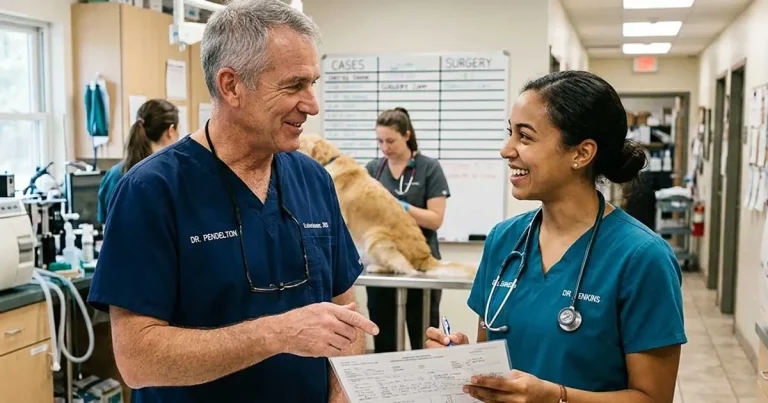
While the early and years months in practice can feel like a steep learning curve for new graduates, the challenge of supporting them is one shared across the entire veterinary team.
Experienced clinicians, clinical directors, and practice leaders play a vital role in shaping the environment into which new vets step.
Supporting the next generation goes beyond overseeing clinical cases; it requires leadership, effective communication and creating a workplace culture where new graduates feel safe to ask questions, learn from mistakes, and build sustainable careers.
Through its Young Vets programme, Purina Pro Plan is supporting students and early career vets with free, practical guidance on pet nutrition, and structured support for non-clinical communication.
Based around the three core pillars of nutrition, employability and entrepreneurship, the Young Vets platform provides digestible, actionable insights to help early-career vets manage challenging client conversations, advocate for preventive health, and build long-term professional confidence.
In this second article and accompanying podcast, Vet Times and Purina Pro Plan turn to the other side of the coin to examine the challenges and opportunities facing young vets through the lens of experience.
We spoke with Ebony Escalona, equine vet and founder of Vets, Stay Go: Diversify, and Caroline Gardner, clinical director at Oak Vet Group and vice-chair of the Inspiring Vet Care small animal clinical board, to explore how practice leaders can best support, guide, and inspire the next generation of veterinary talent…
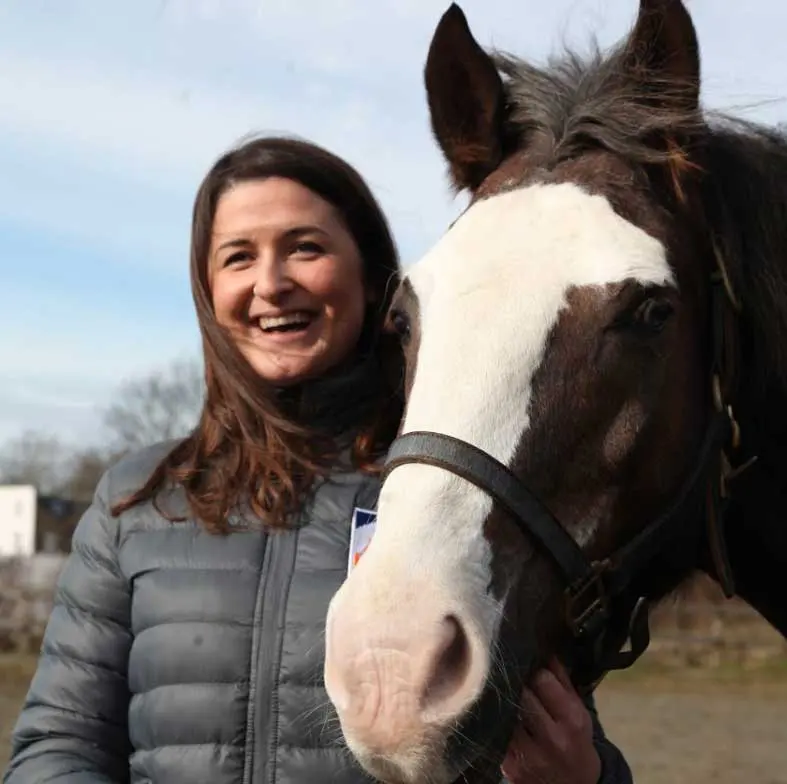

Q) Could you describe your own experiences as a newly graduated vet?
Ebony: It’s probably the part of my career I remember the most.
I started off in my foster practice – the place where I saw the majority of my EMS – and I think that’s just such a wonderful way to build trust and already feel part of the team.
So much of that anxiety or under-confidence just isn’t there, because you’re already part of this team that you know, like and trust. And so that was incredible – so, a big shout out to Village Vets in Flintshire in north Wales.
It was one of the most joyful times, and I still have so many wonderful friends from that era. Then I went and did my internship at the Philip Leverhulme hospital back at Liverpool where I graduated from. And again, a team I already knew, and I think that internship was probably one of the best years of my career – just soaking up everything like a sponge, having that safety and that support system still there and being able to be part of that.
That then led me on to do so many other wonderful things like PhDs and other bits and bobs. So, I can only look back at my new grad life with incredible fondness for the people, for the experiences, and for the knowledge and skills that I still use very much today. So yeah, nothing but high praise.
Caroline: Even, even all these years I remember first stepping into practice as an MRCVS and just suddenly feeling that pressure, that suddenly it’s down to me and that I’m going to be expected to make these decisions now.
My vivid memories now looking back are things like not having mobile phones 30 years ago and needing to remember to take 20ps with me for the phone box and also being the first female full-time vet in that practice.
But incredibly vivid memories. The camaraderie of the job and obviously talking with my friends from university, supporting each other during that early period.
It was a really exciting part of our lives, and everyone’s setting off in different directions. I thought I wanted to be a cattle vet at the time, so I was doing mixed practice, some sheep work, and dairy work, but then soon realised that I quite liked surgery and that there was a lot more scope for that on small animal, and that is the path my career took and I have loved it.
Q) What support did you get in those early years, and what impact did it have on your career and the way it developed?
Ebony: You have your comfort zone, and then you have your stretch zone, and then you have your panic zone. And I think because I had that trust in my first practice it was much easier to stay in that stretch zone when you’re really, really learning.
What was great is that I felt comfortable enough to ask for feedback and to seek feedback and to get agreed specifics that I wanted to do, you know? And so, the team was always working with me towards something.
So that support was great, because it was very specific and it was very personalised with each member in the practice – from the receptionist to the head nurse, to the senior partners.
And I think the other important part for me was the support I had outside of practice. I had so many phone friends and residents and professors who I could call when I was out on the road, so it wasn’t as scary because I had support.
That made all the difference for me, I never felt alone, never felt stupid, but I was always on in that stretch zone, always wanting to better myself and really enjoying that.
Caroline: Mentorship looked very different when I was a new grad. Mentorship generally meant going to the pub after a cow caesarean and hashing it out and being told what you could have done better and very much that would be taken on board because you knew it came from a place of care and support.
And that was how mentorship mostly looked – there were no graduate programmes, no formal support, no VetGDP.
But I would say it was very much felt that the academic side, the science of becoming a vet, was what you got from university, and we did get really good broad and deep training with Bristol and lots of practical experience.
However, the how to be a vet – the art – was taught by those senior vets at the time. There were no manuals, there were no sort of leadership programmes, no communication training, there was none of that when I graduated.
It was more about watching and learning and seeing what worked for somebody and emulating that.
I’d sometimes stand in the consult room or stand in the theatre and just chat and see what other people were doing – you weren’t expecting just to be told all the time, you looked for those opportunities where you could say, “Oh, can I come and help with this?” or “Do you mind if I scrub in?” and looking at those moments when you could learn something.
Q) Do you feel newly-qualified vets face the same challenges as they faced when you first came into practice?
Caroline: Certain things have stayed the same. Client expectations may have evolved and their knowledge base increased, but their desire for the best care for their pet hasn’t changed. Teamwork and camaraderie remain constant, and timekeeping is still a struggle for new grads when estimating procedure times. Job and EMS competition has also come full circle, becoming more competitive again.
However, many challenges are new. Today’s graduates face massive student debt compared to the small amounts we had. Social media has created a heightened fear of failing, with worries about mistakes spreading widely.
While finding information quickly was difficult back when we only had a few textbooks, finding the right knowledge is the challenge today. An abundance of online opinions clouds solid, evidence-based science. Frameworks, like those in Inspiring Vet Care, help provide accessible first-opinion knowledge, but filtering out the noise takes effort.
Additionally, shifts in gender balance and an increase in RVNs have changed practice dynamics. Huge technological leaps – like multi-parameter monitors – have greatly improved patient care. Because we know more now than 30 years ago, cases require far more precision and continuous learning. As the saying goes, you do the best you can until you know better, then you do better.
Q) The veterinary profession has evolved considerably – what impact do you think these changes have had on the support available to newly graduated vets?
Ebony: The impact of these changes has both positive and negative sides. A major shift is in expectations – how new grads view a career, whether as a vocation or a job, and rising client expectations with the rise of the “pet parent”. When these expectations don’t align, resentment follows.
Additionally, the traditional career pathway toward practice ownership has changed. There is a massive brain drain of experienced vets like Caroline staying in practice long-term. As a result, the population landscape has shifted, meaning there aren’t as many experienced mentors physically in practice to support young vets.
Because of this gap, new grads must search for support elsewhere. This is where modern solutions come in – programmes like Purina’s Young Vet programme and tech-enabled remote mentorship provide crucial guidance. Ultimately, the evolution of the profession means we must establish clear, realistic agreements on what support and careers look like, rather than relying on mixed expectations that leave new grads feeling like square pegs in round holes.
Q) What role should industry-led initiatives, such as Purina’s Young Vets programme, play in supporting vets beyond university and the workplace?
Ebony: They’re so invaluable. We had some things when I was younger, but not to the level that they are now.
Beyond the asynchronous digital resources and real-time apps they provide, they offer direct mentorship and a supportive community outside of your immediate practice. This is essential for overcoming the geographical and mental isolation that can make veterinary work feel lonely.
So, there’s also another community there, and I think that’s one thing that’s so important for vets, be it when I graduated right to now.
It’s a great profession to be part of and the wider veterinary industry plays a big part in that.
And I’m also loving the fact that they [Purina] are doing things beyond nutrition with the employability guidance and all the other elements too.
Caroline: I was really interested by the self-care elements of the Purina Young Vet hub, because that’s such an important part of it, isn’t it?
Grads become quite focused on the actual work side and sometimes forget about themselves as a person as well.
So that self-care bit that is also supported by national networks like the BVA Young Vet Network is really important.
I’m out on a peninsula in south-west Wales and having our new grads join things like that can be really, really important so they don’t feel so isolated.
Q) How has the role of nutrition in veterinary medicine evolved since you started your career and how important is nutritional knowledge for young vets entering practice?
Caroline: Nutrition has changed dramatically. When I graduated, feeding mostly consisted of table scraps or basic store-bought food, so nutrition was in its infancy. While university taught us first-principle nutrition across species, we received little instruction on applied nutrition – such as navigating specific brands, dry, wet, raw, or frozen options. I had to learn that along the way.
Today, nutritional knowledge is more vital for young vets than ever. Modern graduates have access to much more applied education, but the key challenge is separating solid science from opinion.
Clients are now deeply passionate about their pet’s diet, but their choices are often based on word-of-mouth rather than tailored care. Having access to high-quality, evidence-based nutritional education is fantastic because it equips new grads to handle these conversations with solid science.
Q) Which piece of advice do you wish you’d had when you started out in your career?
Caroline: Be flexible, you don’t know where your journey is going to take you.
Another piece of advice I often give is don’t give up your hobbies. Just make sure you’ve got that life outside your veterinary work, whether that’s sport, music, art, whatever it might be, make sure you’re doing something else.
And I suppose really the only other piece of advice would be that engaging with clients has been one of the really big joys in my veterinary career.
By developing really, really great client relationships, you realise how much more you can do for their pets. So, when clients are being a bit tricky or as a new grad you find that difficult, realise that as your communication and as your understanding of your clients gets better, that will come with some really big bonuses.
Ebony: The first piece of advice is to reframe your career identity. Instead of saying “I’m a vet,” say “I work as a vet”. Being a vet is just one part of who you are alongside being a human, daughter, or artist, whatever. When work goes poorly, this distinction stops you from feeling like a bad person and helps you treat yourself with more compassion.
The second piece of advice is to prioritise “CPD of self” just as much as clinical subjects like cardiology or orthopaedics. Understanding yourself; your values, purpose, and how you think – it’s essential for finding satisfaction and where you fit in the world.
Ultimately, this career is about the best Plan A and Plan B. Whether you stay in practice long-term or branch out into entrepreneurship, art, or conservation, being a vet gives you that flexibility.