
20 Jul 2026
Ellie Kohut DipVN, APVN, RVN looks at the issues brought on by the season and how nurses can effectively conduct consultations.

Ellie Kohut
Job Title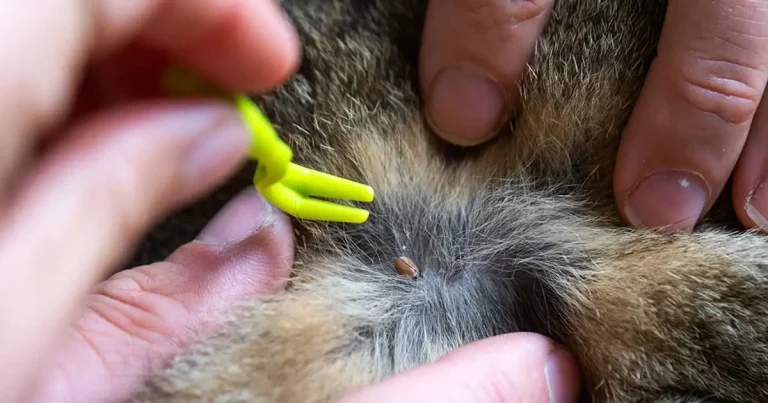
RVNs can demonstrate to owners how to use a tick twister. Image: Adobe Stock
As the sun starts to shine and the months get warmer, this environmental change creates optimal conditions for a range of parasites, resulting in a predictable seasonal increase in presentations within veterinary practice. This article will go into detail regarding the common types of parasites in the summer, how to prevent them and conduct effective nurse consultations.
Parasite prevalence is strongly influenced by environmental conditions that favour survival and reproduction. As temperatures rise and humidity increases, ectoparasites such as fleas and ticks are able to reproduce, feed and survive more quickly, leading to a noticeable increase in cases during the warmer months (Wright, 2022). Seasonal patterns are also seen in some endoparasites, such as Angiostrongylus vasorum, where transmission is linked to greater exposure to slugs and snails, which are more active in summer (Wright, 2022).
Fleas are less able to feed and reproduce effectively during cooler months (Yeadon, 2022), with lower temperatures significantly reducing survival. Adult fleas die relatively quickly in cold conditions, surviving only around 5 days at -1°C and up to 10 days at 3°C (Wright, 2022).
In contrast, survival increases as temperatures rise, with nearly half of emerged adults remaining alive for up to 20 days once temperatures exceed 8°C (Wright, 2022). This creates a clear seasonal pattern, with flea populations increasing as environmental conditions become more favourable.
Due to this seasonal pattern, some owners choose not to treat their pets for fleas during the winter months. However, fleas already established within the home are not impacted in the same way by colder outdoor temperatures – particularly as approximately 95% of the flea population exists within the environment rather than on the host (Clark, 2024).
Centrally heated homes provide a stable, warm environment, and adult fleas are protected by the host’s fur, allowing infestations to persist year round.
This highlights a common misconception among owners that flea infestations are purely seasonal and only require treatment during warmer months. In practice, this often results in inconsistent preventive use, allowing infestations to establish and persist within the home environment, with clients subsequently perceiving flea treatments as ineffective.
Effective control, therefore, requires a combined approach targeting both the animal and the environment. Pets should be kept up to date with veterinary-prescribed flea treatments, alongside appropriate household management, including treatment of the home and regular washing of soft furnishings on a hot cycle to reduce environmental infestations.
From a nursing perspective, effective client communication is essential in addressing these misconceptions. Explaining the flea life cycle and addressing that fleas live in the environment can help improve owner understanding and promote consistent preventive treatment, ultimately reducing the risk of ongoing infestations.
Ticks are commonly encountered in environments where vegetation provides suitable cover and humidity for survival. They are most frequently found in long grass, woodland, moorland and increasingly in urban parks and gardens, where wildlife and companion animals regularly pass through. These areas become particularly high risk during the warmer months, when increased outdoor activity, longer grass growth and higher wildlife movement all contribute to greater exposure (Kelperland Veterinary Centre, 2025).
Tick activity is typically highest between spring and autumn (Kelperland Veterinary Centre, 2025), with summer representing a peak period due to optimal temperature and humidity conditions supporting both host-seeking behaviour and survival.
However, milder winter temperatures mean ticks can now be found throughout the year, reducing the traditional seasonal decline in risk (Kelperland Veterinary Centre, 2025). As a result, consistent preventive treatment and routine post-walk checks remain essential.
It is important that owners are able to recognise ticks, as they are frequently mistaken for lumps or growths. In practice, it is not uncommon for clients to present concerns about a “lump” that has been present for several days or even weeks, which is later identified as an attached tick.
To support this, practices should provide clear client literature detailing what ticks look like, where they are commonly found, and how to check pets effectively, particularly during high-risk summer months. Nurse-led clinics can also be used to demonstrate safe tick removal using appropriate tools such as a tick twister, ensuring owners feel confident in managing ticks correctly at home.
A strong emphasis should also be placed on preventive treatment – particularly during periods of increased exposure. This is not only important for pet health, but also from a public health perspective, as ticks are known vectors of zoonotic diseases such as Lyme disease, meaning a potential risk to owners also exists.
Myiasis (flystrike) is a condition caused by flies laying eggs on fur, which then hatch into maggots that burrow under the skin and feed on flesh. Flystrike tends to develop very quickly because it only takes a few hours for fly eggs to hatch, and maggots can cause extensive damage in as little as one day (PDSA, 2021).
Flystrike is most commonly seen during the warmer summer months, when fly activity is at its peak (PDSA, 2021). While any animal can be affected if it has an open wound or soiled fur, rabbits are commonly seen in practice for this condition.
Rabbits are particularly susceptible when fur around the perineal area is damp or soiled, as this provides an ideal environment for flies to lay eggs. Underlying causes are often linked to reduced grooming ability or underlying disease, including diarrhoea, dental disease, arthritis, obesity, or poor living conditions. These factors increase the risk of faecal or urinary contamination remaining on the coat.
To help prevent flystrike, the environment should be kept clean and hygienic to reduce attraction for flies. Rabbits which are older, have dental disease, mobility issues or are overweight are more susceptible to flystrike, so extra precautions should be taken, such as checking their rear ends more frequently to ensure no soiling or moisture is present, with prompt cleaning carried out where required. Preventive treatments such as cutaneous solutions can also be used in higher-risk cases to help deter flies, alongside consistent monitoring and good husbandry practices.

Although less visually obvious than ectoparasites, endoparasites still remain present during the summer months – particularly due to increased outdoor activity and greater exposure to intermediate hosts and contaminated environments. Gastrointestinal and respiratory worm burdens can be influenced by lifestyle factors, with dogs that spend more time outdoors, explore high-risk environments or have access to prey species being at increased risk of infection. Certain parasites demonstrate clear seasonal patterns; for example, Angiostrongylus vasorum is transmitted through ingestion of infected slugs and snails (NOAH, no date), which are more active during warm, wet conditions commonly seen in summer. This increases the likelihood of exposure – particularly in dogs that scavenge or investigate outdoor environments closely.
Similarly, gastrointestinal worms such as roundworms and hookworms may be acquired through contaminated soil or faecal material (Cohen, no date; Weir and Ward, no date), with risk increasing in areas of high dog population density such as parks and walking routes during the summer months. This environmental contamination is often invisible to owners, making routine preventive treatment essential.
From a clinical perspective, many worm burdens remain subclinical in early stages, meaning infection may go unnoticed until more significant disease develops. This highlights the importance of regular preventive treatment and appropriate faecal screening as part of routine parasite control (European Scientific Counsel Companion Animal Parasites, 2025).
Veterinary nurses play a key role in reinforcing owner understanding of transmission routes – particularly in relation to environmental exposure during the summer months and ensuring compliance with consistent, year-round prevention strategies.
In practice, effective parasite prevention relies heavily on client education and accessible in-clinic resources.
Visual aids such as noticeboards can be used to highlight seasonal parasite risks – particularly during the summer months when flea and tick activity is at its peak – including information on what parasites look like, how to identify them, common areas of attachment, associated clinical signs, and the preventive treatments available can help improve client awareness and understanding of parasite control. This encourages owners to recognise potential issues earlier and supports compliance with routine preventive treatment plans.
Nurse-led clinics also provide an important opportunity to promote routine flea and worm checks, allowing preventive health care to be discussed in a more structured and proactive setting. These consultations can be used to reinforce the importance of year-round parasite control as a preventive, as opposed to corrective treatment once clinical signs are present.
Alongside this, written resources such as client leaflets can help support verbal advice and ensure key information is retained once the client leaves the practice.
When combined, these approaches strengthen client understanding and improve compliance with parasite prevention protocols, ultimately reducing the risk of seasonal parasite-related disease.
In conclusion, summer presents a predictable rise in parasite prevalence due to warmer temperatures, increased host exposure and environmental conditions that support faster parasite development and survival. Veterinary nurses play a vital role in parasite prevention through client education, promoting compliance with preventive treatment and addressing common misconceptions surrounding “seasonal” parasite risk.
Nurse-led consultations provide valuable opportunities to discuss tailored parasite control plans, identify risk factors and encourage routine monitoring, reducing the likelihood of parasite-associated disease.
Although parasite burdens often peak during the summer months, effective prevention should be considered an essential aspect of year-round patient care rather than a solely seasonal concern.
Ellie Kohut has been in practice for seven years, but qualified as an RVN two years ago from Bottle Green Training. With a strong passion for exotic animals, she has recently finished the advanced programme in veterinary nursing small mammal certificate. In addition to her interest in exotics, Ellie enjoys consulting with pet owners and has a keen interest in emergency and critical care, as well as working with geriatric patients.