
Advertorial
05 October 2026
The future of anaesthesia: rethinking ventilation
Gráinne Kelly CertVN(Hons), ECC PGCert, VAA, RVN, veterinary equipment consultant and Joel Huey, content editor discuss why inadequate ventilation can have a significant impact on patients.

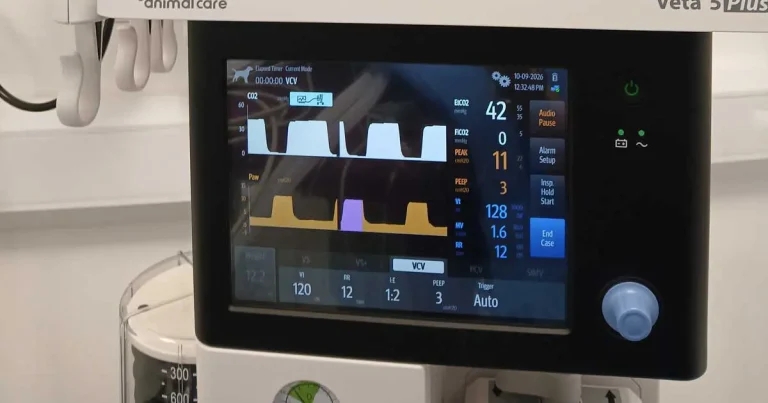
For many veterinary professionals, mechanical ventilation is still viewed as an advanced anaesthesia technique reserved for referral hospitals, thoracic procedures or critically ill patients. In reality, aiding ventilation, however it’s done, is relevant to almost every anaesthetised patient.
Whether you’re managing a routine dental procedure, a lengthy soft tissue surgery, or a patient with respiratory compromise, inadequate ventilation can have a significant impact on anaesthetic stability, patient safety, and the quality of recovery.
The question is no longer whether ventilation has a place in general practice. The question is more about why and when we use it.
Why ventilation matters
At its core, ventilation is about maintaining effective gas exchange.
Every cell in the body relies on oxygen to function. At the same time, carbon dioxide – a waste product of cellular metabolism – must be removed efficiently. When spontaneous breathing is compromised, oxygen delivery decreases, carbon dioxide accumulates, and physiological stability deteriorates.
Equally, we can get physiological instability when excessive CO2 is removed (pH derangements, respiratory alkalosis).
Ventilation also plays an important role in maintaining acid-base balance. Excessive carbon dioxide leads to respiratory acidosis, where carbon dioxide builds up in the blood and causes pH to fall, making the blood more acidic. Conversely, excessive carbon dioxide removal can result in respiratory alkalosis, where pH rises and the blood becomes too alkaline. This can negatively affect cellular and organ function, cardiovascular stability, and recovery.
From an anaesthetic perspective, ventilation is equally important because inhalational agents rely on adequate breathing for uptake and elimination.
Veterinary equipment consultant Gráinne Kelly said: “When we’re using an inhalational agent, it’s actually really important that our patients are breathing adequately so that they can inhale enough agent to maintain the right anaesthetic depth.”
A patient who is not breathing effectively may struggle to maintain a stable plane of anaesthesia, creating a cycle of physiological instability that can be difficult to manage.
Anaesthesia makes hypoventilation more likely
One of the strongest arguments for mechanical ventilation is that anaesthesia itself predisposes patients to respiratory compromise.
Many of the drugs used every day in veterinary practice reduce respiratory drive. Induction agents can often cause hypoventilation and apnoea, making elevated carbon dioxide levels (hypercapnia) one of the most common complications encountered during anaesthesia.
In other words, most anaesthetised patients begin the procedure with multiple factors working against normal spontaneous breathing and effective removal of carbon dioxide.
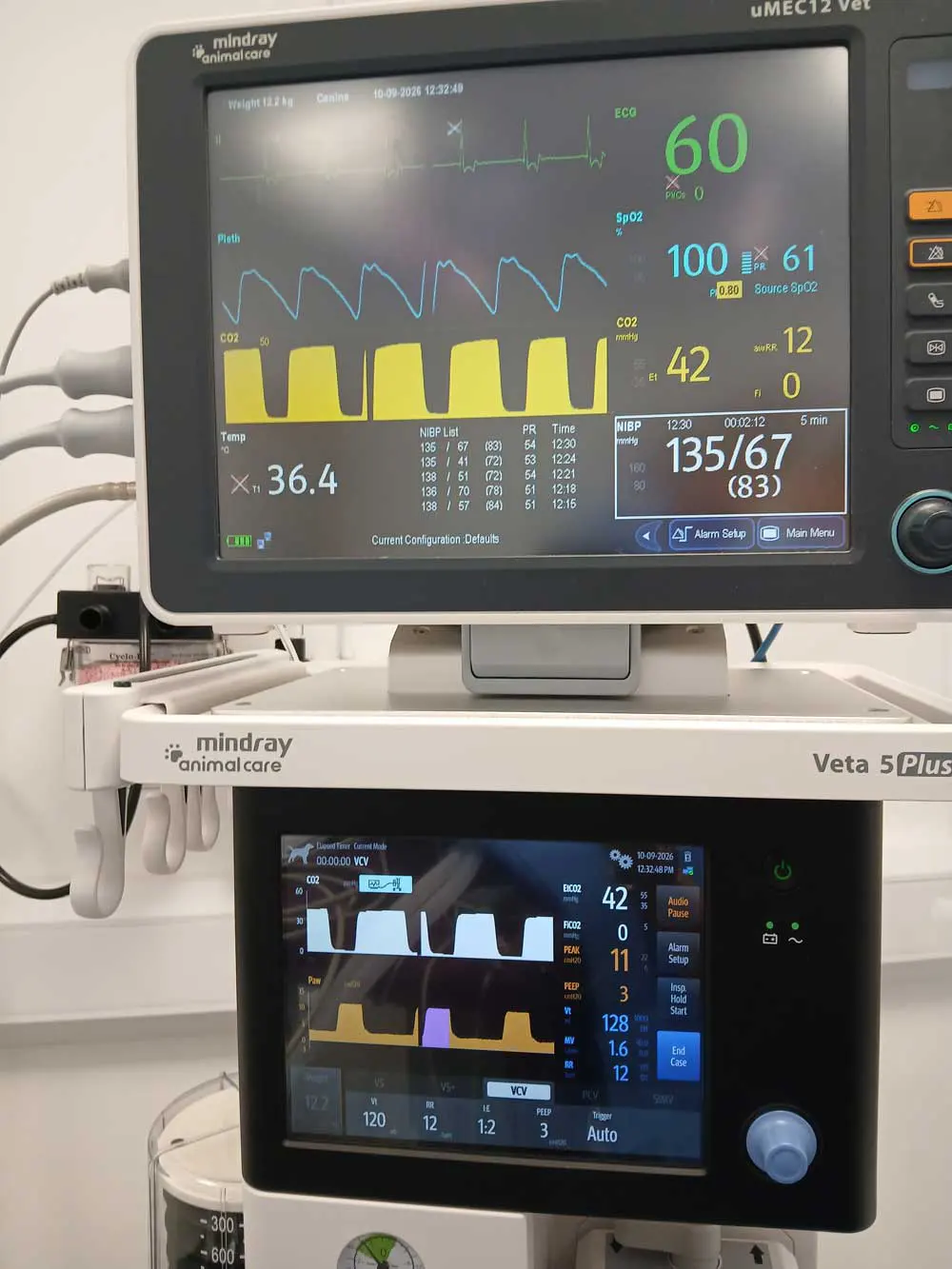
This is why capnography has become such a valuable monitoring tool. End-tidal CO2 provides a real-time indication of ventilatory status and often highlights a problem long before abnormalities appear on pulse oximetry.
Why end-tidal CO2 matters
If hypoventilation is so common under anaesthesia, the next question becomes: how do we know when a patient needs the support of a ventilator?
This is where capnography and end-tidal carbon dioxide (ETCO2) monitoring become invaluable.
Historically, many clinicians relied heavily on pulse oximetry to assess respiratory function. While SpO2 monitoring remains important, it is a relatively poor indicator of ventilation. A patient can be hypoventilating and retaining significant amounts of carbon dioxide while still maintaining a normal oxygen saturation, particularly when receiving supplemental oxygen throughout anaesthesia.
End-tidal CO2 provides a much earlier and more sensitive indication of how effectively a patient is breathing. By measuring the concentration of carbon dioxide in exhaled gas at the end of each breath, capnography allows clinicians to detect changes in respiratory function in real time.
Which patients benefit from ventilation?
When many veterinary professionals think of mechanical ventilation, they often associate it with referral procedures such as thoracotomies or patients receiving neuromuscular blocking agents. In reality, the number of patients that may benefit from respiratory support is much broader.
Patients undergoing longer procedures, those with respiratory disease, laparoscopic cases, neurological patients where carbon dioxide control is important, and any patient showing signs of hypo or hyperventilation during anaesthesia can all benefit from ventilatory support.
Importantly, these are not exclusively referral-level cases. A lengthy dental procedure in first-opinion practice may benefit from ventilation just as much as a specialist surgical case, particularly where maintaining consistent ventilation and effective gas exchange becomes increasingly challenging over time.
Recovery is often overlooked, yet up to 60% of anaesthetic-related patient deaths occur during the postoperative period. In the full article, we explore how ventilatory support can influence recovery quality, why confidence remains one of the biggest barriers to adoption, and how modern ventilators are changing the conversation in first-opinion practice. Continue reading here…
If you’d like to explore these topics further, join us at London Vet Show for one of our workshops or clinical talks, or stop by the stand to speak with the team.