
28 Oct 2025
Vet Times' editor James Westgate caught up with Jo Malone at Minster Vets in York – the place where the VetPartners story began 10 years ago.

James Westgate
Job Title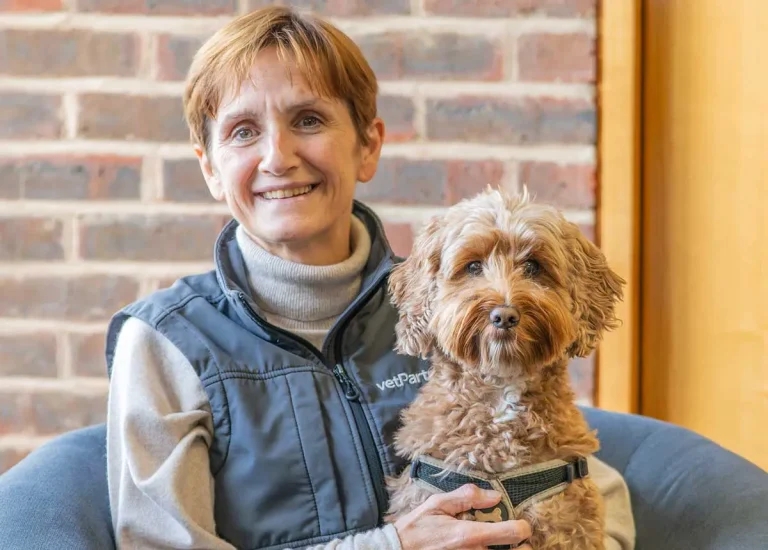
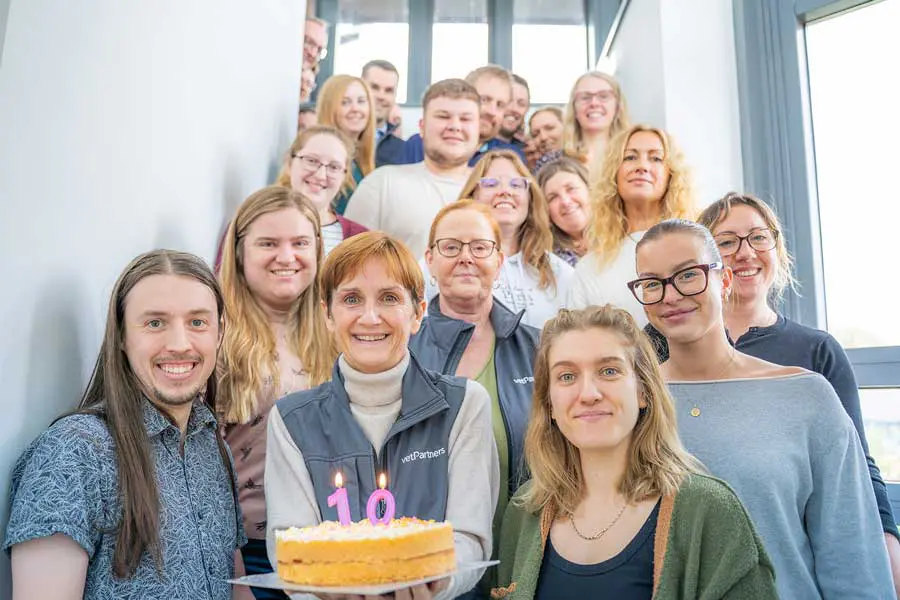
Jo Malone founded VetPartners, which now has 500 practices in the UK and Europe, a decade ago.
Jo Malone once said she “wasn’t’ financially motivated”. It’s a striking statement from the founder of a multi-million pound company and one that’s been used as a stick to beat her with over the past 18 months.
Despite leading what many would regard as a veterinary business success story, as the public face of one of the UK’s largest corporate veterinary groups, Jo has found herself in the firing line of the near-hysterical backlash provoked by the ongoing Competition and Markets Authority (CMA) investigation.
As a seasoned businesswoman and entrepreneur, she’s been able to let much of the criticism wash over her, but when the Daily Mail published details of her private residence under the headline “Vet fat cats making millions”, few would argue they’d not overstepped the mark.
It was a piece of tawdry journalism, sadly typical of much of the national media response to the investigation, and one that might have caused many people to question their body of work.
But when Vet Times met with Jo in a small office above Minster Vets, it was clear she remains as committed as ever to her work with VetPartners and the ethos upon which it is built.
“Firstly, I have to say it is great to be back here at Minster Vets where my career began and where the VetPartners journey began on 31 October 2015 – seeing everyone always gives me a lift,” she said.
“I owe everything to this practice; I was here on my work experience at 14, they helped me get into vet school and I got my first job here. I then worked here for 15 years and became a partner, which for me at that time was the absolute highlight of my career.
“I just loved this place as it seemed to embody everything I ever thought was good about a vet practice – people were respected, there was always a great feeling of collaboration and support and the whole practice was just geared up to do the very best for, not just clients and their pets, but also the people who worked here.
“That is what I wanted to build with VetPartners; to provide that wraparound support for everyone in the group and to build a business that looked after everyone the way we did at Minster Vets.”
And despite some of the bad press, Jo believes she has practised what she preaches by introducing initiatives including enhanced maternity pay, life insurance cover, improved sick pay, mental health support and training and time off for women going through IVF treatment, even though there is no statutory requirement to do so.
Each month, she also rewards 10 team members with a £250 voucher for demonstrating VetPartners’ core values, as well as providing hardship grants and grants for vets and veterinary nurses to volunteer overseas.
She added: “This business really tries to do the right thing for everyone; our clients, their pets and, of course, our amazing teams and we still want to do much more too.
“It’s why I was so annoyed about the Daily Mail article; I was an easy target I suppose and I was able to brush it off, even though they were digging around trying to get my neighbours to say something bad about me. But my son and daughter both rang me in tears because they know the stuff I haven’t done with them, the sacrifices we all made while building this business and they know how much I care.
“I also think that there are certain sections of our society that believe vets shouldn’t make money, but any practice – independent or corporate – needs money to pay its people and fund the investments our clients expect and that helps to progress care.
“I am pretty sure the CEO of a legal firm or some other large multinational wouldn’t come in for that level of criticism, for example.”
For someone who works 100-hour weeks running what has grown into a multinational operation employing more than 13,000 people, it is perhaps understandable that there are those who would regard Jo’s assertion that she’s not motivated by money with a degree of cynicism.
However, when she speaks so openly and candidly about building VetPartners in a way that enshrined the values she clearly holds so dear, it is a sentiment that still rings true.
Indeed, were it not for the fact Minster Vets had hit something of a brick wall when it came to the next phase of development, it is highly likely Jo would still be working at Minster, content with her life as a vet and partner in the business.
But like many large, multi-site independent practices, it had become all but impossible to find vets with the capital needed to buy into a partnership.
So, with the business needing investment to avoid stagnation, the practice decided to enter into a collaboration with other practices to form VetPartners and Jo began exploring the possibility of private equity investment to secure the capital needed.
And after something of a false start with Origin, August Equity came on board having bought into Jo’s vision for a “northern powerhouse”, creating a partnership that ushered in three years of explosive growth.
By 2018, VetPartners had acquired more than 300 small animal and equine practices while its farm animal division remains one of the biggest in the UK production animal sector.
August then sold its share in the business to BC Partners later that year and while growth slowed as the business consolidated, VetPartners has continued to expand, albeit at a pace designed to ensure the business is partnering with the right kind of people.
Now with sites across continental Europe – including in Italy, Germany, France and the Netherlands – Jo admits that the expansion of the group has not been without its challenges and “finding the right fit” has not always been easy.
And while there remain many people who assert that Jo is a mere figurehead for the faceless suits who really run VetPartners, the recent overseas expansion perfectly illustrates that this business remains very much vet-led.
Jo added: “There is that misconception, but BC Partners is just one shareholder – we have many and we also have a board, of which I am the CEO, which means if something is not right for the business then it doesn’t happen.
“An example of that is when we were looking at partnering with a group in Spain. Talks were well advanced, but it had become clear to me that the fit just wasn’t right, so we walked away from the deal.
“There is a lot of misunderstanding about private equity in the veterinary sector, but they don’t take any money from the business until they sell their shares in the next cycle of ownership.
“Of course, they want to make money when that sale occurs, but to do that they try to create something that is greater than the sum of its parts by bringing in structure, processes and efficiencies that ultimately benefit all parts of the business.”
One of the most striking findings of the CMA investigation has been that vet fees have risen 60% in the past 10 years with some of the biggest increases seen in practices owned by the large corporate groups.
There is also the claim that vets working for “the corporates” face restrictions on their clinical freedoms when it comes to areas like referral and drug choice.
But Jo is quick to challenge this view. “For me, that is one of the most important things and all our vets have that autonomy to choose the right drug or treatment pathway for any given patient,” she said.
“Where things might be slightly different is when it comes to things like what you do with clinical waste or where you buy paper from, things like that where our scale means we have deals in place.
“We also have deals in place for products like vaccines, but everything has to be approved by our clinical board and if a vet does have a reason for going another way, then that is fine.”
And on pricing, Jo is uniquely placed to pass comment on the supposed differential between VetPartners practices and independents.
She said: “I am not convinced. Since the days of COVID prices have gone up, but profitability has gone down and that has been caused by lots of things, not least the fact that wages have had to rise. So, unless you were to accept an even lower level of profitability, and that’s the million-dollar question, what level of profitability is, right or not?
“I know our profitability is not so very different than independent practices because I see lots of independent practices that have joined us, and I see their profit and loss account and I see our profit and loss account.
“Now what I do see that is different is the level of pay increase. From 2004 to 2014, national living wage went up something like 33% but between 2014 and 2024 it went up 77%, that is a massive increase and that increase – which needed to happen – also had a knock-on for our amazing nurses, student nurses and our lovely reception teams – and adding that in to the national insurance increase has inevitably meant that prices have had to rise across the board, but the perception that we are creaming off greater profits than most independents is simply not true.”
Jo added that she believed the whole CMA process has been something of a “distraction” that has created mistrust, not just among pet owners, but also within the profession itself.
And while she accepts that the large groups were always going to be something of a “scapegoat” and presented as the bad actors in the piece, the reality is far more nuanced.
She added: “We have supported the whole CMA process and, while many of the recommendations are already in place, we can always find ways to improve.
“I think the CMA went into this thinking the big groups must be profiteering, but they’ve seen our profit levels and now they know that is not the case.
“They have gone into it thinking one thing and found something quite different. There was a lot of talk of divestments, but the CMA has realised that would create an absolute minefield, particularly when you look at out of hours and farm and some mixed practices. There will be changes as we have now seen, but it is my hope that once this is behind us, we can all start to rebuild the trust and move forward as the caring profession we all know this to be.”