13 Oct 2026
Nurturing the vets of the future
The Veterinary Schools Council has published an online admissions guide and is encouraging the profession to share it widely with prospective applicants.

Veterinary professionals are being encouraged to review their understanding of veterinary school admissions amid concern that outdated advice may be discouraging capable students from applying.
The Veterinary Schools Council (VSC) admissions committee is working to address some of the most common misconceptions surrounding veterinary applications, emphasising the important role that the profession plays in advising prospective applicants. It has now published an online admissions guide and encourages the profession to share this with prospective applicants.
Competition
Veterinary courses are often seen as extremely competitive, with many assuming most applicants will be unsuccessful. However, headline statistics often fail to capture the full story, and getting a place is not as tough as it may first seem.
While applicant-to-place ratios might look high, applicants may apply for up to four veterinary courses through UCAS and need only one offer to secure a place.
In reality, data suggests that around half of applicants are successful in gaining a place at a UK veterinary school.
Entry requirements – what are veterinary schools looking for?
A common assumption exists that veterinary schools are seeking a particular “type” of applicant, typically defined by academic achievement or background. This is not the case. Veterinary schools are, instead, looking for candidates who demonstrate the breadth of skills, attributes and potential to succeed in a diverse profession spanning clinical practice, research, public health and beyond. Academic ability remains important, but it is not the sole determinant of success.
Typical A-level requirements at UK veterinary schools range from A*AA to ABB, but institutions now widely provide and accept alternative routes into the course. This often includes previous degrees, vocational study and additional preparatory years, commonly referred to as foundation, gateway or preliminary programmes.
While the structure, content, and entry requirements of these courses vary, these alternative pathways all share the aims of supporting students to succeed on the main veterinary programme and opening the profession to a more diverse range of applicants.
Work experience requirements have also changed significantly. While experience remains valuable, veterinary schools are increasingly aware that access to these experiences is uneven, and that such requirements create significant barriers for otherwise capable applicants.
As a result, some veterinary schools have removed minimum requirements, while others now value a broader range of experiences, including from non-veterinary environments, which help develop transferable skills such as teamwork and communication.
Having a good understanding of the profession remains important, and while work experience can help develop this, alternative routes to gaining this are also now available; for example, during the COVID-19 pandemic, the University of Nottingham led a group of veterinary schools in developing an online work experience scheme. This remains free to access and aims to allow all prospective students to gain an understanding of what a veterinary career involves. Veterinary professionals are encouraged to signpost prospective applicants to these various opportunities and alternative pathways, and to ensure that individuals have a realistic understanding of work experience requirements to avoid discouraging applicants who may have lacked access to these opportunities.
Admissions processes
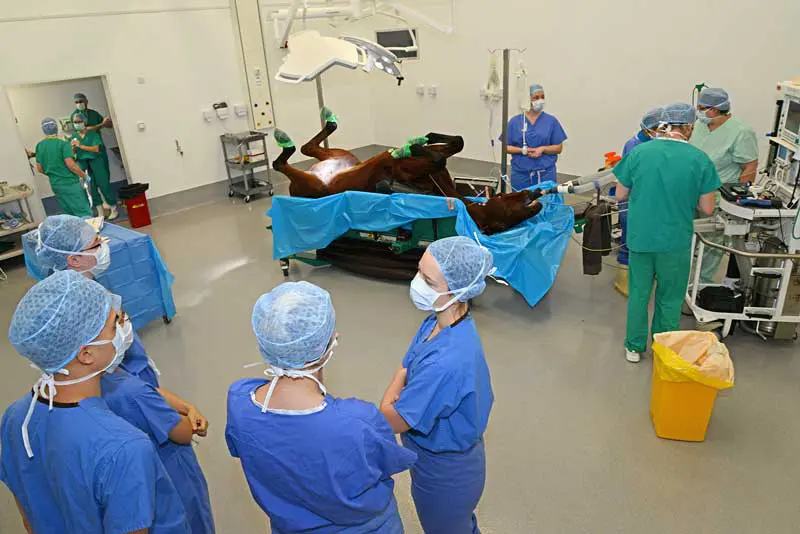
Admissions processes have also evolved to better identify applicants with the potential to succeed in a veterinary career.
Veterinary schools recognise that differences in the support applicants receive – particularly when writing personal statements – can create unfair advantages. As a result, although personal statements are required for UCAS applications, most veterinary schools do not use them as part of their application process.
More common is the use of supplementary tests and questionnaires, which can help admissions teams to understand motivation, skills and experience.
Interviews remain part of the admissions process for many veterinary schools, although not all.
In seeking to assess applicants’ suitability for their courses, veterinary schools use a range of interview formats, with multiple mini interviews and panel interviews being among the most common. Interviews also vary between online and in-person delivery.
Within interviews, and across the whole application process, veterinary schools are committed to providing support and making reasonable adjustments where needed, to minimise any barriers applicants may face; this may include, for example, providing extra time, or offering financial support to attend in-person interviews or events.

What additional support is available?
All UK veterinary schools also use contextual admissions processes. This means that a candidate’s application and achievements are assessed based on the educational opportunities available to them. This approach often involves offering reduced grade entry requirements, flexibility in work experience requirements or guaranteed interviews for eligible applicants.
Furthermore, many of the alternative pathways outlined previously – particularly additional preparatory years – exist to help support students from underrepresented backgrounds, and those who may have faced educational disadvantages, prepare for and thrive on a veterinary degree programme.
In addition to these, many veterinary schools offer other outreach activities, such as summer schools, to support prospective applicants in preparation for veterinary study.
The VSC admissions committee also highlighted that support is available for students with disabilities, citing this as an area where persistent misunderstanding still remains. The committee stressed that while UK veterinary degrees currently require all students to compete all compulsory elements of their veterinary course, including practical work with all major domestic species, it is often possible for veterinary schools to make reasonable adjustments to support disabled students to achieve this.
Prospective students with disabilities should be encouraged to apply and to engage with veterinary schools early to discuss how support can be tailored to their individual needs.
Additionally, given the financial pressures associated with veterinary degrees, and higher education in general, many veterinary schools offer scholarships and bursaries to support students throughout their studies, as well as throughout the application process.
Details of these can be found on each veterinary school’s website.
Final word
The VSC admissions committee emphasises that veterinary professionals are often the first point of contact for those considering a veterinary career and, therefore, they play a key role in shaping perceptions and encouraging applicants.
Professionals are encouraged to keep their knowledge up to date and to signpost prospective applicants to the VSC admissions guide, which is updated annually to reflect current entry requirements, accreditation status, admissions processes and support available at each UK veterinary school.
The guide is available on the VSC website, alongside a resource developed by the Widening Participation Veterinary School Network, which provides detailed information on the outreach and widening participation initiatives offered by each UK veterinary school.
- This article appeared in Vet Times (13 October 2026), Volume 56, Issue 41, Pages 24-27