
25 Nov 2025
Sustainability in everyday vet practice
How vet practices in one large vet group are making strides towards a Positive Pawprint

Vet Times
Job Title
Image: Maksim Pasko / Adobe Stock
A Gloucestershire vets’ has become IVC Evidensia’s 100th Positive Pawprint practice.
Dragon Vets, based in Cheltenham, received the award after meeting challenging targets as part of the group’s drive to improve sustainability.
IVC’s Positive Pawprint strategy sets out to protect the health and happiness of people and their pets while reducing environmental impact and promoting a cleaner and more sustainable environment.
Core pillars
It’s built on three core pillars of sustainability: caring for people, caring for the planet, and caring for patients.
Such has been the response that, as well as 100 Positive Pawprint and Positive Hoofprint partners, around 200 other practices in the UK alone have registered to work on the toolkit, with others also involved in Ireland, Finland, Sweden, France and the Netherlands.
The very first Positive Pawprint practice, in 2022, was Rhyd Broughton Vets in Wrexham. Its comprehensive range of green initiatives included foot pedal-operated taps, an antibacterial salt-water solution reducing the need for chemicals, and bird boxes set up as part of a bee-friendly garden to attract wildlife.
Since then, many more IVC Evidensia practices have been inspired to take up the challenge, including ICR Vets, which provides 24-hour veterinary care at sites in Gorebridge, Loanhead and Pentland, near Edinburgh. Like all the others, they have been guided through the process by a helpful, detailed toolkit.
“When I first came across the toolkit, my immediate reaction was, ‘This is brilliant,’” said Kayleigh Walsh, practice director at ICR. “The structure, focusing on people, patients and planet made it engaging and accessible for the whole team.
“It provided a clear roadmap and didn’t feel like a box-ticking exercise, but rather a genuine opportunity to create meaningful, lasting change.
“It offered a chance for us to do better together for our teams, the patients we care for, their owners, our wider community and, of course, the environment.
“It felt achievable, collaborative, and something we could truly be proud of.”
Green team
A “green team” was founded at the practice, with quarterly meetings planning projects, reviewing progress and celebrating successes.
Vets, nurses, VCAs, reception and admin staff were all involved, with head nurse Robyn Buchanan taking a leading role and ICR using the experience of other practices, including around anaesthetic usage.
“Our commitment to reducing greenhouse gas emissions in our theatre areas has already led to the successful launch of our ‘low flow’ anaesthesia project,” said Kayleigh.
“We also reviewed our premedication protocols and increased our use of local anaesthetic blocks to reduce our reliance on volatile anaesthetic agents wherever possible.
“Being part of the sevoflurane recapture project that has worked elsewhere was a natural next step, allowing us to address anaesthetic gas emissions from every possible angle.
“The impact has been significant, and we’re now planning to expand the installation of recapture units across more of our sites.
“Perhaps most rewarding of all is that we’ve also enhanced patient safety by delivering an even higher standard of anaesthesia.”
Water usage
With more than 70 team members and a high volume of clients, water usage was another area the project team looked at, and toilet hippos were installed throughout all three sites.
With the cistern displacement devices reducing water flush by up to three litres, the simple low-cost change will have saved thousands of litres of water by the end of this year.
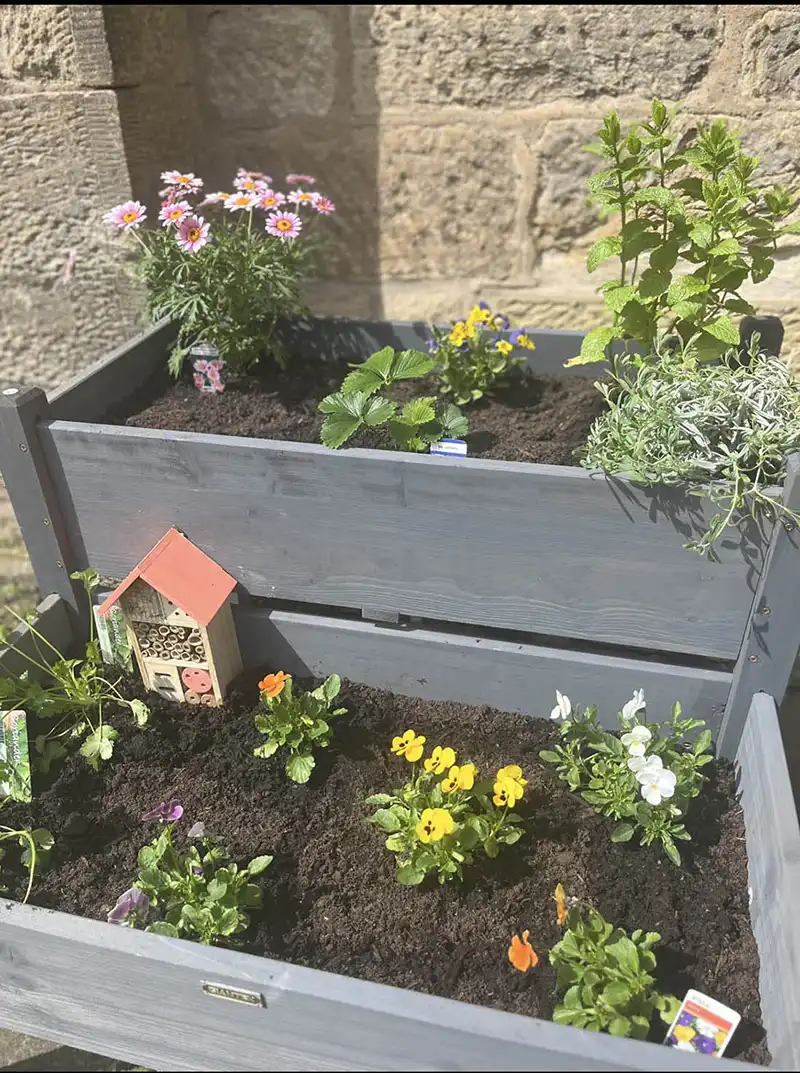
ICR has also become a bee-friendly practice through targeted action in outdoor spaces, despite the challenges of providing extensive car parking.
“We created pollinator-friendly flower arrangements and gave clients free packets of wildflower seeds to help build pockets of bee-friendly flora around our community,” said Kayleigh.
“We installed bee hotels, water stations and hides for pollinators and were really chuffed to see so many bees visiting our flower beds and pots during the summer.”
The green team’s latest meeting this autumn identified three key focus areas for the coming year, choosing projects that have a meaningful and measurable impact. The most ambitious project lies further ahead, with a planned relocation to a new, purpose-built site.
That would present an opportunity to incorporate sustainability into the fabric of the building, from energy-efficient design and ventilation systems to sustainable materials
“Our focus is on embedding sustainability, well-being, and patient care into our daily mindset, aiming for continuous improvement,” added Kayleigh. “Even aiming for just 1 per cent better each day puts us on a strong path to real progress. We’re far from finished, but we’re steadily building momentum.
“It can be a challenge to balance initiatives like Positive Pawprint with our clinical responsibilities, but by working together and breaking things down into manageable sprints, we’ve made impressive strides. And the team are so happy and invested to be part of something we all feel is helping to make a real difference.”
With client care a priority, practices can work through the process at their own pace as workload allows, but most will complete it within six months to build on the initial momentum.
100th practice
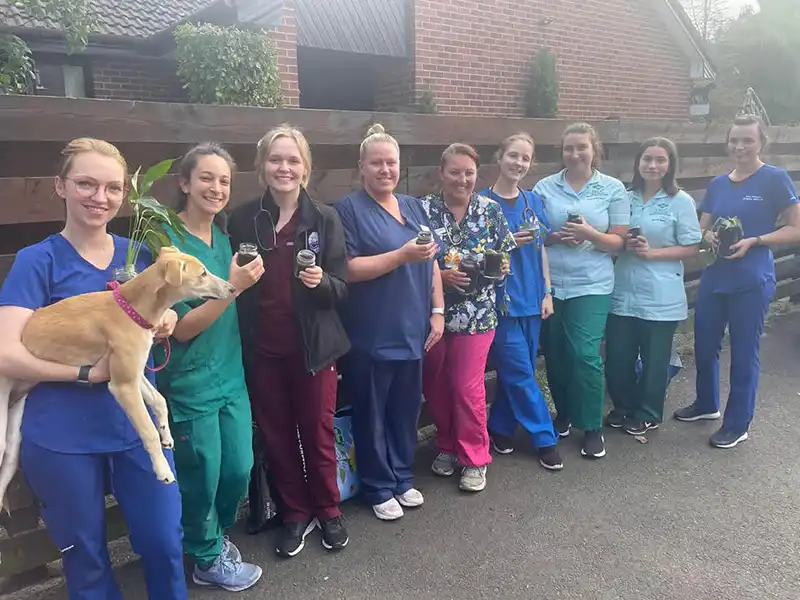
Dragon Vets has recently become the 100th Positive Pawprint practice.
With five locations spread throughout Gloucestershire – Charlton Kings, Kingsway, Prestbury Park, Rissington and Tewkesbury – it required both a coordinated approach and engagement from the large team of vets, nurses and support staff.
“We became more aware of Positive Pawprint during our preparations for Practice Standards inspection,” said Nikki Gillespie, one of the nurses at Dragon Vets keen to get involved and see the Positive Pawprint strategy take shape.
“The toolkit and the sustainability team were a great help and support to helping us become Pawprint Partners.
“It was very interesting learning all the different aspects of sustainability and becoming increasingly aware that there was a lot more to it than just recycling, which we may have assumed before.
“Doing some background reading based on the guides which the Toolkit put together really helped with the understanding of the different aspects.
“Through working together, the team has learned lots from this. We have enjoyed thinking of ideas to help practices become more sustainable and will continue to do so in the future.
“It’s really nice to be the 100th Positive Pawprint practice and see how many others within our IVC Evidensia practice network have become involved.”
Gaining traction
The initiative is increasingly gaining traction as more practices learn about it and want to play a part.
Sarah Heath, group sustainability and ESG director at IVC Evidensia, says the 100 practice milestone is a welcome one for both the company and the sustainability of the veterinary profession.
“At the heart of IVC Evidensia’s Positive Pawprint sustainability strategy is our commitment to use our scale as a force for good to help drive meaningful improvements in sustainability across the veterinary profession,” said Sarah.
“We are delighted to see how keen our staff and practices have been to become involved. The growing number registering to take part shows the momentum we are building and how much we can continue to support the transition to embed sustainability within the profession.”
- This article appeared in Vet Times (2025), Volume 55, Issue 47, Pages 16-17.