
01 February 2026
Sophie Duguid, diagnostics national veterinary manager at Zoetis, discusses the latest capability on the Vetscan Imagyst platform with Vet Times editor James Westgate.


Vet Times
Job Title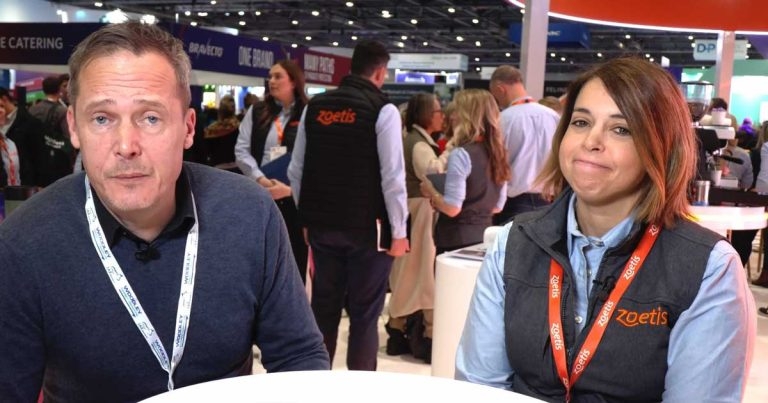
At London Vet Show, Vet Times editor James Westgate sat down with Sophie Duguid, diagnostics national veterinary manager at Zoetis, to discuss the latest capability on the Vetscan Imagyst platform: AI Masses. It is the newest addition to a system that has steadily expanded since its 2020 launch, moving from AI Faecal analysis to Digital Cytology, AI Blood Smear, AI Dermatology, AI Urine Sediment, and AI Equine Faecal Egg Count (FEC) testing.
AI Masses focuses on one of the most common and clinically significant presentations in practice – the patient with a lump. As Ms Duguid explains, fine needle aspirates remain the first step in determining whether a mass is benign or potentially neoplastic.
The new AI tool provides an immediate first‑pass assessment of the sample, helping clinicians determine whether the cells present are suspicious or benign, and whether escalation to a clinical pathologist is required. The same approach applies to lymph node aspirates, supporting differentiation between inflammatory enlargement and cancerous change.
A recurring theme in the conversation is the importance of robust data and rigorous validation. Ms Duguid emphasises that Zoetis’ AI development is grounded in clinical pathology expertise, with every application benchmarked against human specialists.
In cancer detection, especially, she notes, that there are cases where a definitive call is challenging – which is why the platform is backed by a global team of clinical pathologists available to deliver expert review within hours when needed.
For practices, the benefits centre on speed, accuracy, and workflow relief. Sample preparation remains familiar, while analysis is handled by AI or seamlessly escalated to a human expert. Faster clarity supports earlier decision-making, which can translate into improved patient outcomes and reduced anxiety for owners.
Ultimately, the goal is to strengthen clinical confidence, preserve and enhance diagnostic skills, and give veterinary teams more time to focus on the work that matters most.