
2 Jun 2026
Tiny but significant, the microchip represents a rare success where law and innovation align to provide lasting benefits for veterinary teams and owners alike…

Adam Bernstein
Job Title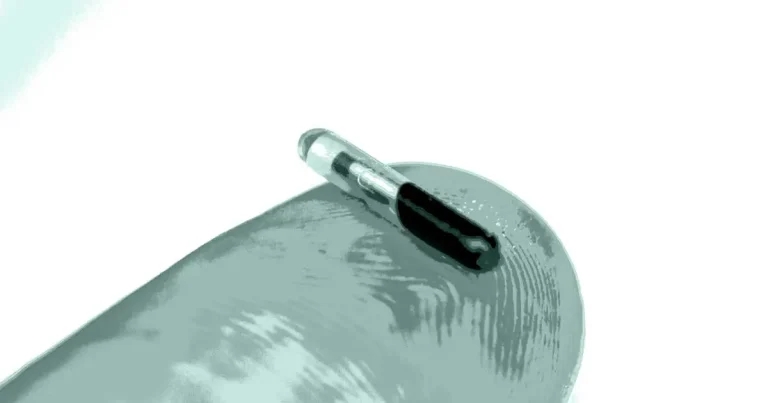
Image: Todorean Gabriel/ Adobe Stock
Technology is a modern-day marvel. Essential to life, even developments mooted at the turn of the millennium would astound a man riding the Clapham Omnibus less than a century ago.
The internet, information technology and miniaturisation are taken for granted, and just as computers and home electronics have shrunk in size and cost, so devices have become super-small with countless uses and applications – including in the world of pet care.
Take the microchipping of pets with devices smaller than a grain of rice, for it’s a rare occasion where the law, interested parties and citizens have reaped a benefit.
Microchipping is nothing new – the technology has been around for more than 40 years. Initially known as PIT (passive integrated transponder) tagging, it was designed to be a more efficient and effective method for monitoring wild animal behaviour than previous mark-and-recapture techniques.
The move into microchipping pets is more “recent” with the technology first introduced into the UK back in 1989. It took some time for the necessary infrastructure to be put in place and for standards suitable for vets and allied groups to be set. It wasn’t until the 1990s that animal charities, veterinary groups and electronics suppliers formed the Microchip Advisory Group, latterly the Microchip Trade Association.
Set up to develop and coordinate systems and implantation sites, while also dealing with issues that caused incompatibility with early chip readers, it created standards – ISOs 11784 and 11785 – in 1996.
The technology has since evolved and while traditional radio-based RFID microchips remain the standard, there are newer products that incorporate new functions such as temperature sensors to allow vets to measure body temperature without rectal thermometers.
At the same time, mobile phone apps, databases, better scanners and digital health systems are all developing. In time, practices will see new opportunities to monetise care.
What was once a tool for animal welfare has grown into being a key part of animal management. Formerly used by the conscientious pet owner wanting more care for their pet, it is now recognised by the law and should be considered a key element of the veterinary care process. But its also a revenue source.
On one level, some might consider microchipping of an animal by inserting a rice-grain-sized chip beneath the skin that can be read by a handheld scanner a one-off task – insert, record the event and owner’s details, and move on.
However, as technology has developed, so microchipping should be considered a central part of the animal/client relationship that can clearly be tied to the process of acquiring clients, meeting regulatory compliance, assisting with medicine and even long-term client retention.
It surprises some that because veterinary medicine in the UK is facing an almost perfect storm of regulatory scrutiny, rising costs, increasing competition and client cost concerns, that microchipping is actually one element of the care process that suits all – regulator, client and practice.
It should not be a shock that with what microchipping costs and what the process offers, that statute has mandated its use in the UK’s dogs and cats.
Mandatory microchipping for dogs came into force across England, Scotland and Wales in 2016 via The Microchipping of Dogs (England) Regulations 2015, The Microchipping of Dogs (Wales) Regulations 2015, and The Microchipping of Dogs (Scotland) Regulations 2016.
Under that law, dogs must be chipped by the age of eight weeks, with owners expected to keep registration details updated upon pain of a fine up to £500. There was some initial resistance among owners, but that soon evaporated and now a non-microchipped dog is an exception rather than the rule.
Given the success of microchipping dogs, it was only a matter of time before it was rolled out to cats. This was done in England from June 2024 with The Microchipping of Cats and Dogs (England) Regulations 2023. Microchipping is now also compulsory for cats above 20 weeks old.
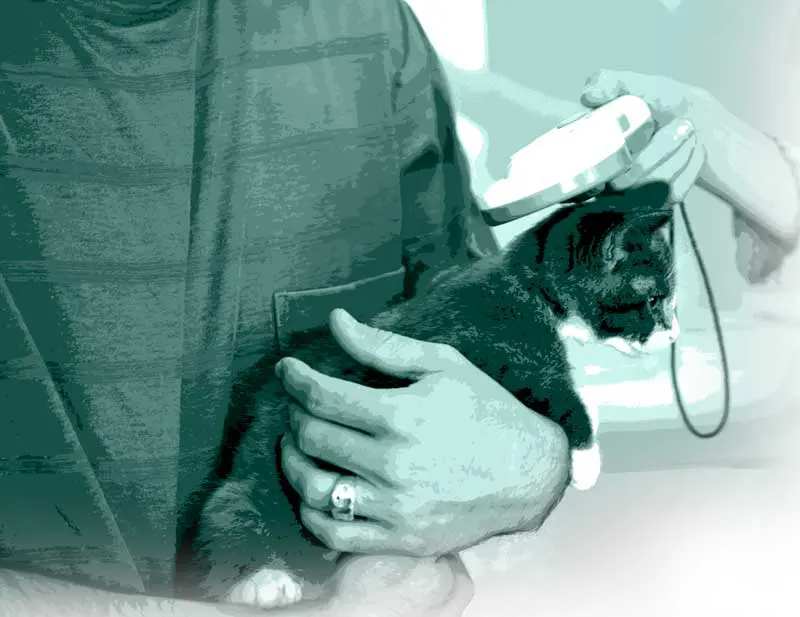
Where dogs tend to receive routine care – vaccinations, annual health checks, and regular preventive treatment – cats, particularly indoor ones, are often seen by owners as needing less intervention. Cats tend to only be presented when ill; for them there is generally much less structure around preventive health care.
However, since microchipping of cats is now mandatory, there is now a legally driven reason for the owners of cats to interact with a vet. This means that for many practices, a microchipping appointment is now the first time that they’ll see a cat owner, making it an ideal opportunity to begin what might become a long-term relationship.
The financial implications of the microchipping process to an owner is low given that it lies somewhere between £10 and £30 – depending on location, chip type and if the chipping is carried out as part of another service.
That fee won’t make an empire. The chip may be inexpensive, but time, admin and registration take a chunk of that fee.
However, that one-off transaction could, if handled correctly, lead to years of other interactions with the owner.
So, considering it a one-off, to be handled quickly, sale is a huge miscalculation. Rather, a forward-thinking practice would see it as an entrée into a financially rewarding long-term relationship that involves preventive health care as well as urgent needs.
It follows that both dog and cat owners booking a legally required microchipping appointment may also register with the practice to discuss vaccinations, ask about neutering, enquire about flea and worm prevention, or purchase pet insurance. In other words, a simple £30 legally mandated sale can easily lead on to become something much bigger.
That first appointment, in effect, creates a bridge into recurring revenue streams that are significantly more valuable over time than the chip itself.
Consider how microchipping can be packaged into a general wellness plan.
Puppy and kitten plans are perfect for combining microchipping with discounts on vaccinations, health checks, parasite prevention and neutering. Looking at microchipping this way it’s reasonable, and possible, to move away from treating each as a single transaction and instead, moving clients on to a subscription-style preventive care relationships.
And this recurring revenue matters enormously; it’s far more stable than random treatment income which, by definition, means unpredictable demand and fluctuating income.
It’s also worth remembering that the data held via every chip is valuable – it contains owner contact information, pet demographics, breed details and identification records. If integrated into practice management software, the chip effectively becomes a pet’s lifelong record.
From this a practice can automate reminders for vaccinations, annual checks, parasite treatments, dental assessments, older pet programmes and other such campaigns.
All of this has become more important now that the profession is under the spotlight in terms of transparency and affordability resulting from the CMA’s investigation. And with affordability a concern, where one-off bills for emergency treatment may be painful, a monthly subscription for preventive care may be more palatable – all because of a tiny microchip.
And it’s important to not forget that a microchip can help reunite a lost pet with its owner; practices that assist here are likely to win emotional long-term goodwill from distraught owners.
Finally, it needs to be recognised that vets can also use microchipping to create tie-ups with rescue organisations, breeders and charities. These bodies require animals to be microchipped before rehoming. This alone creates more work.
But beyond this, it’s possible to build a referral relationship with organisations that also need vaccinations, neutering and ongoing care for newly adopted animals. And from there, it’s possible that new owners of microchipped animals may want to use a chipping vet that’s been recommended to them.
The public has increasing expectations around animal welfare; owners view pets as family members rather than animals. This “humanisation” of pets has led to spending growth in so many ways, including veterinary medicine, nutrition, insurance and preventive care.
Microchipping is not to be seen as a simple one-off sale. Instead, it must be viewed as the door to be opened into a whole world of business for a vet where regulation, welfare and business interests coincide.
Adam Bernstein is a former editor of VBJ with many years’ experience running his own small business.