
15 May 2026
Effective CPD transforms veterinary practices by aligning individual ambitions with strategic business goals. Career development coach and SPVS board member Emily Bridges explores how proactive mentorship and purposeful training can boost staff retention, improve patient care and drive sustainable financial growth…

Emily Bridges
Job Title
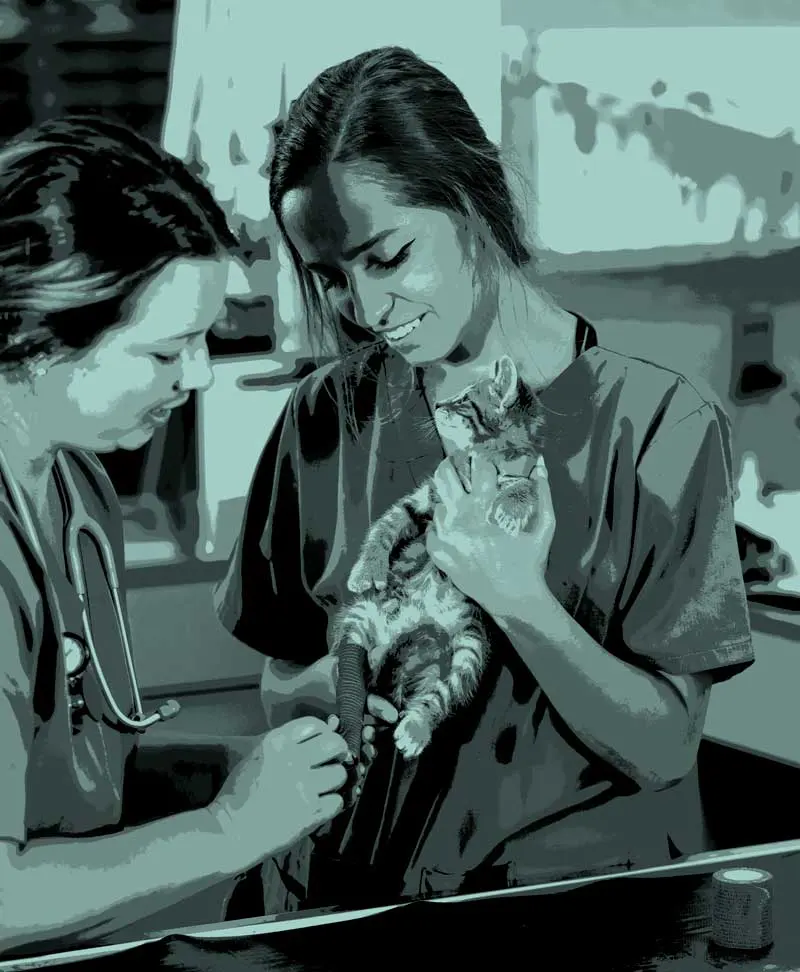
Image: Alvarog1970 / iStock
You’ve got the team’s 1-2-1s coming up and you need to sort CPD. They each get £1,500 and five days.
They all get the usual brochures and there’s always congress later in the year so there’s nothing really to plan, right? They’ll tell you what they want to do and you’ll approve it. Easy.
I want to discuss why I think this approach is doing your team and your practice a disservice. The right training can improve staff retention, motivation and productivity. You can create new income streams while providing better care for patients and a better experience for clients – with the individuals and CPD providers still doing most of the work.
Let’s look at a couple of examples (see case studies 1 and 2).
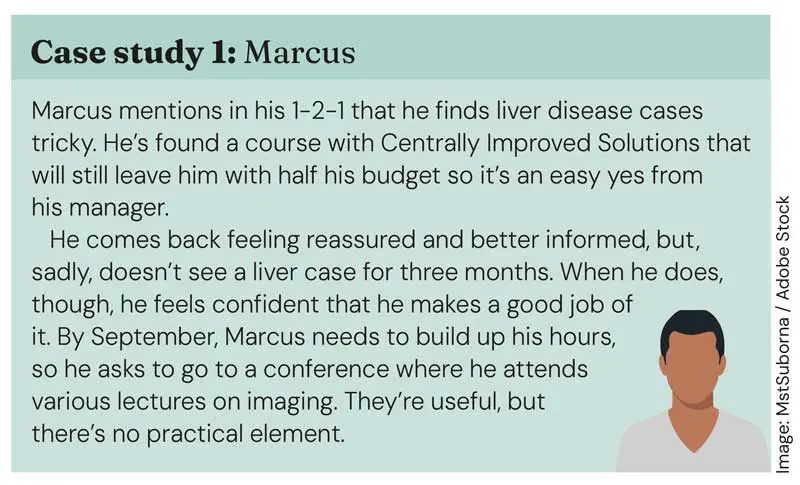
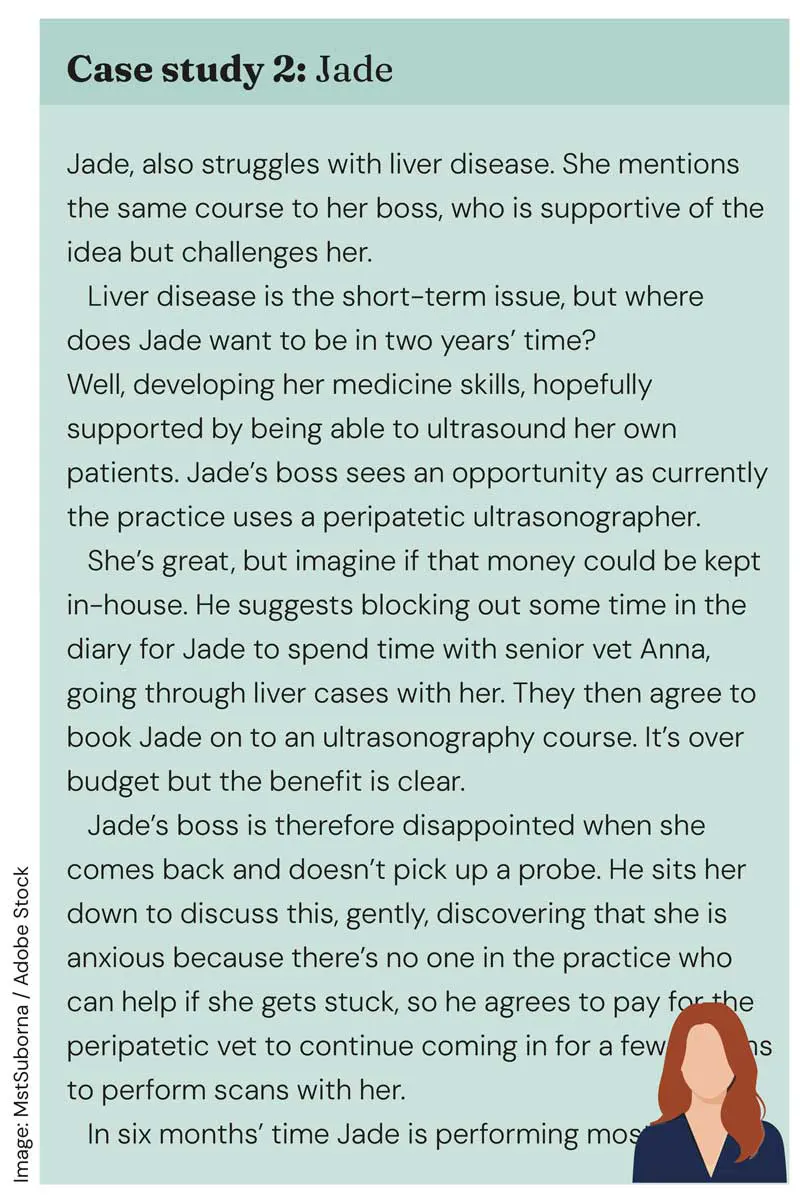
What are some obvious benefits of effective training in your team?
Motivation: vets and nurses have worked for years with a goal in mind – qualifying. Once they achieve this, they are suddenly goal-less. While some enjoy the freedom, in my experience, many soon feel lost and start searching for the next achievement. If they can’t see that within your practice day-to-day motivation drops, which brings me to…
Retention: if people can’t envisage their next step within your practice, they look elsewhere. We’ve all felt how frustrating it can be to train up a colleague, only to see them leave taking all your hard work with them. If you can help someone see an exciting future to work towards, they are more likely to stay. This isn’t just about signing off the CPD they ask for, it’s about talking regularly about their ambitions, helping them build a vision for what they want and how that’s going to look in your practice. Hopefully I don’t need to point out that retaining your team means spending money on their education, not on agency fees.
Comfort: I recently heard the phrase “do you hate doing it or do you just not know how to do it”. I’ve seen countless new graduates “hate” dentals before attending practical CPD or receptionists who feel uncomfortable supporting bereaved clients. They return having discovered they just didn’t have the right skills. The right training can eliminate an awful lot of stress. That being said, I think it’s important to note that more knowledge is not always the solution. This leads me to my next point.
Personal development: training does not just mean a one-day clinical course, it can be anything that helps a person develop. For example, many practices now fund colleagues receiving coaching, say, to build confidence. It’s always worth getting curious with your team – is lack of clinical knowledge really the barrier or do we need to learn to navigate self-doubt or manage time better.
Community: being in practice can be isolating. You may have a wonderful team, but if you are the only practice manager, you can feel like an island. No one else knows how to do your role so asking for help can feel pointless. When you need to let off steam, you can’t complain down to the team, but then you don’t want to take the practice owner’s time either, so who do you go to? When designing our popular SPVS Elevate leadership course, building a network of peers was one of the primary aims of the CPD; helping people feel supported when taking their new skills back to their teams.
Leadership: talking of Elevate, one of the reasons I’m so passionate about this course is because of the huge benefit I see it having, not just to the people who attend, but their practices. One benefit of good development is that it should give you, as a practice owner and leader, an easier time. Your team should be empowered so that when you step away for a holiday, everything carries on running just fine; you’re not the only person who feels capable of the tricky tasks and, when it comes to thinking about stepping away for good, there are obvious colleagues ready to take it on. To achieve this, your colleagues need leadership skills too.
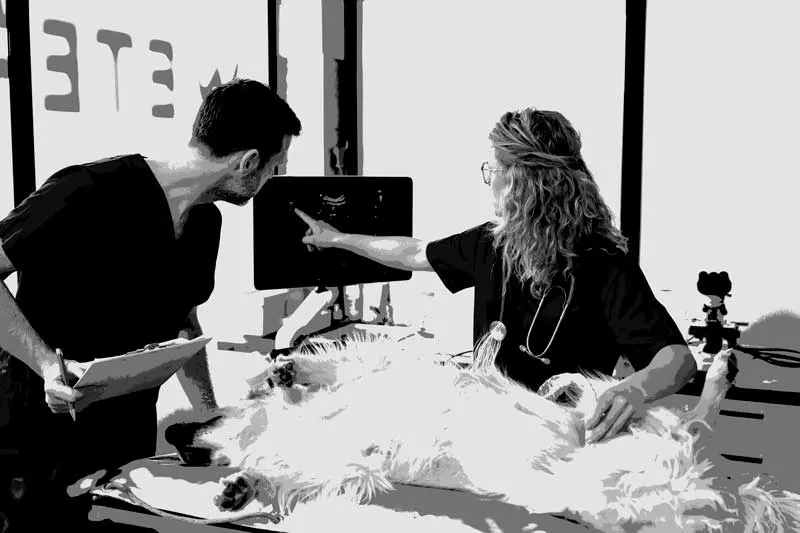
But training is expensive, right? You want to see a return on your investment. Absolutely, most external training costs money, even internal training costs time, and therefore money, but I really believe there are so many reasons it is worth your investment.
Introduction of new services. This is where it is important to think of the bigger picture, not just one person going on a CPD course. At Vets for Pets, we run a laparoscopy course where not only do the clinical team learn how to use the equipment, but the practice manager learns how they can price and market such a new offering in their clinic. Organised to align with the purchasing of equipment, this leads to a great opportunity to use the new service to draw in new clients, with the whole team on board.
Nurse utilisation. Building the skillset of our veterinary nurses not only increases job satisfaction, but allows them to do more charged work. Whether this be increasing the range of nurse consults offered to your clients or having nurses do procedures such as stitch-ups and simple lump removals, it frees up vet time, meaning more consult and ops slots for them too.
New technology. Some people will be happy where they are, but nowadays, staying where you are is really moving backwards. While being mindful that some people need more support to cope with change, developing team members in areas such as AI to enable them to use notetaking apps, can create a huge shift in the productivity of your day.
Hopefully I have given you quite enough bullet points to persuade you that putting some thought into your team’s development, and taking time to discuss it with each member, is worthwhile. Let me just finish with a tool to help you along the way.
In coaching, there is a model I often introduce to clients called Ikigai. It allows people to find their reason for being and, with a slight tweak, I think can be used to explore development. I should say, I’m the daughter of a mathematician, I’m a big fan of a Venn diagram (Figure 1).
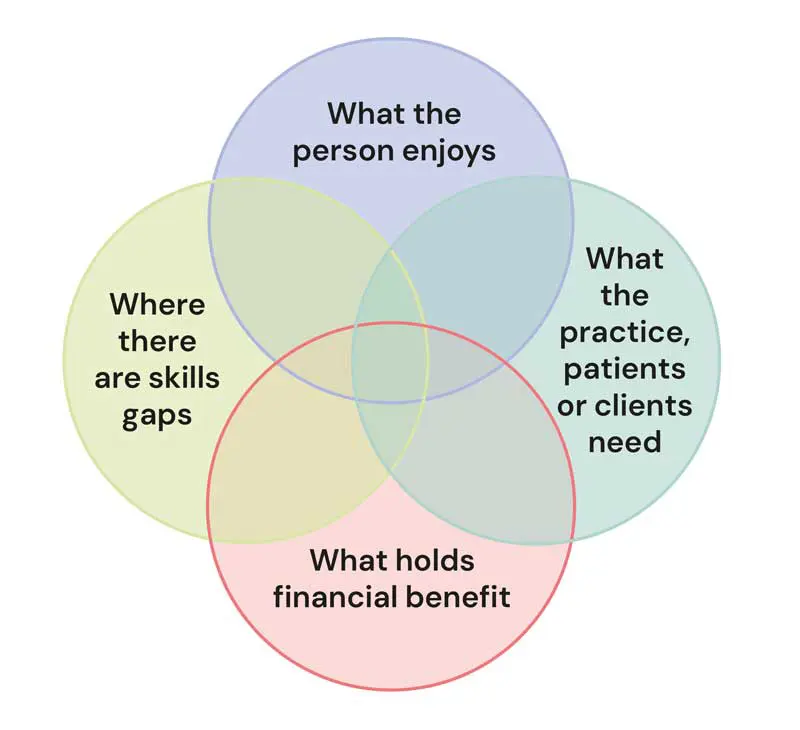
In an ideal world, you want to identify areas with as much overlap as possible. Let’s think about Marcus and Jade. Marcus had a skills gap in liver disease but we didn’t explore whether he actually enjoyed these cases. Of course, patients do need good care, but it was unlikely to be a big gap in the practice, and his training is unlikely to have made a measurable financial impact – he’s in the green circle.
Now let’s turn to Jade. She had the same skills gap, but it sparked a conversation, uncovering the interest in imaging, which she enjoys. The practice and patients would really benefit from having someone who can do this internally and there is a financial benefit to that – her imaging training sits right in the middle.
It’s not to say it isn’t worth investing in CPD requests where someone has a skills gap, but this tool can be used to expand the conversation to make the development opportunities more rewarding for all.
Emily Bridges is a veterinary surgeon and coach. She is a SPVS board member and now works in a people leadership role within a busy practice, while setting up her own coaching business alongside, offering both 1:1 and team coaching. She is also a trained Insights practitioner.