
3 Nov 2026
Choosing between cash, hire purchase, or leasing for clinical equipment directly impacts practice cashflow and tax liabilities. This essential practice guide outlines how decision makers can evaluate financing options to protect capital and maximise returns…

Steven Goodear
Job Title
Image: Leicarras / iStock
Every practice hits the same point eventually: the ultrasound is on its last legs, or perhaps the x-ray needs replacing. This is where it can get confusing over the options of whether to purchase new or used, whether to use cash – or even how to finance.
With this option, you pay upfront and own the asset outright from day one – no interest, no documentation or credit checking. The trade off: your reserves take an immediate hit. VAT is also due in full upfront, though reclaimable on your next return if you’re VAT-registered. Some finance providers will lend the VAT amount specifically, letting you reclaim from HMRC a few weeks later and clear that portion of the loan — you pay interest for the period it’s outstanding, but never have to find that £3,000 out of reserves. From personal experience, paying for refurbishments or lots of kit for three to four months takes a brutal toll on cash flow.
This is often a deposit (typically 0% to 20%) followed by fixed monthly instalments across three to seven years, with ownership transferring on the final payment. Hire purchase (HP) sits on your balance sheet as an asset with a matching liability, and you can claim capital allowances on the full cost from day one, even though you’re still paying it off. VAT is charged upfront on the full price, same as a cash purchase. The same aforementioned VAT-lending option applies here too.
The finance company retains legal ownership; you pay to use the asset, then usually continue at a nominal rent or the equipment is sold with you keeping most of the proceeds. VAT is charged on each rental rather than upfront – a good cash flow advantage, since you’re not fronting £3,000 in one go.
This is shorter term, with lower monthly cost, equipment returned at the end. The lender carries the asset’s future value risk, suiting equipment that ages quickly or that you’ll want to refresh regularly. It is good for lab equipment where there is frequently a newer model, and often support and maintenance from the company becomes essential. VAT arrangements mirror the finance lease option.
This fifth option releases cash against equipment you already own outright. This is, perhaps, useful if you’re cash-rich in assets, but need working capital elsewhere.
Ultrasound and tonometers age slowly – a well-maintained unit can run eight to 10 years, which favours ownership. Lab equipment ages faster as technology and software improve, so leasing may suit practices wanting to refresh regularly.
A one-off purchase of a £2,000 tonometer barely dents working capital – so consider just buying it. A £50,000 x-ray is different: cash purchase removes a buffer exactly when you might need it for future staffing growth. If you’re mid-growth, HP or leasing usually beats paying cash – even when you can afford to.
The annual investment allowance (AIA) gives 100% relief in the year of purchase, up to £1 million annually – for cash and HP alike, since HP counts as an outright purchase for allowance purposes from day one. A finance lease differs: relief follows the rental payments as incurred, spread across the term. From April 2026 the standard writing-down allowance outside the AIA dropped from 18% to 14%, so timing large purchases within the AIA window matters more. Speak to your accountant for details
HP and finance leases show as debt-like obligations, which can affect future borrowing capacity if you’re planning an acquisition. Operating leases sit off the balance sheet, which is why larger groups often lease commoditised kit and reserve capital purchase for long-term assets like ultrasound.

Income-generating kit (such as ultrasound, x-ray, or in-house lab equipment) pays for itself through new billable work, making it the strongest case for financing. The payment is serviced by revenue the equipment itself generates from day one, and lenders often view these deals more favourably.
Straight replacements add no new revenue, so the decision reverts to the general cash-position logic: HP to protect reserves, cash if reserves are comfortably beyond the purchase price.
Essential infrastructure like a PMS is often subscription-based rather than a capital purchase at all, in which case none of this framework applies – treat it as a recurring overhead line, fully deductible as incurred.
This is the scenario that comes up most: you can technically afford it outright, so is that the right call?
Paying cash gets you the cheapest total cost (no interest) but wipes your entire buffer – if an emergency generator fails the same month or you’re about to take on a new vet, you’ve nothing to draw on without going to a lender under pressure, which is always worse terms than planning ahead.
HP is the standout, specifically because of the aforementioned advantages, specifically that you can use the new revenue from the equipment to pay for the monthly payments, and if it is a replacement, then a small increase in your current ultrasound fee to reflect the improvement in your diagnostic abilities will quickly cover the interest cost.
A finance lease preserves the most cash of the three, but costs you on tax timing. Given ultrasound’s long useful life, leasing doesn’t buy much here that HP doesn’t already offer, while giving up the upfront tax relief.
And the missed opportunity cost: If you’ve got the cash in the bank or have it invested, are you earning any interest on it? Could you spend that £15,000 in another area of the business. How would your business grow if you spent that £15,000 on marketing for the next 12 months, for example? Would your active client numbers grow by one extra per month (equivalent to an extra 12 times your annual client spend (say, £400) would equal £4,800 extra income per year.
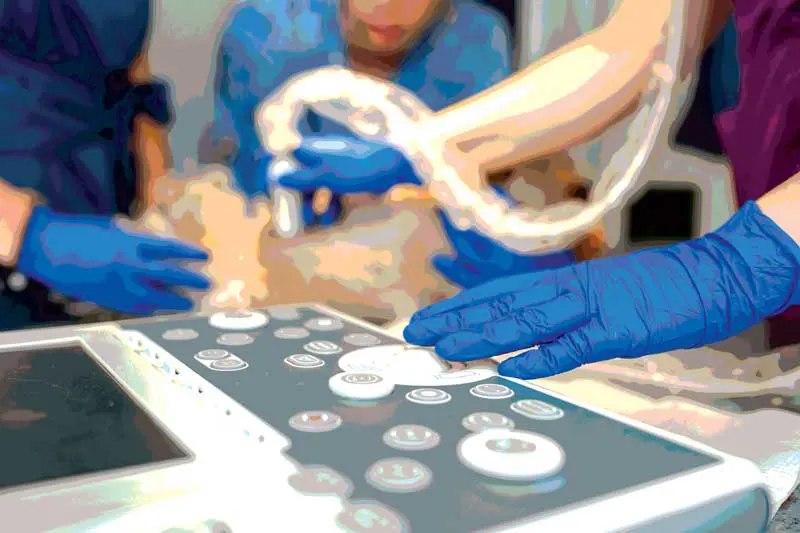
Second-hand suits equipment with stable technology and well-understood failure points – ultrasound is the classic case. A probe and console from a reputable make can have 10-plus years of life left, and a well-maintained second-hand unit at 40% to 60% of the new price is often the better capital decision, if you know what you’re buying.
The key is understanding what wears and what it costs to replace. On ultrasound, probes are the main wear item – ask about probe age and test on site. On CT, the x-ray tube is the big one: it has a finite scan-count life, and replacement can cost £30,000-plus, so always check tube age and expected remaining life before pricing a deal.
On endoscopy, have a look down it and check the fibre bundles and bending section, as cracks in the casing result in leaks or fuzzy vision and can turn a bargain into an expensive mistake (and yes, we’ve all bought dodgy vet equipment online). On infusion pumps, battery life and calibration are the main things to check, but maybe if you buy a job lot cheaply it could be worth the risk. However, always check which IV giving sets are compatible – I once brought 10 former NHS infusion pumps for £20 – and they all worked. The only problem was that you had to buy that specific IV pump company’s giving sets, and they were nearly £10 a set, which quickly eroded the savings on my bargain £2 pumps.
Get service history and, ideally, an independent engineer’s inspection before committing, and check whether a service contract is even available on second-hand units. Some manufacturers restrict support to approved-dealer purchases, and some lenders will only lend or provide HP on new products from reputable companies.
The NHS is a genuine source. Trusts regularly refresh infusion pumps, endoscopes, ultrasound machines and monitors well before their end-of-life, often driven by procurement cycles rather than actual failure. This kit surfaces through surplus/disposal routes and specialist resellers, is typically well-maintained, and can represent very good value – though check compatibility for veterinary use first.
Second-hand can also de-risk a new service. If you’re untested at in-house ultrasound, a lower-cost second-hand machine allows you to find out – with real cases – whether there’s enough demand and whether your vets take to it, without committing to a four-year agreement from month one; 6 to 12 months of real use data then puts you in a far stronger position to decide whether to expand, upgrade or add capacity.
VAT and tax treatment on second-hand mirrors new equipment for HP and finance lease purposes. Full expensing doesn’t apply to used assets, but the AIA still does up to the £1 million limit, so relief isn’t lost.
Work out the all-in monthly cost – such as, finance, service contract, consumables and calibration – and not just the finance payment; a service contract alone can be a third of the true cost.
Estimate realistic use conservatively, based on what you’ll actually do in month 1, 3 and 12, not theoretical capacity.
Calculate net revenue per use fee minus consumables and marginal staff time and training time and cost for a genuine contribution margin.
Divide monthly cost by that figure for your break-even use, and compare it honestly to your realistic estimate – this predicts failure better than the headline price does.
Then check the payback period against useful life; aim for payback within the first third to half of the asset’s life. Finally, stress test by rerunning the numbers 30% below your use estimate.
For referral-capture equipment like ultrasound or endoscopy, the return should also includes referral fees you’d previously sent elsewhere.
None of this replaces a conversation with your accountant, particularly on how a deal interacts with your AIA position and corporation tax bracket – but it should get you into the conversation asking the right question, rather than just “what’s the interest rate?”
Steven Goodear is a vet and owner of a small family of vet practices in the midlands. He has experience in starting up, buying, and managing vet practices over the past 25 years. His particular interests are in encouraging and teaching both the clinical and non-clinical team to thrive in the veterinary world, as well as advising and guiding members of the profession to take those first big steps in starting their own practice or moving into leadership, whether that be for vets, nurses or in the field of client care.