
31 Mar 2026
Liz Barton, head of impact at VET.CT, speaks to four vet leaders to explore how practices can generate better outcomes for their people, patients and the planet.

Liz Barton
Job Title
Image: herraez / Adobe Stock
Veterinary leaders are up against it. Never before in the memory of the modern veterinary profession have we faced such scrutiny from the media, animal owners and the wider public, government, shareholders and investors and – last, but certainly not least – our teams.
Leaders are being pulled in multiple directions at once: rising client expectations, workforce pressure, intensifying scrutiny of profit, value and outcomes, and the growing emphasis on “one health” and the responsibility that what we do affects animals, people and the environment beyond the clinic doors.
Veterinary practice is not alone. Across many sectors, from transport and water to health and social care, the public is demanding transparency and demonstration of value, and governments are moving towards more robust oversight and accountability. The good news is that veterinary is a profession well equipped to meet these varied challenges with curiosity, empathy, critical thinking and innovation – all the traits that make good vets and nurses.
To explore how we can evolve to meet these varied demands, I approached veterinary leaders championing better business models. The common thread across their businesses is they have all explored the B Corp framework: a cross-sector standard for purpose-driven business and a framework for continuous improvement.
In conversation, Rob Foale (Granta Veterinary Specialists), Victoria Johnson (VET.CT), Caroline Collins (Pennard Vets) and Owen Monie (Animal Trust Vets) each shared what is working for them in practice, and their recommendations for how we can move the profession forward to improve outcomes for people, patients, the planet and the business.
Veterinary medicine is purpose driven to the core. Every vet and nurse starts down this career path to improve animal health and welfare – whether directly in the clinic or in varied roles across the industry – and this remains the heart and purpose of the people in the profession.
If the same underlying purpose is not perceived to be, or actually true, of our veterinary businesses, incongruence can lead to negative feelings, from dissatisfaction and frustration to mistrust and disillusionment.
As Rob Foale put it: “The most important factor for a good veterinary business is having a clear purpose and understanding your ‘why’. As clinicians, our ‘why’ is almost always the patient. For us, as a veterinary business, it is to create the conditions for professionals to do their best work for patients and clients. We should be creating places where people can truly thrive and grow as professionals.
“Profit matters, but it should be as proof that the organisation is delivering value sustainably, not as the organising principle.”
At the heart of B Corp is a commitment to wider stakeholder governance. All B Corps must write into their articles of association consideration of stakeholders beyond just shareholders in all business decisions.
This is more than a “tick box” – it is governance redesigned. VET.CT went a step beyond the standard requirements and included a commitment for the company to have a material positive impact on society, the environment, and animal health and welfare.
The benefits are stark. Data from B Lab UK (which administers the B Corp assessment) shows that organisations built around stakeholder governance outperform peers on several business fundamentals, including resilience, revenue and retention; for example, B Lab UK reports that 93% of B Corps remained active since 2020 versus 84% of UK businesses; small and medium-sized B Corps had a 6.4% higher increase in turnover, and a 9.6% increase in headcount, compared to a national decrease of 0.5%.
Victoria Johnson explained why this is important to her: “I have always been determined that VET.CT has a positive impact and meaningful legacy.
“One of the attractions of becoming a B Corp was a public commitment to legally embed this within the company. Every business decision must now include regard to the possible consequences in the long term and the impact any such decision may have on any affected stakeholders; which we have adapted to specifically include our team, clients, the community, the environment and animals.
“We are committed to maintaining a reputation for high standards of business conduct, which is reflected in how we treat our team, clients, suppliers, and how we deliver and develop our products and services.”
Key to a thriving workplace is one where people feel psychologically safe. Caroline Collins emphasised the focus on a “safe and clear culture” at Pennard Vets, where decisions are made with human impact in mind and aligned with their internal focus on “right care, right way, right time”.
This is operational, not aspirational, as Caroline explained: “It includes robust systems and a culture of support, rather than focusing solely on capability. This is key to helping people work easily and well.
“Decisions, workflows and operations are constantly reviewed and refined to make it easier for teams to do the right thing. This includes being able to speak up about errors, ask for help with a complex case, or suggest a better way of doing things without fear of judgement.”
“We ensure there is absolute clarity in areas of the business that could create conflict. Transparency over pay and progression along with consistent, timely and constructive performance reviews supports a structured, fair and accessible career progression pathway.
“Key to enabling a positive culture is structuring the working day to foster growth and reduce moral injury, such as manageable workloads, clear escalation routes, and structured, constructive debriefs after adverse events.”
In a profession that delivers care, depends on trust and needs to communicate value, a move towards more transparent clinical governance and quality improvement is essential.
Owen Monie explained why this is the focus for Animal Trust Vets CIC: “We have to stop asking the public to trust us and compel them to through our actions.
“I believe we should be aiming for end-to-end transparency – publishing meaningful quality metrics such as complication rates, outcomes and client experience.
“Human health care uses public-facing inspection and rating systems, such as the Care Quality Commission and its ratings framework, to drive comparability and improvement.
“We may not want exactly this in veterinary care, but the underlying principles of transparent standards, outcomes tracking and improvement expectations are valid.”
In busy practice, the thought of adding additional considerations, measurements and accountabilities may seem daunting. However, several frameworks exist that break down the vision of “better business” into manageable stepwise improvements.
From the RCVS Practice Standards Scheme to the BVA Good Workplaces policy, to cross-sector initiatives such as B Corp, the true value in taking on these schemes is to identify easy business wins that improve outcomes for the team, patients and the business.
The advantages of cross-sector frameworks, such as the B Impact Assessment, include zooming out beyond the myopic world of veterinary practice to learn from best practice across sectors. The disadvantage of this is that some areas may be less relevant in the veterinary setting.
All the business leaders in this article agreed that having a broad framework with tiered levels of improvement across multiple areas expanded their understanding and options for action to move the business forward.
To get started on the journey to “better”, some ideas to consider include:
It is true that it is not enough to talk the talk, but it is also true that language drives behaviour.
When we describe veterinary as an “industry”, we subconsciously normalise manufacturing logic: throughput, optimisation, margin-first decisions.
When we describe it as a profession or a community, we make different choices: quality, stewardship, care and long-term trust. Beyond the talk, moving better business from aspiration into reality requires top-down and bottom-up embedding of the principles into decision making and operations. Building governance that protects purpose, considers all stakeholders, invests deliberately in culture and capability and makes clinical quality visible is the stabilising keel to keep the business sailing true through any storm, allowing it to move forward with purpose.
Finally, let us be clear: better veterinary business is not anti-growth. It is pro-purpose growth that strengthens the people delivering care, improves outcomes for patients, and reduces harm to the systems we all depend on.
When a veterinary business operates as a force for good, it is not just about the bottom line; it is about creating an environment where every individual can be their best self and deliver optimal care for patients.
When this is working, profit is the result, not the mission. With more “better” veterinary businesses on a journey of continuous improvement, the rising tide will lift all ships, setting the profession up for a brighter future.

Granta Vets does not operate with traditional mission, vision and values, but instead we have values, behaviours and a promise that we established around our five “business principles”: our “five Ps” that guide every business decision we make.
These principles dictate that every business decision must bring benefit to our patients, their people, their local and wider population, the profession and the planet. We use these to “vet” decisions in board meetings, and the promise of the business is to be an independent, vet-led business that strives to give affordable, professional care and inspiring, meaningful careers.

To ensure we’re walking the walk of better governance and to embed the principles of B Corp and drive continuous improvement, we have considered how we can put this into practice at VET.CT:

Pennard Vets operates several policies that support a consistent culture across branch practices:
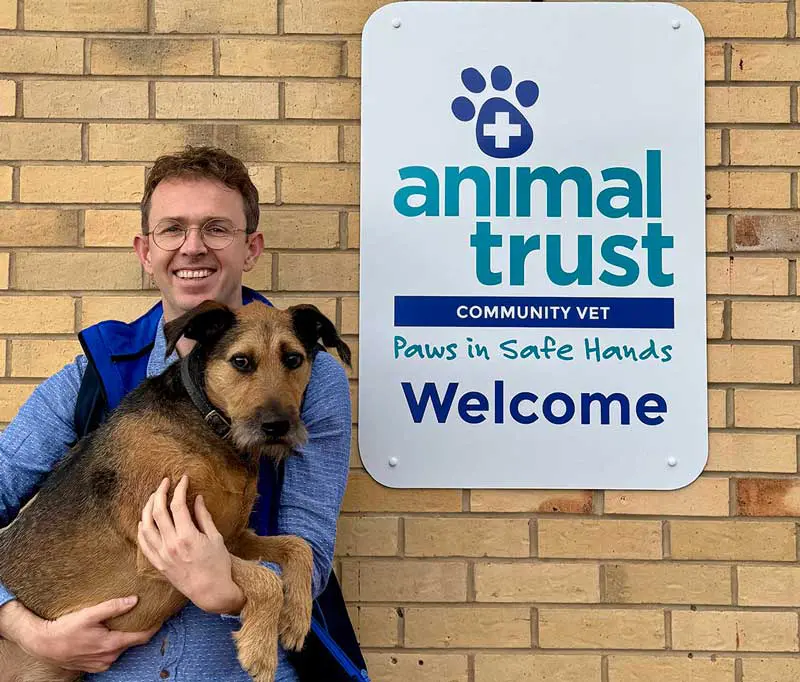
At Animal Trust, we use a variety of measurements to track how we’re doing, set our strategy for improvement, then track and report on progress.
In addition to business metrics, other key areas to consider are: