
25 Aug 2026
Fears have been raised that the sector is being held back by an ongoing “diversity crisis”, despite more than 19,000 vet school applications being submitted this year.

Allister Webb
Job Title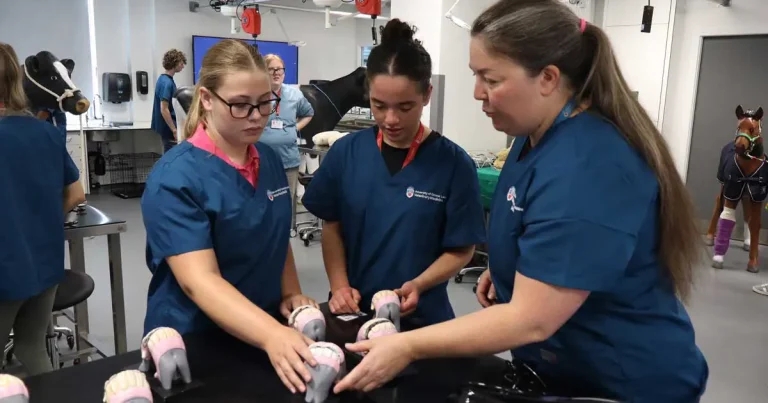
Students at a summer school held at the University of Lancashire this summer.
A senior clinician has warned the veterinary profession remains “a closed shop” for many aspiring entrants despite an apparent surge in the numbers seeking places.
Figures from the university admissions body UCAS have revealed an increase of almost 13% in veterinary science degree applications this year compared with 2025.
But with initial admissions data indicating much slower growth, leaders of a summer school intended to help widen participation say much more still needs to be done.
Medivet and Partners clinical governance director Rhian Littlehales said: “Our industry is unfortunately a closed shop for too many children who dream one day of becoming vets.
“If we want a veterinary workforce that truly reflects the communities it serves, we need to create opportunities for talented young people from every background.”
According to UCAS data, 2,400 students had been accepted on to veterinary science degree programmes in the first four days after exam results were published – an increase of around 2% on the same point in 2025.
But a total of 19,150 veterinary science applications were submitted, up around 12.9% on the 2025 total of 16,960.
The Veterinary Schools Council said it was “excellent to see that more people are interested in pursuing a veterinary career”, though it admitted it had no specific explanation for the increase.
Karen Gardiner, a co-founder of the Future Vets project, which hosted its third summer camp for aspiring Scottish vets last month, said she was delighted by the application figures, amid that initiative’s aims to both widen participation and keep clinicians in practice for longer.
She added: “When Future Vets camp was first set up in 2024, we wanted to address not just the number of applications to vet schools, but to enlarge the pipeline of young people applying – especially those young Scots from rural and under-represented backgrounds.”
But while Dr Littlehales stressed pride at her involvement in a summer school held at the University of Lancashire, she argued the sector was still being held back by what she described as a “diversity crisis”.
In an accompanying comment for Vet Times, she highlighted BVA figures indicating just 3% of the veterinary workforce are from ethnic minority backgrounds, plus other analysis suggesting more than one-quarter of vets are privately educated, as she argued many otherwise capable young people were being lost to other career paths.