
8 Sept 2026
To achieve sustainable growth, veterinary practices must look to streamline workflows, reduce client friction and capture existing demand. By modernising digital touch points and unlocking team capacity, practices can boost revenues without expanding physical footprints…

Thom Jenkins
Job Title
Image: blackred/ iStock
Veterinary practices are being asked to manage several forms of change at once.
Client expectations continue to rise, operating costs and staffing remain under pressure, artificial intelligence is entering everyday workflows, and the Competition and Markets Authority (CMA) is introducing new requirements around transparency, pricing and consumer choice, with legally binding orders due to be in place by 23 September.
It would be understandable to view all of this as another set of demands on already stretched teams. But it also creates an opportunity to reconsider what practice growth means.
Growth does not have to begin with another building, another consulting room or a larger client list. Often, the more immediate opportunity is to make more of the demand that already exists.
Every practice contains points where value is lost to friction: the owner who thinks about booking at 9pm but forgets to call the following morning; the recommendation that never becomes an action; the repeat prescription that consumes unnecessary reception time; the eligible pet owner who never hears about a health care plan; the medication prepared but never collected; the happy client who never leaves a review.
Seen this way, practice growth becomes less about manufacturing additional demand and more about connecting the demand, expertise and trust the practice already has.
The question is not simply: “how do we attract more clients?”
It is: “where are willing clients being delayed, where is appropriate care not being taken up, and where is team capacity being consumed unnecessarily?”
Adding demand to an overloaded practice is not sustainable growth. Before promoting more services, practices should identify the repetitive administrative work absorbing excessive team time.
Appointment requests, repeat prescriptions, routine product orders, reminders, payments and basic follow-up can often be moved into structured digital workflows.
This does not remove the human relationship. It allows the team to concentrate their attention where professional judgement and empathy are most valuable.
In our analysis of digitally active UK veterinary groups, workflow modelling estimated that online booking and asynchronous chat released an average of nine net team hours per site per week, more than a full working day of additional capacity per location.
Released time can support nurse clinics, chronic-disease monitoring, preventive health care conversations and better follow-up: services that improve patient care while contributing to practice revenue.
Once capacity exists, the next opportunity is to look for places where owners already want something, but the journey makes it unnecessarily effortful to act. Appointment booking is a good example.
If an owner decides at 9pm that their pet needs an appointment, asking them to remember to telephone the following morning introduces friction at exactly the point when their intention was strongest.
Across the UK veterinary practices we work with, nearly half of online appointments are booked outside normal practice opening hours. A substantial proportion of owners therefore choose to book at precisely the time when there would be no one available to answer the phone.
Twenty-four-hour access does not require 24-hour staffing. It means allowing owners to book or leave a request when the need is front of mind, while the practice responds according to its normal clinical and operational protocols.
The same principle applies to repeat prescriptions, product requests and routine questions.
Owners value being able to initiate the process at a convenient time and effectively delegate the item from their to-do list. Veterinary teams benefit from receiving a structured request they can prioritise, rather than another interruption via a phone line demanding an immediate response.
This is the first useful lens through which to examine practice growth: where does demand already exist, but friction prevents the owner from acting on it?
The modern client journey may start with Google, a practice website, a recommendation or, increasingly, an AI-assisted search. The owner then needs to understand what the practice offers, whether they trust it and what they should do next.
The strongest practices connect this digital journey with the care delivered in person: a “clicks and bricks” approach in which discovery, access, clinical care and ongoing communication feel like parts of the same service.
When an owner searches for a local vet, the practice should therefore be easy to find and easy to understand. Accurate opening hours, services and prices, a complete Google business profile, up-to-date photographs, genuine client reviews and a clear route to the next action all help turn discovery into consideration.
Reviews are particularly important because they provide reassurance before an owner has spoken to the team. Practices can understandably be nervous about actively asking for them: veterinary care is emotional, and not every outcome is the one an owner hoped for.
Our own data across veterinary practices should offer some reassurance. Only around 1.4% of reviews are one star, while for every negative review a practice receives, we see approximately 51 times as many five-star reviews.
The greater risk may therefore be that failing to ask for reviews leaves the experiences of the much larger number of happy clients invisible.
A useful digital front door should answer a few straightforward questions:
The goal is not technology for its own sake. It is to reduce the number of points at which a willing client is delayed, confused or lost.
The same principle can help practices decide which services to develop. A practice’s client conversations provide a surprisingly useful map of unmet or poorly served demand.
Our analysis of veterinary client conversations shows that a substantial proportion of inbound demand relates to recurring needs such as medication and prescription requests, health care plans, dispensing and product enquiries. In some practices, these categories account for more than half of all chats.
Instead of beginning with “what new service could we sell?”, practices can ask: what are our clients already repeatedly asking us to help them with?
Those patterns may reveal opportunities for:
The strongest opportunities tend to share three characteristics: they address a recurring clinical need, fit the skills of the team and can be delivered through a consistent, joined-up online-to-offline workflow.
Some opportunities do not require creating a new service at all. They come from making an existing, trusted service substantially more convenient.
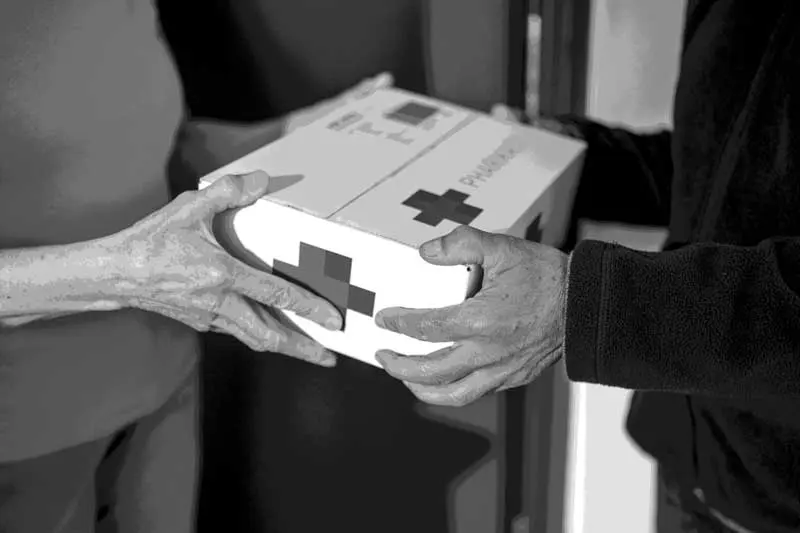
Home delivery is a good example. Pet owners already trust their veterinary team to recommend and prescribe the right medication, parasite control and preventive health care. Bringing home delivery into that relationship combines the clinical trust of the practice with the convenience owners increasingly expect elsewhere in their lives.
There can be an operational benefit too. Traditional dispensing may involve ordering and holding stock, preparing medication, contacting the owner and storing completed prescriptions at reception until they are collected, sometimes only to find they never are.
That consumes team time and working capital while leaving prepared medication at risk of going unused and ultimately expiring. A well-designed home delivery service linked to your preferred wholesaler can remove much of that friction while allowing the practice to retain the trusted clinical relationship and oversight of the pet’s care.
The broader principle matters more than the individual example: look for areas where the practice already possesses trust, expertise and demand, then ask whether a better service design can make that relationship more valuable for everyone.
Finding demand is only part of the problem. Neither the practice nor the pet benefits from a recommendation until the owner can act on it.
Preventive health care plans illustrate this particularly well. They offer recurring revenue, improved adherence and a longer-term client relationship, but our analysis suggests that many practices focus on the wrong part of the problem.
Uptake varies enormously between practices, and the difference is rarely explained by price or retention. Often, the bigger opportunity is more fundamental: how consistently and effectively eligible owners are introduced to the plan in the first place.
Clinics with the most popular wellness plans tend to make their value concrete. They are more likely to specify a financial amount or percentage and more likely to explain the frequency or limit attached to a benefit.
Practices can therefore:
But there is a further lesson here: timing matters. Owners are most receptive when a service is relevant to a need already being discussed. Pet owners can be introduced to wellness plan benefits during appropriate digital touch points, such as online booking, or through a link shared during a relevant client conversation.
Consultations reveal the scale of this opportunity. Our analysis found that 75% of consultations involving pets not yet enrolled in a wellness plan included a product or service closely aligned with a plan benefit. Yet the clinic’s wellness plan was mentioned in less than 2% of consults.
This should not be interpreted as a failure by clinicians to engage with or advocate for plan membership. Quite the opposite. It demonstrates the limitation of relying on a busy clinical conversation to identify and communicate every relevant service available to an owner.
The answer is not to turn every consultation into a wellness-plan conversation. It is to use the wider client journey intelligently. Registration, booking, vaccination, parasite treatment, dental discussions and chronic care reviews can all create appropriate moments to introduce relevant services, supported by digital nudges and follow-up where useful. The aim is to make owners aware of genuinely relevant options, giving clinicians access to a valuable patient-advocacy tool without asking them to carry the entire commercial journey.
Payment represents another point at which an owner can move smoothly from recommendation to action, or encounter unnecessary friction. Digital payment is therefore about more than making it easier to collect money. It can improve the way money is discussed in the first place.
Sending an estimate or payment request digitally gives the practice space to explain what is being recommended, what is included and why it represents value, rather than leaving the financial conversation until a rushed interaction at a busy reception desk where an unexplained total of any amount can easily create sticker shock.
It can also help separate the act of paying from the delivery of care. Owners can review and settle a bill privately and at a convenient time, while the clinical interaction remains focused on the pet and the care being provided. The same channel provides a discreet, embarrassment-free way to follow up missed charges or outstanding balances, helping practices reduce debtor days without repeatedly putting team members in the uncomfortable position of chasing clients for payment.
Done well, payment becomes another connected part of the client journey: Recommendation → explanation → agreement → simple payment.
The same thinking applies to price transparency more broadly. The CMA’s reforms will require veterinary businesses to provide clearer information about ownership, services, pricing, health care plans and other parts of the client journey.
Done poorly, narrow transparency on individual line items risks encouraging owners to compare practices on price alone, when the quality and value of veterinary care cannot be captured by a fee list. Done well, transparency gives practices an opportunity to communicate not just what their services cost, but what those services include and why they are valuable.
Competing on price alone is rarely a sustainable position. Practices can instead differentiate through clinical quality, convenient access, continuity and follow-up, preventive care, clear communication, transparent choices and a consistently good client experience. Transparency is most powerful when it makes value easier to understand.
This way of thinking about growth also changes what practices should measure. Website traffic and search visibility matter, but they are only the beginning. A practice cannot understand growth by looking only at the number of people entering the top of the funnel. It needs to understand what happens next.
Useful measures include:
The objective is not to maximise every metric independently. It is to identify where owners encounter friction, where appropriate next steps are being lost and where valuable team capacity is being consumed without improving care.
Sustainable growth starts with the demand already in front of you
Practices often think about growth by looking outward: more marketing, more clients, more services, more parking space, more consulting rooms. Sometimes those investments are exactly what is required. But before looking outward, there is considerable value in looking at what is already happening inside the practice.
Where are owners trying to access care but finding it difficult? Where are they repeatedly asking for the same help? Where does a clinical recommendation fail to become an action? Where is team time being consumed by work that could be organised differently? Where does the practice already have the trust and expertise to provide something more conveniently?
The practices best positioned for sustainable growth will not necessarily be those with the widest service offerings, largest footprints or biggest marketing budgets. They will be those that connect discovery, access, clinical advice, payment and ongoing care into one coherent experience.
For many practices, the next stage of growth is already there: in the appointment an owner wants to book, the service clients keep asking for, the preventive care a pet is eligible for and the clinical recommendation an owner is ready to act on.
Before investing in creating more demand, make sure you are capturing the growth opportunities your clinic is already creating.
Thom Jenkins is co-founder and chief executive of PetsApp, a client engagement app used by more than 170 practices across the UK. He has served as chief operating officer for veterinary groups in both the UK and Asia. He was the inaugural chairperson of VetForum in the UK, US and Asia-Pacific and also sits on the board of YLD, a software engineering and design consultancy.