
1h ago
Project DRAPES brought together 16 VetPartners practices to contribute to a study involving 3,227 patients.

Chris Simpson
Job Title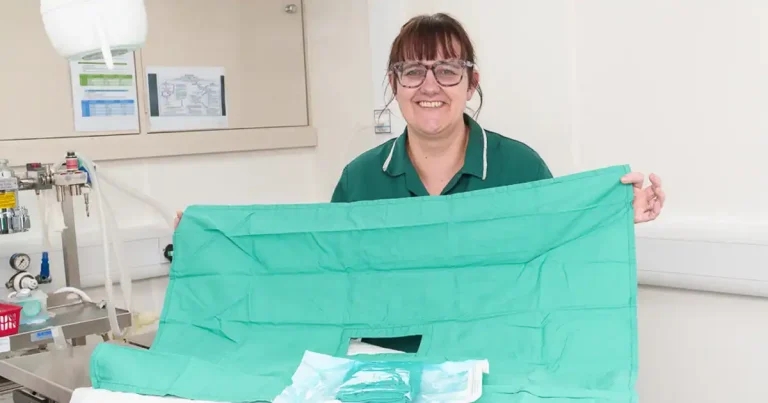
Emma Hoole, senior veterinary nurse at Stanley House Vets in Lancashire.
A large veterinary group has completed its first ever clinical trial as it investigates the environmental and clinical impact of reusable surgical drapes.
VetPartners described the trial as a “landmark” for the group and a “major milestone in veterinary research”.
Project DRAPES – Drapes in Routine Aseptic Procedures for Environmental Sustainability – united 3,227 patients across 16 practices for the study.
Led by VetPartners’ sustainability team, clinical board and practice teams, the study is exploring whether reusable textile drapes and disposable alternatives produce different surgical outcomes during routine cat and dog neutering procedures while reducing waste.
Project DRAPES is tracking outcomes and examining post-operative infections and other wound complications following the surgeries.
Analysis of the findings is now said to be underway, with the results expected in 2027.
The group said it is aiming to build on the experience to develop similar research projects in the future.
Hannah James, VetPartners’ head of environment, social and governance, said: “A huge thank you goes to all the practice teams who have supported the study and helped recruit patients alongside their day-to-day responsibilities. Their time, commitment and contribution have been fundamental to making this project possible.
“The study also highlights the value of collaboration between teams with different areas of expertise. By combining sustainability knowledge, clinical oversight and the practical experience of veterinary teams, VetPartners has been able to turn an important question into a large-scale research project.”
Emma Hoole, senior veterinary nurse at Stanley House Vets in Lancashire, which participated in the trial, added: “Everyone at Stanley House was proud to be involved in this valuable research.
“It has helped us to promote sustainability to clients and encouraged team members to consider the environment when choosing materials and how we can improve on this. We hope that our involvement will support a positive change for VetPartners.”