8 Sept 2026
The Moores Orthopaedic Clinic has gone from strength to strength since opening for business three years ago. To keep pace with growing demand, the practice recently completed an expansion project that has nearly doubled its size – VBJ headed to Hampshire to see if bigger really is better…

VBJ
Job Title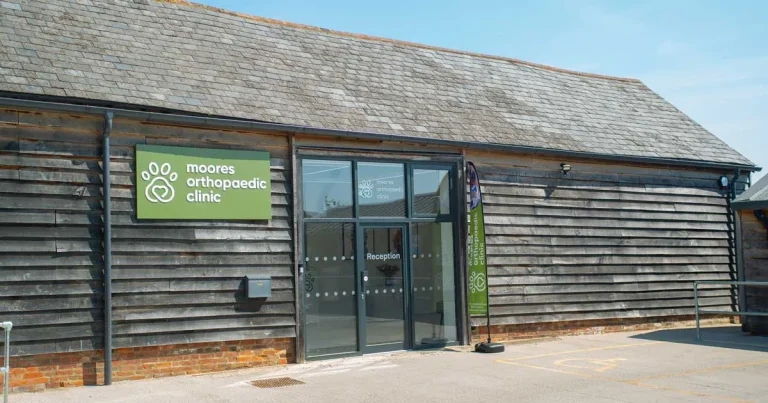
Staff: full-time vets 2 | registered veterinary nurses 10 | technicians 3 | practice administrators 3
There are no sure things in the world of veterinary business, but when Andy Moores decided to set up his own specialist orthopaedic practice, it was probably as close as you are going to get.
During a career as a specialist that began at Langford in Bristol and includes a spell in academia at the RVC, followed by more than a decade at Anderson Moores, Andy has established himself as one of the UK’s most highly respected orthopaedic surgeons.
So, when – in partnership with long-term colleague Richard Hoile – he put his name above the door of his own eponymously named practice in 2023, the venture was always likely to be a success.
And so it has proved, with The Moores Orthopaedic Clinic fast building a reputation for excellence that has attracted clients from far beyond its Hampshire HQ and gathered more than 300 five-star Google reviews along the way.
Working alongside fellow surgeon Chris Jordan, who completed his European College of Veterinary Surgeons surgical residency training under Andy at Anderson Moores, the practice now sees around 40 cases for consult and performs between 12 and 18 surgeries every week.
And with an ever-increasing caseload, less than two months ago substantial extension work was completed to ensure the building was able to keep pace.
Having started in an industrial unit on a rural business park in the village of Upton Grey, with just one consult room and a rather basic waiting area for clients, the development includes the addition of two more consult rooms and a reception space with the kind of “wow factor” that had previously been missing.
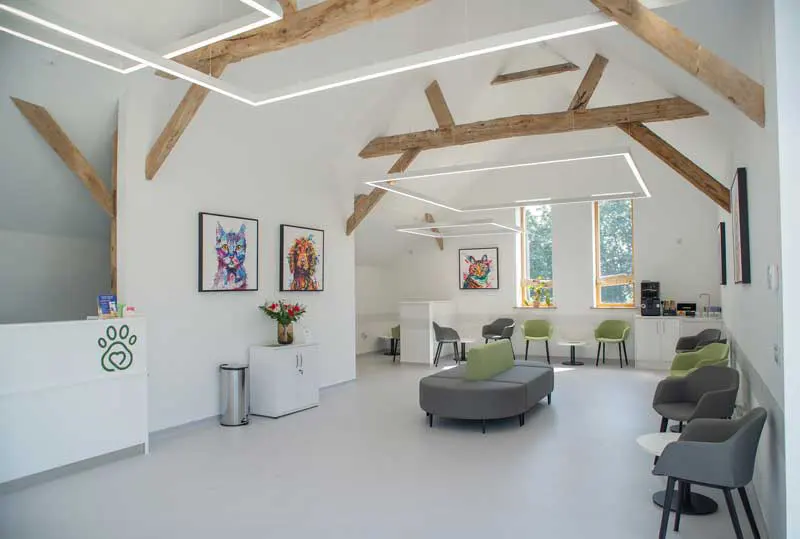
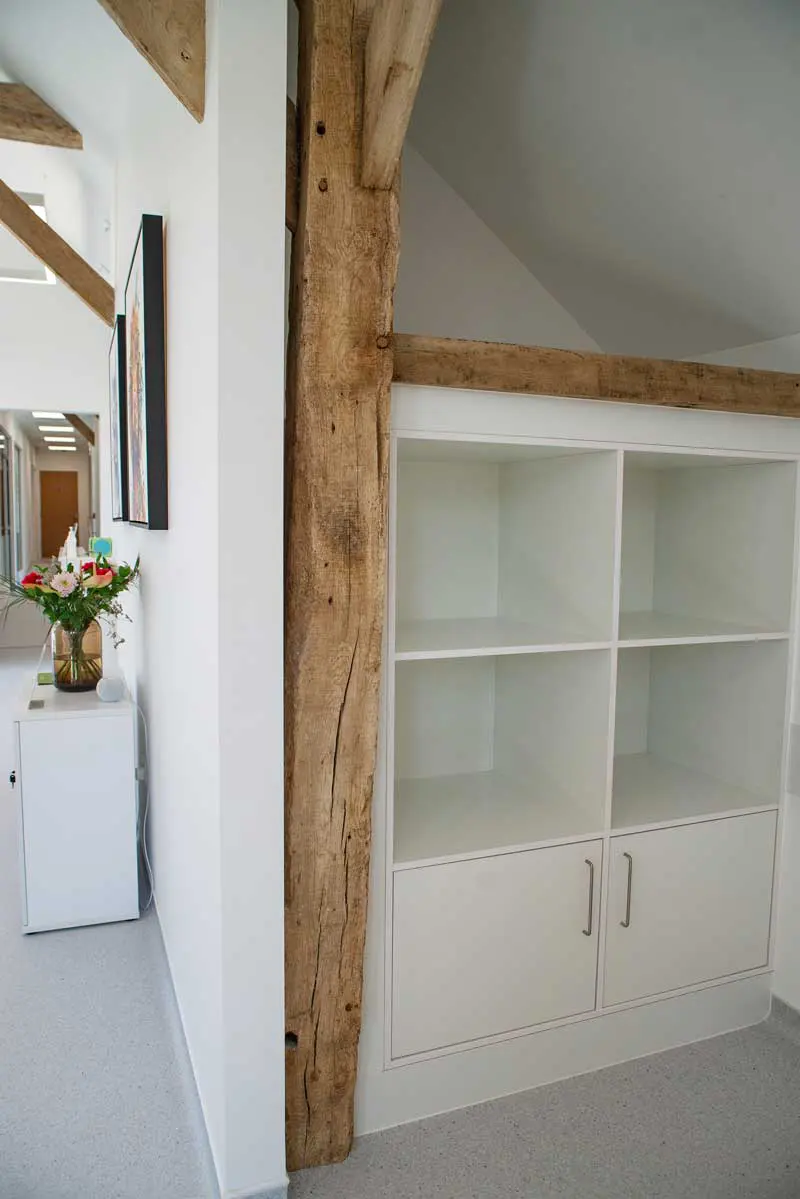
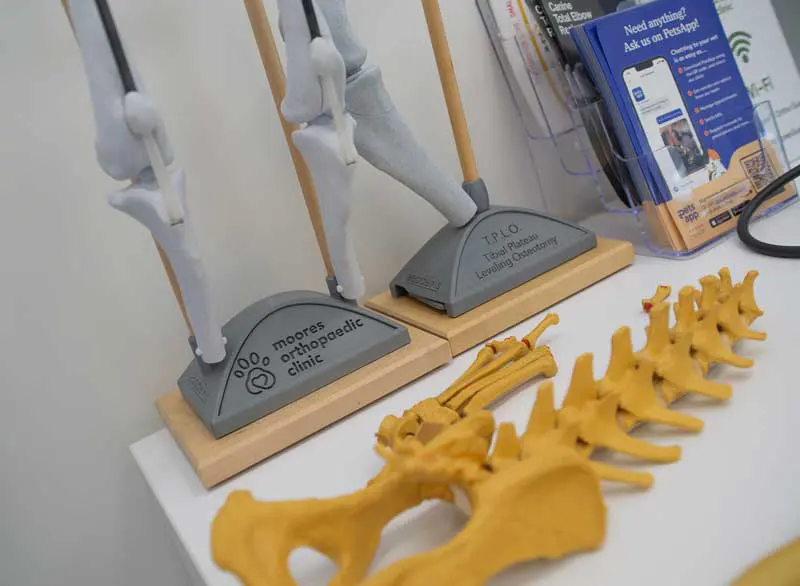
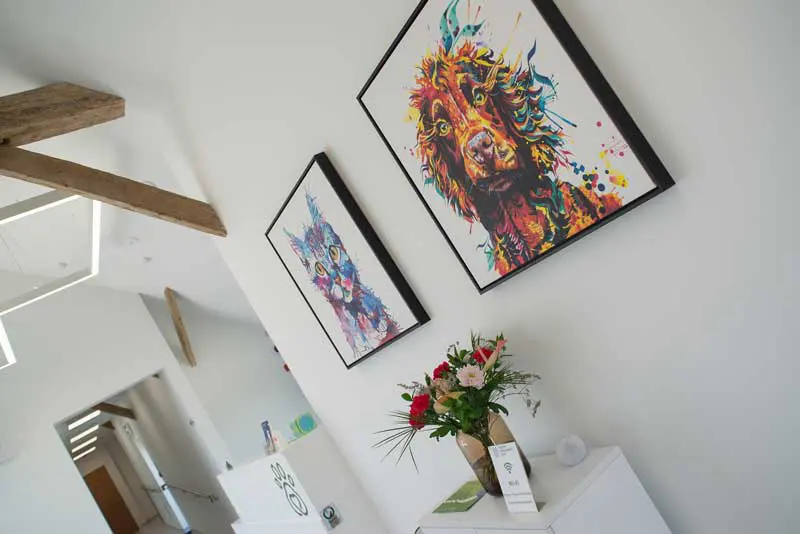
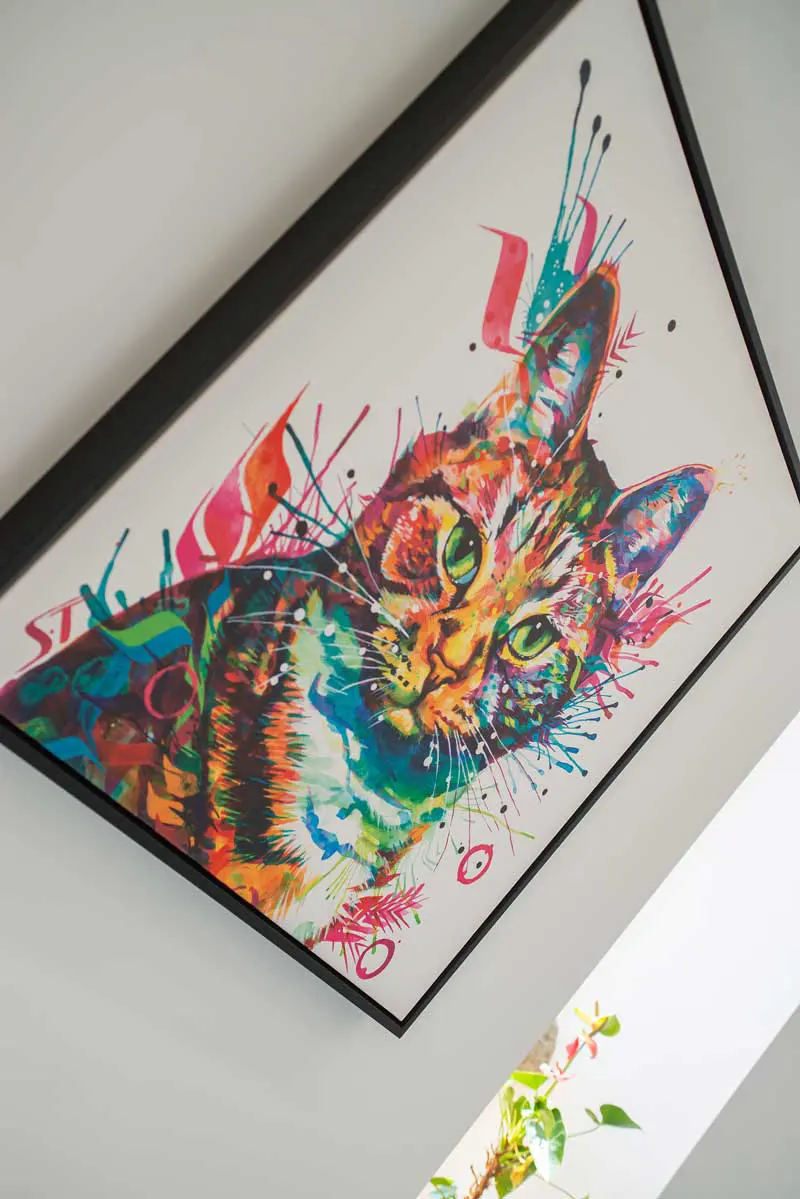
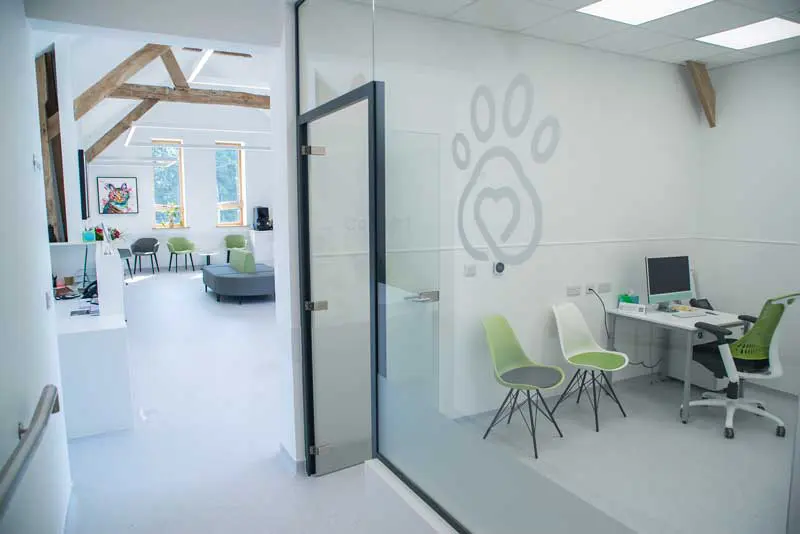
Front of house has been relocated to an old grain store and transformed by ACD Projects into a reception area that one US-based client recently described as the “most impressive veterinary waiting space” she had ever seen, either side of the Atlantic. It is a glowing endorsement of the painstaking work that has clearly gone into this characterful old building so that it delivers the same high-level customer experience for clients that the practice routinely delivers clinically for their pets.
Andy said: “After leaving Anderson Moores, I knew I wanted to go again and do something like this – especially seeing the success of other specialist orthopaedic centres in recent years.
“But I wanted to make sure we did it in the right way and in the right place, so it took a while to find a suitable location to get things off the ground.
“When we started, we only had one consulting room and a very small waiting area, but that was always the plan as we wanted to build up case load, check it was working and get some cash behind us before expanding further.
“And then in the past few months we converted the barn into what you see now, and we started using it three or four weeks ago.”
He added: “We always wanted to expand into the barn and the plan was always to do this and we are really pleased with the outcome.
“The old set up served us really well for the first three years, but as the caseload has expanded, we needed additional consulting and reception space, and one of the key objectives was to deliver a front-of-house area that really fitted in with the high standards throughout the rest of the practice.”
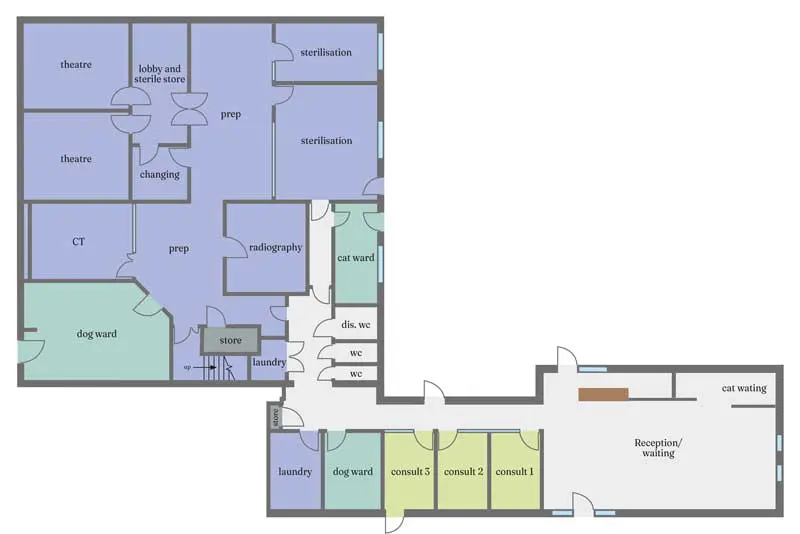
Reception links to the original building via a corridor, off which sit three new consult rooms (the original consult room has been converted into a cat ward), extra kennelling for dogs and a laundry room.
But there is no door separating the plush new front-of-house area from the rest of the practice. This is intentional as – long before the Competition and Markets Authority’s findings – Andy has always been a firm believer in the concept of openness and transparency in the way he works and the way his building works.
Client tours of the clinical spaces are a regular feature, while the old reception area once featured a full-height glass window, so clients could see into the heart of the practice. However, this was partially obscured following complaints from the nursing team that at times it felt like “working in a goldfish bowl”.
While much of the rest of the building has remained as it was, developments look set to continue, with nebulous plans already taking shape to expand prep and the sterilisation room into the old reception space.
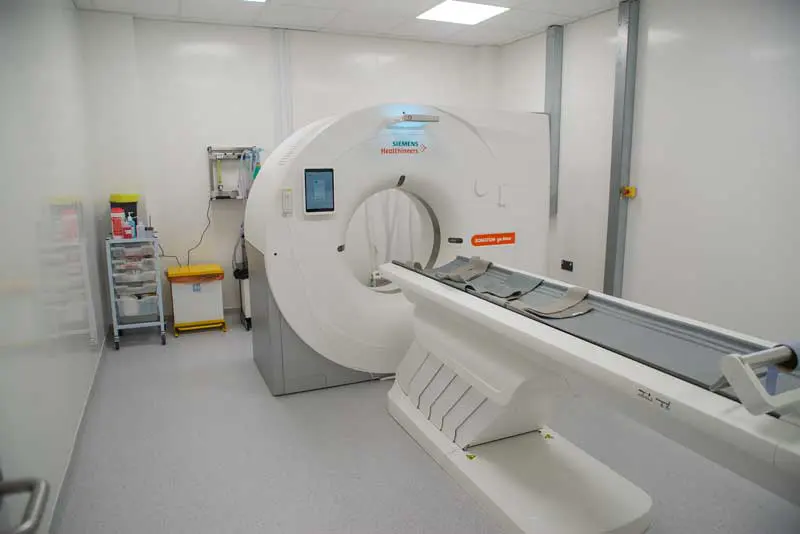
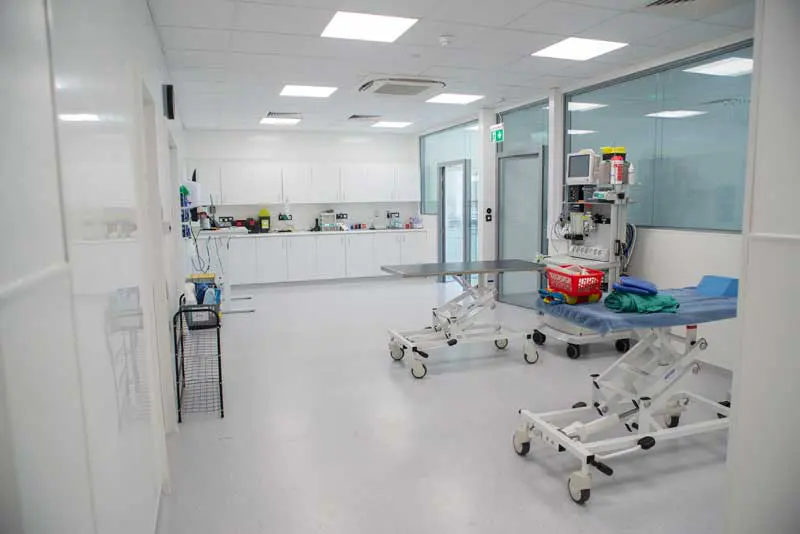
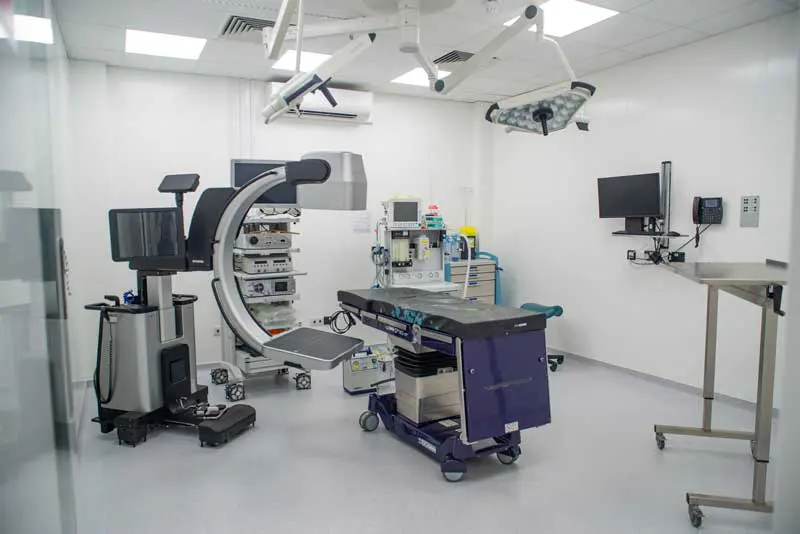
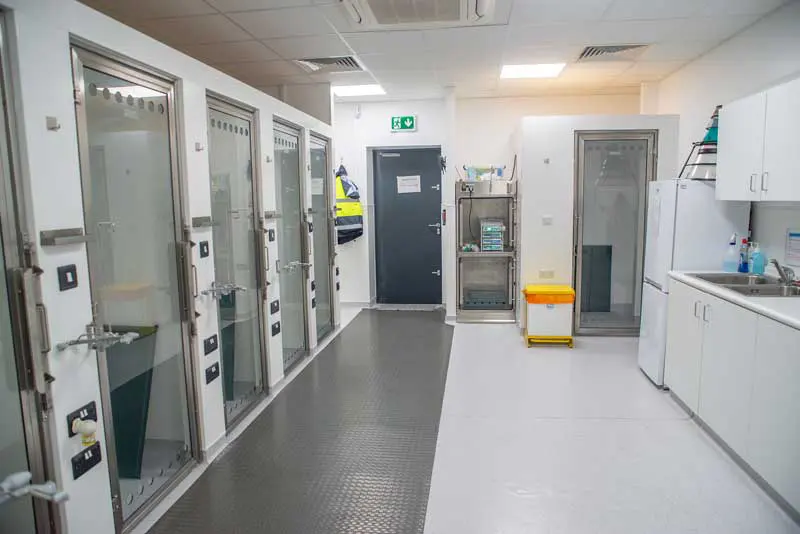
As it stands, prep runs the full length of the practice’s original 300m2 footprint, which also houses separate radiography and CT rooms and a large dog ward. The entire building is air conditioned, but for the engine room of the practice – two state of the art operating theatres – ventilation has been taken to an entirely different level.
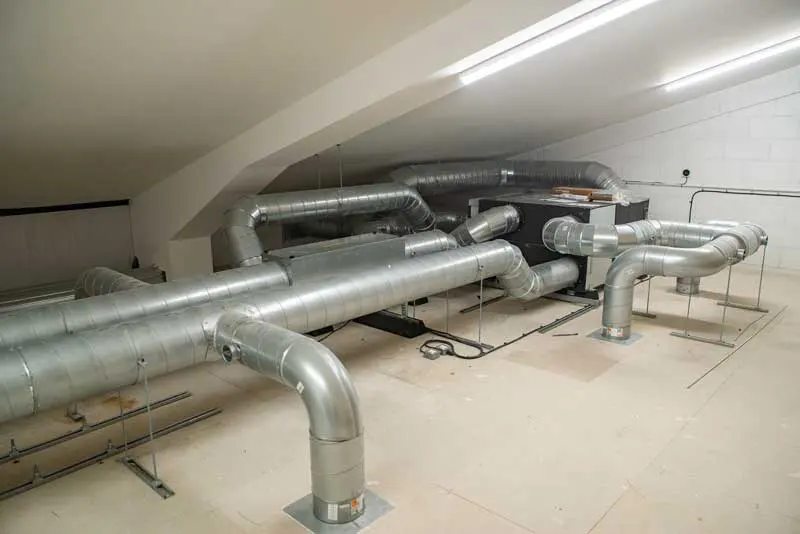
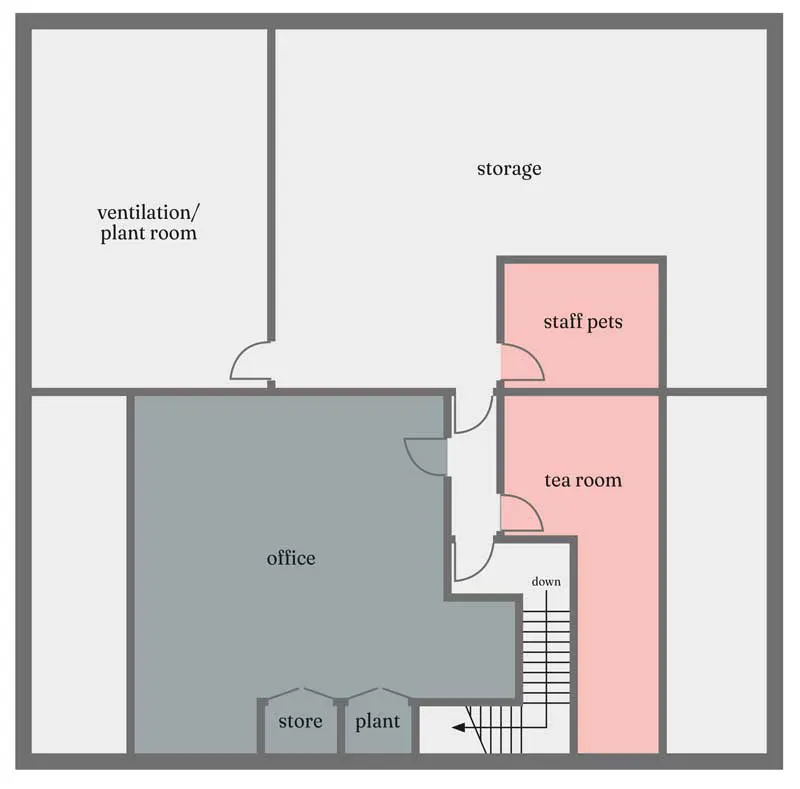
Due to the high risk of infection associated with orthopaedic procedures – not least the total hip and elbow replacement operations regularly performed at the practice – Moores features a high efficiency particulate air (HEPA) system that filters out even the smallest of potentially problematic particles.
This extensive system, installed above the theatres at a cost of more than £20,000 when the practice was first built, ensures infection rates are kept at a level comparable to those achieved in human health care settings.
Andy said: “The system performs to the same standards that you’d get in a human orthopaedic theatre. And we specifically requested this from day one, as we do lots of joint replacements and technical procedures where infection can have a devastating impact on the patient.
“There are two aspects to air quality: there’s constant airflow, which a lot of clinics will have and provides maybe 15 to 20 air changes in the theatres per hour, so the air is constantly being turned over, and that helps to keep the air clean. And then we’ve got the HEPA filters, which mean that very, very small particles, even bacteria potentially, are filtered out of the air, and that’s the key difference we have.
“The cleaner the air, the less likely we’re going to get infections. And so far, that seems to be borne out, as our infection rate for healthy hip replacement patients is below 1%, compared to the typical accepted infection rate in a veterinary setting of 4% to 5%.”
However, despite such high clinical standards and the significant investments in equipment and personnel needed to provide it, the practice is able to keep its prices at a highly competitive level.
Just how competitive they are can be seen on the practice’s website, which features a fixed-rate price list of all of its most common procedures to provide clients with a high level of transparency.
“We were proud of the prices we were charging and we wanted people to see them,” Andy added.
“The only people who don’t put price lists on their website are the people who are embarrassed by their prices.
“I’ve always worked on the principle that if you can provide a good service, and that means clinically good, but also public-facing good, and you can do it at a reasonable price point, you can’t go too far wrong.”
One of the reasons the practice is able to be so competitive – the average TPLO costs £3,800 – is that orthopaedics works well as a standalone service, which helps to keep staff overheads down.
This means the practice is able to challenge price points set by the increasing number of peripatetic surgeons offering orthopaedic procedures in a general practice setting.
According to Andy, the sector has seen significant price inflation in recent years, largely driven by the increase in corporate ownership, and this dynamic, he believes, has forced many pet owners to seek out alternatives.
These mid-tier options are often much cheaper than those offered at specialist-led centres, which has provided benefits for both pet owners and first opinion practices.
But it can also create problems when things do not go to plan, as Andy explained: “Because referral has been getting so expensive, we have seen a big increase in what you might call ‘middle tier’ referral work.
“In many cases, the corporate groups had driven up prices to an unsustainable level, with some centres charging £6,000 for a TPLO, which allowed the certificate holders to come in and mop up those cases in general practice for half that price.
“The GP practices make a good profit and the client obviously saves money, and there are benefits to that. But, equally, I think there are surgeons out there doing peripatetic work who are much less experienced than people think they are, and it’s not uncommon for cases treated in general practice to end up on our doorstep to be fixed when things are not going so well, so it’s not all good news.”
He added: “When we opened, it was not just the other referral centres we were looking at competing with; it was also those peripatetic surgeons out in general practice. We wanted to show that: number one, we could provide a superior service, clinically and in general; and number two, that we could work at a similar price point.”
Along with Andy, Chris and managing director Richard Hoile, the practice now employs a total of 18 people, with two administrators, three technicians and 10 registered vet nurses.
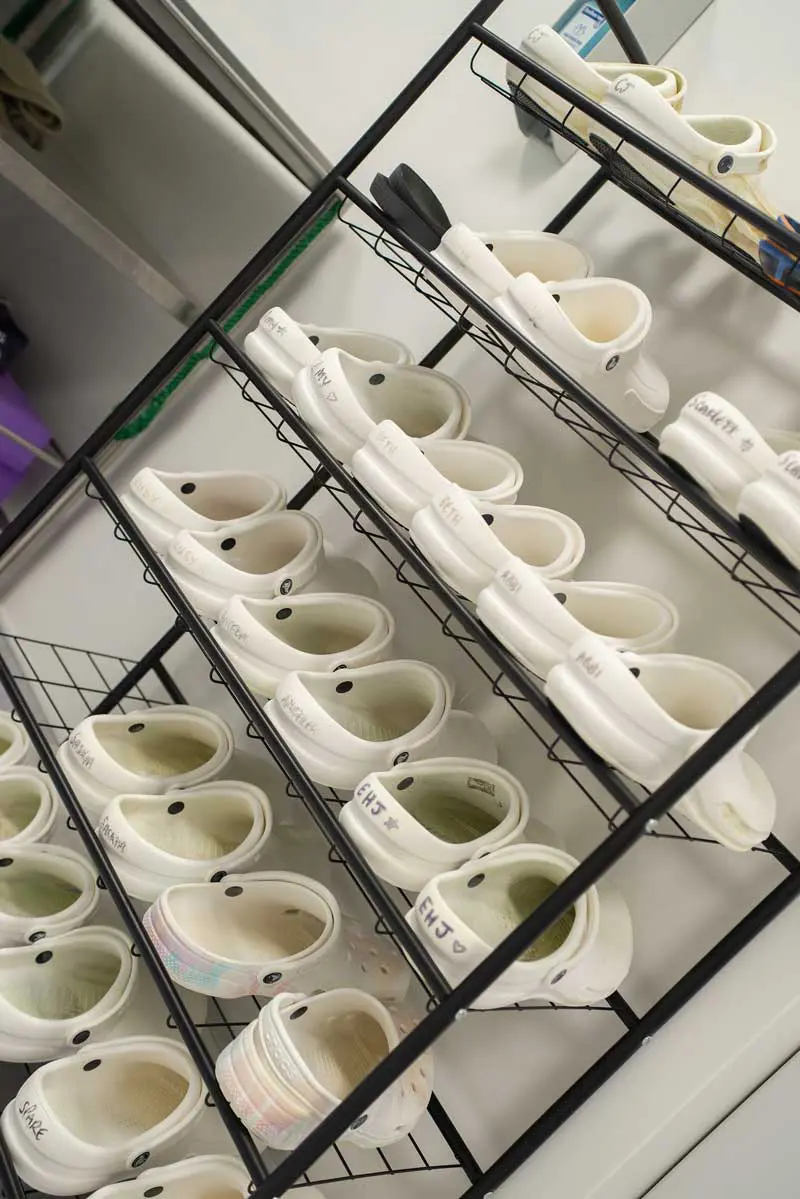
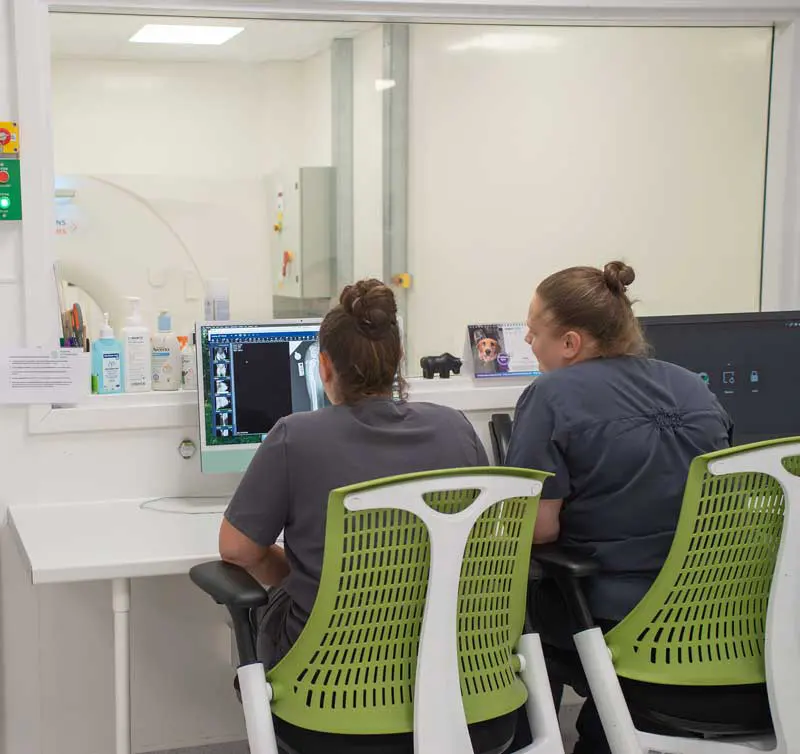
It is a tight, nurse-heavy roster which means the RVNs are involved on a level rarely seen in other practices. There are no dedicated anaesthetists, no interns and no residents at The Moores Orthopaedic Clinic, which means the team in green plays a vital role in making everything tick.
Andy said: “Without the nursing team, this place would grind to a halt pretty quickly, as they do so much. The nurses do all of the radiography and with supervision they do all the anaesthesia, and they run the CT.
“We put a lot of emphasis on using the nurses efficiently and effectively.
“They also get to scrub into surgeries. Go to any other referral centre, it’ll be the intern or the resident scrubbing in, but the nurses get to scrub in, and they tend to really enjoy that.”
Having rapidly established The Moores Orthopaedic Clinic as a busy, well-regarded standalone referral centre, Andy is already thinking about what might come next.
Any expansion, however, will be cautious and tightly controlled, hinging on finding the right people with genuine “skin in the game” rather than simply rebadging another site.
Andy said: “We’ve always said that this might not be the only clinic we do, but the only way we would set up another clinic is if we had some really good people on the ground to run it, who had skin in the game, who were totally invested in making it work.
“We would want to replicate the exact same model I think: two surgeons, a couple of theatres, CT, x‑ray – it’d be almost exactly the same.
“But if we can tick those boxes, we could be up and running, and we could do something in the next year or two.
“And we have talked to people; I’m not going to tell you who, but we have talked to people, and there may be opportunities in the not too distant future.”