
22 May 2026
Licensing regimes may not be fully protecting the welfare of the UK’s working donkeys even where veterinary oversight is required, new research has concluded.

Allister Webb
Job Title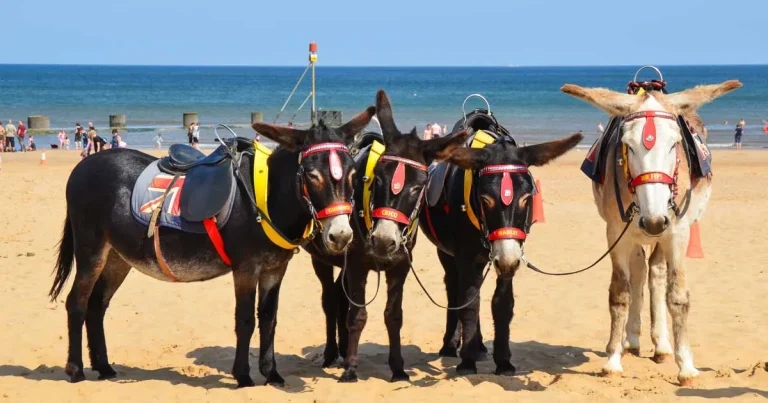
Donkeys on the beach at Mablethorpe, Lincolnshire. Image: Gill / Adobe Stock
Researchers for a leading donkey charity have called for greater veterinary oversight after nearly all of the animals taken into its care were found to have health problems.
Analysis by the Donkey Sanctuary found nearly all the animals which entered its care over an eight-year period, most of whom had worked as beach donkeys, were in poor health.
Now, with a bank holiday weekend heatwave forecast, the charity has argued change is needed and urged visitors to consider welfare issues before paying for donkey-based attractions.
Its paper, published in Veterinary Record said: “If animal activities continue to maintain public support, the welfare of animals working within these contexts has to be improved and maintained to a good standard.”
The warning is based on analysis of 179 donkeys which entered the charity’s care between 2015 and 2023.
Almost 85% of them (152) had previously acted as beach donkeys, while other settings including farm parks, nurseries and hotel or wedding venues were also recorded.
All but four were found to have health issues at the time of relinquishment, though the paper stressed those were not always linked to currently licensed premises.
Welfare issues were also reported to have been observed in 91% of cases assessed by donkey welfare advisors.
But the paper described it as being of “greatest concern” that all the donkeys had been given annual inspections by council inspectors, often with veterinary input depending on the type of licence involved.
Lead author Tamlin Watson, the charity’s senior researcher, said: “Greater access to veterinary expertise is essential to ensure welfare assessments are robust and evidence based.
“However, our research suggests that vets too sometimes need a better understanding of donkey welfare needs.”
But she also stressed the problems were more likely to be influenced by a lack of resources and expertise, based on the range of facilities that councils are expected to oversee, rather than negligence.
Nearly 80% of attendees at a recent online CPD event for farm parks that the charity participated in were local authority officers.
Dr Watson added: “The success of that event suggests there is an appetite for specialist training and a genuine desire to ensure the welfare of animals under licence. Further events are planned for 2027.”