
19 Dec 2025
Scholars called for a holistic approach to resolving the issue including community clean-ups and improved waste disposal systems.

Chris Simpson
Job Title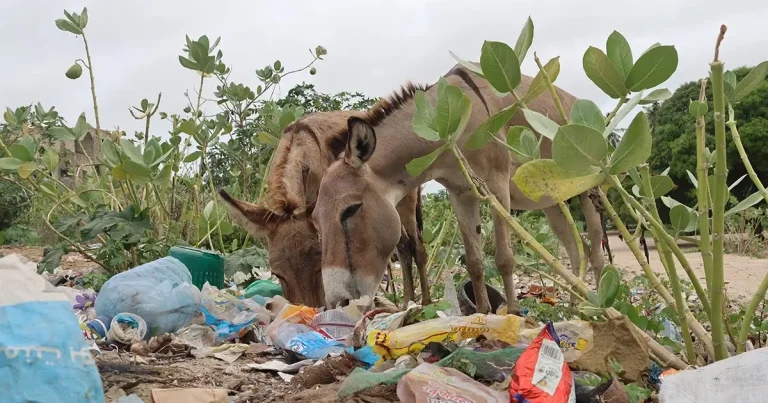
Researchers have called for urgent action to be taken after finding microplastics were prevalent in 100% of faecal samples analysed during their study.
The first-of-its-kind University of Portsmouth study, carried out in collaboration with The Donkey Sanctuary, The Flipflopi Project and The Kenyan Marine and Fisheries Research Institute, sought to address the knowledge gap in the impact of plastic on terrestrial animals.
Scholars employed a multi-disciplinary approach, observing donkey and cattle feeding behaviour in Lamu, Kenya, analysing microplastic levels in their faeces and surveying local residents and visitors.
Of 39 viable faecal samples collected (25 donkey, 14 cattle), all of them contained microplastics.
Despite high rejection rates of plastic items, they accounted for 4.5% and 10% of items ingested by donkeys and cattle at waste sites, respectively.
More than a quarter (27%) of the 168 people surveyed reported they or someone they knew had experienced an animal becoming sick from plastic ingestion, with 78% of them reporting the animals had died as a result.
Amid fluctuating feed prices, half of the donkey owners surveyed admitted they could not consistently provide enough food for their animals, which were left to roam in search of some.
Plastic-induced colic has been a significant issue for vets at The Donkey Sanctuary’s Lamu clinic. They treated 108 cases of colic last year with 14 of those subsequent fatalities, while in 2025 they have had 16 deaths from 91 donkeys with colic.
Clinic programme manager and co-author Obadiah Sing’Oei said: “This study is a wake-up call for collective action to end the plastics crisis here in Lamu.
“Time and time again we see firsthand the terrible – and preventable – suffering caused to donkeys who have ingested plastics.
“This study provides hard evidence of the true scale of the problem and its widespread impact.
“Together with our partners, we will not rest until we have a joined-up solution to create a safer environment for all.”
University of Portsmouth professor in animal behaviour and welfare, Leanne Proops, added: “Here we have clear evidence that microplastics are present across an entire animal population which has serious implications for the whole ecosystem.
“This problem extends far beyond Lamu – underscoring the urgent need for a holistic approach to mitigate the global plastic crisis.”