
8 Dec 2025
A senior vet said it was ‘truly exciting’ to introduce the third option for treating a common canine cardiac condition.

Allister Webb
Job Title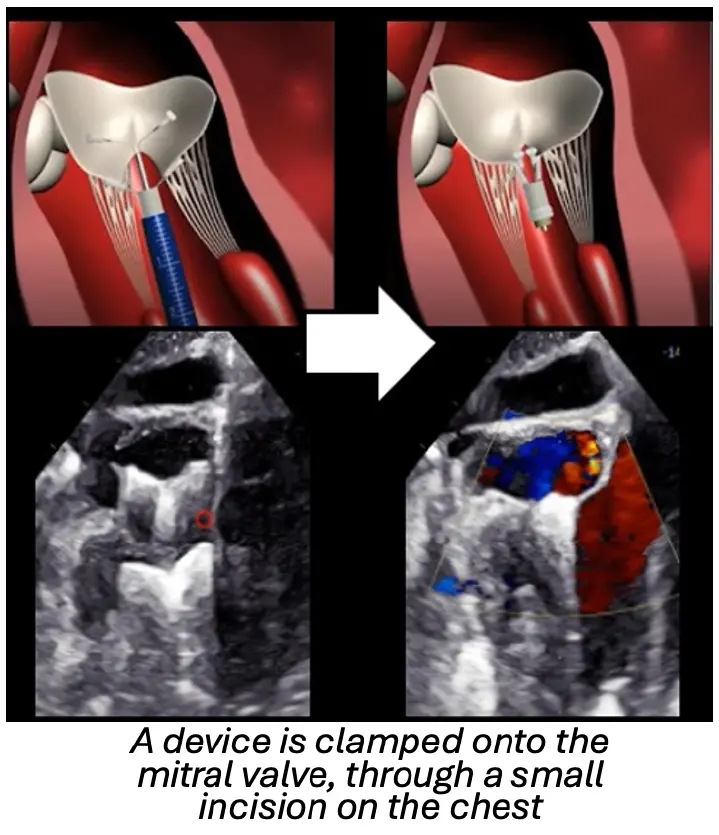
The QMHA has introduced trans-catheter edge-to-edge repair (TEER) to help treat cases of degenerative mitral valve disease (DMVD).
The RVC’s Queen Mother Hospital for Animals (QMHA) has announced the launch of a new treatment which it says makes it a global leader for canine heart disease care.
The hospital has introduced trans-catheter edge-to-edge repair (TEER) to help treat cases of degenerative mitral valve disease (DMVD).
Although the technique has been available in Asia and the United States for several years, the QMHA says its introduction makes it the first facility in the world to offer TEER, open heart surgery and medical treatment for the disease in dogs.
Co-head of cardiology Joshua Hannabuss said: “It’s truly exciting to offer an additional treatment option for dogs with degenerative mitral valve disease.”
The hospital has worked with Bristol Vet Specialists on the new service which uses specialist equipment to operate on the valve.
Although open heart surgery is still thought to be the most effective treatment for advanced DMVD, it is hoped TEER could provide a less invasive and potentially more affordable alternative, as well as an option when surgery is considered inappropriate.
The hospital said around 95% of dogs recovered well from TEER, with 80% of patients with heart failure surviving for two years after undergoing the procedure.
Dr Hannabuss, who also serves as an RVC lecturer in veterinary cardiology, said: “I believe we’re entering a new era where minimally invasive therapies will become more accessible for managing this condition.
“With a clearer understanding of the safety, benefits and potential risks of TEER, we feel that now is the right time to introduce this therapy to the UK, and we remain committed to improving the quality and longevity of life for dogs affected by this disease.”