
14 Oct 2026
Navaratnam Partheeban and Issa Robson challenged veterinary organisations and workplaces to be more proactive in promoting inclusivity and tackling discrimination.

Chris Simpson
Job Title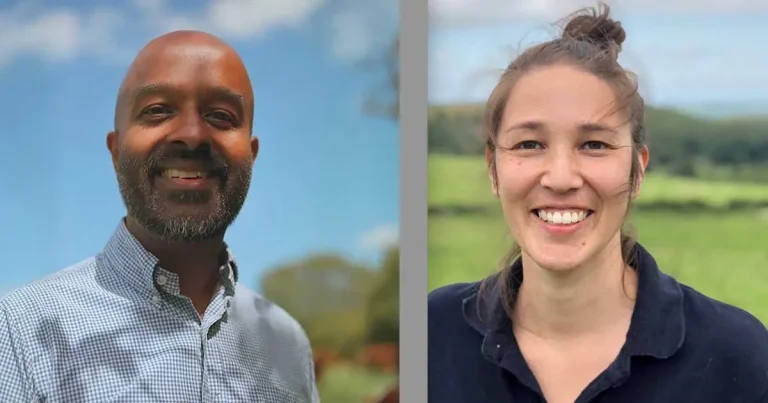
Navaratnam Partheeban and Issa Robson, vets and founders of the British Veterinary Ethnicity and Diversity Society.
The founders of the British Veterinary Ethnicity and Diversity Society (BVEDS) say the sector still has “a long way to go” to become more inclusive as the organisation celebrates its 10th anniversary.
Reflecting on the milestone, Navaratnam Partheeban and Issa Robson told the Vet Times Podcast the profession can do much more to support ethnic minority colleagues and students.
Dr Robson said while she felt the profession “has matured a bit” in the past decade, “we have a lot more to do in terms of preparing all workplaces and all students for what happens when discrimination of any kind happens within a workplace”.
She added: “I have dealt with – multiple times a year – incidences where colleagues have said stupid things or thoughtless things. Learning how to handle that social emergency, I think, is actually a really important skill that we should be teaching everybody in any organisation of our profession.”
Mr Partheeban added: “The visibility has increased slightly about what racism exists and what it can look like. I still think that we are just scratching the surface.”
Mr Partheeban, Inspiring Vet Care’s regional head of farm, said there has been a “marginal” response to a paper he co-authored last year which found an “urgent need” to address racism within the sector.
He said while many people were “shocked” by the findings, “converting that into real action has been the difficulty”.
Mr Partheeban continued: “We’ve still got a long way to go if we really want to create an inclusive sector where everyone feels like they belong and everyone’s encouraged to join us, because just having posters or just saying it is not enough.
“It’s about the things that we do and actions we take. If everyone made changes in their own little environments, the whole sector would change.”
Reflecting on the barriers to people of diverse ethnicities and backgrounds from entering the profession, Dr Robson said the sector does not use its “amazing role models” to inspire others.
She challenged “every veterinary organisation”, adding: “I would like to see them really putting some thought into how they can improve widening participation [and] resource passionate people within their organisation about equalities and diversity”.
The University of Surrey’s senior lecturer in veterinary clinical practice also called on organisations and workplaces to proactively use available resources to improve.
Dr Robson said: “There are people within the profession that know why things are difficult, because we’ve been trying to do this for 10 years.
“We know what things work and what things don’t work, and utilising that skillset and funding that skillset, I think, is the next step.”
She concluded: “The possibility of a workplace where you could work with somebody that might look like you, or be from your ethnic background, or at least have an understanding – a lived experience of racism – there is potential for that now.
“There’s certainly potential to have really good conversations with white allies that may align on some of your core values and support you within workplaces.
“I don’t think, when I first graduated, I even thought that was a possibility. I just put my mental armour on and just got on with the job, but now selecting practices that support and reflect your core values, I think that is a possibility.”