
8 Sept 2026
A team of UNAL vets has supported affected communities after more than 30,000 hectares burned in Colombia’s Tolima province.

Chris Simpson
Job Title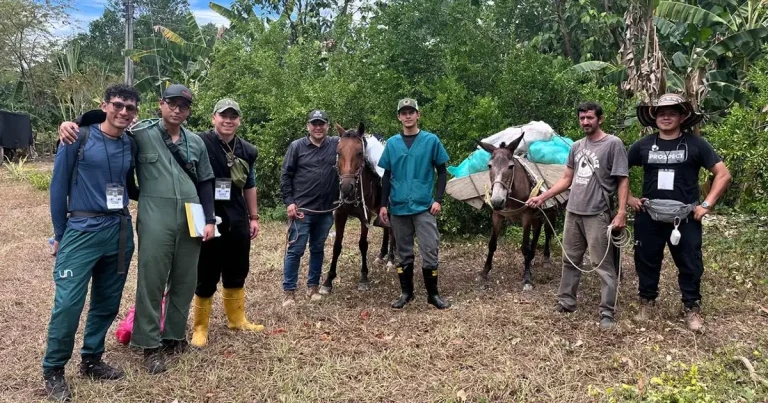
Image: Universidad Nacional de Colombia (Agencia UNAL).
An international animal welfare charity has supported emergency veterinary response for animals affected by wildfires in Colombia.
The Donkey Sanctuary has contributed to the costs of medicines and consumable supplies for a team of 12 vets from the Universidad Nacional de Colombia (UNAL) aiding rural communities.
More than 30,000 hectares have been burned in the Tolima province, just weeks after the country was hit by a magnitude 7.4 earthquake.
The UNAL team has treated 80 mules, donkeys and horses – many of which had been transporting essential supplies to affected communities – as well as cattle, opossums, turtles and other animals suffering from dehydration, pneumonia and other respiratory conditions, eye damage, skin lesions and back injuries.
Support from The Donkey Sanctuary and other charities has helped the team perform clinical examinations and provide treatment including intravenous fluids, eye medication, antibiotics, parasite treatment and vitamin supplementation.
The UNAL team has also offered advice to help prevent health problems developing in exposed animals after the fires and on how to correctly fit saddles to avoid wounds and injury in the future.
Erika González Niño, from UNAL’s Large Animal Clinic, said: “Many of these animals were used to transport water and food to the areas where the fires occurred, becoming a fundamental part of the communities’ efforts to face this emergency.”
The Donkey Sanctuary’s regional director for Latin America and the Caribbean, Eduardo Santurtun, added: “This response highlights the often overlooked but vital role working equids play in supporting communities across the region.
“Emergencies such as this show that donkeys and mules are not only affected by disasters; they are also essential to the response, helping people access aid, transport vital supplies and begin rebuilding.
“That is why they must be included in national disaster preparedness and response plans, both to protect their welfare and to ensure they can continue providing support when they are needed most.”