
6 May 2026
Only 28% of vets surveyed reported feeling competent performing FLASH scans before training programme implemented.

Chris Simpson
Job Title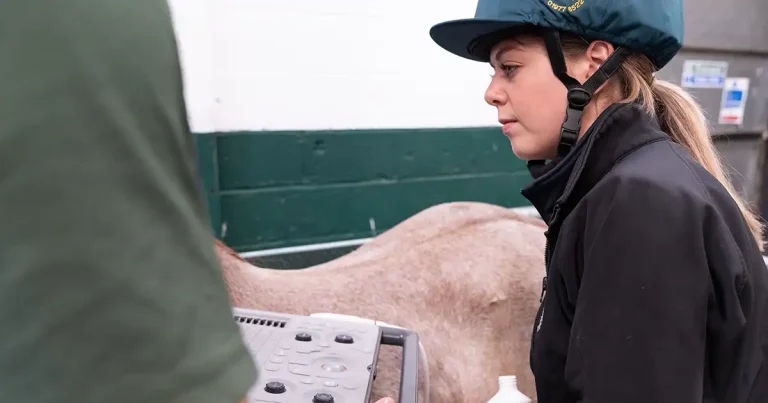
A veterinary group has delivered a clinical improvement initiative to strengthen assessment of equine colic cases via greater use of a “transformative” ultrasound technique.
CVS said its equine division has increased its FLASH scanning (Fast Localised Abdominal Sonography for Horses) in colic call-outs by 21% as a result of the project, which it launched early last year.
The group surveyed 21 of its equine practices to better understand current FLASH usage among its clinicians.
It received responses from 93 vets – roughly half of CVS’ equine clinicians – with almost a quarter of them (24%) reporting not feeling competent in FLASH scanning at all.
A similar proportion (28%) felt competent performing FLASH scans, while the remaining 48% felt moderately competent.
Two-thirds (65%) of those who felt competent expressed desire for further training.
In partnership with IMV imaging, CVS delivered a hands-on training programme to 50 equine vets focused on technique, image interpretation and integrating FLASH findings into case-based decision‑making.
The group has also begun employing handheld wireless ultrasound “V scanners”, which connect to mobile phones or tablets, to enable ambulatory vets to undertake rapid imaging during colic exams.
As well as an uptake in FLASH scanning during call-outs, CVS said its clinicians have reported its implementation has improved diagnostic certainty, supported clearer client communication and increased confidence in determining whether cases require referral.
The group will gather follow-up data in 2026 as part of the project’s next phase, and it plans to continue expanding access to handheld devices and offering additional training opportunities.
CVS Equine veterinary medical director Charlotte Sinclair said: “FLASH scanning is a powerful tool in equine emergency care, and this project has shown just how transformative it can be when clinicians have the skills and equipment to use it confidently.
“By investing in structured training and portable ultrasound technology, we are helping our vets make faster, clearer and more consistent decisions for colic cases.
“Ultimately, this is about improving outcomes for horses and supporting our clinicians to deliver the best possible care.”