
5 Dec 2025
“It’s not a question of if, it’s when we get a notifiable disease outbreak” – Malcolm Morley.

Chris Simpson
Job Title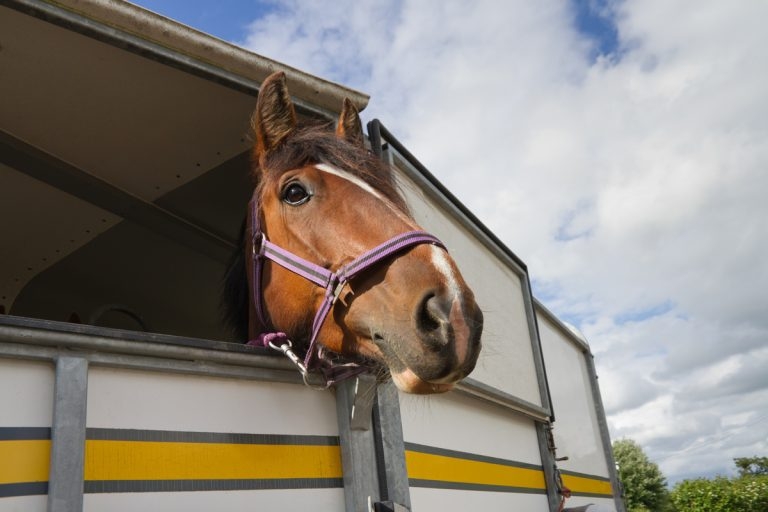
Image © countrylens / Adobe Stock
A senior vet and charity official has claimed a notifiable disease outbreak in the UK is unavoidable due to insufficient border controls.
Speaking in the session, “How do we keep our borders safe?” at London Vet Show, World Horse Welfare director of UK and BVA past-president Malcolm Morley painted a concerning picture as he said: “It’s not a question of if, it’s when we get a notifiable disease outbreak.”
Dr Morley argued horses are “almost untraceable and invisible” while moving through the UK Land Bridge connecting Ireland with continental Europe, and described a recent equine flu outbreak caused by imported horses as “a canary in the coal mine [in] how easy it is to bring things through”.
He added: “There is a merry go round, a carousel of horse movements. They are bought and sold as commodities, and they’re constantly moving around between these countries, horses getting on and getting off.”
“I would argue we, therefore, don’t have any effective border controls.”
Dr Morley suggested vets can help tackle the issue. He said: “We’ve got to find solutions to all these things, and as private vets we play an incredibly important role in disease surveillance.
“It’s easy to see biosecurity as a Government problem, but this is about all of us maintaining our standards and vigilance at all times.”
Speaking alongside him, Defra’s deputy CVO for international affairs Jorge Martin-Almagro called for similar vigilance across all species.
He said: “Threats are exponentially increasing, but something we have really good in the UK is [the ability] to tackle and eradicate issues when they hit us at home.
“Monitoring what’s coming is fundamental, and we can only do that with yourselves as being our eyes and ears in the field and beyond that, as well.”
Dr Martin-Almagro added that biosecurity is “not the Government’s job, it’s everybody’s job”, and “we all have to be hammering the message to farmers, producers, everybody” to play their part.
He added: “Defra invests a lot of money in monitoring what’s happening out there.
“It will be as effective as those who are in the chain making sure that they raise that alarm.Private vets play a crucial role in that part of the chain when you talk to clients and you come across sick animals.”
Asked how biosecurity can be improved, Dr Morley and independent vet and former Dogs Trust veterinary director, Paula Boyden, highlighted the need for digital ID and traceability of animals.
Dr Boyden described the UK’s border controls as “a big leaky cauldron” and urged vets to discuss the risks of importing animals with clients.
She also hit out at “paltry” penalties for those caught smuggling animals, adding: “There’s just no deterrence.”
Dr Martin-Almagro agreed on the need for “more digitisation, more electronic certificates, better reporting systems” and suggested newer colleagues who haven’t encountered major outbreaks “need to be told about how catastrophic [it] can be for farmers, private vets, local communities, society in general, to not uphold high standards of biosecurity”.
However, he said the majority of vets and farmers “always do the right thing”, adding: “I think it’s very easy to think, or maybe walk away today [thinking], ‘Oh my god’. There is a threat, but generally speaking the standards are really high.”