
5 Oct 2026
The EverBowl monitors animals’ eating and drinking patterns to detect changes and potential health issues earlier.

Chris Simpson
Job Title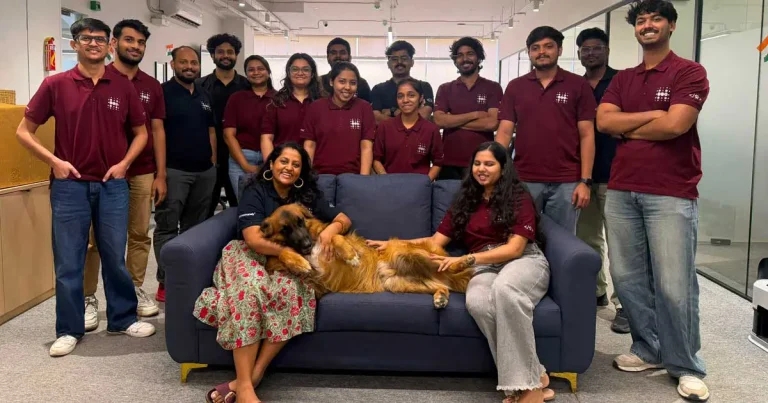
Members of the Hoomanely team, which has launched its first commercial product – EverBowl.
An animal health company has unveiled an artificial intelligence platform that monitors pet health and behaviour.
California-based Hoomanely has launched its first commercial product, EverBowl, a feeding station that observes animals while they eat to support early recognition of potential issues.
The product measures food and water consumption and eating speed and records chewing and swallowing sounds, facial thermal patterns, oral motion and other indicators to build a unique health record for each animal.
During an 18-month beta featuring more than 80 dogs, it is said to have generated more than five million multimodal data points, tracking changes later found to coincide with tick fever, early dental damage and monitoring a dog being treated for Cushing’s syndrome.
Hoomanely co-founder and chief executive Sai Supriya Sharath said: “These observations are informing formal veterinary studies designed to determine whether the system can reliably recognise meaningful changes across a larger group of dogs.
“We are building toward a future where subtle changes in behaviour can be understood earlier and more clearly, so care decisions can be made with greater confidence.”
The company’s chief veterinary advisor Petra Harms added: “Pet caregivers may not recognise health changes until weeks or months after they begin, leaving veterinarians with an incomplete picture when an animal becomes sick.
“By tracking behavioural changes over time, Hoomanely can help identify concerns earlier and provide valuable insight into how an animal responds to treatment at home.”
The EverBowl is said to be the first component of a planned modular system, and while the company has started with dogs, the AI platform’s architecture is designed to extend to other companion animals and livestock.
Hoomanely said it is in the process of developing additional ways to measure animal information, including movement, rest, weight, stance and environmental conditions.