
27 Jun 2026
All three dogs treated with varespladib in the study made a full recovery without the need for mechanical ventilation.

Chris Simpson
Job Title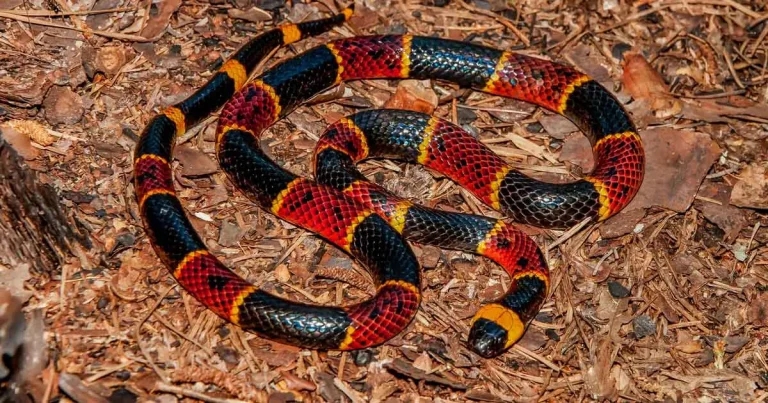
The eastern coral snake. Image: ondreicka / Adobe Stock
A new snake bite treatment being developed for dogs has shown “life-saving” potential, a study has shown.
University of Florida scholars found that administering the investigational drug varespladib to dogs with severe eastern coral snake envenomation rapidly sped up their recovery time and prevented them from requiring mechanical ventilation.
In the study, published in the Journal of the American Veterinary Medical Association, researchers treated three dogs with tetraparesis, hypoventilation and other clinical signs of eastern coral snake envenomation.
Alongside coral snake antivenom and supportive care, the dogs were administered varespladib, an oral treatment which inhibits a class of toxins present in the venom of more than 95% of snake species.
All three dogs – which the authors said based on their experience treating such cases and the dogs’ clinical signs likely would have progressed to requiring mechanical ventilation – made a complete and expedited recovery, with two experiencing neurologic improvement observed within minutes of administration.
The total hospitalisation time for each dog was approximately 50 to 67 hours, compared to the average 187 to 196 hours reported in historical cases without varespladib.
The authors noted that “compared to other dogs with a similar magnitude of tetraparesis, these three dogs recovered very rapidly, very likely related to varespladib administration”.
They also said they “do not typically see improvement with such rapidity in dogs that develop severe neurologic signs” when treated with antivenom alone.
Client costs were observed to be “markedly lower due to the significantly shorter hospitalisation and lack of ventilatory support”, which can make such cases cost upwards of US$15,000.
No adverse effects were attributed to varespladib or antivenom administration.
The authors called for further randomised clinical control trials to determine the drug’s benefits and potential side effects.
Tim Platts-Mills, chief medical officer at Ophirex, the company developing varespladib for both human and canine use, said while “caution must be made in drawing definitive conclusions” as the study was not a randomised trial, “the large differences in outcomes between treated dogs and historical cases suggests the drug is having an important effect”.
He added: “The results support the potential of varespladib to improve outcomes and reduce the cost of care for dogs bitten by eastern coral snake.”
An estimated 50,000 dogs are bitten by venomous snakes in the United States each year.
A submission for varespladib’s approval to the US Food and Drug Administration for use in dogs is expected to be completed by the end of 2027.
Dr Platts-Mills continued: “Varespladib remains an experimental drug. If approved, we anticipate that varespladib will be given by dog owners as a time-of-bite therapy and by veterinarians on arrival to a clinic.
“In most cases, when available, we’d expect veterinarians would still administer antivenom, recognising that varespladib is a potent inhibitor of a key snake venom toxin but does not inhibit all the toxins.”
Co-author Michael Schaer, professor emeritus at the University of Florida’s College of Veterinary Medicine, explained the drug “essentially block[s] the paralysing effects of coral snake venom on the peripheral nervous system, including the respiratory muscles”.
He urged vets to ensure they are familiar with the clinical signs of envenomation due to the lack of a single diagnostic test to determine it, in cases where snake bites go unwitnessed.
Dr Schaer continued: “Since most veterinarians will not be using coral snake antivenom, they should be familiar with the progression of clinical signs to validate treatment with varespladib.
“If approved, varespladib has the potential to be truly a life-saving drug that was free of any side effects in our research.”