
10 Jun 2026
Purina Institute Global Summit delegates in Lausanne hear emerging data, new digital breakthroughs and insights from human health have key future role.

James Westgate
Job Title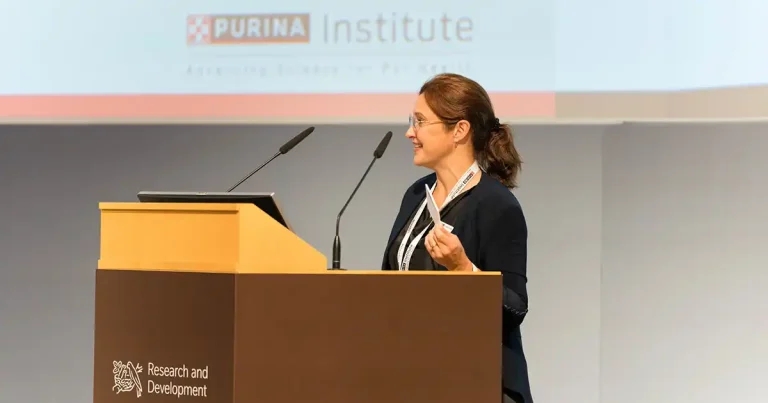
Head of Purina Institute Marianne Lomberg addresses delegates at the 2026 Purina Institute Global Summit in Lausanne.
Vets should embrace a more proactive approach with clients if they hope to stay ahead of a rapid “paradigm shift” in pet health.
Delegates at the Purina Institute Global Summit in Lausanne (27 to 28 May) heard how emerging data, new digital breakthroughs and insights from the human health sector are driving a move from reactive crisis management to proactive, relationship-centred preventive care.
The aim of the event was to showcase the growing scientific evidence base around preventive health and to provide the tools and methodologies needed to take advantage of the opportunities it could provide for both veterinary professionals and the animals under their care.
A line-up of international speakers from the fields of veterinary science, human health, animal behaviour, communication and technology explained how a proactive approach can extend healthspan and lifespan for pets, deliver economic benefits to clients, and improve the working lives of vets and vet nurses.
Audrey Ruple, professor of veterinary medical informatics at the Virginia-Maryland College of Veterinary Medicine, highlighted analysis of data from the Dog Aging Project and pet insurance claims in the US to show how the approach not only improves longevity and quality of life for pets, but can also serve to protect against clinical stress and burnout.
She said: “Most small animal veterinarians reported that ethical dilemmas as a leading cause of work-related stress. We also know from other research that one of the biggest ethical dilemmas that faces the small animal practitioner is that we might be euthanising an animal for disease that could have been prevented had the right preventive measures been taken in the first place.”
However, ECC medic and director of the Penn Medicine Nudge Unit, Kit Delgado acknowledged that one of the biggest barriers veterinary professionals must overcome is getting clients onboard with their recommendations.
Dr Delgado stressed the importance of behavioural economics and shared insights from human health initiatives showing that defaults such as how 90-day prescription refills significantly increase adherence and how framing messages to highlight losses can boost vaccine uptake by as much as 11 per cent.
Delegates also heard how to increase adherence by moving to a more client-centred model, an approach that requires vet nurses to play an increased role, according to director of the veterinary communication for professional excellence programme at Colorado State University, Natasha Janke.
She said: “I have studied the role of veterinary technicians or veterinary nurses in shared decision making, and we found that clients were significantly more engaged in decisions about their pet’s health care when the veterinary nurse was involved in that conversation, so there’s a huge opportunity there for using their valuable skills in the appointment.”
According to Shawn Wilkie, CEO of Talkatoo, another huge opportunity for veterinary professionals is wearable pet tech. He emphasised the growing market for smart feeders, GPS trackers, and smart litter systems and envisioned a future where connected devices improve pet health, increase veterinary visits, and foster better relationships between clients and vets.
Biomarkers were also discussed as an area with great potential for preventive health with vet and longevity scientist Brennen McKenzie using the example of how insulin levels are already being used to predict frailty and chronic kidney disease.
But, as Onswitch founder Alison Lambert was keen to emphasise, clear communication is central to successfully implementing any preventive approach and veterinary practices must strive to “make the right thing to do, the easy thing to do”.
Head of the Purina Institute, Marianne Lomberg, concluded: “We chose this topic as we want to help the veterinary profession become more proactive in how we communicate to our clients and taking away some of the barriers of fear and uncertainty about how to do it. If we can help veterinary professionals to communicate more powerfully and impact a patient’s future as a result, then that is success for us.”