
15 Oct 2026
The document is being launched at the group’s annual congress as a new policy paper is also released.

Allister Webb
Job Title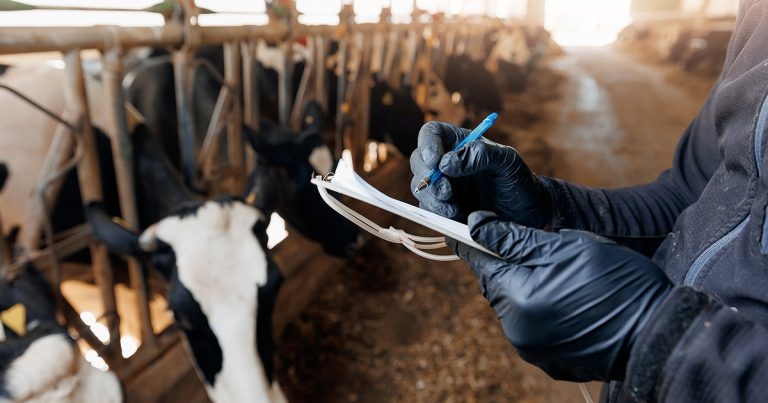
Image © Parilov / Adobe Stock.
A veterinary association has unveiled new support materials intended to help address the mental health impacts faced by vets and farmers during a bTB outbreak.
The document, called When TB Hits, developed in collaboration with Vetlife and the Farming Community Network (FCN), was due to be formally launched at the BCVA Congress in Telford this week (15 to 17 October).
The association has also released a revised policy paper on the disease, whose recommendations include both the roll-out of cattle vaccination and keeping the option of badger culling under “regular review”.
But officials insisted that supporting clinicians and producers cannot be treated separately from control measures if the fight against the disease is to be won.
Ed Simmons, who chairs the BCVA’s TB working group, wrote: “Supporting well-being is not an add on to eradication policy; it is part of how we get eradication right.”
The new paper specifically advises vets on how to approach the disclosure of a bTB breakdown and farmers on what to expect in that situation.
It also describes an outbreak as “one of the hardest things a farming family can go through, and one of the hardest conversations a vet can have with a farmer”.
Stephen Dennis, FCN’s south-west regional manager, said he hoped the project would help more people to seek their support at an earlier stage.
Mr Simmons also praised the partnership with FCN and Vetlife, which he said had produced “a practical and useful resource” for both vets and farmers.
He added: “Progress on bTB comes alongside real, ongoing hardship for all those who feel its impact.
“The mental health toll on farmers – and vets – is serious and persistent. Protecting their well-being matters in its own right, alongside controlling this disease.”
The release of the new resources also coincides with the publication of the BCVA’s revised policy on the disease following a review it first announced in January 2024.
Under seven priorities for action, the paper argued vets should be “central to driving long-term TB control” and supported the “accelerated deployment” of a cattle vaccine.
It also pledged to expand training for the BCVA accredited TB veterinary advisor (BATVA) accreditation programme to help “broaden the cohort” of clinicians with advanced risk assessment knowledge in the area.
But, despite the UK Government’s commitment to ending the controversial badger cull programme, the paper argues wildlife control should still be “regularly reviewed as a potential tool [of disease control] based on the available evidence”.
The document acknowledged that farm vets are required to work within the strategy set out by Defra, but argued that the management of wildlife reservoirs “remains necessary, both to break transmission cycles and protect herd health”.
It has also raised concerns about an emerging reservoir in wild deer, calling for surveillance pilots to be set up, and called for increased coverage and monitoring of badger vaccination work.